Introduction
Watching a beloved dog struggle after surgery is heartbreaking. Incision pain, hesitant movement, and dulled eyes from discomfort and anesthesia are common. The post‑op period is critical but often frustrating. Pain medications help, but they don’t fully address swelling, stiffness, or slow tissue healing. Owners and vets need safe, non‑invasive ways to support natural recovery. CO₂ cryotherapy offers a gentle, drug‑free option that uses controlled cooling to reduce pain, minimize swelling, and promote tissue repair, helping dogs move more comfortably through early recovery.
1. The Challenge of Post-Surgical Recovery in Dogs
Every surgical procedure, from a routine spay to an orthopedic reconstruction, triggers a cascade of physiological responses. The body responds to the trauma of surgery with inflammation, a process that, while essential for healing, can also create significant discomfort and delay recovery.
1.1 Understanding the Body’s Response to Surgery
When tissue is cut, the body mobilizes its healing machinery. Blood vessels dilate, and fluid rushes to the surgical site, carrying immune cells and growth factors. This inflammatory response is necessary, but it often brings swelling, heat, and pain. Swelling can put pressure on surrounding nerves and tissues, making movement difficult and uncomfortable. Inflammation, if left unchecked, can also impede the delivery of oxygen and nutrients to the healing tissues, slowing the repair process down. For a dog, this can mean days of avoiding weight on a sore leg or shying away from being touched near the incision.
1.2 The Importance of Early Intervention
The first 48 to 72 hours after surgery are often the most critical for recovery. This is when swelling is at its peak, and pain is most intense. Managing these early symptoms effectively can set the tone for the entire recovery period. If swelling and pain are well controlled, dogs are more willing to move and bear weight on their surgical site. This early movement is essential for preventing muscle atrophy, maintaining joint mobility, and encouraging proper healing of the underlying tissues. Conversely, if pain and swelling are not well managed, dogs may become reluctant to move, leading to stiffness, decreased range of motion, and a longer, more difficult recovery.
2. How CO₂ Cryotherapy Works
CO₂ cryotherapy offers a modern approach to managing the challenges of post-surgical recovery. Unlike traditional ice packs, which can be messy, uneven in their cooling, and difficult to apply precisely, CO₂ cryotherapy uses a stream of pressurized carbon dioxide gas delivered through a specialized applicator. This allows for rapid, targeted, and dry cooling directly to the surgical site.
2.1 Vasoconstriction: Reducing Swelling at the Source
One of the primary ways CO₂ cryotherapy supports healing is through vasoconstriction, the narrowing of blood vessels. When the cold gas is applied to the skin, it causes the blood vessels in the underlying tissues to constrict. This reduces blood flow to the area, which in turn limits the accumulation of inflammatory fluid and helps decrease local swelling. By addressing swelling at its source, the therapy helps reduce pressure on surrounding tissues and nerves, providing relief and making movement more comfortable for the recovering dog.
2.2 Modulating Pain and Inflammation
The cooling effect of CO₂ cryotherapy also has a direct impact on pain and inflammation. Cold exposure slows nerve conduction velocity, which can help raise the pain threshold and reduce the perception of discomfort. The therapy also helps modulate the inflammatory environment by reducing the activity of pro-inflammatory mediators. This helps keep the inflammatory response within a manageable range, preventing excessive inflammation from delaying the healing process. For a dog recovering from surgery, this can mean less reliance on pain medications and a more comfortable, restful recovery.
2.3 Reactive Hyperemia: Supporting Tissue Repair
Perhaps one of the most significant advantages of CO₂ cryotherapy over traditional cold packs is the rebound effect known as reactive hyperemia. After the brief period of cooling ends, the blood vessels dilate more widely than before. This surge of blood flow brings fresh oxygen and nutrients to the surgical site, supporting cellular repair and helping to clear away metabolic waste products that accumulate in the tissues. This process helps create an environment more conducive to healing, promoting tissue repair and supporting the body’s natural recovery processes.
3. Clinical Evidence in Veterinary Medicine
A growing body of evidence supports the use of CO₂ cryotherapy in veterinary post-surgical care. Research has demonstrated its effectiveness in reducing pain, improving mobility, and supporting a faster return to normal function.
3.1 Evidence from Canine Orthopedic Studies
A study examining hyperbaric gaseous cryotherapy after stifle joint surgery in dogs found that dogs receiving the therapy showed a significant decrease in pain scores as early as 24 hours after surgery. By 48 hours post-surgery, these dogs also demonstrated significantly decreased lameness and improvement in all kinetic measurements. Furthermore, the treatment group showed a significant increase in range of motion at 28 days after surgery compared to the control group. The study concluded that the therapy plays a powerful role in decreasing initial postoperative pain and that the improvement in pain positively affects the use of the operated limb, eventually assisting in the quick recovery of normal function.
3.2 Supporting Wound Healing
Research on the effects of CO₂ therapy on wound healing has highlighted its potential to improve the quality of healing. The main effects described include improved blood flow and local oxygenation, reduction of the inflammatory process, increased collagen production, and improved clinical aspects of wounds with faster healing. In a canine acute injury model, adjuvant cryotherapy appeared to alter wound healing, leading to decreased and more organized collagen formation, suggesting an improvement in tissue quality.
4. Integrating CO₂ Cryotherapy into Post-Surgical Care
For pet owners and veterinarians considering CO₂ cryotherapy, understanding how to integrate it into a post-surgical care plan is essential.
4.1 A Safe and Gentle Option
CO₂ cryotherapy is a low-risk, non-invasive, and effective complementary therapy for pets with post-surgical recovery needs. It is generally well tolerated, even in older dogs, due to its non-invasive nature and controlled application. The therapy can be applied to the area surrounding the surgical site, providing targeted cooling without causing discomfort or stress to the animal.
4.2 Supporting Early Mobilization
The ability to reduce pain and swelling makes CO₂ cryotherapy a valuable tool for supporting early mobilization. When dogs are more comfortable, they are more likely to bear weight and use the affected limb, which is essential for preventing muscle atrophy and joint stiffness. By facilitating early movement, the therapy may help accelerate the overall recovery process and help dogs return to their normal activities more quickly.
4.3 Complementary to Other Therapies
CO₂ cryotherapy works most effectively as part of a comprehensive post-surgical care plan. It does not replace other essential components of recovery, such as appropriate rest, pain management, and physical rehabilitation, but rather complements them. By reducing pain and inflammation, the therapy may make other recovery activities more comfortable and effective.
5. Practical Considerations for Pet Owners
For pet owners considering CO₂ cryotherapy for their dog, understanding what to expect can help make the experience a positive one.
5.1 The Treatment Experience
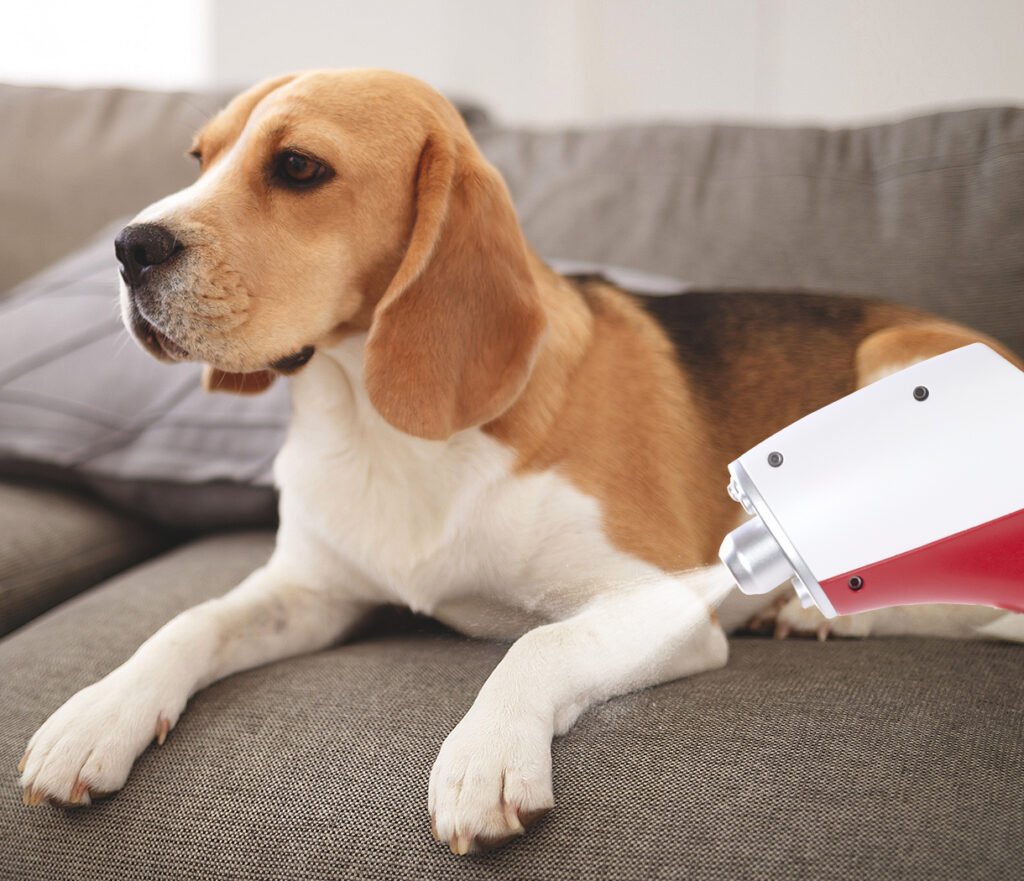
A typical CO₂ cryotherapy session for a post-surgical site is brief, lasting only a few minutes. The practitioner directs the applicator at the skin surrounding the surgical site, moving it in sweeping motions to ensure even cooling. The experience is generally well tolerated by dogs, and the treatment leaves no moisture behind, making it clean and convenient.
5.2 Frequency and Consistency
The benefits of CO₂ cryotherapy are often cumulative. While a single session may provide temporary relief, consistent application over the early post-surgical period tends to produce the most noticeable improvements in pain control and swelling reduction. Many practitioners recommend a series of sessions in the days following surgery, particularly during the most critical first 48 to 72 hours.
5.3 A Non-Pharmaceutical Approach
For pet owners who are concerned about the potential side effects of medications, CO₂ cryotherapy offers a valuable non-pharmaceutical alternative. It does not interfere with other medications and provides a way to manage pain and inflammation without adding to the dog’s pharmaceutical burden.
FAQ
Q1: Is CO₂ cryotherapy safe for dogs after surgery?
Yes. When administered by a trained professional, CO₂ cryotherapy is a safe, low-risk, and non-invasive therapy for post-surgical recovery.
Q2: How soon after surgery can CO₂ cryotherapy be used?
It can often be used within the first 24 hours after surgery to help manage initial pain and swelling.
Q3: How many sessions will my dog need?
The number varies depending on the type of surgery and the individual dog’s response. A typical supportive protocol may include several sessions during the first few days to a week after surgery.
Q4: Does CO₂ cryotherapy replace pain medication?
No. It is a complementary therapy that works alongside medications to support recovery and may help reduce the need for pharmaceuticals.
Q5: Will my dog find the treatment uncomfortable?
Most dogs tolerate the treatment well. The applicator moves continuously, and the cooling effect is brief and targeted.
Conclusion
The days following a surgical procedure are a vulnerable time for any dog. The body is working hard to heal, but pain, swelling, and stiffness can make the process slow and uncomfortable. For pet owners who want to support their dog’s recovery in a safe, non-invasive way, CO₂ cryotherapy offers a promising option. By reducing swelling, modulating pain, and supporting tissue repair, the therapy helps create the conditions for a smoother, more comfortable recovery. When integrated into a comprehensive post-surgical care plan, CO₂ cryotherapy can help dogs move through the healing process with less pain and greater ease, allowing them to get back to the activities they love sooner.
References
Hyperbaric gaseous cryotherapy for postoperative rehabilitation enhances functional recovery of canine stifle joint: a report on a short-term study. Journal of Veterinary Science, 2021.
https://pmc.ncbi.nlm.nih.gov/articles/PMC8636653
Effects of Carbon Dioxide Therapy on Skin Wound Healing. Biomedicines, 2025.
https://www.mdpi.com/2227-9059/13/1/228
Vocal fold healing after laser cordectomy with adjuvant cryotherapy. PubMed.
https://pubmed.ncbi.nlm.nih.gov
CO₂ Cryotherapy for Pain Management in Veterinary Clinics. Local Cryotherapy.
https://www.localcryotherapy.com
Top 10 Questions About CO2 Cryotherapy for Pets. Local Cryotherapy.