
1. Introduction
Seasonal changes, particularly during colder months, present unique challenges to equine health, performance, and recovery. As temperatures drop, horses often experience increased muscle stiffness, reduced joint mobility, and slower post-exercise recovery. These issues can affect not only high-performance sport horses but also leisure and senior horses, ultimately influencing comfort, training consistency, and long-term musculoskeletal health.
Traditional winter care methods—such as extended warm-ups, stable management adjustments, and manual therapies—remain valuable. However, modern equine rehabilitation increasingly integrates advanced, non-invasive modalities to address cold-weather physiological stress more effectively. Among these, cryotherapy has gained significant attention for its ability to support recovery, manage inflammation, and maintain tissue health throughout seasonal transitions. This article explores how equine cryotherapy can be strategically applied during cold seasons to promote optimal recovery and long-term performance maintenance.
2. How Cold Weather Affects Horse Muscles and Joints
Cold environments influence equine physiology in complex ways, especially in tissues responsible for movement and load-bearing. Understanding these effects provides essential context for why targeted recovery strategies are necessary during winter months.
2.1 Seasonal Muscle Stiffness in Horses
Lower ambient temperatures reduce peripheral blood flow as part of the body’s natural thermoregulatory response. In horses, this vasoconstriction can decrease oxygen delivery and metabolic efficiency within skeletal muscles. As a result, muscle fibers may become less elastic, increasing stiffness and reducing range of motion, particularly after periods of inactivity.
During winter training, this stiffness often manifests as delayed warm-up responses, reduced stride fluidity, and increased post-exercise discomfort in horses. Without appropriate recovery interventions, repeated muscle tightness may contribute to compensatory movement patterns, elevating the risk of soft tissue discomfort over time.
2.2 Joint Stress and Inflammation During Winter Months
Cold temperatures also influence joint function by altering synovial fluid viscosity and reducing joint capsule flexibility. Horses may show signs of reduced willingness to move freely, especially in the early stages of exercise. For performance horses, this joint stiffness can compromise precision and power, while in older horses it may exacerbate underlying degenerative conditions.
Inflammatory responses tend to persist longer during colder months due to slower metabolic clearance. Consequently, effective inflammation management becomes essential to maintaining joint health and preventing chronic discomfort throughout the winter season.
3. What Is Equine Cryotherapy and How It Works
Cryotherapy refers to the controlled application of cold temperatures to targeted areas of the body to elicit therapeutic physiological responses. In equine care, cryotherapy is increasingly utilized as a recovery and maintenance tool across training and rehabilitation programs.
3.1 The Science Behind Cryotherapy for Horses
When cold is applied to tissues, vasoconstriction occurs, temporarily reducing blood flow and limiting inflammatory mediator activity. Upon rewarming, vasodilation follows, enhancing circulation and promoting metabolic waste removal. This vascular response cycle supports tissue recovery while modulating pain perception through neuromuscular pathways.
Cryotherapy also influences nerve conduction velocity, reducing nociceptive signaling and providing analgesic effects. Additionally, controlled cold exposure can decrease muscle spasm and support tendon and ligament recovery, making it particularly relevant during high-load training periods in colder climates.
3.2 Macchine per crioterapia for Horses in Seasonal Care
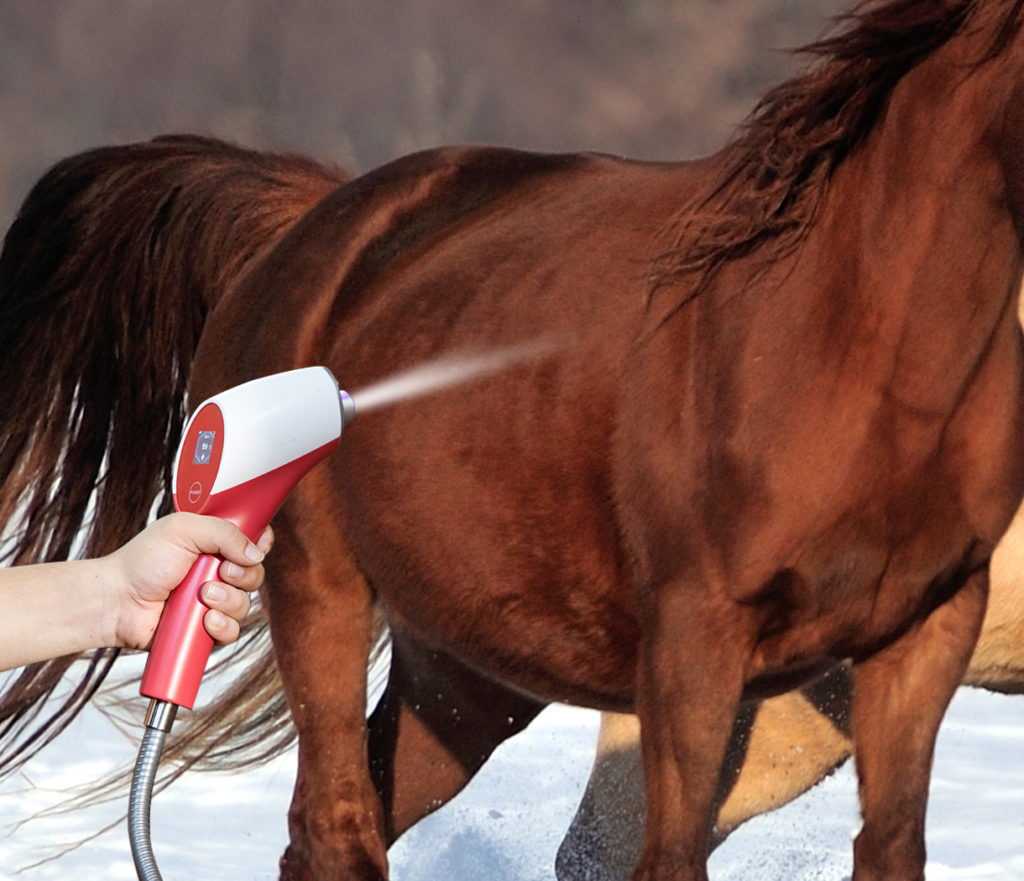
Modern equine cryotherapy systems are specifically engineered to deliver consistent, localized cold therapy safely and efficiently. These systems often incorporate adjustable temperature controls, ergonomic applicators designed for equine anatomy, and treatment protocols suitable for limbs, joints, and large muscle groups.
Unlike traditional ice application, these devices maintain stable cooling levels without excessive moisture or uneven temperature distribution. Their portability and ease of use allow integration into daily stable routines, making them especially valuable during winter when outdoor cold-water methods may be impractical. Such systems support both post-exercise recovery and preventive maintenance across seasonal training cycles.
4. Benefits of Seasonal Cryotherapy for Horses
Incorporating cryotherapy into winter care protocols offers multifaceted benefits that extend beyond immediate recovery, supporting overall musculoskeletal resilience.
4.1 Supporting Post-Exercise Recovery in Cold Weather
After winter training sessions, horses often experience prolonged muscle fatigue due to reduced circulation and slower metabolic recovery. Cryotherapy helps mitigate these effects by limiting secondary inflammation and promoting more efficient tissue repair.
Consistent post-exercise cryotherapy sessions can shorten recovery windows between training days, allowing horses to maintain conditioning without accumulating excessive muscular stress. This is particularly advantageous during condensed competition schedules or intensive winter training blocks.
4.2 Managing Inflammation and Swelling During Seasonal Training
Targeted cryotherapy is highly effective in managing localized inflammation in tendons, ligaments, and joints—areas commonly stressed during winter exercise. By reducing edema and inflammatory mediator activity, cryotherapy supports tissue integrity and minimizes discomfort.
Seasonal use of cryotherapy also plays a preventive role, addressing subclinical inflammation before it escalates into overt injury. This proactive approach is especially valuable for horses with a history of soft tissue sensitivity.
4.3 Maintaining Performance and Mobility Year-Round
By preserving muscle flexibility and joint mobility during cold months, cryotherapy helps maintain consistent performance levels throughout the year. Horses are better able to adapt to training demands without seasonal declines in movement quality.
Long-term, this contributes to improved athletic longevity and reduced reliance on reactive treatment strategies, supporting a sustainable approach to equine performance management.
5. Cryotherapy vs Traditional Cold-Weather Recovery Methods
While traditional recovery methods remain relevant, cryotherapy offers distinct advantages in cold-weather contexts.
5.1 Cryotherapy vs Ice Packs and Cold Hosing
Ice packs and cold hosing provide surface-level cooling but often lack consistency and depth of penetration. Temperature fluctuation and uneven coverage can limit their effectiveness, particularly in winter conditions.
Cryotherapy systems deliver controlled, uniform cooling, ensuring reproducible treatment outcomes. Additionally, they eliminate the logistical challenges associated with water use in freezing temperatures.
5.2 Cryotherapy vs Heat Therapy for Seasonal Care
Heat therapy is commonly used to promote circulation and muscle relaxation; however, during active inflammation, cold therapy is often more appropriate. Cryotherapy helps manage acute post-exercise responses, while heat may be better suited for pre-exercise warm-up or chronic stiffness.
Strategically alternating between cold and heat therapies allows for a balanced seasonal care approach tailored to the horse’s physiological state.
6. Best Practices for Using Cryotherapy in Cold Seasons
To maximize benefits, cryotherapy should be applied according to evidence-informed protocols and individual horse needs.
6.1 Treatment Frequency and Duration During Winter
During intensive training periods, cryotherapy may be applied several times per week as part of post-exercise recovery. For maintenance purposes, less frequent sessions may suffice to preserve tissue health.
Treatment duration should be adjusted based on targeted areas, ambient temperature, and the horse’s response, ensuring therapeutic effects without excessive cooling.
6.2 Safety Considerations for Seasonal Cryotherapy
Monitoring skin condition, circulation, and behavioral responses is essential to safe cryotherapy application. Gradual acclimation and adherence to recommended exposure times help prevent cold-related stress.
Professional guidance from veterinarians or equine therapists is advised when integrating cryotherapy into rehabilitation programs.
6.3 Integrating Cryotherapy into Daily Winter Care Routines
Cryotherapy is most effective when combined with comprehensive care strategies, including appropriate warm-ups, stretching, nutrition, and stable management. Scheduling treatments post-exercise or during rest periods ensures optimal physiological responses.
7. Which Horses Benefit Most from Seasonal Cryotherapy
While many horses can benefit, certain populations are particularly well-suited to seasonal cryotherapy.
7.1 Performance Horses and Competition Seasons
Horses participating in dressage, show jumping, eventing, and racing continue to be subjected to relatively high training loads during the winter season. Cryotherapy supports rapid recovery and helps manage cumulative stress during winter competition schedules.
7.2 Senior Horses and Long-Term Joint Care
Older horses often face reduced circulation and joint elasticity in cold weather. Cryotherapy can enhance comfort, support mobility, and contribute to improved quality of life during winter months.
8. Frequently Asked Questions (FAQ)
Is cryotherapy safe for horses during winter?
Yes, when applied correctly with controlled temperatures and appropriate duration.
How often should cryotherapy be used in cold seasons?
Frequency depends on workload, age, and individual recovery needs.
Can cryotherapy replace traditional winter care methods?
Cryotherapy complements rather than replaces foundational care practices.
9. Conclusion
Seasonal cryotherapy represents a proactive, evidence-informed approach to managing the physiological challenges horses face during cold weather. By supporting recovery, reducing inflammation, and preserving mobility, cryotherapy enhances both performance and long-term musculoskeletal health. Integrated thoughtfully into winter care routines, it offers a modern solution aligned with evolving standards in equine rehabilitation and welfare.
10. References
McGowan, C. M., Goff, L., & Stubbs, N. C.
Animal Physiotherapy: Assessment, Treatment and Rehabilitation of Animals
https://www.wiley.com/en-us/Animal+Physiotherapy%2C+2nd+Edition-p-9781118982639
Haussler, K. K.
The role of physical modalities in equine rehabilitation
https://aaep.org/issue/role-physical-modalities-equine-rehabilitation
King, M. R., & Evans, D. L.
Exercise physiology and thermoregulation in horses
https://www.sciencedirect.com/science/article/pii/S0737080608000893
Bleakley, C., McDonough, S., & MacAuley, D.
The use of ice in the treatment of acute soft-tissue injury
https://bjsm.bmj.com/content/38/3/379
Hubbard, T. J., & Denegar, C. R.
La crioterapia migliora i risultati delle lesioni dei tessuti molli?
https://pubmed.ncbi.nlm.nih.gov/12937529
Clayton, H. M., & Hobbs, S. J.
The role of biomechanical analysis in equine performance and rehabilitation
https://beva.onlinelibrary.wiley.com/doi/full/10.1111/eve.12190
Equine Veterinary Journal – Rehabilitation and Therapy Collection
https://beva.onlinelibrary.wiley.com
American Association of Equine Practitioners (AAEP)
Rehabilitation and physical therapy resources
https://aaep.org/horsehealth/rehabilitation-and-physical-therapy
Local Cryotherapy – Cryotherapy Machines for Horses
https://www.localcryotherapy.com/cryotherapy-machine-product-list/cryotherapy-machine-for-horses