Introduzione
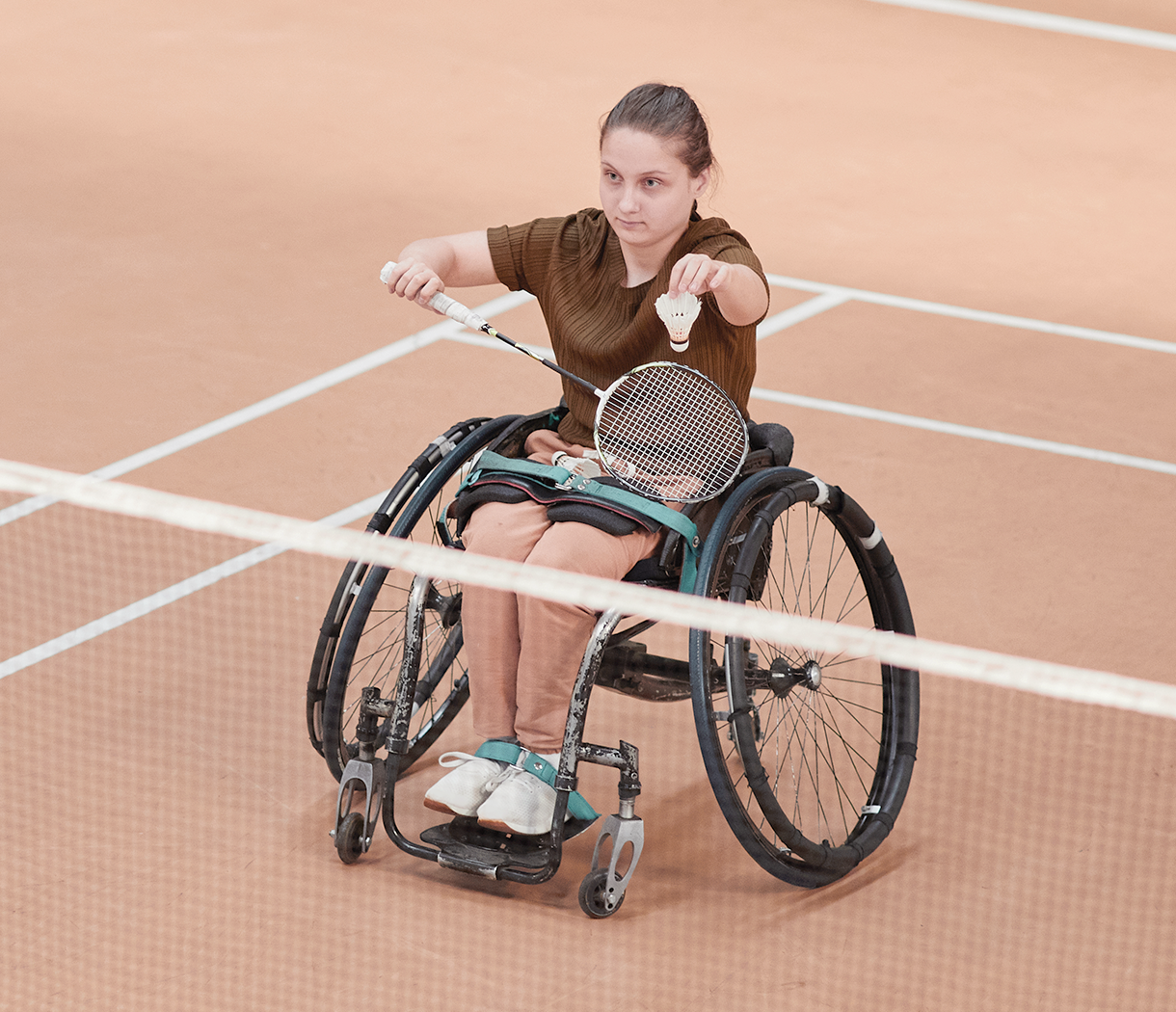
Wheelchair athletes rely heavily on their upper limbs for propulsion, training, and competition, making their shoulders, elbows, wrists, and upper back prone to fatigue, inflammation, and overuse injuries. Prolonged repetitive motion and high localized load can compromise muscle function and performance. Traditional recovery methods such as rest, massage, or heat therapy often fail to provide rapid and effective recovery following high-intensity training sessions. CO₂ cryotherapy is a non-invasive cooling therapy that uses carbon dioxide gas to lower local tissue temperatures, reduce muscle fatigue, and modulate inflammatory responses. This article explores the mechanisms, benefits, clinical application, and practical considerations of CO₂ cryotherapy for wheelchair athletes, providing evidence-based guidance for coaches, physiotherapists, and athletes.
1. Understanding Upper Limb Fatigue in Wheelchair Athletes
The upper limbs are the primary source of propulsion and power in wheelchair athletes, placing them under higher mechanical stress than able-bodied athletes.
1.1 Muscle Fatigue from High-Frequency Propulsion
Wheelchair athletes perform repetitive pushes, turns, and accelerations daily, mainly engaging the shoulders, elbows, and upper back muscles. Repeated contractions cause lactate accumulation, microtrauma in muscle fibers, and localized inflammation, resulting in soreness, reduced strength, and restricted movement. Without proper recovery, chronic fatigue and overuse injuries may develop, affecting both training and competition performance.
1.2 Joint and Tendon Load Characteristics
The rotator cuff, biceps, elbows, and wrists experience repetitive traction and rotational stress during propulsion. These areas are prone to inflammation, bursitis, or tendonitis. Additionally, compensatory loading in residual limbs or weaker muscle groups can increase localized stress, accelerating fatigue accumulation and injury risk.
1.3 Impact of Chronic Fatigue on Performance
Upper limb fatigue reduces strength output, impairs motor control, and increases the likelihood of injury. Elite wheelchair athletes require rapid and effective recovery strategies to maintain training intensity and competitive performance, making advanced recovery techniques critical.
2. What is CO₂ Cryotherapy?
Understanding the therapy’s mechanisms and differences from traditional cold treatments helps clarify its application value for wheelchair athletes.
2.1 Mechanisms of CO₂ Cryotherapy
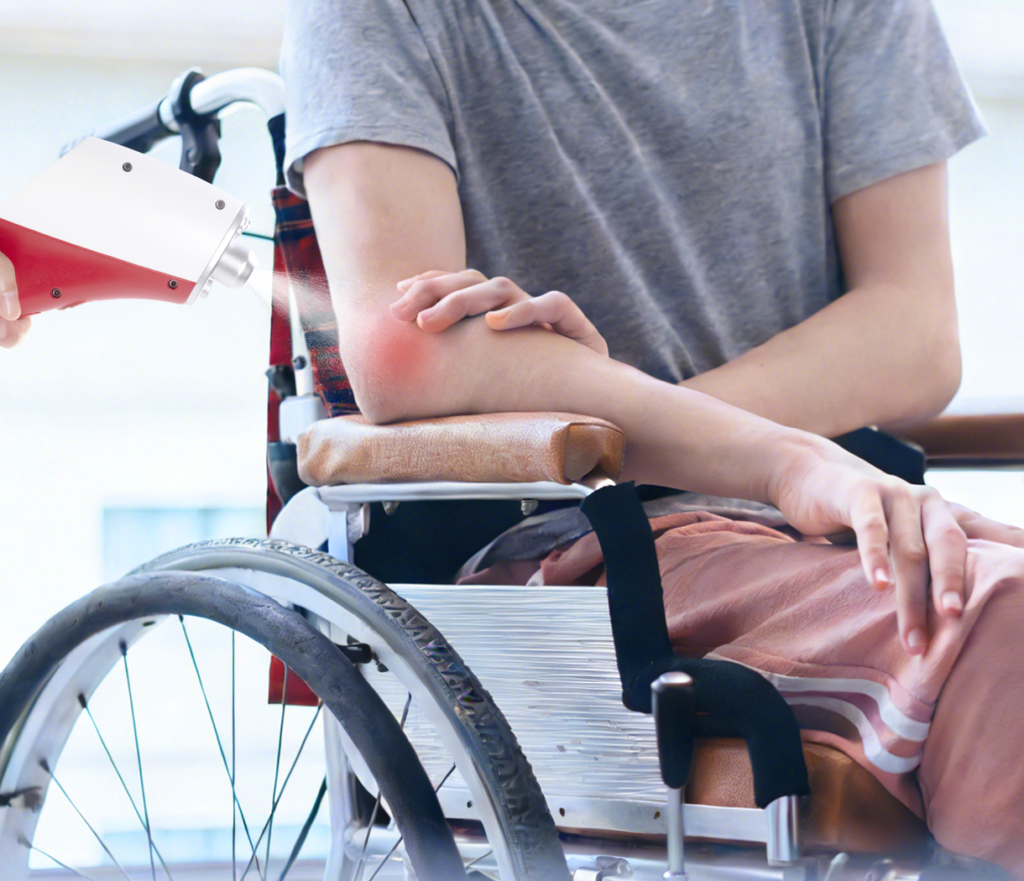
CO₂ cryotherapy delivers cold carbon dioxide gas to target areas, rapidly reducing skin and superficial tissue temperature. Local vasoconstriction is followed by reactive vasodilation, improving blood flow, reducing edema, and modulating inflammation. At the cellular level, cryotherapy enhances mitochondrial function, accelerates tissue repair, and reduces pain perception, supporting faster muscle recovery.
2.2 Differences from Traditional Ice Therapy
Unlike ice packs or cold-water immersion, CO₂ cryotherapy provides controlled and uniform cooling, minimizing the risk of skin injury. Treatment sessions are short (3–5 minutes), allowing wheelchair athletes to recover quickly after training without limiting joint mobility, making it a practical solution for high-performance schedules.
3. Benefits of CO₂ Cryotherapy for Upper Limb Recovery
For wheelchair athletes, upper limb recovery is essential for performance maintenance and injury prevention.
3.1 Accelerating Muscle Metabolism and Lactate Clearance
Localized cooling improves blood flow, accelerating the removal of lactic acid and metabolic waste. Faster clearance reduces post-training soreness, helps muscle fibers regain function, and shortens recovery periods, enabling athletes to maintain high training intensity.
3.2 Reducing Inflammation and Microtrauma
Repetitive propulsion causes micro-injuries and inflammation in the rotator cuff, elbows, and upper back. CO₂ cryotherapy lowers local tissue temperature and modulates inflammatory mediators, reducing swelling, pain, and joint stiffness, providing a safer recovery window before subsequent training or competition.
3.3 Supporting Long-Term Musculoskeletal Health
High-intensity repetitive training increases the risk of chronic overuse injuries and tendon degeneration. Regular CO₂ cryotherapy sessions not only aid short-term recovery but may also reduce the long-term risk of musculoskeletal damage, helping athletes maintain functional performance over years of training.
4. Practical Application in Wheelchair Athlete Training
Effective integration of CO₂ cryotherapy requires attention to treatment protocol, target areas, and individual athlete needs.
4.1 Session Frequency and Duration
Short 3–5 minute sessions immediately post-training are most effective. Frequency may range from 2–4 times per week depending on training load and fatigue levels. Proper scheduling ensures sufficient recovery without overexposure to cold therapy.
4.2 Target Areas and Positioning Techniques
Focus areas include shoulders, elbows, wrists, and upper back muscles most involved in propulsion. Operators should carefully control spray angle, distance, and movement speed to ensure uniform cooling while avoiding frostbite or excessive discomfort.
4.3 Integration with Other Recovery Methods
CO₂ cryotherapy should complement stretching, strength training, massage, and nutritional interventions. By reducing pain and soreness, cryotherapy allows athletes to participate more effectively in active recovery, enhancing overall rehabilitation and performance outcomes.
5. Scientific Evidence and Clinical Research
Although research specifically on wheelchair athletes is limited, studies indicate that CO₂ cryotherapy can effectively reduce fatigue and enhance recovery in upper limb muscles.
5.1 Improvement in Muscle Recovery
Cryotherapy reduces delayed-onset muscle soreness (DOMS), decreases muscle tightness, and promotes strength recovery, providing a clear benefit for high-intensity post-training recovery in wheelchair athletes.
5.2 Impact on Inflammation and Joint Load
Local cooling reduces inflammatory cytokine levels in shoulder, elbow, and wrist tissues, alleviating pain and improving joint mobility. This is particularly important for athletes performing repetitive high-load movements, as it helps prevent overuse injuries.
5.3 Performance and Long-Term Musculoskeletal Health
Regular use of CO₂ cryotherapy allows athletes to maintain high training volume while minimizing chronic musculoskeletal stress. This supports long-term performance consistency, functional health, and safe participation in intensive training programs.
FAQ
Q1: Is CO₂ cryotherapy safe for all wheelchair athletes?
A: Yes, generally safe, but those with cold intolerance or open wounds should consult a doctor first.
Q2: How soon after training should CO₂ cryotherapy be applied?
A: Ideally within 30 minutes after training for best recovery effects.
Q3: Are there any risks or side effects?
A: Minor tingling or redness may occur; frostbite is rare with proper use.
Q4: How does it compare to ice packs or massage?
A: Provides faster, uniform cooling and does not restrict joint mobility like ice packs.
Q5: Can it be used long-term without affecting training gains?
A: Yes, short sessions support recovery without impairing muscle adaptation.
Conclusione
CO₂ cryotherapy offers a rapid, safe, and non-invasive recovery strategy for wheelchair athletes. By enhancing lactic acid clearance, reducing inflammation, and improving circulation, it shortens post-training recovery time and lowers the risk of chronic overuse injuries. When integrated into a comprehensive rehabilitation and training program, CO₂ cryotherapy helps athletes maintain high performance, prevent injuries, and sustain long-term musculoskeletal health. Individualized protocols and careful monitoring are key to maximizing benefits and ensuring safety.
Riferimenti
Lombardi, G., Ziemann, E., Banfi, G. Whole-Body Cryotherapy in Athletes: From Therapy to Stimulation. Front Physiol. 2017;8:258.
https://www.frontiersin.org/articles/10.3389/fphys.2017.00258/full
Bleakley, C., et al. The Use of Cryotherapy in the Treatment of Acute Soft-Tissue Injury: A Systematic Review of Randomized Controlled Trials. Am J Sports Med. 2012;40(11): 2427–2435.
https://pubmed.ncbi.nlm.nih.gov/23065461/
Hausswirth, C., et al. Recovery Management in Elite Athletes: Cryotherapy Applications. J Sports Sci. 2011;29(6): 593–600.
https://pubmed.ncbi.nlm.nih.gov/21417921/
Banfi, G., Melegati, G., Barassi, A., et al. Effects of Whole-Body Cryotherapy on Recovery from Exercise-Induced Muscle Damage in Elite Athletes. J Sports Med Phys Fitness. 2009;49(3): 318–324.
https://pubmed.ncbi.nlm.nih.gov/19672703/
Ferreira-Junior, J., et al. Cryotherapy in Adaptive Sports Athletes: Review and Practical Considerations. Eur J Sport Sci. 2021;21(9): 1234–1245.