
Introduction
Dancers place unique demands on their bodies through continuous movement, repetitive techniques, and high levels of physical control. From ballet and contemporary dance to professional performance training, dancers often rely on strong muscles, flexible joints, and efficient recovery habits to maintain movement quality. CO₂ Cryotherapy, also known as localized carbon dioxide cryotherapy, has gained attention as a modern cold therapy approach that supports muscle relaxation, physical recovery routines, and overall body comfort. By applying controlled cold stimulation to targeted areas, CO₂ Cryotherapy provides dancers with a convenient option to include in their wellness and recovery strategies after demanding training sessions.
1. Understanding the Physical Demands of Dance Performance
Before exploring how CO₂ Cryotherapy connects with dance recovery, it is important to understand the physical challenges dancers experience. Dance requires a combination of strength, flexibility, balance, coordination, and repeated movement patterns that place continuous demands on the musculoskeletal system.
1.1 Why Dancers Experience High Levels of Muscle and Joint Stress
Dance is a physically demanding activity that requires precise control over the body. Unlike many forms of exercise, dancers often repeat the same movements hundreds of times to improve technique and performance quality.
Movements such as jumps, turns, extensions, and floor work require constant engagement of muscles throughout the legs, hips, shoulders, and core. Repetitive loading may create temporary muscle fatigue and joint stress, especially during intensive training periods.
Professional dancers and students often focus heavily on maintaining performance ability, making recovery habits an important part of their daily routine.
1.2 Common Areas of Physical Discomfort Among Dancers
Different dance styles place stress on different areas of the body. Ballet dancers may focus heavily on ankle and foot control, while contemporary dancers often perform movements involving the knees, hips, and spine.
Common areas where dancers may experience physical stress include:
- Ankles and feet from repetitive jumping and landing
- Knees from bending and impact movements
- Hips from extensive range-of-motion requirements
- Shoulders and upper body muscles from lifting and expressive movements
Understanding these common stress areas helps dancers develop more targeted recovery strategies.
1.3 The Importance of Recovery for Dance Longevity
A dancer’s ability to continue training depends not only on performance skills but also on how effectively they manage physical demands. Recovery routines help dancers maintain movement quality, flexibility, and comfort throughout different stages of training.
Modern recovery approaches now include various technologies designed to support physical wellness. CO₂ Cryotherapy has become one of the options considered by active individuals who want to add targeted cold therapy into their recovery habits.
2. What Is CO₂ Cryotherapy and How Does It Work?
CO₂ Cryotherapy is a localized cold therapy technology that uses carbon dioxide gas to create controlled cooling on specific body areas. Unlike traditional ice applications, this approach allows practitioners and users to focus cold stimulation on selected regions.
2.1 Understanding Localized CO₂ Cryotherapy Technology
Localized CO₂ Cryotherapy uses rapidly expanding carbon dioxide gas to create a cooling effect on the skin surface. The sudden temperature change creates a cold stimulation response that interacts with the body’s natural physiological mechanisms.
This type of cryotherapy differs from whole-body cryotherapy because it focuses on specific areas rather than exposing the entire body to extremely cold environments.
For dancers, localized application allows attention toward areas commonly affected by training stress, including calves, ankles, knees, hips, and shoulders.
2.2 The Relationship Between Cold Stimulation and Physical Recovery
Cold therapy has been widely used in sports and rehabilitation environments as part of recovery routines. Exposure to cold temperatures can create physiological responses involving blood vessel contraction, followed by a return of normal circulation after cooling.
These responses are often discussed in relation to temporary comfort, muscle relaxation, and recovery support after physical activity.
Cryotherapy research has explored different cold application methods and their relationship with exercise recovery, although individual responses can vary depending on training intensity, physical condition, and recovery needs.
2.3 Why Dancers Are Exploring CO₂ Cryotherapy
Dancers often need recovery methods that fit into busy training schedules. Long rehearsals, multiple performances, and repeated technical practice require approaches that are convenient and easy to integrate.
CO₂ Cryotherapy provides a targeted option because users can focus on specific areas that experience frequent stress. This makes it particularly interesting for dancers who want to maintain physical comfort while continuing regular movement activities.
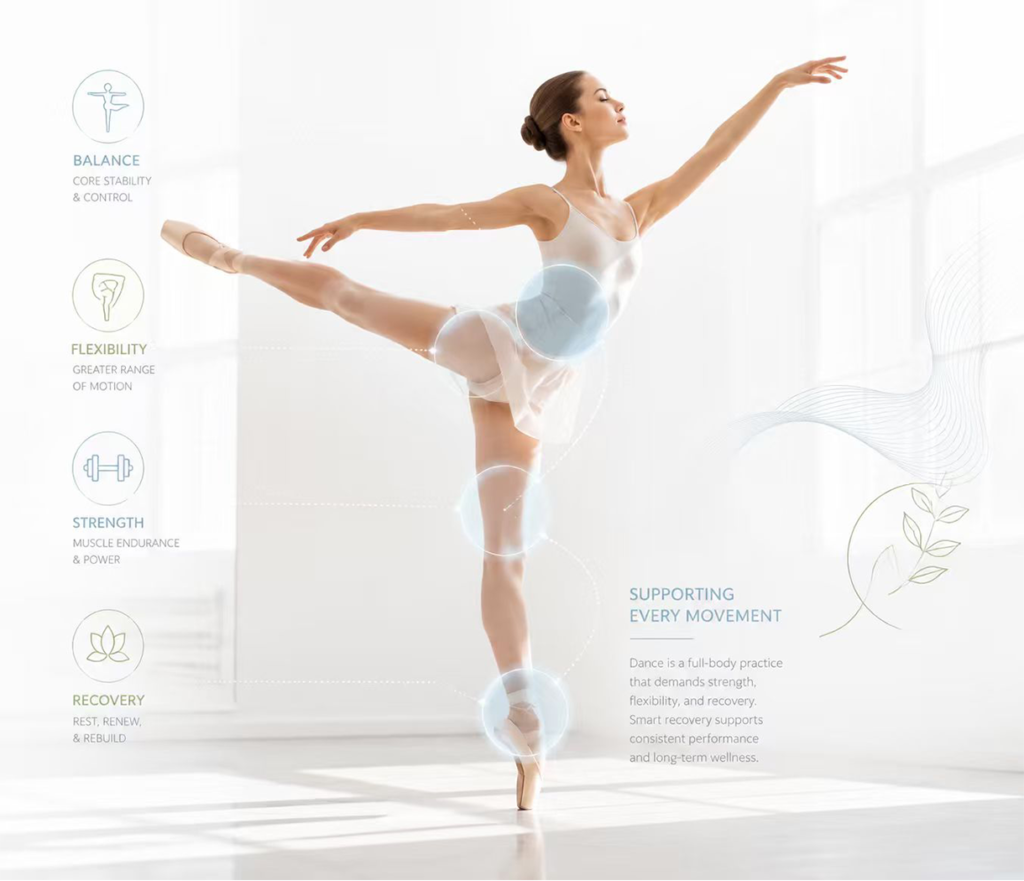
3. CO₂ Cryotherapy Applications in Dance Recovery Routines
As dance continues to evolve as both an art form and athletic discipline, recovery technology has become an important topic among performers. CO₂ Cryotherapy represents one of the modern approaches used to support muscle comfort and movement preparation.
3.1 Supporting Lower Body Recovery After Dance Training
The lower body performs a major role in almost every dance style. Feet, ankles, calves, and knees absorb repeated impact during jumps, turns, and controlled landing movements.
Localized CO₂ Cryotherapy can be applied to specific lower-body areas after training sessions as part of a personal recovery routine. Many dancers focus on areas that experience repeated mechanical stress, especially after intense rehearsal days.
By including targeted cold therapy alongside stretching, mobility exercises, and proper rest, dancers can create a more complete recovery approach.
3.2 Supporting Joint Flexibility and Movement Comfort
Flexibility is one of the defining characteristics of dance performance. Maintaining comfortable joint movement is important for dancers who perform complex positions and extended ranges of motion.
Cold therapy is often discussed within sports recovery because it may influence sensations related to muscle tightness and temporary discomfort after physical activity.
For dancers, CO₂ Cryotherapy may be considered as a supportive tool to complement mobility routines and help maintain comfortable movement patterns during demanding training periods.
3.3 CO₂ Cryotherapy for Different Types of Dancers
Different dance disciplines create different physical demands. A ballet dancer may focus more on foot and ankle recovery, while a hip-hop performer may pay closer attention to knees, hips, and lower-body muscles.
Contemporary dancers often combine strength, flexibility, and floor-based movements, creating unique recovery requirements.
Because CO₂ Cryotherapy allows localized application, dancers can consider using it based on their specific training style and the areas that receive the greatest physical workload.
4. Benefits of Including CO₂ Cryotherapy in a Dance Wellness Routine
A modern dancer’s wellness routine usually combines multiple elements, including physical conditioning, nutrition, stretching, rest, and recovery technology. CO₂ Cryotherapy can become one supportive component within this broader approach.
4.1 Supporting Muscle Comfort After Intensive Practice
Long training sessions can create temporary muscle fatigue, especially when dancers repeatedly practice demanding movements. Recovery routines often focus on helping the body return to a comfortable state after physical exertion.
CO₂ Cryotherapy offers a targeted cold application method that allows dancers to focus on specific muscles and joints involved in training.
The goal is not to replace fundamental recovery habits but to provide an additional option that fits within a dancer’s overall wellness strategy.
4.2 Improving Recovery Convenience for Busy Performers
Dancers often manage demanding schedules that include rehearsals, classes, performances, and personal conditioning. Recovery methods that require minimal preparation can be easier to maintain consistently.
Localized CO₂ Cryotherapy can be incorporated into recovery periods before or after training, allowing dancers to focus on specific body regions rather than following a complicated process.
This convenience makes localized cryotherapy appealing for performers who need practical recovery solutions.
4.3 Combining CO₂ Cryotherapy With Professional Dance Conditioning
Although recovery technology continues to develop, dancers benefit most from a balanced approach. Strength training, flexibility exercises, proper technique, and professional guidance remain important parts of maintaining physical performance.
CO₂ Cryotherapy works best as a complementary wellness method that supports a dancer’s existing training routine.
5. The Future of CO₂ Cryotherapy in Dance and Performance Wellness
As sports science and wellness technology continue to develop, dancers are exploring new approaches that support their physical preparation and recovery habits. CO₂ Cryotherapy represents one of the technologies gaining attention because of its targeted application, convenience, and connection with modern recovery practices.
5.1 The Growing Role of Localized Cryotherapy in Performance Recovery
Recovery has become an essential part of many athletic and artistic disciplines. Dancers, similar to other high-performance individuals, increasingly focus on maintaining physical readiness throughout demanding schedules.
Localized cryotherapy provides a focused approach compared with traditional cooling methods. By targeting specific areas, CO₂ Cryotherapy allows users to include cold stimulation as part of a personalized wellness routine.
Future developments in cryotherapy technology may continue to improve usability, precision, and accessibility, making localized cold therapy a more common option within performance environments.
5.2 Combining Modern Recovery Technology With Dance Health Management
Dance performance depends on a combination of physical strength, mobility, technique, and recovery awareness. While technologies such as CO₂ Cryotherapy can provide additional support, they work best when combined with established health practices.
Maintaining proper training balance, listening to physical feedback, and working with qualified professionals remain important factors for dancers at every level.
By combining traditional conditioning methods with modern recovery tools, dancers can create a more comprehensive approach to supporting long-term movement ability and physical wellness.
FAQ
What is CO₂ Cryotherapy for dancers?
CO₂ Cryotherapy is a localized cold therapy method that uses carbon dioxide gas to create controlled cooling on targeted body areas. Dancers may use it as part of a recovery routine after training or performance activities.
How can CO₂ Cryotherapy support dancers?
CO₂ Cryotherapy may help support muscle comfort and relaxation after physical activity. Many dancers include it as one part of a broader recovery routine that also includes stretching, conditioning, and rest.
Which areas can dancers apply CO₂ Cryotherapy to?
Dancers commonly focus on areas that experience frequent training stress, including ankles, feet, calves, knees, hips, and shoulders.
How is CO₂ Cryotherapy different from traditional ice therapy?
CO₂ Cryotherapy uses controlled carbon dioxide cooling technology, while traditional ice therapy typically involves direct application of cold materials. Localized cryotherapy allows targeted application to specific areas.
Can CO₂ Cryotherapy improve dance flexibility?
CO₂ Cryotherapy does not directly increase flexibility. However, it may support comfort and relaxation as part of a routine that includes stretching and mobility exercises.
Is CO₂ Cryotherapy suitable for all dancers?
Individual responses may vary. Dancers should consider their personal health conditions and seek professional guidance when they have specific concerns.
Conclusion
CO₂ Cryotherapy is becoming an increasingly recognized recovery technology among active individuals who want to support muscle comfort, mobility, and physical wellness. For dancers, whose bodies experience repeated movement demands and high levels of training intensity, localized cold therapy offers a convenient approach that can complement traditional recovery habits. By focusing on targeted areas such as the feet, ankles, knees, hips, and shoulders, CO₂ Cryotherapy can be integrated into a dancer’s overall wellness routine. While it should be considered a supportive method rather than a replacement for professional care or proper training practices, this advanced cold therapy approach provides dancers with another option for maintaining movement comfort and recovery balance.
References
Cryotherapy in Sports Medicine: Applications and Physiological Responses
https://pubmed.ncbi.nlm.nih.gov/34901847
The Effects of Cold Therapy on Exercise Recovery and Muscle Function
https://pubmed.ncbi.nlm.nih.gov/31462023
Whole-Body Cryotherapy and Local Cryotherapy in Sports Recovery: Current Perspectives
https://pubmed.ncbi.nlm.nih.gov/30621794
Cold Therapy and Its Role in Managing Exercise-Induced Muscle Stress
https://pubmed.ncbi.nlm.nih.gov/29564973
Cryotherapy Techniques in Physical Rehabilitation and Sports Performance