Введение
Wheelchair athletes rely heavily on their upper limbs for mobility, stability, and athletic performance. Daily propulsion of the wheelchair, repetitive pushing actions, and strength training all impose intense mechanical loads on the shoulder, elbow, and wrist. Over time, these stresses can lead to persistent fatigue, chronic inflammation, tendonitis, and joint pain, which compromise performance and quality of life. Traditional recovery protocols—such as rest, massage, or ice packs—provide limited relief and may not sufficiently support long‑term tissue repair. In recent years, CO₂ Cryotherapy has emerged as a cutting‑edge, non‑invasive modality that targets inflammation, stimulates circulation, and accelerates tissue healing at the cellular level, making it especially appealing for athletes dealing with chronic upper limb strain and overuse injuries.
1. Understanding Upper Limb Strain in Wheelchair Athletes
1.1 Common Causes of Upper Limb Injuries
Upper limb injuries in wheelchair athletes typically arise from repetitive stress and the high physical demands of sport and daily mobility. Shoulder impingement, tendonitis, bursitis, and rotator cuff irritation are frequent consequences of repeated propulsion actions and forceful arm movements. Wheelchair propulsion involves cyclic shoulder internal rotation and elbow extension under load, creating significant strain on soft tissues. The cumulative effect of thousands of pushes per day can lead to microscopic tears in tendons and increased friction in joints. Over time, these factors contribute to chronic pain, reduced range of motion, and functional decline. Recognizing these mechanisms is essential to understanding how targeted recovery modalities like CO₂ Cryotherapy can intervene effectively.
1.2 Symptoms and Long-Term Effects
Symptoms of upper limb strain in wheelchair athletes often begin subtly but can escalate without proper management. Early signs include mild discomfort during propulsion, soreness after training, and localized swelling around the shoulder or elbow. If left untreated, these signs can progress into chronic conditions characterized by persistent pain, stiffness, and reduced strength. Long‑term effects may include tendon degeneration, joint capsule thickening, and compensatory movement patterns that further exacerbate injury risk. This chronic discomfort not only affects athletic performance but can also interfere with daily life tasks like transfers and self‑care. As such, effective recovery strategies are critical for maintaining mobility and preventing long‑term disability.
2. What is CO₂ Криотерапия?
2.1 Definition and Mechanism
CO₂ Cryotherapy, also referred to as carbon dioxide cryotherapy, is a medical‑grade cold therapy that delivers pressurized CO₂ gas at cryogenic temperatures (around −78°C) directly to targeted tissues. Unlike traditional ice packs, which cool only superficially, CO₂ Cryotherapy induces a rapid thermal shock response, triggering both immediate vasoconstriction followed by reactive vasodilation. This vascular response enhances microcirculation, improves oxygen delivery, and helps eliminate metabolic waste products around the injured area. In addition, the extreme cold temporarily blocks nociceptors—nerve endings responsible for pain perception—offering instant analgesia. At the cellular level, CO₂ exposure modulates inflammatory mediators, reducing pro‑inflammatory cytokines and promoting anti‑inflammatory pathways, which supports tissue repair and recovery.
2.2 Benefits Over Traditional Methods
Compared to common recovery techniques like ice packs, rest, or compression alone, CO₂ Cryotherapy provides deeper and more consistent cooling in a controlled manner. Whereas ice loses thermal efficiency over time and can only penetrate a few millimeters into tissue, CO₂ gas achieves more uniform cooling and triggers systemic recovery responses beyond the surface. CO₂ Cryotherapy is non‑invasive, requires no anesthesia or medication, and can be precisely administered to specific anatomical regions like shoulder complexes and forearms. It also offers rapid results—many athletes report noticeable improvements in pain and discomfort within minutes—making it ideal for frequent use during training cycles or competitive seasons.
3. CO₂ Cryotherapy for Upper Limb Recovery
3.1 Reducing Inflammation and Pain
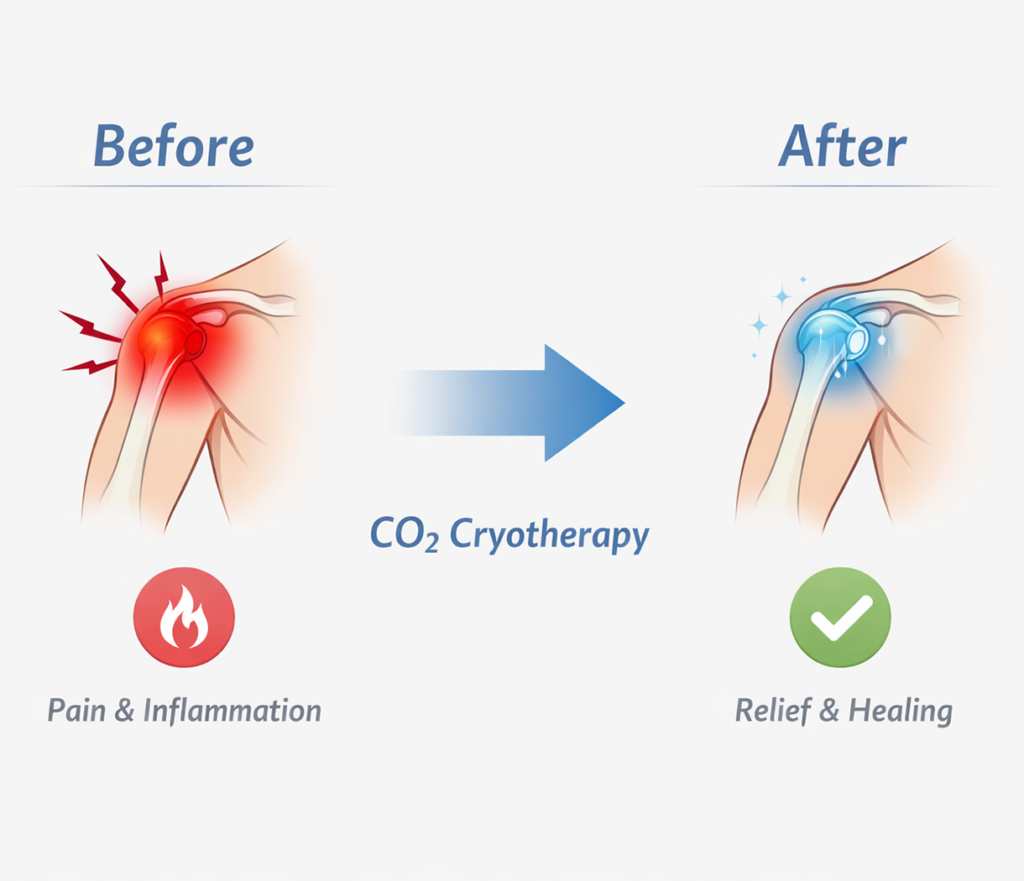
Inflammation is a core driver of pain and dysfunction in upper limb overuse injuries. In wheelchair athletes, repeated loading of the shoulder and elbow joints leads to persistent release of pro‑inflammatory mediators, contributing to pain, swelling, and reduced tissue mobility. CO₂ Cryotherapy addresses this by inducing vasoconstriction followed by vasodilation, which helps flush out inflammatory cytokines while improving nutrient and oxygen delivery to damaged tissues. This enhanced circulation supports the body’s natural healing processes, shortening the inflammatory phase and reducing pain levels. By directly affecting both vascular and nervous systems, CO₂ Cryotherapy offers both immediate and sustained relief without the need for pharmaceuticals, making it suitable for athletes seeking drug‑free recovery options.
3.2 Accelerating Muscle Recovery
In addition to inflammation control, CO₂ Cryotherapy has been shown to accelerate muscle recovery by improving metabolic waste removal and oxygen supply post‑exercise or injury. Enhanced microcirculation promotes faster clearance of lactic acid and other metabolites that accumulate during strenuous activity, thereby reducing delayed onset muscle soreness (DOMS). Increased tissue oxygenation supports mitochondrial function within muscle cells, aiding in cellular repair and reducing fatigue. For wheelchair athletes, this means fewer downtime days between training sessions and more consistent performance outputs. By stimulating both vascular and cellular regeneration pathways, CO₂ Cryotherapy facilitates a more efficient recovery process that complements structured rehabilitation.
3.3 Enhancing Long-Term Performance
Regular use of CO₂ Cryotherapy can support long‑term upper limb health by promoting collagen synthesis and improving tissue integrity in tendons and ligaments. Collagen, a major component of connective tissues, is crucial for resisting tensile forces and maintaining joint stability. CO₂ Cryotherapy has been linked to increased fibroblast activity—the cells responsible for producing collagen—enhancing tissue strength and elasticity over time. For athletes with a history of overuse injuries, this can translate into reduced recurrence rates and better resilience to intense training loads. Moreover, improved joint mobility and reduced muscle tension can contribute to greater functional capacity and sustained athletic performance across competitive seasons.
4. Integrating CO₂ Cryotherapy into Athlete Recovery Plans
4.1 Recommended Frequency and Duration
To achieve optimal recovery outcomes, CO₂ Cryotherapy protocols should be tailored to the athlete’s condition, training load, and recovery timeline. For acute overuse symptoms or intense training phases, sessions of CO₂ Cryotherapy can be applied multiple times per week, focusing on the affected shoulder, elbow, or forearm regions. Each session is typically brief—ranging from 10 to 30 seconds per site—yet delivers potent therapeutic effects due to the cryogenic temperature and rapid cooling action. Persistent or chronic injuries might benefit from a more structured schedule, such as 3–5 sessions per week initially, followed by maintenance treatments as symptoms improve. Collaborating with a certified sports medicine professional ensures that CO₂ Cryotherapy is integrated safely and effectively into broader rehabilitation plans.
4.2 Complementary Recovery Strategies
While CO₂ Cryotherapy offers powerful benefits on its own, combining it with other recovery modalities can amplify results. Integrating range‑of‑motion exercises, strength training, and manual therapy—such as massage or myofascial release—supports comprehensive rehabilitation. For example, CO₂ Cryotherapy can precede stretching sessions to relax tissues and enhance flexibility, making subsequent therapeutic exercises more productive. Nutritional support and adequate sleep also play key roles in tissue repair and inflammation control. By creating a multimodal recovery strategy, wheelchair athletes can address both the symptomatic and functional aspects of upper limb fatigue and injury, ensuring a robust and sustainable performance trajectory.
ЧАСТО ЗАДАВАЕМЫЕ ВОПРОСЫ
Q1: Is CO₂ Cryotherapy safe for wheelchair athletes?
Yes, CO₂ Cryotherapy is a non‑invasive and drug‑free treatment that is generally safe when administered by trained professionals. It avoids typical medication side effects and doesn’t require needles or surgical intervention. However, individuals with certain conditions (like cold urticaria or circulatory impairment) should consult a clinician before treatment.
Q2: How soon can I expect results?
Many athletes experience immediate relief in pain and muscle tension following CO₂ Cryotherapy sessions. Noticeable improvements in inflammation and recovery often appear within a few treatments, though cumulative benefits occur with repeated sessions.
Q3: Can CO₂ Cryotherapy replace physical therapy?
CO₂ Cryotherapy complements but does not replace structured physical therapy. It works best as part of a comprehensive rehabilitation program, enhancing tissue healing and reducing inflammation while physical therapy builds strength and functional mobility.
Q4: How does CO₂ Cryotherapy compare to ice packs?
CO₂ Cryotherapy offers more consistent and deeper cooling than ice packs, which only reduce surface temperature and lose effectiveness quickly. The focused thermal shock from CO₂ induces vascular responses that improve circulation and accelerate healing beyond what traditional ice therapy can achieve.
Q5: Is this therapy suitable for post‑surgical recovery?
Yes, CO₂ Cryotherapy is increasingly used to reduce swelling and support tissue repair after shoulder or upper limb surgeries. Its ability to improve circulation and minimize inflammation supports faster functional recovery when paired with standard post‑operative care.
Заключение
For wheelchair athletes, upper limb health is essential to performance and everyday functioning. Chronic strain and inflammation from repetitive propulsion and intense training can erode tissue integrity and limit mobility. CO₂ Cryotherapy provides a scientifically supported, non‑invasive approach to reduce inflammation, alleviate pain, and accelerate muscle and connective tissue recovery. When integrated into comprehensive rehabilitation plans—including physical therapy, stretching, and proper nutrition—CO₂ Cryotherapy enhances recovery efficiency, supports long‑term tissue resilience, and helps athletes maintain peak performance. As research and clinical use expand, this modality is poised to play an increasingly important role in sports medicine and adaptive athlete care.
Ссылки
“CO₂ Cryotherapy for Wheelchair Athlete Upper Limb Recovery.” LocalCryotherapy.com,
https://www.localcryotherapy.com/it/co2-cryotherapy-wheelchair-upper-limb-recovery.html
“Why CO₂ Takes Sports Medicine to the Next Level.” LocalCryotherapy.com,
https://www.localcryotherapy.com/why-co%E2%82%82-takes-sports-medicine-to-the-next-level.html
Hirata, K., et al. Cryotherapy with Carbon Dioxide Hydrate on Muscle Blood Circulation and Fatigue Recovery, 2024.
https://www.tandfonline.com/doi/full/10.1080/02640414.2024.2423135
“CO₂ Cryotherapy Machine Benefits and Mechanism.” LocalCryotherapy.com,
https://www.localcryotherapy.com/cryotherapy-machine-product-list/cryotherapy-machine-for-human
Alharbi, S. A., The Effectiveness of Cryotherapy in the Management of Sports Injuries, Scandinavian Journal of Medicine & Science in Sports, 2020.