
Introdução
Post-workout recovery has become an essential part of modern fitness training. High-intensity workouts, strength training, and endurance exercises place significant stress on muscles, often leading to fatigue, inflammation, and delayed onset muscle soreness (DOMS). Without proper recovery strategies, these physiological stresses may reduce performance and increase the risk of injury. In recent years, CO₂ cryotherapy, a localized cold therapy that uses high-pressure carbon dioxide gas, has gained popularity in sports recovery and rehabilitation environments. Many professional trainers now incorporate CO₂ cryotherapy into recovery programs because it can rapidly cool targeted tissues, stimulate vascular responses, and help reduce inflammation. As a non-invasive and efficient therapy, it is increasingly used to support muscle recovery, improve circulation, and maintain consistent training performance.
1. The Importance of Post-Workout Recovery in Fitness Training
1.1 What Happens to Muscles After Intense Training
During intense exercise such as resistance training or high-intensity interval workouts, muscle fibers experience mechanical stress that leads to microscopic muscle damage, commonly known as microtears. This damage triggers an inflammatory response as the body begins repairing the affected tissues. Immune cells migrate to the damaged area, increasing blood flow and activating cellular repair mechanisms.
Although this process is necessary for muscle growth and adaptation, it can also cause soreness, stiffness, and temporary strength loss. In addition, metabolic by-products accumulate in muscle tissues during intense activity, contributing to fatigue and discomfort.
Proper recovery allows the body to repair damaged muscle fibers and restore physiological balance. Without adequate recovery, repeated physical stress can lead to prolonged inflammation and decreased performance. Therefore, recovery strategies play an important role in maintaining both training effectiveness and long-term muscular health.
1.2 Common Post-Workout Problems for Athletes and Gym Clients
After strenuous workouts, many athletes and fitness enthusiasts experience delayed onset muscle soreness (DOMS). This condition usually appears 12–48 hours after exercise and is characterized by muscle stiffness, tenderness, and reduced range of motion. DOMS can temporarily limit physical performance and make daily activities uncomfortable.
Another common issue involves localized inflammation in muscles and connective tissues. Repetitive movements and heavy loads can strain tendons and joints, potentially increasing the risk of overuse injuries. If recovery is insufficient, these minor stresses may accumulate over time and develop into chronic discomfort.
Athletes may also experience neuromuscular fatigue, where the nervous system remains under stress after intense training. This condition can reduce coordination and reaction speed. Because of these challenges, professional trainers emphasize structured recovery techniques to help athletes maintain performance and reduce injury risk.
1.3 Why Recovery Strategies Are Essential for Performance
Recovery strategies allow the body to repair tissues, replenish energy stores, and restore optimal physiological function. During recovery, muscle protein synthesis increases, helping rebuild stronger muscle fibers. At the same time, glycogen stores are replenished to prepare the body for future physical activity.
Professional trainers often combine several recovery methods, including stretching, foam rolling, massage therapy, and cold therapy. Each method targets different aspects of recovery, such as muscle relaxation or circulation improvement.
Cold therapy is particularly popular because it can rapidly influence vascular and inflammatory responses. Exposure to cold temperatures causes temporary vasoconstriction, followed by vasodilation when the body rewarms. This process helps remove metabolic waste and deliver oxygen and nutrients to muscle tissues. As a result, cryotherapy has become an important tool in modern sports recovery programs.
2. What Is CO₂ Cryotherapy and How Does It Work
2.1 Understanding Localized CO₂ Cryotherapy Technology
CO₂ cryotherapy is a form of localized cryotherapy that uses high-pressure carbon dioxide gas to create extremely cold temperatures. When pressurized CO₂ is released through a specialized device, it rapidly expands and produces a cold gas stream with temperatures reaching approximately −78°C (−108°F).
This cold gas is applied to specific areas of the body for a short period, typically two to five minutes. The rapid cooling effect creates a strong thermal stimulus that activates temperature receptors in the skin.
Unlike traditional ice therapy, which cools tissues gradually, CO₂ cryotherapy produces a rapid drop in skin temperature. This sudden cooling can trigger physiological responses in the vascular and nervous systems, making the therapy particularly effective for targeted recovery treatments.
2.2 The Physiological Effects of Rapid Skin Cooling
Rapid skin cooling initiates several physiological responses within the body. The most immediate effect is vasoconstriction, where blood vessels temporarily narrow in response to cold exposure. This reduces blood flow to the treated area and helps limit inflammatory processes.
After the cold stimulus ends, the body reacts with reactive vasodilation, increasing circulation to restore normal tissue temperature. This rebound circulation helps transport oxygen and nutrients to muscle tissues while removing metabolic waste products.
Cold exposure also influences the nervous system by reducing nerve conduction velocity. Slower nerve signal transmission can temporarily decrease pain perception, providing relief from post-exercise discomfort. In addition, cryotherapy may stimulate endorphin release, contributing to improved comfort and relaxation after intense workouts.
2.3 Why Trainers Prefer Targeted Cryotherapy
Professional trainers prefer localized cryotherapy because it allows them to focus on specific muscle groups that experience the most stress during exercise. Areas such as the quadriceps, hamstrings, shoulders, and lower back are commonly treated after intense workouts.
Another advantage is efficiency. Traditional recovery techniques like ice baths can require long exposure times and may be uncomfortable. CO₂ cryotherapy sessions are much shorter, often lasting only a few minutes while still producing significant cooling effects.
This efficiency makes cryotherapy easy to integrate into busy training schedules. Trainers can apply the treatment immediately after workouts, helping athletes begin the recovery process without disrupting their routines.
3. Benefits of CO₂ Cryotherapy for Post-Workout Recovery
3.1 Reducing Muscle Soreness and Inflammation
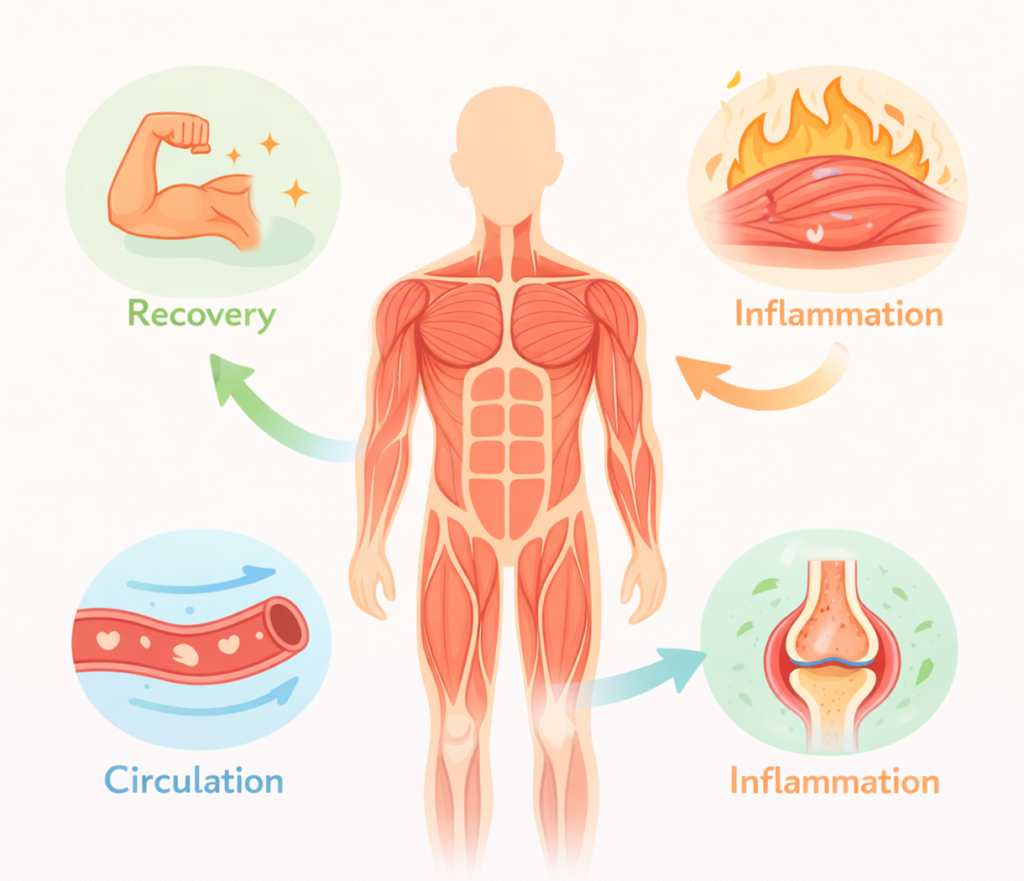
One of the most recognized benefits of CO₂ cryotherapy is its ability to reduce muscle soreness and inflammation after intense exercise. The rapid cooling effect helps slow inflammatory processes within muscle tissues, reducing swelling and discomfort.
By limiting inflammation, cryotherapy may help athletes recover faster from delayed onset muscle soreness. Reduced soreness can improve mobility and make it easier to continue training without prolonged discomfort.
Cold exposure also affects nerve activity, temporarily reducing pain signal transmission. This analgesic effect allows athletes to feel more comfortable during the recovery phase and may improve overall training consistency.
3.2 Accelerating Muscle Recovery and Tissue Repair
Cryotherapy may also support the biological processes responsible for tissue repair. After exercise, the body activates cellular mechanisms that rebuild damaged muscle fibers. These processes involve satellite cell activation and increased protein synthesis.
Improved circulation following cryotherapy treatments helps deliver oxygen and nutrients necessary for cellular regeneration. Amino acids, growth factors, and other molecules involved in tissue repair can reach damaged tissues more efficiently.
Some research suggests that cryotherapy may also help regulate oxidative stress levels in muscle cells. Controlling oxidative stress can support healthier cellular environments and contribute to faster recovery between workouts.
3.3 Improving Circulation and Oxygen Delivery
Another important benefit of cryotherapy is its impact on circulation. The alternating phases of vasoconstriction and vasodilation stimulate blood flow, helping improve oxygen delivery to muscle tissues.
Efficient circulation assists in removing metabolic by-products produced during exercise. These substances can contribute to fatigue and muscle discomfort if they accumulate in tissues.
Improved oxygen delivery also supports mitochondrial function, allowing muscle cells to produce adenosine triphosphate (ATP) more efficiently. ATP is the primary energy source for muscle contraction, so enhanced cellular energy production supports better performance and recovery.
4. How Fitness Professionals Integrate CO₂ Cryotherapy into Training Programs
4.1 Post-Workout Recovery Sessions
Many trainers incorporate CO₂ cryotherapy immediately after workouts to support recovery. During this period, muscles are still experiencing increased metabolic activity and inflammation.
Applying cryotherapy during this window may help control inflammatory responses and reduce soreness before it intensifies. The treatment is usually directed at muscle groups that were heavily involved in the workout.
Because sessions are brief, athletes can complete cryotherapy treatments quickly before continuing with other recovery activities such as stretching or hydration.
4.2 Targeting High-Stress Muscle Groups
Certain muscle groups experience higher levels of stress depending on the type of exercise performed. Runners often place heavy strain on their calves and hamstrings, while weightlifters may stress their shoulders and lower back.
Targeted cryotherapy allows trainers to focus treatment on these areas, providing localized recovery support where it is most needed.
This precision makes cryotherapy particularly useful for athletes experiencing mild strains or muscle tightness after intense training sessions.
4.3 Combining Cryotherapy with Other Recovery Methods
Cryotherapy is often combined with other recovery techniques to enhance overall results. Sports massage can help reduce muscle tension, while mobility exercises promote joint flexibility.
Active recovery activities such as light cycling or swimming also support circulation without adding excessive physical stress.
Proper nutrition and hydration further support muscle recovery by providing essential nutrients and restoring energy levels. When combined with these strategies, cryotherapy becomes part of a comprehensive recovery approach used by many fitness professionals.
5. Who Can Benefit Most from CO₂ Cryotherapy
5.1 Professional Athletes
Professional athletes frequently train at high intensities and require effective recovery tools. Cryotherapy allows them to recover more quickly between training sessions and competitions.
Sports teams and performance centers often include cryotherapy in their recovery facilities to help athletes maintain peak physical condition.
5.2 Fitness Enthusiasts and Gym Members
Recreational athletes and gym members can also benefit from cryotherapy. Individuals who perform intense workouts several times per week often experience muscle soreness and fatigue.
Cryotherapy may help manage these symptoms and support consistent training routines.
5.3 Individuals with Chronic Muscle Fatigue
People who experience persistent muscle fatigue from repetitive work or intensive exercise may also benefit from localized cryotherapy.
The therapy can help relieve muscle tension and reduce inflammation associated with chronic overuse.
6. Safety and Considerations When Using CO₂ Cryotherapy
6.1 Treatment Duration and Protocols
Most cryotherapy treatments last between two and five minutes per targeted area. Short exposure times allow effective cooling while maintaining safety.
6.2 Professional Supervision and Equipment
Cryotherapy devices should always be operated by trained professionals who understand proper application techniques and safety protocols.
6.3 When Cryotherapy May Not Be Recommended
Individuals with severe circulatory disorders, cold sensitivity conditions, or certain cardiovascular diseases should consult a healthcare professional before undergoing cryotherapy.
PERGUNTAS FREQUENTES
Is CO₂ cryotherapy safe?
When performed by trained professionals using proper equipment, the treatment is generally considered safe.
How long does a session take?
Most localized cryotherapy sessions last only a few minutes.
When should it be used after exercise?
Many trainers recommend using cryotherapy shortly after workouts to help reduce inflammation.
Does cryotherapy hurt?
The treatment creates a strong cooling sensation but is usually well tolerated.
How often can it be used?
Frequency depends on training intensity and individual recovery needs.
Conclusão
CO₂ cryotherapy has become an increasingly popular recovery method in modern fitness training. By rapidly cooling targeted tissues, it can help reduce inflammation, relieve muscle soreness, and support physiological recovery processes. Many professional trainers incorporate cryotherapy into post-workout routines because it is efficient, non-invasive, and easy to integrate into existing training programs. When combined with proper nutrition, hydration, and active recovery strategies, CO₂ cryotherapy can play an important role in helping athletes and fitness enthusiasts maintain consistent performance and reduce the risk of injury.
Referências
Cryotherapy in Sports Medicine and Athletic Recovery
https://www.ncbi.nlm.nih.gov/pmc/articles/PMC6518105
The Effects of Cryotherapy on Muscle Recovery and Performance
https://www.ncbi.nlm.nih.gov/pmc/articles/PMC5932411
Whole-Body Cryotherapy: Clinical Applications and Benefits
https://www.ncbi.nlm.nih.gov/pmc/articles/PMC5411446
Cryotherapy and Inflammation Reduction in Sports Injuries
https://www.ncbi.nlm.nih.gov/pmc/articles/PMC4049052
Local Cryotherapy and Pain Management Mechanisms