
Introduzione
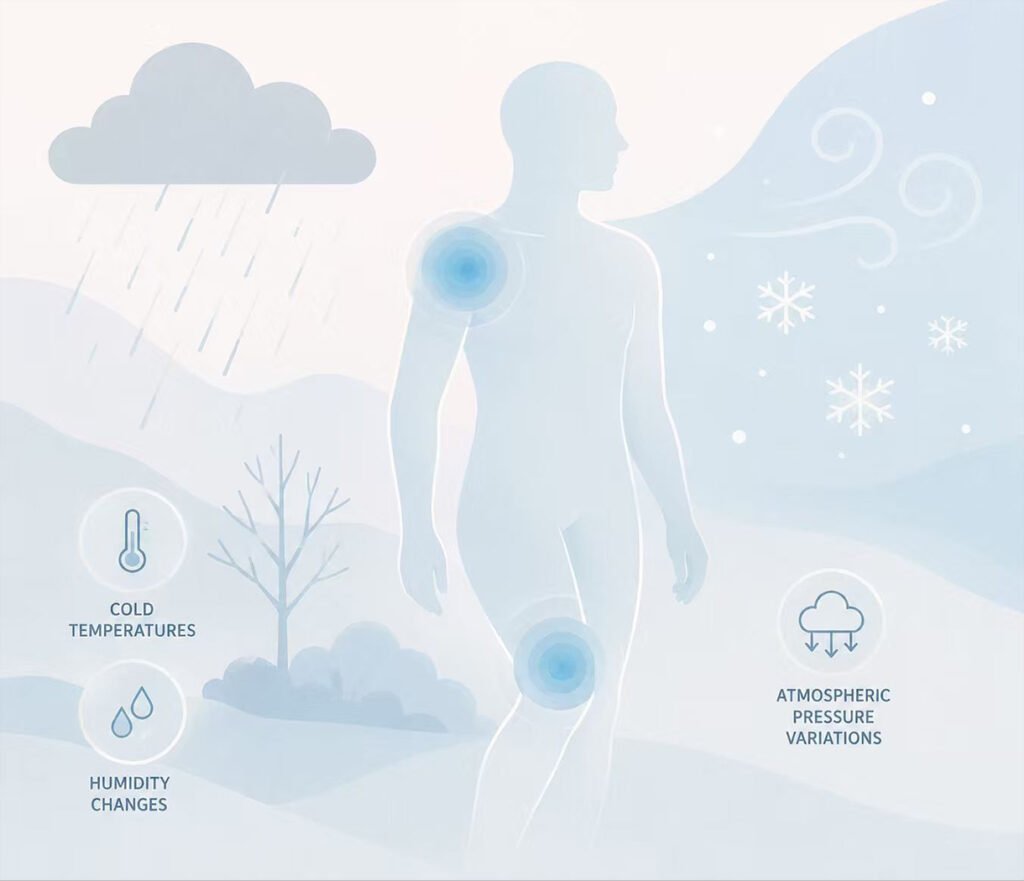
Many people notice that joint stiffness and general musculoskeletal discomfort become more pronounced when weather conditions shift, especially during colder temperatures or periods of high humidity. These changes are often discussed in relation to atmospheric pressure variations and their potential influence on joint sensitivity and mobility. In modern wellness and pain management discussions, localized CO₂ cryotherapy is frequently referenced as a non-invasive approach associated with supporting comfort in areas affected by stiffness and movement-related discomfort, particularly within broader musculoskeletal care concepts.
1. Weather Influence on Joint Sensitivity
1.1 How Temperature Changes Affect Physical Comfort
Temperature fluctuations can influence how the body perceives joint and muscle comfort. When the environment becomes colder, individuals may experience increased stiffness or reduced flexibility, particularly in commonly active joints such as knees, shoulders, and hands. These sensations often link to changes in tissue responsiveness and circulation behavior. While experiences vary, experts widely recognize environmental temperature as a contributing factor in perceived musculoskeletal discomfort.
1.2 Atmospheric Pressure and Joint Response
Shifts in atmospheric pressure are often discussed in relation to joint sensitivity. Some individuals report that changes in weather pressure correspond with increased joint awareness or stiffness. Although the exact biological mechanisms are still widely explored, this pattern is commonly observed in individuals with prior joint strain or chronic musculoskeletal conditions. This relationship highlights the complex interaction between environmental factors and physical perception.
1.3 Individual Sensitivity Differences
Not everyone experiences weather-related discomfort in the same way. Sensitivity can vary depending on age, activity level, previous injuries, and general joint health. Individuals with repetitive joint usage or reduced mobility may notice these changes more clearly. This variability explains why weather-related joint discomfort is considered a highly individualized experience rather than a universal condition.
2. CO₂ Cryotherapy and Localized Cold Applications
2.1 Overview of CO₂ Cryotherapy in Wellness Contexts
CO₂ cryotherapy is a localized cold application method that experts commonly discuss in non-invasive wellness and recovery settings. It involves targeted cooling of specific areas and often supports comfort in regions experiencing stiffness or inflammation-related sensations. Within modern musculoskeletal care concepts, practitioners position it as part of cold-based supportive approaches.
2.2 Why Localized Treatment Matters
Localized applications allow targeted attention to specific joints or muscle groups without affecting the entire body. This precision makes CO₂ cryotherapy particularly relevant in discussions around area-specific discomfort. In wellness routines, such approaches are often combined with mobility practices and recovery strategies to support overall physical comfort.
2.3 Integration with Recovery-Oriented Routines
CO₂ cryotherapy is frequently included in broader recovery frameworks that focus on maintaining movement quality and reducing localized discomfort perception. These routines often combine physical activity, stretching, and supportive modalities that aim to improve daily functional comfort and mobility consistency.
3. Joint Stiffness and Lifestyle Factors
3.1 Repetitive Movement and Joint Load
Daily repetitive movements can influence long-term joint sensitivity. Activities involving consistent joint loading may contribute to gradual stiffness over time. When combined with environmental changes, these patterns can make discomfort more noticeable during colder or damp conditions.
3.2 Sedentary Behavior and Reduced Circulation
Extended periods of inactivity may contribute to reduced joint mobility and circulation. When movement decreases, joints may feel stiffer, particularly after prolonged sitting. This effect is often more noticeable during seasonal changes when physical activity levels naturally decline.
3.3 Occupational Strain and Micro-Stress Accumulation
Certain occupations that involve repetitive micro-movements or prolonged static postures may increase joint sensitivity over time. This includes jobs requiring fine motor control or long hours of standing or sitting. These micro-stress patterns may accumulate and contribute to heightened awareness of joint discomfort during environmental changes.
4. Modern Approaches to Joint Comfort Management
4.1 Shift Toward Non-Invasive Support Methods
Modern wellness approaches increasingly emphasize non-invasive methods that support natural body function. Instead of focusing on intensive interventions, individuals are exploring supportive strategies that integrate into daily routines. These include cold-based applications, mobility practices, and recovery-oriented lifestyle adjustments.
4.2 Role of Localized Cryotherapy in Support Strategies
Experts often discuss localized CO₂ cryotherapy as part of broader comfort-support routines. Users typically combine it with other wellness practices aimed at maintaining mobility and reducing discomfort perception in specific areas of the body. This reflects a growing interest in targeted, non-invasive approaches.
4.3 Combining Mobility and Recovery Practices
Joint comfort strategies often include a combination of movement exercises and recovery-based approaches. Regular mobility work helps maintain flexibility, while recovery methods support overall physical balance. This combined approach is increasingly emphasized in modern wellness discussions.
5. Environmental Awareness and Long-Term Joint Health
5.1 Recognizing Weather-Related Patterns
Understanding how the body responds to environmental changes can help individuals better manage daily comfort levels. Recognizing patterns in stiffness or discomfort during certain weather conditions allows for more proactive adjustments in activity and recovery habits.
5.2 Building Consistent Movement Habits
Regular physical activity plays a key role in maintaining joint flexibility and comfort. Consistent movement helps support circulation and joint function, reducing the likelihood of stiffness becoming more noticeable during environmental changes.
5.3 Personalized Comfort Management Strategies
Long-term joint wellness often depends on personalized routines that consider lifestyle, activity level, and environmental sensitivity. Practitioners sometimes incorporate non-invasive approaches such as localized CO₂ cryotherapy into these broader strategies to support individualized comfort needs.
FAQ
Why do joints feel more stiff in cold weather?
Lower temperatures may influence circulation and tissue flexibility, making stiffness more noticeable.
Does atmospheric pressure really affect joints?
Some individuals report increased sensitivity during pressure changes, especially those with prior joint strain.
What is CO₂ cryotherapy used for?
It is commonly discussed as a localized cold application method in wellness and recovery contexts.
Who is more likely to feel weather-related joint discomfort?
People with previous joint stress, repetitive strain, or reduced mobility may be more sensitive.
Can lifestyle habits influence joint comfort?
Yes, regular movement and recovery-focused routines can help maintain joint flexibility and comfort.
Conclusione
Environmental conditions, lifestyle factors, and individual sensitivity together influence joint discomfort that becomes more noticeable during weather changes. As wellness approaches continue to evolve, experts increasingly discuss localized CO₂ cryotherapy within non-invasive strategies that support musculoskeletal comfort. This reflects a broader shift toward personalized, targeted, and lifestyle-integrated approaches to maintaining long-term joint health and mobility.
Riferimenti
Local Cryotherapy – CO₂ Cryotherapy Technology Overview
https://www.localcryotherapy.com/
National Library of Medicine – Joint Pain and Environmental Factors Research
https://pubmed.ncbi.nlm.nih.gov
Arthritis Foundation – Weather and Joint Pain Information
Cleveland Clinic – Joint Pain and Stiffness Overview
https://my.clevelandclinic.org
Mayo Clinic – Musculoskeletal Pain and Joint Health