Introduzione
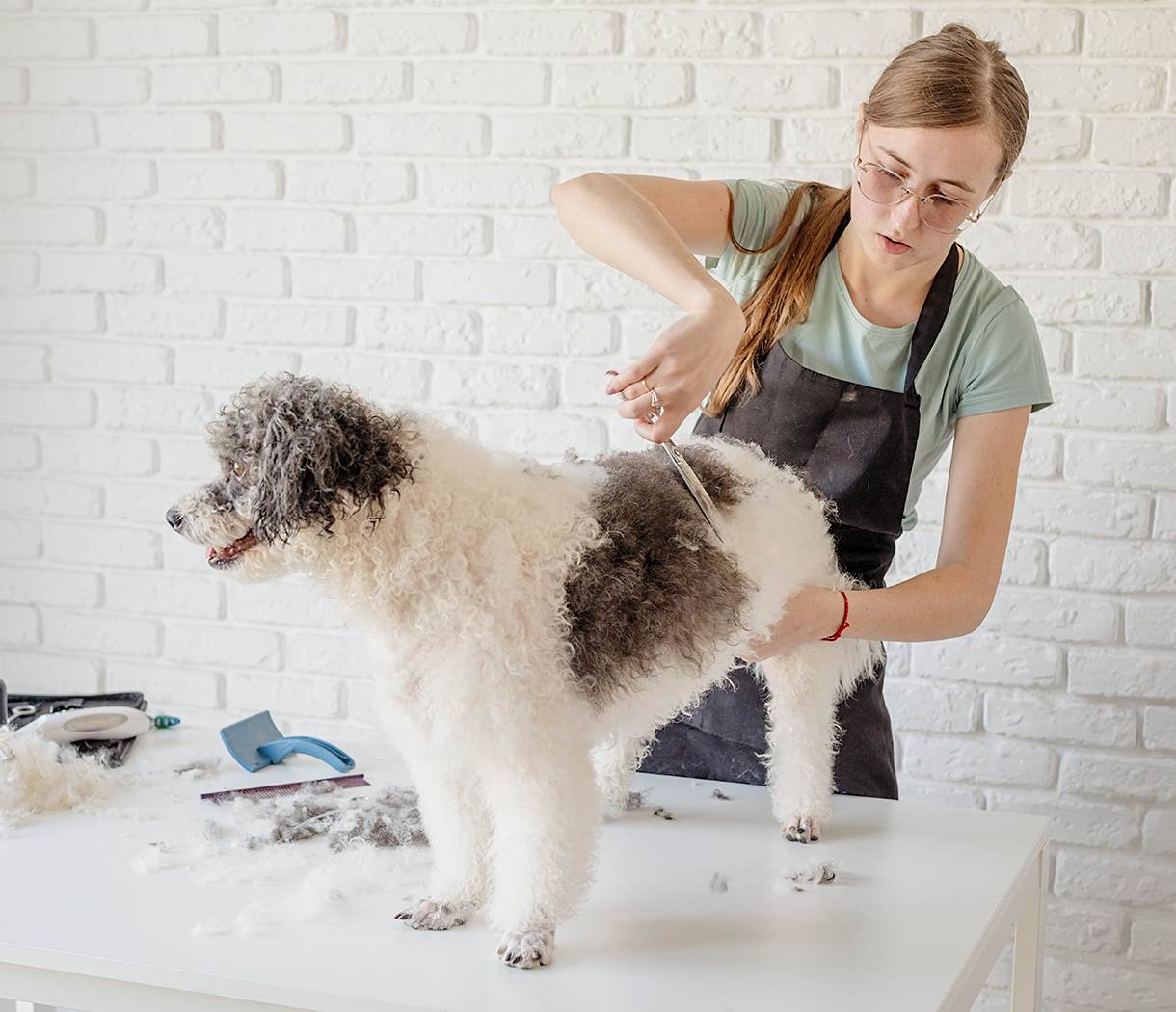
Professional pet grooming requires patience, precision, and physical endurance. From brushing and trimming to bathing and styling, groomers often repeat the same hand movements for several hours while maintaining fixed postures. Over time, repetitive motions, prolonged standing, and continuous use of grooming tools may contribute to hand fatigue, wrist tension, shoulder stiffness, and overall physical stress. CO₂ Cryotherapy, also known as carbon dioxide cryotherapy or localized cryotherapy, has gained attention as a targeted cold therapy approach that supports recovery routines for professionals who rely on their hands and upper body every day. By using rapid cooling technology, CO₂ Cryotherapy helps create a refreshing recovery experience through controlled cold stimulation and localized application.
1. Understanding Physical Challenges Faced by Professional Pet Groomers
Pet grooming is a highly skilled profession that combines animal handling, detailed styling work, and continuous physical effort. Unlike many desk-based occupations, groomers frequently move between different working positions while controlling tools and managing animal movement. Understanding these daily physical demands helps explain why recovery strategies such as CO₂ Cryotherapy are becoming increasingly relevant among grooming professionals.
1.1 Why Pet Grooming Can Create Hand and Wrist Stress
A pet groomer’s hands are one of the most important working tools. Daily tasks such as brushing, clipping, trimming, and nail care require constant grip strength and fine motor control.
Repeated movements involving scissors, clippers, brushes, and other grooming equipment may place continuous pressure on:
- fingers
- wrists
- forearms
- small hand muscles
Many grooming activities require maintaining the same wrist angle for extended periods, which can contribute to feelings of stiffness and fatigue after a busy workday.
Because hand precision is essential for grooming quality, maintaining hand comfort and mobility is an important part of professional self-care. Research into occupational health among grooming professionals has highlighted that repetitive movements and physical workload are common factors associated with musculoskeletal discomfort in this industry.
1.2 Shoulder and Neck Tension During Grooming Sessions
In addition to hand and wrist stress, pet groomers often experience physical pressure in the shoulders and neck. Grooming requires leaning over tables, reaching around animals, and maintaining controlled movements for detailed work.
Common daily activities that may contribute to upper-body fatigue include:
- lifting or positioning pets
- holding grooming tools for long periods
- reaching across grooming tables
- maintaining forward-leaning postures
These movements require continuous muscle engagement, especially around the shoulders, upper back, and neck.
A balanced recovery routine that includes stretching, ergonomic adjustments, and supportive technologies such as localized cold therapy may help professionals maintain comfort throughout demanding schedules.
1.3 The Importance of Recovery for Long-Term Grooming Performance
Professional groomers depend on physical consistency. Healthy hands, flexible wrists, and comfortable shoulders allow groomers to maintain precision and provide quality services.
Recovery is not only about addressing discomfort after work but also about creating sustainable habits. Many professionals now include wellness practices such as mobility exercises, proper workstation setup, and targeted recovery technologies into their daily routines.
CO₂ Cryotherapy provides another option by focusing on localized cooling rather than whole-body exposure. This makes it suitable for professionals who want to focus on specific areas affected by daily workload.
2. How CO₂ Cryotherapy Supports Localized Recovery for Groomers
CO₂ Cryotherapy uses compressed carbon dioxide to create rapid cooling on targeted areas. Unlike traditional cold packs, localized cryotherapy delivers controlled cold stimulation directly to specific regions, making it suitable for professionals who need focused recovery support.
Understanding how this technology works helps pet groomers choose recovery methods that match their daily physical demands.
2.1 The Science Behind CO₂ Cryotherapy and Cold Stimulation
CO₂ Cryotherapy works through rapid temperature reduction on the skin surface. The sudden cooling effect stimulates physiological responses related to circulation, nerve activity, and tissue comfort.
When exposed to controlled cold stimulation, the body responds through several natural mechanisms, including:
- changes in local blood flow
- temporary reduction in sensation
- activation of recovery-related responses
Unlike traditional ice application, CO₂-based cryotherapy allows professionals to target specific areas with controlled application.
This precision makes it suitable for occupations where certain body parts experience repeated stress, including the hands, wrists, shoulders, and elbows.
2.2 Why Localized Cooling Is Suitable for Pet Grooming Professionals
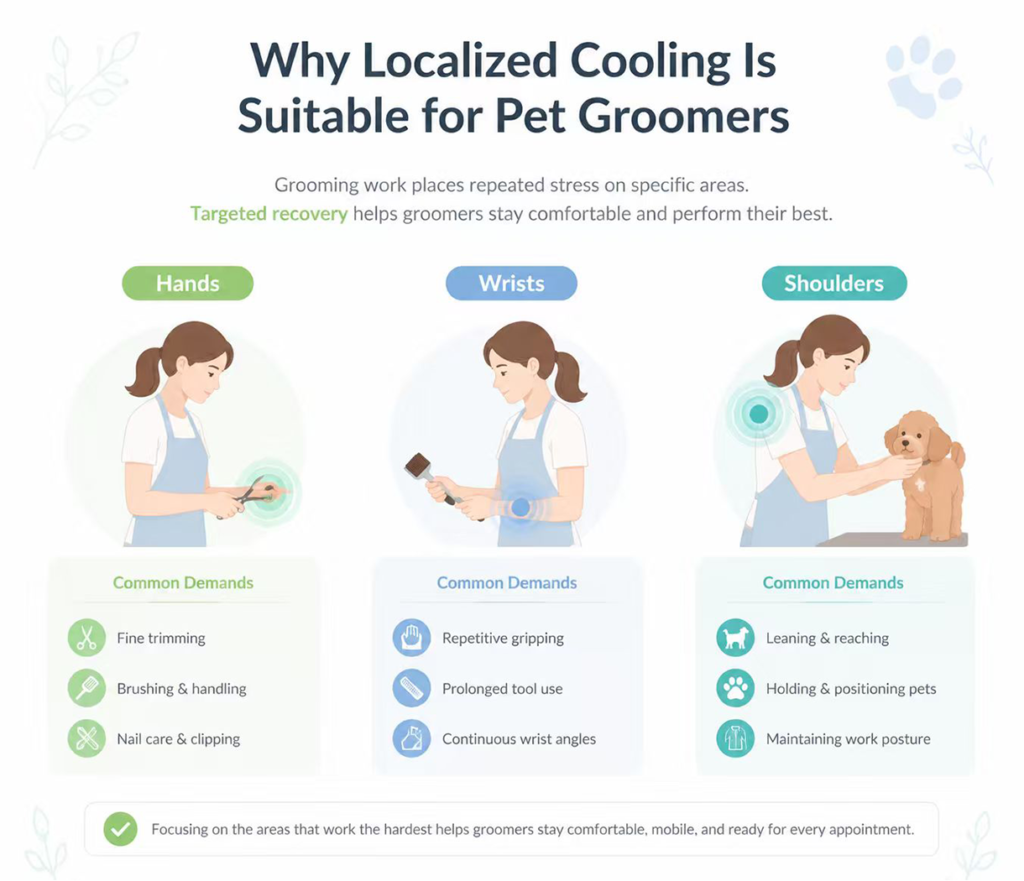
Pet groomers do not always experience discomfort throughout the entire body. Most challenges are often concentrated in specific working areas.
For example:
- hands may experience repetitive tool use
- wrists may experience prolonged bending positions
- shoulders may experience continuous reaching movements
Localized CO₂ Cryotherapy allows users to focus on these specific areas rather than applying general cold exposure.
This targeted approach fits well with the needs of grooming professionals because their daily workload is often concentrated in particular muscles and joints.
2.3 CO₂ Cryotherapy Compared With Traditional Cold Application
Traditional cold methods, such as ice packs, have been used for many years as a simple cooling approach. However, they may not always provide the convenience and precision needed by busy professionals.
CO₂ Cryotherapy offers several differences:
- faster targeted cooling
- easier application to specific areas
- no need to prepare ice packs
- flexible use between daily activities
For pet groomers who work with tight schedules, a localized recovery method can be easier to integrate into regular self-care routines.
3. Key Application Areas of CO₂ Cryotherapy for Pet Groomers
Because grooming work involves repetitive upper-body movements, certain areas often receive more physical demand than others. CO₂ Cryotherapy can be used as part of a wellness routine focusing on commonly stressed areas.
3.1 Supporting Hand and Finger Comfort After Grooming Tasks
Hands perform hundreds of precise movements during a grooming session. Continuous gripping, trimming, and brushing require coordination between small muscles and joints.
CO₂ Cryotherapy can be applied as a localized cooling method around areas such as:
- fingers
- palms
- back of the hands
- wrists
The goal is to provide a refreshing recovery experience after repetitive activities and support overall hand comfort.
For professionals who rely on detailed hand movements, maintaining flexibility and comfort is an important part of protecting long-term work performance.
3.2 Wrist and Forearm Recovery After Repetitive Tool Use
Grooming tools require repeated gripping actions throughout the day. Clippers, scissors, and brushes all create continuous demand on wrist and forearm muscles.
Areas commonly considered for localized cold therapy include:
- wrist joints
- forearm muscles
- areas affected by repetitive movement
CO₂ Cryotherapy provides focused cooling that can easily fit into a professional routine after completing grooming appointments.
3.3 Shoulder and Upper Back Support After Long Grooming Sessions
Many groomers spend hours standing, bending, and reaching around grooming tables. These positions can place additional workload on the shoulder and upper back areas.
Localized cold therapy can be incorporated into recovery routines targeting:
- shoulder muscles
- upper back areas
- neck region
By focusing on areas exposed to daily physical demand, CO₂ Cryotherapy may help professionals maintain a comfortable routine while continuing their grooming careers.
4. Integrating CO₂ Cryotherapy Into a Pet Groomer’s Daily Wellness Routine
Pet grooming requires continuous physical effort, and maintaining body comfort is essential for professionals who spend long hours caring for animals. A structured recovery routine can help groomers manage the physical demands of repetitive movements and maintain consistent performance. CO₂ Cryotherapy provides a localized cooling approach that can be incorporated alongside stretching, ergonomic adjustments, and other wellness practices.
4.1 Creating a Recovery Routine After Grooming Appointments
A typical grooming schedule may include multiple appointments throughout the day, requiring repeated use of hands, wrists, shoulders, and upper-body muscles. Developing a simple recovery routine after intensive grooming sessions can help professionals pay attention to areas that experience frequent workload.
A recovery routine may include:
- gentle stretching exercises
- maintaining proper posture
- taking short movement breaks
- using localized cold therapy when needed
CO₂ Cryotherapy offers a targeted option because it allows users to focus on specific areas rather than applying cooling to the entire body.
For pet groomers, this localized approach can be especially useful after completing detailed grooming tasks that require extended concentration and repetitive hand movements.
4.2 Understanding Proper Areas for Localized CO₂ Cryotherapy
The effectiveness of localized cold therapy depends on selecting appropriate areas based on daily physical demands.
For pet grooming professionals, commonly considered areas include:
- wrists after repeated scissor and clipper use
- forearms after prolonged gripping
- shoulders after extended reaching movements
- upper back areas after maintaining working positions
Localized cooling allows professionals to focus on the areas that experience the most workload during grooming activities.
CO₂ Cryotherapy technology uses carbon dioxide cooling to create rapid temperature changes on targeted areas. Research on cryotherapy methods has explored how different cooling approaches influence tissue temperature and recovery responses, showing that gaseous CO₂-based cryotherapy can provide rapid cooling effects compared with some traditional methods.
4.3 The Role of CO₂ Cryotherapy in Supporting Professional Longevity
Pet grooming is a career that requires both technical skills and physical endurance. Maintaining comfortable movement patterns can help professionals continue performing detailed work over time.
CO₂ Cryotherapy should be viewed as part of a broader wellness strategy rather than a replacement for professional medical advice. Combining localized cooling with healthy work habits, proper equipment adjustment, and regular movement can create a more balanced approach to occupational wellness.
For groomers who rely heavily on hand precision and upper-body strength, recovery technologies such as localized cryotherapy provide another option for supporting daily comfort.
5. Why CO₂ Cryotherapy Is Becoming Popular Among Animal Care Professionals
The animal care industry continues to evolve, with professionals looking for modern approaches that support their physical well-being. From veterinarians to pet groomers, many animal-related careers involve repetitive movements and physically demanding tasks. CO₂ Cryotherapy represents a growing interest in targeted recovery technology because it combines convenience with localized application.
5.1 The Advantages of Targeted Cold Therapy for Grooming Professionals
One of the main advantages of localized CO₂ Cryotherapy is precision. Instead of applying general cold exposure, professionals can focus on specific areas affected by daily activities.
For pet groomers, targeted cooling provides several practical benefits:
- convenient application
- focused treatment areas
- quick integration into daily routines
- no need for complicated preparation
This makes localized cryotherapy suitable for busy professionals who may not have extended recovery periods between appointments.
The controlled cooling process also distinguishes CO₂ Cryotherapy from traditional methods that may require ice preparation or longer setup times.
5.2 The Future of Recovery Technology in the Pet Care Industry
As the pet care industry grows, professional wellness is becoming an increasingly important topic. Groomers, trainers, and animal care workers all depend on physical capability to perform their daily responsibilities.
Future recovery solutions may continue moving toward:
- portable wellness devices
- targeted recovery technologies
- personalized self-care routines
CO₂ Cryotherapy reflects this shift by offering a localized approach that fits into modern professional lifestyles.
For pet groomers, maintaining hand comfort, mobility, and physical balance can support both career satisfaction and consistent service quality.
FAQ
Che cos'è la crioterapia CO₂?
CO₂ Cryotherapy is a localized cold therapy method that uses carbon dioxide to create rapid cooling on targeted areas of the body.
Why might pet groomers consider CO₂ Cryotherapy?
Pet groomers often perform repetitive hand movements and maintain fixed postures. CO₂ Cryotherapy provides a targeted cooling option that can be included in a personal recovery routine.
Which areas can pet groomers focus on with CO₂ Cryotherapy?
Common areas include wrists, hands, forearms, shoulders, and upper back areas that experience frequent physical workload.
How does CO₂ Cryotherapy differ from traditional ice packs?
CO₂ Cryotherapy provides controlled localized cooling without requiring preparation of ice packs, making it convenient for targeted applications.
Can CO₂ Cryotherapy replace professional healthcare advice?
No. CO₂ Cryotherapy is a supportive wellness approach and should not replace professional evaluation or medical guidance when needed.
Is CO₂ Cryotherapy only useful for pet groomers?
No. Many professionals who perform repetitive physical tasks may explore localized cryotherapy as part of their wellness routine.
Conclusione
Pet grooming is a physically demanding profession that requires precision, strength, and continuous hand coordination. The repeated use of grooming tools and long working hours can create challenges for hands, wrists, shoulders, and upper-body comfort. CO₂ Cryotherapy offers a modern localized cooling approach that supports professional wellness routines through targeted cold stimulation. By combining recovery practices such as stretching, ergonomic adjustments, and localized cryotherapy, pet groomers can develop a balanced approach to maintaining comfort during their careers.
Riferimenti
Cryotherapy and Cold Therapy in Veterinary Rehabilitation
https://vcahospitals.com/know-your-pet/rehabilitation-modalities
Comparative Analysis of Cryotherapy Modalities Using Muscle Tissue Temperature Measurement: Cold Pack, Cold Compression, and Hyperbaric Gaseous Cryotherapy
https://pmc.ncbi.nlm.nih.gov/articles/PMC11680439
Hyperbaric Gaseous Cryotherapy for Postoperative Rehabilitation Enhances Functional Recovery of Canine Stifle Joint: A Report on a Short-Term Study
https://pubmed.ncbi.nlm.nih.gov/34854265
The Efficacy of a Novel CO₂ Topical Vapocoolant Spray for Reducing Needle-Related Pain in Dogs
https://www.frontiersin.org/journals/veterinary-science/articles/10.3389/fvets.2026.1754998/full
Effect of Localized Cryotherapy on Interdigital Pruritus of Dogs With Canine Atopic Dermatitis