Introduzione
You finish a session of jump rope or burpees, and your feet feel fine. Then the next morning, you take your first step out of bed, and a sharp, burning sensation shoots through your heel. This classic sign of early plantar fasciitis is a warning that the thick band of tissue along the bottom of your foot has become irritated. For anyone who enjoys high‑impact activities like jumping, sprinting, or plyometric training, this discomfort can quickly put a stop to progress. CO₂ cryotherapy offers a non‑invasive, drug‑free way to help calm the early burning sensation associated with plantar fasciitis. By delivering rapid, dry cooling directly to the heel and arch, it helps support the body‘s natural healing response without the need for ice packs or medication.
1. Understanding Early Plantar Fasciitis in High‑Impact Training
The plantar fascia is a thick band of connective tissue that runs from the heel bone to the toes, supporting the arch of the foot. When subjected to repetitive, high‑load activities like jumping, the fascia can develop micro‑tears and become inflamed.
1.1 What Happens During High‑Impact Movements
Each time you land from a jump, your foot absorbs a force several times your body weight. The plantar fascia stretches and recoils with every landing. Over a single workout, this can happen hundreds of times. If the tissue does not have adequate time to recover, the repetitive stress leads to micro‑damage at the attachment point on the heel bone. The body responds with inflammation, which causes the classic symptoms: a dull ache that worsens after rest, a sharp pain with the first steps in the morning, and a burning sensation in the arch after activity.
1.2 The Early Warning Signs Many Ignore
Early plantar fasciitis often starts subtly. You may notice a mild ache in your heel after a long run or a jumping session. The discomfort may disappear within a few hours, only to return the next morning. Some people feel a burning sensation along the arch of the foot, especially when walking barefoot on hard floors. Because the pain is not severe, many athletes continue their training, hoping the discomfort will resolve on its own. Unfortunately, ignoring these early signals often allows the condition to progress. The inflammation becomes chronic, and the pain becomes more persistent, eventually interfering with daily activities and training.
1.3 Why the First Step in the Morning Hurts the Most
During sleep, the plantar fascia shortens and relaxes. When you stand up in the morning and place your full weight on your feet, the fascia is suddenly stretched from its shortened position. If the tissue is already inflamed, this sudden stretch produces a sharp, tearing sensation. The pain typically eases after a few minutes of walking as the tissue warms up and lengthens. However, the discomfort may return later in the day after prolonged standing or another round of high‑impact activity. This predictable pattern — morning pain that improves with movement, then worsens with activity — is a hallmark of early plantar fasciitis.
2. How CO₂ Cryotherapy Targets Heel and Arch Discomfort
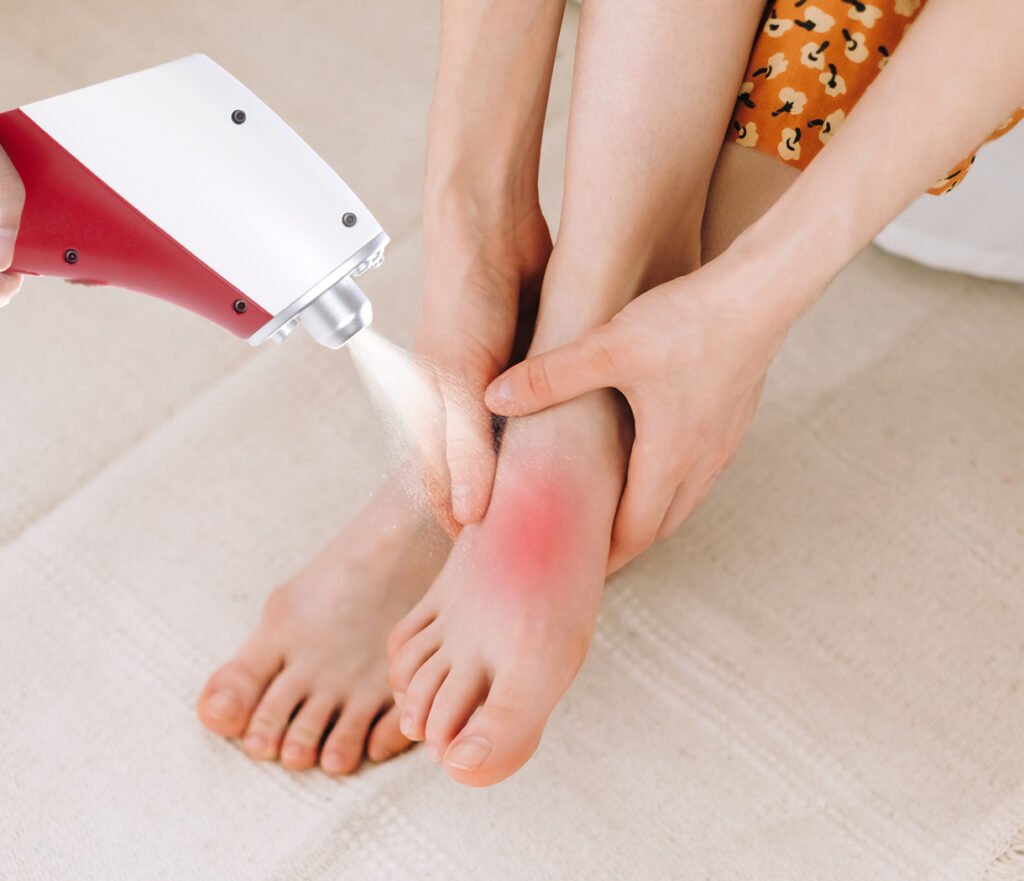
CO₂ cryotherapy uses pressurized carbon dioxide gas to deliver intense, dry cooling to a specific area. Unlike gel ice packs that must be pressed against the skin and can become wet as they thaw, CO₂ cryotherapy is completely dry and non‑contact. The gas stream rapidly lowers the temperature of the skin and underlying tissues, triggering beneficial physiological responses.
2.1 Rapid Cooling Without Moisture or Pressure
The CO₂ gas is released under high pressure, causing it to expand rapidly and cool. When directed at the heel and arch, the gas stream lowers the surface temperature within seconds. The treatment is applied from a short distance, so there is no pressure on the tender foot. Because the cooling is dry, there is no moisture to wet the skin or socks, and no risk of chilling the entire foot unnecessarily. This makes CO₂ cryotherapy particularly suitable for targeting the plantar fascia without causing discomfort from direct pressure or prolonged cold exposure.
2.2 How Cold Affects Inflammation and Pain Signaling
The intense cold causes local blood vessels to constrict temporarily, which can help reduce the leakage of inflammatory fluid into the irritated tissue. After the brief cooling period, the vessels dilate, bringing fresh, oxygen‑rich blood to the area. This cycle helps flush out inflammatory byproducts while delivering nutrients that support tissue repair. Additionally, the cold stimulus can temporarily reduce the transmission of pain signals along nerve pathways, providing relief from the burning sensation without the need for oral pain medications.
2.3 A Brief, Practical Option for Busy Athletes
A typical CO₂ cryotherapy session for the foot lasts only about thirty to sixty seconds. The athlete can sit comfortably, direct the gas stream to the heel and arch, and then resume normal activities immediately. There is no need to lie down for twenty minutes with an ice pack, no risk of slipping on a wet floor, and no downtime. For someone who trains multiple times per week, this convenience is a major advantage. The brief treatment can be performed after a workout or even before the morning steps to reduce the sharp first‑step pain.
3. Using CO₂ Cryotherapy for Early Intervention
Intervening at the first sign of plantar fasciitis discomfort offers the best chance of preventing the condition from becoming chronic. CO₂ cryotherapy can be a practical part of that early intervention.
3.1 When to Apply CO₂ Cryotherapy During a Training Week
The most helpful times to use CO₂ cryotherapy are immediately after a high‑impact workout and again before the first steps in the morning. Post‑workout cooling helps calm the acute inflammation that builds up during training. Morning treatment, applied while still seated, can reduce the sharp pain that typically occurs when you stand up. A single session takes less than a minute. Some athletes also use the therapy during breaks in a long training session to keep the foot comfortable.
3.2 How to Target the Plantar Fascia Correctly
The plantar fascia runs from the heel bone forward to the toes. The most sensitive area is usually the attachment point on the inner side of the heel. Direct the gas stream to that spot, then slowly sweep it along the arch toward the ball of the foot. Cover the entire sole from heel to toe. The treatment is dry, so there is no need to remove socks if they are thin, although direct application to bare skin is preferred. The sensation is a brisk cold, but not painful. Repeat on the other foot if both are affected.
3.3 Complementing Cryotherapy with Simple Foot Habits
CO₂ cryotherapy works best as part of a broader foot care routine. After a session, gentle stretching of the calf and plantar fascia can help maintain flexibility. Avoid walking barefoot on hard floors, especially in the morning, as this places extra strain on the irritated fascia. Supportive shoes with good arch support and cushioning reduce the load on the plantar fascia during daily activities. These simple habits do not replace the therapy but help extend its benefits and reduce the risk of symptom recurrence.
4. What to Expect When Using CO₂ Cryotherapy for Foot Pain
Understanding what the therapy can and cannot do helps set realistic expectations. CO₂ cryotherapy is a supportive tool, not a cure for structural foot problems.
4.1 Gradual Reduction in Morning Pain
Many people notice a decrease in morning pain after a few days of consistent CO₂ use. The sharp, tearing sensation may become a mild tug, then a faint awareness, and eventually disappear. The improvement is gradual, not instant. Using the therapy after each high‑impact workout and every morning for one to two weeks often produces the best results. Once the pain is under control, switching to a maintenance schedule of a few times per week may be sufficient.
4.2 Less Burning After Activity
The burning sensation that follows a jumping session is a sign of active inflammation. CO₂ cryotherapy applied immediately after training helps calm that inflammation more quickly than simply resting. Many athletes report that the foot feels less warm and tender after a session, allowing them to walk comfortably and even perform another workout sooner.
4.3 When to Seek Professional Evaluation
If the foot pain worsens despite consistent use of CO₂ cryotherapy and good self‑care, a visit to a healthcare provider is appropriate. Some cases of heel pain are caused by other conditions, such as a stress fracture, fat pad atrophy, or nerve entrapment. A professional evaluation can rule out these possibilities and ensure that the chosen management plan is appropriate.
5. Preventing Recurrence of Plantar Fasciitis
Once the early discomfort has been managed, the goal shifts to keeping the plantar fascia healthy for the long term. A few practical strategies can help.
5.1 Gradual Progression of Jumping Volume
Jumping volume should be increased slowly. Adding too many jumps too quickly is a common cause of plantar fascia irritation. A sensible progression might be to increase total weekly jump count by no more than ten percent. Using CO₂ cryotherapy preventively after high‑volume days can help keep the tissue comfortable.
5.2 Choosing Appropriate Footwear for Training
Shoes with good cushioning and arch support reduce the impact transmitted to the plantar fascia. Worn‑out shoes lose their shock‑absorbing properties and should be replaced regularly. For indoor training, a cushioned mat can reduce the hardness of the floor surface.
5.3 Listening to Early Warning Signs
The most effective way to avoid chronic plantar fasciitis is to act when the first mild symptoms appear. A little morning stiffness or a faint burning sensation after jumping are signals to ease off and use supportive measures. Continuing to train through pain almost always leads to worsening of the condition. A few days of reduced intensity and consistent CO₂ cryotherapy can often resolve early symptoms completely.
FAQ
Q1: Does CO₂ cryotherapy for foot pain hurt?
You will feel an intense cold sensation, but it is not painful. Most people tolerate it well. The sensation lasts only as long as the gas stream is applied.
Q2: How soon after a jumping workout can I use CO₂ cryotherapy?
You can use it immediately after finishing your workout, while your feet are still warm. There is no need to wait.
Q3: Can I use CO₂ cryotherapy if I already have a diagnosed heel spur?
Yes. The therapy helps manage the inflammation and discomfort associated with the heel spur, even though it does not remove the spur itself.
Q4: How many times per week should I use CO₂ cryotherapy for early plantar fasciitis?
Using it after every high‑impact workout (three to five times per week) and each morning for two weeks is a common approach. After symptoms improve, you may reduce to two to three times per week.
Q5: Is CO₂ cryotherapy safe to use on both feet?
Yes. You can treat both feet in the same session. Simply direct the gas stream to each foot for about thirty to sixty seconds each.
Conclusione
The burning sensation in your heel after a jump session and the sharp pain of the first morning step are early warnings from your plantar fascia. Ignoring them often leads to a long, frustrating recovery. CO₂ cryotherapy offers a non‑invasive, drug‑free way to help manage these early symptoms. By delivering rapid, dry cooling directly to the irritated tissue, it can reduce inflammation, calm pain signals, and support the body’s natural healing. With consistent use and sensible adjustments to your training, you can keep your feet healthy and continue enjoying high‑impact activities without the dread of morning pain.
Riferimenti
Local Cryotherapy. CO₂ Cryotherapy for Pain Management.
https://www.localcryotherapy.com
Local Cryotherapy. How Does CO₂ Cryotherapy Work.
https://www.localcryotherapy.com/how-does-cryotherapy-work/
Local Cryotherapy. Applications – Sports Recovery.
https://www.localcryotherapy.com/american-athlete-local-cryotherapy-performance-recovery.html
Local Cryotherapy. Orthopedic and Musculoskeletal Applications.
https://www.localcryotherapy.com/applications-orthopedic-rehabilitation-post-trauma.html
Local Cryotherapy. Veterinary and Equine Indications.
https://www.localcryotherapy.com/co₂-cryotherapy-one-therapy-two-species-limitless-benefits.html