
Introduzione
Tendon discomfort caused by repetitive stress is a common concern among athletes, fitness enthusiasts, and people with physically demanding routines. Tendons connect muscles to bones and help transfer force during movement, but repeated loading, intense exercise, or daily repetitive activities may place additional stress on these connective tissues. CO₂ Cryotherapy, also known as carbon dioxide cryotherapy or localized cryotherapy, has become an increasingly popular approach for people looking for targeted cold therapy support. By using controlled carbon dioxide cooling technology, localized cryotherapy focuses on specific body areas and creates a rapid cooling effect that may support comfort management and recovery routines. This article explores how CO₂ Cryotherapy relates to tendon discomfort, overuse stress, and modern recovery strategies while explaining the science behind targeted cold applications.
1. Understanding Tendonitis and Overuse-Related Tendon Stress
1.1 What Is Tendonitis and Why Does Tendon Stress Occur?
Tendonitis refers to discomfort and irritation associated with tendon structures, which are strong connective tissues that attach muscles to bones. Tendons play an essential role in movement by transferring muscle force and supporting joint function.
When tendons experience repeated stress without enough recovery time, people may notice discomfort, stiffness, or reduced comfort during movement. Common areas affected by repetitive tendon stress include the elbow, shoulder, wrist, knee, and Achilles tendon.
Daily activities and exercise patterns can influence tendon loading. Athletes who perform repeated movements, such as throwing, running, jumping, or lifting, may place continuous demand on specific tendon areas. Similarly, professionals who perform repetitive motions throughout the day may experience increased tendon stress.
The relationship between activity, recovery, and tendon health is complex. Supporting proper recovery habits can help individuals maintain movement quality and manage occasional discomfort associated with physical demands.
1.2 Common Causes of Tendon Overuse in Sports and Daily Activities
Tendon overuse often develops when repetitive movements create continuous mechanical stress. Unlike sudden injuries caused by a single event, overuse-related tendon discomfort usually develops gradually through repeated loading patterns.
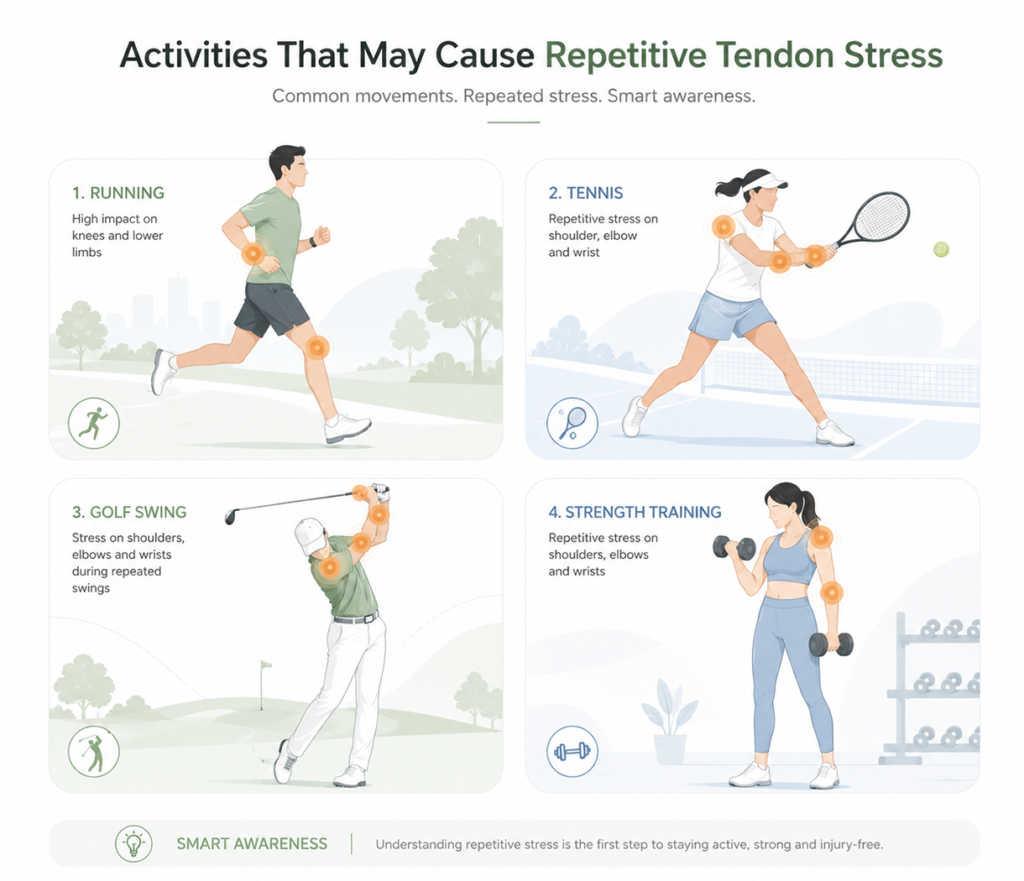
Sports activities frequently associated with tendon stress include tennis, golf, running, weight training, basketball, and cycling. These activities involve repeated muscle contractions and joint movements that require consistent tendon participation.
Outside sports, many occupations and hobbies can also create repetitive stress. Computer work, manual tasks, crafting, musical activities, and physical labor may involve repeated wrist, elbow, shoulder, or hand movements.
Several factors may influence tendon comfort, including activity intensity, movement patterns, recovery time, flexibility, and overall physical condition. Understanding these factors allows individuals to develop better approaches for maintaining long-term movement comfort.
1.3 Why CO₂ Cryotherapy Is Becoming Popular for Tendon Recovery Support
CO₂ Cryotherapy has gained attention because it provides a targeted cooling method that focuses on specific body areas rather than applying cold exposure to the entire body.
Localized cryotherapy uses carbon dioxide gas released at high pressure to create rapid surface cooling. This cooling process may trigger physiological responses, including temporary vasoconstriction, changes in local circulation patterns, and sensory responses related to cold exposure.
Unlike traditional ice applications, CO₂ Cryotherapy allows practitioners to direct cooling precisely toward selected areas, such as the elbow, shoulder, knee, wrist, or Achilles tendon region.
For people experiencing tendon-related discomfort, localized cold therapy can become part of a broader recovery routine that includes appropriate activity management, movement exercises, and professional guidance when needed.
2. The Science Behind CO₂ Cryotherapy and Tendon Support
2.1 How Carbon Dioxide Cryotherapy Creates a Targeted Cooling Effect
CO₂ Cryotherapy uses medical-grade carbon dioxide to produce rapid cooling on the skin surface. When carbon dioxide expands through a specialized applicator, it creates a significant temperature reduction in the targeted area.
This rapid cooling effect influences the body’s natural response to cold exposure. The temporary decrease in tissue temperature may affect nerve signaling, helping create a cooling sensation and supporting short-term comfort.
Localized cryotherapy differs from traditional cold methods because it allows controlled application to specific areas. This targeted approach is particularly useful for individuals who want to focus on areas affected by repetitive stress, such as tendons around frequently used joints.
The purpose of CO₂ Cryotherapy is to support recovery routines and comfort management. It does not replace professional evaluation or personalized rehabilitation plans.
2.2 The Role of Cold Exposure in Managing Tendon Discomfort
Cold therapy has long been used in sports medicine and physical recovery environments because temperature changes can influence the body’s response to physical stress.
When cold is applied to a targeted area, the body responds through several physiological processes. Temporary vasoconstriction reduces local blood flow during cooling, while the recovery period after cooling allows circulation patterns to gradually normalize.
Cold exposure also interacts with sensory nerves, which may influence how individuals perceive discomfort in the treated area.
For tendon-related concerns, CO₂ Cryotherapy is often considered as a supportive method alongside other recovery approaches. Maintaining appropriate movement, strengthening routines, and load management remain important components of tendon care.
Research exploring cryotherapy and tendon health has examined its potential role in short-term discomfort management, while also highlighting the importance of combining cold therapy with comprehensive recovery strategies.
2.3 Common Tendon Areas Where Localized Cryotherapy Is Used
Because CO₂ Cryotherapy focuses on specific areas, it can be applied to different tendon regions depending on individual needs and professional recommendations.
Common areas include:
- Achilles tendon area: Often associated with running, jumping, and lower-body activities.
- Elbow tendon area: Frequently involved in repetitive gripping and arm movements.
- Shoulder tendon area: Common among people involved in overhead activities.
- Knee tendon area: Often exposed to stress from jumping, squatting, and athletic movements.
- Wrist tendon area: Frequently affected by repeated hand and wrist motions.
Athletes and active individuals often explore localized cryotherapy because it fits into recovery routines after physical activity. The ability to target specific areas makes CO₂ Cryotherapy different from general cold exposure methods.
3. CO₂ Cryotherapy for Different Types of Tendon Stress
3.1 Supporting Athletes With Repetitive Motion Tendon Stress
Athletes often place high demands on their tendons through repeated training sessions. Sports performance requires strong coordination between muscles, joints, and connective tissues, making recovery an important part of maintaining activity levels.
Runners may focus on the Achilles tendon and knee area, while racquet sports players may pay attention to elbow and wrist regions. Weight training participants may experience stress around shoulders, elbows, and other movement-related areas.
CO₂ Cryotherapy provides a targeted cooling option that can be included after training sessions or during recovery periods. Many athletes choose localized cold therapy because it allows them to focus on specific areas rather than using general cooling methods.
A balanced recovery plan may include proper warm-up, mobility exercises, strength training, rest periods, and supportive technologies such as localized cryotherapy.
3.2 Helping Manage Occupational Tendon Stress
Tendon discomfort is not limited to athletes. Many occupational activities involve repetitive movements that may create continuous pressure on specific tendon areas.
Office professionals may experience wrist and elbow stress from repeated computer use. Skilled workers may place additional demand on hand, shoulder, or arm tendons through physical tasks. Musicians may also experience repetitive motion stress due to frequent practice.
CO₂ Cryotherapy can be considered as part of workplace wellness routines by focusing on areas that experience repeated daily use.
Localized cooling technology provides a convenient option for people who want targeted recovery support without interrupting their normal schedules.
4. Exploring the Benefits of CO₂ Cryotherapy for Tendon Wellness
4.1 Supporting Recovery After Physical Activity and Exercise
Physical activity places different levels of stress on muscles, joints, and tendons. Whether people participate in professional sports, fitness training, or recreational activities, recovery plays an important role in maintaining consistent movement habits.
CO₂ Cryotherapy provides a targeted cooling approach that can be incorporated after exercise sessions or periods of increased physical demand. The rapid cooling effect from carbon dioxide cryotherapy helps create a refreshing sensation around specific areas, making it a popular option among people looking for modern recovery methods.
For individuals experiencing tendon-related discomfort, localized cryotherapy may support a more comfortable recovery routine by focusing on areas exposed to repetitive stress. Common application areas include the elbow, shoulder, wrist, knee, and Achilles tendon region.
A complete recovery strategy usually involves multiple factors, including proper movement techniques, suitable training intensity, stretching, and adequate rest. CO₂ Cryotherapy works as a supportive option within a broader approach to maintaining physical comfort.
4.2 The Difference Between CO₂ Cryotherapy and Traditional Cold Therapy
Traditional cold therapy methods, such as ice packs or cold compresses, have been commonly used for many years. However, CO₂ Cryotherapy provides a different experience through targeted carbon dioxide cooling technology.
One major difference is application precision. Ice packs often cover a larger area and depend on physical contact with the skin, while localized CO₂ Cryotherapy allows professionals to direct cooling toward specific body areas.
Another difference is cooling speed. Carbon dioxide cryotherapy creates rapid temperature reduction, producing a quick cooling effect in the targeted area. This makes it suitable for people who prefer efficient recovery routines.
However, both traditional cold therapy and CO₂ Cryotherapy have their own applications. The most suitable approach depends on individual needs, activity levels, and personal recovery preferences.
Understanding these differences helps users make informed decisions when choosing supportive recovery methods.
5. Integrating CO₂ Cryotherapy Into Modern Recovery Routines
5.1 Creating a Balanced Approach for Tendon Comfort Management
Maintaining tendon health requires attention to daily habits, activity levels, and recovery strategies. While CO₂ Cryotherapy can provide targeted cold therapy support, it works best when combined with other healthy practices.
A balanced tendon care routine may include:
- Gradual increases in exercise intensity
- Proper warm-up and mobility exercises
- Strength and flexibility training
- Appropriate recovery time
- Attention to movement patterns
CO₂ Cryotherapy can complement these approaches by offering targeted cooling for areas that experience repeated stress.
For active individuals, localized cryotherapy provides another option to support their recovery routine. The ability to focus on specific areas makes it suitable for people with different lifestyles, from athletes to professionals with repetitive daily activities.
5.2 Choosing Localized CO₂ Cryotherapy for Targeted Recovery Support
When considering CO₂ Cryotherapy, several factors may influence the overall experience, including treatment area, recovery goals, and individual comfort preferences.
Localized cryotherapy is designed for targeted application, making it suitable for areas where people commonly experience tendon stress. These areas may include:
- Elbows affected by repetitive arm movements
- Shoulders involved in overhead activities
- Wrists exposed to repeated motions
- Knees affected by active lifestyles
- Achilles tendon areas used during walking and running
The growing interest in CO₂ Cryotherapy reflects a broader trend toward personalized wellness and recovery solutions. Instead of general approaches, many people now prefer targeted methods that fit their specific needs and daily routines.
By understanding how carbon dioxide cryotherapy works and how it fits into a complete wellness plan, individuals can make better choices for supporting their physical activities and long-term comfort.
FAQ
Che cos'è la crioterapia CO₂?
CO₂ Cryotherapy is a localized cold therapy method that uses carbon dioxide to create rapid cooling on specific body areas.
Can CO₂ Cryotherapy help with tendon discomfort?
CO₂ Cryotherapy may help support comfort management and recovery routines for areas affected by repetitive tendon stress. Individual experiences may vary.
What tendon areas can use localized cryotherapy?
Common areas include the elbow, shoulder, wrist, knee, and Achilles tendon regions.
How is CO₂ Cryotherapy different from ice packs?
CO₂ Cryotherapy uses controlled carbon dioxide cooling and allows targeted application, while ice packs provide general cold contact over a wider area.
Is CO₂ Cryotherapy only for athletes?
No. Athletes, active adults, and people with repetitive occupational movements may explore localized cryotherapy as part of their wellness routines.
How often can someone use CO₂ Cryotherapy?
Usage frequency depends on individual needs, professional recommendations, and the specific recovery routine being followed.
Conclusione
Tendon discomfort caused by repetitive stress can affect athletes, professionals, and active individuals in different stages of life. CO₂ Cryotherapy, through localized carbon dioxide cooling technology, offers a targeted approach that supports modern recovery routines and comfort management. By focusing on specific areas such as the elbow, shoulder, wrist, knee, and Achilles tendon region, localized cryotherapy provides a convenient option for people interested in supporting their physical wellness. When combined with proper movement habits, balanced training, and appropriate recovery strategies, CO₂ Cryotherapy can become a valuable part of a comprehensive approach to managing everyday tendon stress.
Riferimenti
Cryotherapy in Sports Medicine: Mechanisms and Applications for Recovery
https://pubmed.ncbi.nlm.nih.gov/30866615
The Effects of Local Cooling on Tissue Response and Pain Perception
https://pubmed.ncbi.nlm.nih.gov/30584594
Cryotherapy and Its Role in Musculoskeletal Recovery
https://pubmed.ncbi.nlm.nih.gov/33409345
Tendon Structure, Function, and Response to Mechanical Loading
https://pubmed.ncbi.nlm.nih.gov/22982311
Cold Therapy and Rehabilitation: Current Perspectives in Sports Recovery
https://www.sciencedirect.com/science/article/pii/S1360859225004656