
Introduzione
The holiday season often brings a long list of household responsibilities. Cleaning rooms, decorating the house, preparing meals, carrying groceries, and organizing gatherings can turn ordinary chores into physically demanding activities. Repeated bending, lifting, reaching, and standing may contribute to muscle fatigue and temporary discomfort in the back, shoulders, arms, and legs. Although these tasks may not feel like formal exercise, they can place considerable demands on the body when performed for several hours without adequate breaks. CO₂ cryotherapy, also known as localized carbon dioxide cryotherapy, is one approach that professionals may consider for managing certain types of localized discomfort. Understanding how this technology works, where it may fit into a broader wellness routine, and what safety precautions matter can help people approach holiday recovery more thoughtfully.
1. Understanding Holiday-Related Physical Fatigue
Holiday preparation often involves several repetitive tasks within a short period. The combination of sustained postures, repeated movements, and limited recovery time can leave different muscle groups feeling tired or uncomfortable.
1.1 Why Repetitive Household Tasks Can Cause Muscle Fatigue
Cleaning, decorating, and meal preparation frequently involve repeated movements rather than one isolated physical effort. Bending to clean low surfaces, reaching overhead to hang decorations, and carrying supplies can repeatedly load the same muscles. When these activities continue for extended periods, the body may have less time to recover between tasks.
Muscle fatigue does not always indicate an injury. However, persistent soreness, increasing pain, or reduced movement can signal that the workload exceeds what the body comfortably tolerates. Recognizing these signs early can help prevent minor discomfort from becoming a more disruptive problem during a busy holiday period.
1.2 Common Areas of Discomfort During Holiday Preparation
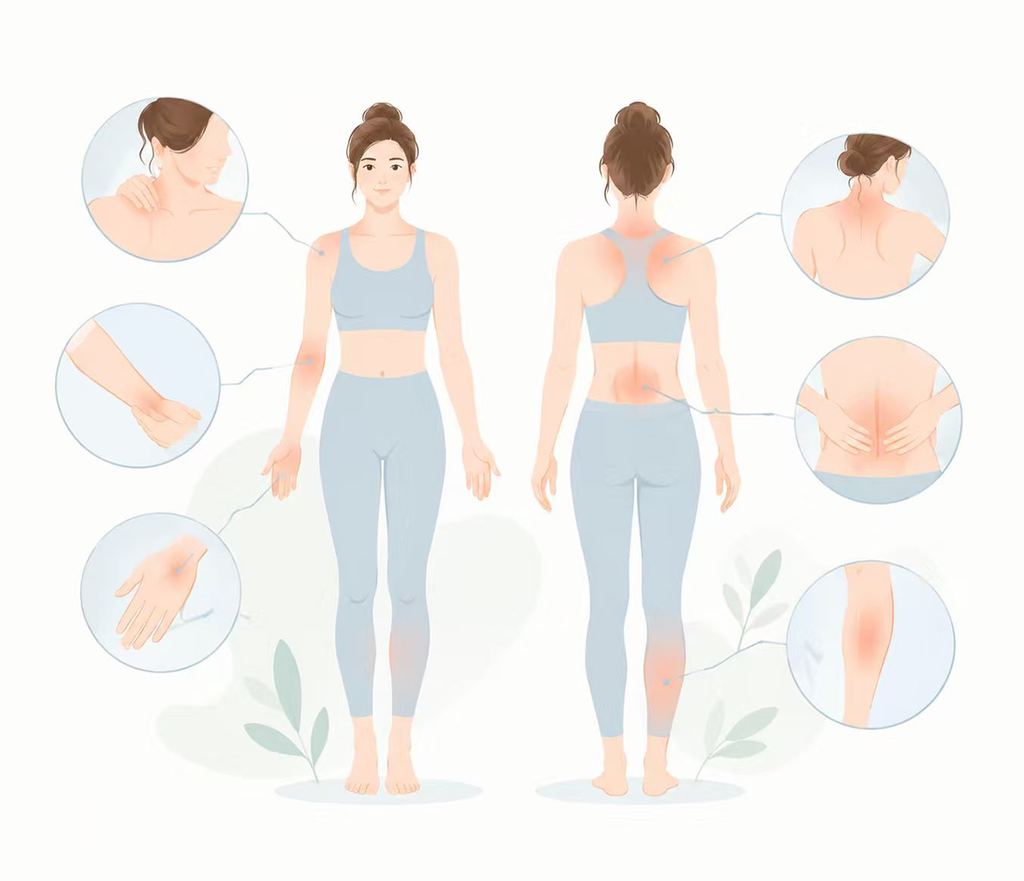
The lower back may become uncomfortable after repeated bending and lifting. The shoulders and neck may feel tight after overhead decorating or prolonged food preparation. Meanwhile, the forearms and hands can become tired from scrubbing, chopping, wrapping gifts, and handling household supplies.
The legs and feet may also feel fatigued after hours of standing. These symptoms can have different causes, so it is important not to assume that every ache comes from simple muscle overuse. Severe, persistent, or unexplained discomfort may require professional assessment.
1.3 How Limited Recovery Time Can Affect Physical Comfort
Holiday schedules often encourage people to finish several chores in one session. Someone may clean the kitchen, carry decorations upstairs, prepare a large meal, and then continue standing while entertaining guests. This pattern leaves fewer opportunities for muscles to recover between activities.
Adequate sleep, regular breaks, hydration, and a manageable workload all support general well-being. When discomfort develops, adjusting the activities that trigger it is often more useful than relying on a single recovery method.
2. What Is CO₂ Cryotherapy?
CO₂ cryotherapy uses pressurized carbon dioxide gas to produce rapid, localized cooling. Unlike whole-body cryotherapy, which exposes a large portion of the body to a cold environment, this approach focuses on a selected treatment area.
2.1 Understanding Localized Carbon Dioxide Cooling
CO₂ cryotherapy devices deliver carbon dioxide gas to a targeted area under controlled operating conditions. The rapid temperature change stimulates responses in the skin and underlying tissues. Cooling can temporarily influence sensory nerve activity and the perception of discomfort.
The effects depend on the application method, cooling intensity, exposure conditions, and the individual’s health status. Localized CO₂ cryotherapy should not be treated as interchangeable with an ice pack, a cold-water bath, or whole-body cryotherapy because these methods differ in how they deliver cold.
2.2 How Localized Cooling May Support Comfort
Cold-based interventions are often explored for short-term management of certain types of localized pain and discomfort. Cooling may temporarily reduce pain perception, making it a potential supportive option in selected circumstances.
However, evidence for one type of cryotherapy does not automatically establish the effectiveness of another. Research on whole-body cryotherapy, for example, cannot be directly applied to every CO₂ device or household-related complaint. More research specific to localized CO₂ cryotherapy and repetitive household-task fatigue is needed.
For this reason, CO₂ cryotherapy should be described as a potential adjunct to symptom management rather than a proven way to prevent muscle fatigue, accelerate tissue repair, or eliminate pain.
2.3 Why Treatment Conditions and Professional Assessment Matter
Localized cryotherapy involves more than exposing an area to cold. Device design, temperature control, application distance, exposure conditions, and the person’s medical history can all affect safety.
Professional assessment is particularly important when discomfort has no clear cause or when the individual has reduced skin sensation, circulation problems, or unusual reactions to cold. A qualified provider can help determine whether localized cooling is appropriate and whether another form of care would be more suitable.
3. CO₂ Cryotherapy for Common Holiday-Related Discomfort
Holiday chores can affect several body regions at once. Understanding the demands placed on each area helps explain where localized cooling might be considered as part of a broader recovery plan.
3.1 Managing Lower Back Discomfort After Cleaning and Lifting
Vacuuming, moving storage boxes, and repeatedly bending to clean low surfaces can place stress on the lower back. Discomfort may become more noticeable when several tasks are completed without changing positions or taking breaks.
When a qualified professional determines that localized cooling is appropriate, CO₂ cryotherapy may be considered as an adjunct for certain localized symptoms. It does not correct lifting mechanics or address every possible cause of back pain. Persistent pain, pain radiating down the leg, or symptoms accompanied by weakness or numbness warrant medical evaluation.
3.2 Supporting Shoulder Comfort After Decorating
Hanging lights, placing ornaments, and reaching into high cupboards require repeated shoulder movement. Holding the arms elevated for extended periods can also increase muscular demand around the shoulders and neck.
Localized cooling may be considered for selected discomfort, depending on its cause and the individual’s circumstances. Nevertheless, changing the height of work surfaces, using stable step equipment, and alternating overhead tasks with other activities can reduce repeated strain. These practical adjustments remain important even when a person explores a cold-based recovery option.
3.3 Addressing Forearm and Hand Fatigue from Repetitive Tasks
Gift wrapping, food preparation, scrubbing, and handling tools involve repeated gripping and wrist movement. Over time, these activities may contribute to temporary forearm fatigue or hand discomfort.
The appropriate response depends on the symptoms. General muscle fatigue may improve with rest and reduced repetitive loading, while persistent tingling, numbness, swelling, or weakness may indicate a problem that needs professional assessment. CO₂ cryotherapy should not replace evaluation for suspected tendon, joint, or nerve conditions.
4. Local Cryotherapy Technology and Holiday Recovery
Professional CO₂ cryotherapy equipment is designed to deliver localized cooling to selected areas. Understanding the device’s features can help readers distinguish technical capabilities from claims about clinical outcomes.
4.1 Understanding CO₂ Cryotherapy Equipment
The human-use cryotherapy device featured on the Local Cryotherapy website delivers pressurized CO₂ gas at a stated temperature of approximately -78°C. The product information also describes red-laser targeting, real-time temperature monitoring, and a display for treatment management.
These features relate to how the device delivers and monitors localized cooling. They do not, by themselves, establish that a treatment will produce a particular clinical result. The stated gas temperature is also not the same as the temperature reached by the skin or deeper tissues.
Readers interested in the technology can review the human-use CO₂ cryotherapy device specifications for more information about its design and intended professional applications.
4.2 The Role of Targeted Cooling and Temperature Monitoring
Localized treatment allows a professional to focus on a selected area rather than exposing the entire body to cold. Red-laser targeting can help identify the intended treatment location, while temperature-monitoring features provide information about cooling conditions during application.
These functions are relevant to controlled use, but safe application still depends on correct operation, appropriate assessment, and adherence to the manufacturer’s instructions. A device feature should not be interpreted as a guarantee that skin or tissue injury cannot occur.
4.3 Integrating CO₂ Cryotherapy into a Balanced Wellness Routine
For people experiencing holiday-related discomfort, professional CO₂ cryotherapy may be one option to discuss with a qualified provider. Its role should remain complementary to practical recovery measures, including reducing repetitive workloads, alternating tasks, maintaining comfortable working positions, and allowing enough time for rest.
The aim is not to use cooling to push through fatigue or continue working despite worsening symptoms. Instead, a balanced approach considers the cause of discomfort, the individual’s health status, and the potential benefits and limitations of each recovery strategy.
5. Building a More Sustainable Holiday Recovery Routine
A more comfortable holiday season begins with managing physical demands before discomfort becomes difficult to ignore. Small adjustments can make household responsibilities easier to distribute throughout the day.
5.1 Organizing Chores to Reduce Repetitive Strain
Rather than completing all demanding tasks in one session, people can alternate between activities that use different muscle groups. For example, a period of cleaning can be followed by seated gift wrapping or another lighter task. Frequently used supplies can be kept within easy reach to reduce repeated bending and overhead reaching.
Using suitable equipment and asking for help with heavy items can also reduce unnecessary physical stress. These changes address the workload itself, whereas localized cooling focuses on symptoms in a selected area.
5.2 Recognizing When Discomfort Needs Medical Attention
Mild, temporary fatigue after an unusually busy day may improve with rest and reduced activity. However, severe pain, substantial swelling, an inability to bear weight, or symptoms that continue to worsen should not be managed solely with cold therapy.
New weakness, persistent numbness, or unexplained pain also deserves professional assessment. Sudden chest pain, difficulty breathing, or other emergency symptoms require immediate medical attention. Seeking timely care can help identify problems that ordinary holiday fatigue does not explain.
Frequently Asked Questions
1. What is CO₂ cryotherapy?
It is a localized cooling approach that uses pressurized carbon dioxide gas to cool a selected area of the body.
2. Can CO₂ cryotherapy help with holiday-related muscle discomfort?
It may be considered for certain localized symptoms, but direct evidence for fatigue caused by repetitive household tasks remains limited.
3. Is CO₂ cryotherapy the same as using an ice pack?
No. The delivery method and cooling conditions differ, so the two approaches should not be assumed to have identical effects.
4. Can CO₂ cryotherapy prevent muscle fatigue?
There is insufficient evidence to conclude that it prevents fatigue caused by repetitive household tasks.
5. Is professional guidance important before treatment?
Yes. A qualified provider can assess whether localized cooling is appropriate and identify relevant safety concerns.
6. What else can help reduce holiday-related physical discomfort?
Pacing chores, taking breaks, changing positions, using suitable equipment, and allowing time for recovery can help reduce unnecessary physical strain.
Conclusione
Holiday preparation can place considerable demands on the body through repeated bending, lifting, reaching, gripping, and prolonged standing. CO₂ cryotherapy offers a targeted cooling approach that may be considered for selected localized discomfort, but its effectiveness for household-task-related muscle fatigue has not been firmly established. Professional assessment and appropriate device use remain essential. By combining realistic task planning, safer movement habits, sufficient rest, and timely medical care when needed, people can manage holiday responsibilities more sustainably. Localized CO₂ cryotherapy may have a complementary role in selected circumstances, but it should not replace measures that reduce physical strain or address the underlying cause of persistent symptoms.
Riferimenti
1. Cryotherapy Machine for Humans — Product Information
https://www.localcryotherapy.com/cryotherapy-machine-product-list/cryotherapy-machine-for-human
2. Whole-Body Cryotherapy (Extreme Cold Air) for Preventing and Treating Muscle Soreness After Exercise in Adults — Cochrane Review
https://pmc.ncbi.nlm.nih.gov/articles/PMC9579836
3. Occupational Safety and Health Administration — Ergonomics
https://www.osha.gov/ergonomics
4. American Academy of Dermatology — Whole-Body Cryotherapy Can Be Hazardous to Your Skin
https://www.aad.org/public/cosmetic/safety/cryotherapy
5. Evaluating Safety Risks of Whole-Body Cryotherapy/Cryostimulation: A Scoping Review