
Introduction
Competitive gaming demands hours of intense focus, rapid reflexes, and precise fine motor movements. Professional esports athletes and streamers often train for ten or more hours daily, placing enormous repetitive stress on their wrists, hands, and forearms. This sustained strain frequently leads to a debilitating condition known as carpal tunnel syndrome, which many players call “gamer’s wrist.” This article explores how carpal tunnel syndrome develops in gamers, examines the physiological mechanisms behind cold-based therapy, and discusses how CO₂ cryotherapy can support prevention and recovery without invasive procedures.
1. Why Gamers Face a High Risk of Wrist Injuries
The modern gaming lifestyle pushes the human body to its limits in ways that traditional office work never does. High-stakes tournaments, streaming marathons, and daily practice sessions force players to maintain peak performance for extended periods, often with little regard for the physical consequences.
1.1 Prevalence of Wrist Pain in the Gaming Community
Wrist injuries rank among the leading health concerns for both professional and amateur esports players worldwide. Around 30 to 36 percent of esports athletes report experiencing wrist and hand pain from spending extensive time performing fine motor movements. Among those who game for more than two hours daily, nearly 35 percent have musculoskeletal disorders, with common injuries including carpal tunnel syndrome, ulnar neuropathies, and various tendinopathies such as “gamer’s thumb.” These numbers only continue to grow as esports competitions attract larger audiences, which increases pressure on players to outperform their competitors.
1.2 How Repetitive Gaming Motions Damage the Wrist
During a typical gaming session, a player performs roughly 400 small motor movements per minute across their fingers, wrists, and elbows. Without regular breaks, these tiny repetitive actions cause gradual discomfort that can eventually lead to inflammation in delicate tendons and compression of the median nerve. The main factors behind declining wrist health in gamers include overuse, poor ergonomic habits, and extended periods without rest. Many players fail to notice early warning signs because these injuries develop slowly and progressively, only becoming obvious once significant damage has already occurred.
1.3 The Unique Demands of Esports Training
Unlike casual gaming, competitive esports training involves structured practice sessions that often exceed ten hours per day. Players must maintain extremely high actions per minute, sometimes reaching 500 to 600 APMs, which subjects their wrist structures to relentless mechanical loading. Furthermore, non-ergonomic setups—chairs without proper support, keyboards placed at awkward angles, and mice that do not fit the player’s hand—significantly increase injury risk. Alarmingly, only about two percent of affected players seek medical care, meaning most wrist problems go untreated until they severely impact performance or force career breaks.
2. Understanding Carpal Tunnel Syndrome in Gamers
Carpal tunnel syndrome stands as the most common entrapment neuropathy, accounting for roughly 90 percent of all nerve compression cases. For gamers who spend countless hours gripping controllers or hovering over keyboards, this condition represents a serious threat to their ability to compete at a professional level.
2.1 What Happens Inside the Carpal Tunnel
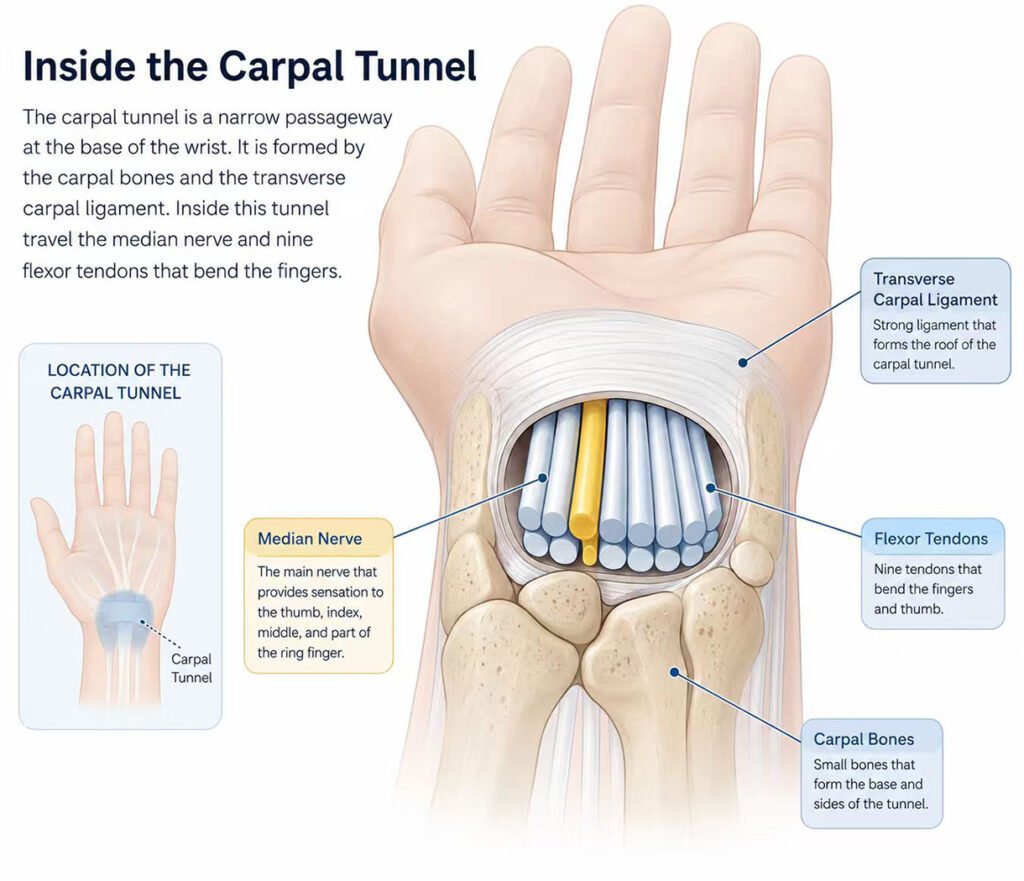
The carpal tunnel is a narrow passageway located at the base of the wrist, formed by the transverse carpal ligament above and the carpal bones below. The median nerve, along with nine flexor tendons, travels through this confined space on its way to the hand. When the tissues within the tunnel swell—whether from repetitive motion, inflammation, or fluid retention—they compress the median nerve against the surrounding rigid structures. This compression disrupts the nerve’s normal function and reduces its blood supply, triggering the hallmark symptoms of carpal tunnel syndrome.
2.2 Recognizing the Early Warning Signs
Players who develop carpal tunnel syndrome typically first notice pain, numbness, or tingling sensations in the thumb, index finger, middle finger, and half of the ring finger. These symptoms often appear at night while lying down, but they soon begin occurring during daytime activities such as typing, drawing, or gaming. As the condition progresses, players may experience hand weakness, decreased fine motor coordination, clumsiness, and eventually wasting of the thumb muscles. When untreated, carpal tunnel syndrome can lead to permanent loss of sensation and function in the affected hand.
2.3 Why Gamers Develop This Condition Faster
Several factors make gamers particularly susceptible to carpal tunnel syndrome compared to the general population. Prolonged sessions of five to ten hours or more, high APMs, and non-ergonomic setups all contribute to elevated pressure within the carpal tunnel. Additionally, the sustained wrist flexion or extension common in gaming postures increases intra-tunnel pressure beyond normal levels. Because many players push through discomfort rather than taking breaks, the nerve compression worsens over time, accelerating the progression from mild tingling to debilitating pain and weakness.
3. How CO₂ Cryotherapy Supports Wrist Recovery
Cold application has long been a cornerstone of injury management, but modern CO₂ cryotherapy offers a more refined approach than traditional ice packs. This advanced technology delivers precise, controlled cooling that triggers specific physiological responses beneficial for gamers dealing with wrist strain.
3.1 The Science Behind Cold Application on Nerves
Cold exposure directly influences how peripheral nerves transmit electrical signals. When tissue temperature drops, the speed of action potentials traveling along nerve fibers decreases in a temperature-dependent manner. For gamers suffering from carpal tunnel syndrome, this reduction in nerve conduction velocity means fewer pain signals reach the brain during and shortly after cold application. Research on patients with clinical carpal tunnel syndrome has found that cold application produces measurable changes in distal motor latency and median nerve velocity, indicating the nerve’s responsiveness to temperature changes.
3.2 Understanding the TRPM8 Pathway
The skin contains specialized temperature-sensing neurons called thermoreceptors. Among these, the transient receptor potential melastatin 8 channel, or TRPM8, serves as the primary detector for cool and cold temperatures. When TRPM8 channels open in response to cold exposure, they trigger a cascade of events that includes reduced pain signal transmission and temporary numbing of the treated area. CO₂ cryotherapy activates these receptors rapidly and efficiently, providing targeted relief to the wrist area without the tissue maceration or mess associated with ice packs.
3.3 The Biphasic Vascular Response
One of the most valuable effects of CO₂ cryotherapy involves the biphasic vascular response. During the initial phase, cold exposure causes vasoconstriction—narrowing of blood vessels—which reduces local blood flow and limits the spread of inflammation. As the tissue rewarms after treatment, a rebound vasodilation occurs, where blood vessels dilate beyond their normal size. This rebound phase delivers oxygen-rich blood, nutrients, and immune cells to the treated area, supporting the body’s natural repair processes and accelerating the removal of metabolic waste products. For gamers who subject their wrists to prolonged repetitive loading, this vascular cycle can help manage the cumulative effects of daily training.
3.4 Controlled Cooling Without Wetness
Traditional ice packs require prolonged skin contact, often for 15 to 20 minutes, and leave the skin wet and cold afterward. CO₂ cryotherapy delivers a pressurized gas stream that rapidly lowers skin temperature without any moisture contact. This dry application means players can receive treatment without interrupting their training schedule or dealing with wet sleeves and messy setups. The controlled cooling also reduces the risk of frostbite or excessive tissue damage, making it a safer option for regular use in recovery protocols.
4. Practical Prevention Strategies for Gamers
While therapeutic interventions help manage existing discomfort, prevention remains the most effective approach for protecting long-term wrist health. Gamers who incorporate smart habits into their daily routines can significantly reduce their risk of developing carpal tunnel syndrome.
4.1 Ergonomic Setup and Proper Posture
A well-designed gaming station makes a substantial difference in wrist health. Players should keep their wrists in a neutral position—neither bent upward nor downward—while using keyboards or controllers. Elbows should rest at roughly a 90-degree angle, and shoulders should stay relaxed rather than hunched forward. Ergonomic peripherals, such as mice that fit the player‘s hand comfortably and keyboards with adjustable tilt, reduce the strain from repetitive clicking and key presses. Adjusting sensitivity settings to minimize excessive mouse movement also helps decrease the total mechanical load on the wrist.
4.2 Taking Regular Breaks and Stretching
Frequent short breaks provide the single most effective protection against repetitive strain injuries. Every 30 to 45 minutes, gamers should take a five-minute break to stretch their wrists, fingers, and forearms. Simple exercises include wrist circles, finger extensions, and gentle forearm massages before long sessions. Targeted stretching focused on the wrists, forearms, hands, and fingers can reduce stiffness, improve blood flow, and decrease soreness after lengthy playtimes. Players who treat these stretches as part of their training routine, rather than an optional add-on, maintain healthier wrists over the long term.
4.3 Warming Up Before Gameplay
Just as traditional athletes warm up before competition, gamers should prepare their muscles and joints before diving into intense play. Wrist rotations, gentle finger stretches, and forearm massages activate blood flow and improve tissue elasticity, reducing the risk of acute strain during high-APM gameplay. A five-minute warm-up routine before each long session may seem trivial, but it conditions the wrist structures to handle the repetitive loading that follows, much like a runner would never sprint without first loosening their legs.
5. Integrating Thermal Support Into Recovery Routines
Gamers who already experience wrist discomfort need effective recovery strategies that fit seamlessly into their demanding schedules. CO₂ cryotherapy offers a practical option for managing inflammation and supporting the body’s healing processes without interrupting training.
5.1 When to Apply Cold Therapy
The timing of cold application influences its effectiveness for wrist recovery. Following long gaming sessions, the wrist tissues have accumulated microdamage and inflammatory byproducts. Applying cold during this post-activity window initiates vasoconstriction, which helps limit excessive inflammatory responses, followed by rebound vasodilation that enhances circulation and waste removal. Many players find that using CO₂ cryotherapy immediately after extended practice sessions provides optimal support for overnight recovery.
5.2 Cold Exposure and Nervous System Regulation
Beyond local wrist effects, cold exposure influences the body’s broader stress response systems. Researchers believe that cold exposure activates the sympathetic nervous system, which connects organs to the brain, leading to increased levels of noradrenaline—a neurotransmitter linked to concentration, alertness, and motivation. Additionally, cryotherapy has been associated with lower cortisol levels and improved nervous system balance, which may help reduce mental fatigue and support overall recovery. For gamers who face both physical and cognitive demands, these systemic effects represent an added benefit beyond local wrist support.
5.3 Safety Considerations
While CO₂ cryotherapy provides a safe option for many players, individuals with cold hypersensitivity disorders, such as cold urticaria or cryoglobulinemia, should exercise caution. Open wounds, skin infections, or significant dermatological conditions in the treatment area also warrant avoiding direct cold application until those issues resolve. Proper applicator distance, movement pattern, and treatment duration all influence the cooling effect, so players should seek qualified practitioners who understand both the equipment and the relevant anatomy for wrist treatments.
Frequently Asked Questions
Q1: How can I tell if my wrist pain is carpal tunnel syndrome or just normal gaming soreness?
Normal soreness feels like general fatigue and fades within a day. Carpal tunnel syndrome causes tingling, numbness, or pain in the thumb and first two fingers.
Q2: Can I still game with early carpal tunnel symptoms?
You can with shorter sessions and better ergonomics, but ignoring symptoms often makes the condition worse.
Q3: How long does CO₂ cryotherapy take for wrist treatment?
A typical session lasts only a few minutes per wrist. The cooling effect starts within seconds.
Q4: Is CO₂ cryotherapy better than ice packs for gamer’s wrist?
It delivers dry, controlled cooling without wetness and activates the same nerve pathways more efficiently.
Q5: Should I use cold therapy before or after gaming sessions?
Apply cold after gaming to manage inflammation. Warm up with stretches before playing.
Q6: How often can I safely use CO₂ cryotherapy for my wrist?
Many players use it after each long session, but a qualified practitioner can give personalized advice.
Conclusion
Esports athletes and dedicated gamers face a genuine risk of developing carpal tunnel syndrome from the repetitive, high-intensity demands of competitive play. Understanding the mechanisms of median nerve compression and recognizing early warning signs allows players to take proactive steps before minor tingling evolves into career-threatening pain. CO₂ cryotherapy offers a targeted, science-based approach to supporting wrist recovery through rapid TRPM8 activation, biphasic vascular responses, and controlled nerve conduction modulation. By combining proper ergonomics, regular stretching breaks, and thoughtful recovery practices, gamers can protect their wrist health while continuing to pursue their passion for competition and streaming.
References
Chrzanowski, W., et al. (2025). Upper Limb Injuries in Esports and Videogaming – A Narrative Review of Pathology, Risk Factors and Prevention Methods.
https://doi.org/10.31435/ijitss.3(47).2025.3448
Gul, M., Rauf, H., & Khan, F. (2025). Prevalence of Carpal Tunnel Syndrome and De-Quervain Tenosynovitis Among PUBG Players.
https://e-journal.unair.ac.id/SPMRJ/article/view/66113
Werner, R. A., & Andary, M. (2002). Carpal tunnel syndrome: pathophysiology and clinical neurophysiology.
https://www.sciencedirect.com/science/article/abs/pii/S1388245702004023
Should You Try CO₂ Cryotherapy? What Science Says.
https://www.localcryotherapy.com/should-you-try-co₂-cryotherapy-what-science-says.html
The Centers for Advanced Orthopaedics. (2025). How to Avoid Orthopaedic Hand Issues While Gaming.
https://www.cfaortho.com/media/news/2025/12/how-to-avoid-orthopaedic-hand-issues-while-gaming