
Introduction
Getting a tattoo can be a meaningful and artistic expression, but post-tattoo skin recovery is often overlooked. Fresh tattoos cause localized inflammation, redness, and discomfort due to trauma to the skin’s dermal layers. Rapid and proper healing is essential to prevent infection, reduce irritation, and maintain the tattoo’s vibrancy. CO₂ cryotherapy, a non-invasive treatment using cold carbon dioxide gas, has emerged as a promising solution for enhancing post-tattoo recovery. By improving circulation, reducing local inflammation, and promoting cellular repair, CO₂ cryotherapy provides an innovative approach to support skin healing and minimize redness after tattoo sessions.
1. Understanding Post-Tattoo Skin Trauma
Tattooing involves depositing ink into the dermis through repeated needle punctures. This process, while safe when performed by professionals, inevitably triggers localized tissue injury and an immune response. Understanding these mechanisms is critical for appreciating how CO₂ cryotherapy can aid recovery.
1.1 Skin Response to Tattooing
After tattooing, the skin undergoes acute inflammatory changes. Micro-injuries cause vasodilation, leading to redness and slight swelling. Immune cells, including neutrophils and macrophages, migrate to the site to prevent infection and clear cellular debris. While this is a normal healing response, excessive inflammation can prolong discomfort, increase the risk of scabbing, and affect the final appearance of the tattoo. Controlled management of this inflammatory process is crucial for optimal healing.
1.2 Common Healing Challenges
Post-tattoo healing may be complicated by itching, excessive redness, or uneven skin texture. Individuals with sensitive skin or pre-existing dermatological conditions may experience more pronounced inflammation. Environmental factors, such as heat, friction from clothing, and improper aftercare, can exacerbate irritation. Understanding these challenges highlights the need for interventions that support skin repair, reduce redness, and minimize prolonged discomfort.
2. What Is CO₂ Cryotherapy
CO₂ cryotherapy is a non-invasive treatment method that utilizes compressed carbon dioxide gas cooled to sub-zero temperatures. It differs from traditional cryotherapy methods by its precise application and ability to target superficial skin layers without causing tissue damage.
2.1 Mechanism of Action
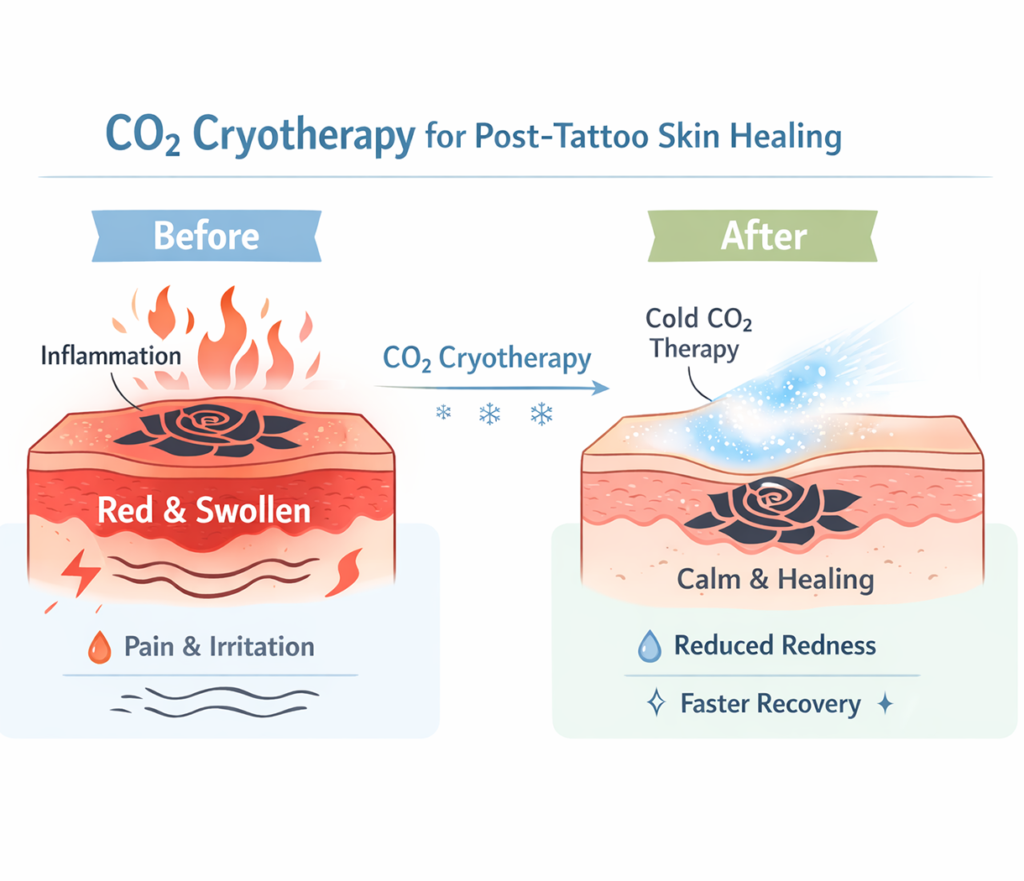
When applied to the skin, CO₂ gas rapidly cools the epidermis and dermis, inducing local vasoconstriction followed by reactive vasodilation. This process enhances microcirculation, improves oxygenation, and stimulates fibroblast activity. The therapy also helps modulate inflammatory mediators, reducing localized redness and promoting faster tissue repair. Unlike ice packs or cold water treatments, CO₂ cryotherapy delivers controlled cooling without excessive moisture or risk of maceration.
2.2 Safety and Non-Invasiveness
CO₂ cryotherapy is generally safe for post-tattoo application when administered by trained professionals. It does not penetrate deeply enough to disrupt ink placement or damage the dermis. The non-invasive nature ensures minimal downtime, making it a convenient adjunct to standard tattoo aftercare routines. Its ability to provide consistent, targeted cooling makes it preferable to ad hoc cold compresses or other home remedies.
3. Benefits of CO₂ Cryotherapy for Post-Tattoo Recovery
CO₂ cryotherapy provides several advantages that can directly improve the healing process for fresh tattoos, addressing both aesthetic and comfort-related concerns.
3.1 Reducing Redness and Swelling
The most noticeable effect of CO₂ cryotherapy is the reduction of post-tattoo redness. By constricting superficial blood vessels and subsequently improving circulation, the therapy minimizes visible inflammation and swelling. This can result in a calmer, more even-toned skin surface, improving both comfort and the visual appeal of the tattoo in its early healing stages.
3.2 Supporting Cellular Repair
The cooling effect of CO₂ cryotherapy stimulates fibroblast activity and enhances collagen synthesis in the affected area. These cellular processes accelerate tissue repair and strengthen the dermal matrix. For fresh tattoos, this means a more resilient skin barrier, reduced scabbing, and lower risk of post-inflammatory hyperpigmentation, which can impact the final appearance of the ink.
3.3 Enhancing Comfort During Healing
In addition to aesthetic benefits, CO₂ cryotherapy alleviates discomfort associated with post-tattoo inflammation. Many individuals experience itching, mild burning, or tenderness in the first few days after tattooing. The therapy’s localized cooling and anti-inflammatory effects can help relieve these sensations, allowing individuals to carry out daily activities more comfortably while the skin heals.
4. Ideal Candidates for Post-Tattoo CO₂ Cryotherapy
Not everyone may need CO₂ cryotherapy after a tattoo session, but certain individuals can particularly benefit from its application.
4.1 Sensitive Skin or Reactive Skin Types
Individuals with naturally sensitive or reactive skin may develop excessive redness, prolonged inflammation, or irritation following tattooing. CO₂ cryotherapy can help control the intensity of these responses, reducing the likelihood of complications and supporting a smoother healing process.
4.2 Large or Complex Tattoos
Tattoos that cover large areas or contain intricate designs often involve longer sessions and deeper needle penetration, increasing tissue trauma. Applying CO₂ cryotherapy post-session can help reduce overall inflammation, expedite recovery, and protect the integrity of the detailed artwork.
4.3 People with Active Lifestyles
Those who maintain active lifestyles—athletes, fitness enthusiasts, or individuals who exercise frequently—may experience additional irritation from friction, sweat, or heat post-tattoo. Targeted CO₂ cryotherapy provides controlled cooling that can prevent prolonged redness and discomfort while accommodating an active routine.
5. How to Incorporate CO₂ Cryotherapy Into Tattoo Aftercare
While traditional aftercare routines involve cleansing, moisturizing, and avoiding sun exposure, CO₂ cryotherapy can serve as an adjunctive method to support skin recovery.
5.1 Timing of Application
CO₂ cryotherapy is most effective when applied within the first 24–48 hours after tattooing. Early intervention helps control acute inflammation, reducing redness and swelling before it peaks. However, professional guidance is recommended to determine the optimal duration and frequency for individual skin types.
5.2 Complementing Standard Aftercare
CO₂ cryotherapy does not replace traditional aftercare practices. Gentle cleansing, application of tattoo-specific ointments, and avoiding scratching or friction remain essential. The therapy works synergistically by reducing visible inflammation and accelerating cellular repair while standard practices protect the skin barrier and prevent infection.
5.3 Frequency and Duration
Sessions are typically brief, lasting only a few minutes per treated area. Depending on the size of the tattoo and the skin’s response, 1–2 sessions may be sufficient for noticeable benefits. Overuse is unnecessary and may result in overcooling, which is why professional supervision is important.
FAQ
Q1: Is CO₂ cryotherapy safe for all tattoo colors?
Yes. The therapy cools the skin superficially without affecting pigment placement, making it safe for all ink colors.
Q2: Can CO₂ cryotherapy replace ointments or moisturizing aftercare?
No. It complements traditional aftercare routines and should not replace cleansing or topical protection.
Q3: How soon after tattooing can CO₂ cryotherapy be applied?
Ideally within 24–48 hours post-tattoo, depending on individual skin sensitivity and professional recommendations.
Q4: Does CO₂ cryotherapy hurt or damage the tattoo?
No. The cooling effect is non-invasive, painless, and does not penetrate deep enough to alter tattoo ink.
Q5: How many sessions are needed for visible improvement?
Typically 1–2 short sessions are sufficient to reduce redness and support faster healing.
Conclusion
CO₂ cryotherapy offers a safe, non-invasive method to enhance post-tattoo recovery by reducing redness, swelling, and discomfort. Its ability to stimulate cellular repair and improve circulation makes it an effective adjunct to traditional tattoo aftercare, particularly for sensitive skin, large tattoos, or active individuals. Integrating CO₂ cryotherapy into tattoo healing routines can help maintain skin health, preserve the vibrancy of the artwork, and improve overall comfort during the recovery process.
Références
Local Cryotherapy. “Cryotherapy and Skin Healing.”
https://www.localcryotherapy.com
Bolognia, J.L., Schaffer, J.V., Cerroni, L. Dermatology, 4th Edition. Elsevier, 2017.
Bleakley, C.M., et al. “The Use of Cryotherapy in Skin Injury Recovery.” Journal of Sports Medicine, 2012.
https://doi.org/10.1155/2012/987257
Wollina, U., Goldman, A. “Management of Post-Tattoo Skin Healing.” Clinical Dermatology Review, 2015.