Introduction
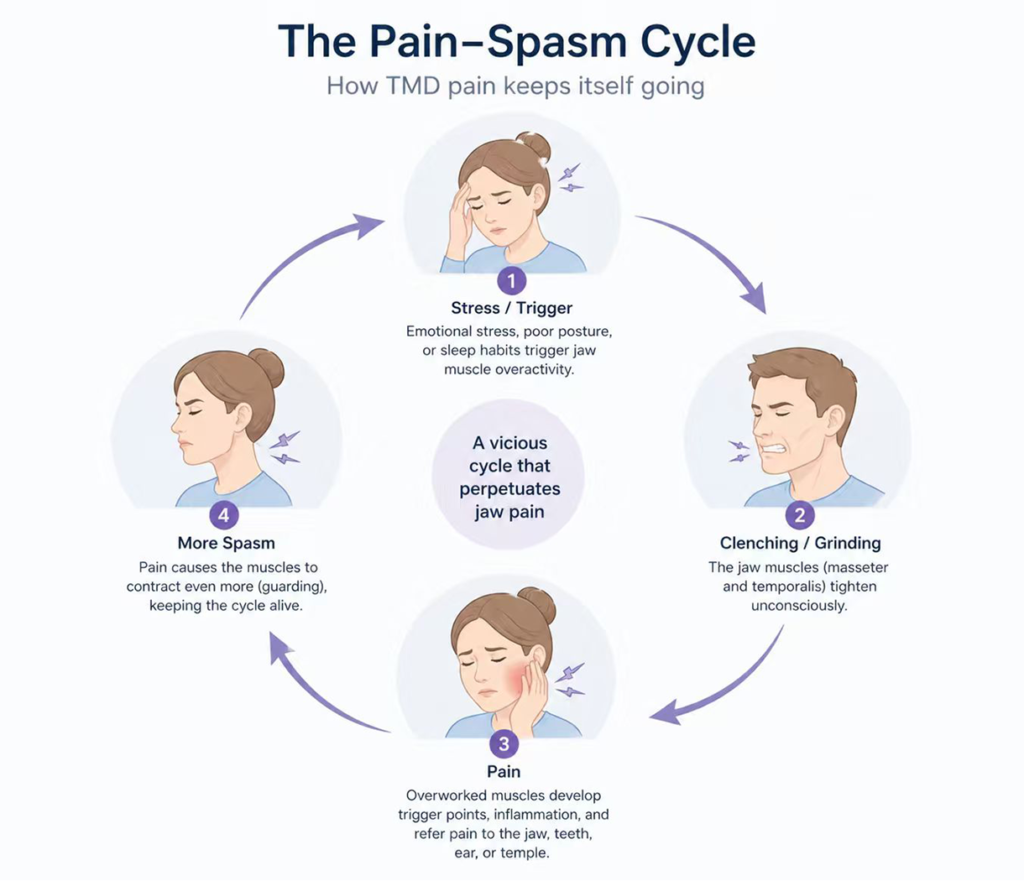
You wake up with a dull ache deep in your jaw. Chewing toast feels like work. By afternoon, the pain has spread to your temple, and you catch yourself clenching your teeth without realizing it. This is not a tooth problem. This is temporomandibular disorder (TMD), a condition affecting the jaw joints and the muscles that control chewing. For millions of people, TMD turns everyday activities like eating, talking, and yawning into sources of persistent pain. The core of the problem is often a vicious cycle: muscle tightness causes pain, pain causes more clenching, and more clenching creates more tightness. Breaking this cycle requires a treatment that relaxes the overworked muscles without drugs or needles. Localized CO₂ cryotherapy, applied directly to the masseter and temporalis muscles, offers a rapid, non‑invasive way to interrupt the pain‑spasm loop. This article explains how TMD develops, how targeted cold gas works on hyperactive jaw muscles, and how you can integrate CO₂ therapy into a comprehensive jaw pain management plan.
1. Why the Jaw Gets Stuck in a Pain‑Spasm Cycle
The temporomandibular joint is one of the most complex joints in the body, combining hinge action with sliding movements. When the muscles that control this joint become overloaded, they do not simply ache—they tighten, spasm, and stay tight.
1.1 How the Masseter and Temporalis Work
The masseter is the large muscle that runs from your cheekbone to your lower jaw. It is the primary muscle for closing your mouth and generating chewing force. The temporalis is a fan‑shaped muscle on the side of your head that retracts the jaw and helps with side‑to‑side grinding. These two muscles work in coordination every time you eat, speak, or even rest your jaw. During stress or sleep, many people unconsciously clench or grind, placing the muscles under constant low‑level tension. Over hours and days, this tension leads to micro‑trauma, inflammation, and eventually palpable trigger points—small knots of tight muscle fibers that refer pain to other areas like the teeth, ear, or temple.
1.2 The Trigger for the Cycle
The pain‑spasm cycle begins when a muscle is overworked. The fatigue triggers the release of inflammatory mediators that sensitize nerve endings. In response, the muscle contracts even more to “protect” the area, a reflex called guarding. This extra contraction reduces blood flow, causing more ischemia, which then produces more pain. The jaw is especially vulnerable because we use it constantly. Even when you try to relax, the masseter and temporalis may stay partially contracted from habit or stress. Once the cycle establishes itself, the pain becomes self‑sustaining. Treating only the joint or only the teeth often fails because the muscle tension remains.
1.3 Why Common Treatments Fall Short
Dentists often prescribe night guards to prevent tooth wear, but guards do not relax the muscles. Anti‑inflammatory medications like ibuprofen reduce pain temporarily but do not break the spasm. Muscle relaxants cause drowsiness and are not suitable for daytime use. Trigger point injections with local anesthetic or Botox can work, but they require needles, have risks, and may need repeating every few months. Physical therapy and stretching help, but they take weeks to show results and require active patient participation. None of these options provide immediate, drug‑free, non‑invasive relief that the patient can control at home. This gap is exactly where localized CO₂ cryotherapy fits.
2. How Targeted CO₂ Cryotherapy Interrupts the Spasm
Localized CO₂ cryotherapy uses a jet of hyper‑cold carbon dioxide gas to rapidly cool a specific muscle area. When applied to the masseter or temporalis, the extreme cold triggers physiological changes that directly counter the pain‑spasm cycle.
2.1 Rapid Cooling to Quiet Hyperactive Nerves
Spasming muscles are stuck in a state of excessive electrical activity. The muscle fibers receive too many signals from the nerves to fire, and they do not get the “relax” signal. Applying CO₂ gas at approximately –78°C lowers the local tissue temperature by several degrees within seconds. This rapid temperature drop temporarily slows the conduction velocity of the small nerve fibers that transmit pain and the medium fibers that control muscle tone. The effect is like turning down the volume on a loudspeaker. The nerve signals become weaker, and the muscle receives fewer excitatory commands. Within a minute, the clenching force decreases, and the patient feels the jaw start to release.
2.2 Breaking the Ischemia‑Spasm Loop
When a muscle is in spasm, the contracted fibers compress nearby capillaries, reducing blood flow. The resulting ischemia (lack of oxygen) causes more pain and more spasm. CO₂ cryotherapy produces an initial intense vasoconstriction—blood vessels narrow sharply. This first phase helps stop any active bleeding from micro‑tears and limits the spread of inflammatory fluid. But the real benefit comes seconds later as the tissue rewarns. The body reacts to the cold with a rebound vasodilation. Blood vessels open wider than before, flooding the previously ischemic muscle with fresh, oxygenated blood. This flush washes away the metabolic waste (lactic acid, potassium, bradykinin) that was keeping the pain receptors activated. The muscle can finally relax because the chemical irritants are gone.
2.3 Direct Mechanical Relaxation of Trigger Points
In addition to the vascular and nerve effects, the physical force of the gas jet itself can help break up tight muscle knots. The high‑velocity CO₂ stream creates a tapping, percussive sensation on the skin and superficial muscle. This mechanical input stimulates the Golgi tendon organs, which are sensory receptors that tell the muscle to relax when tension gets too high. A few seconds of targeted cold gas over a tender masseter trigger point can produce an immediate softening of the knot. The effect is similar to, but faster than, manual massage or dry needling—without the pain of needles or the discomfort of deep pressure. Patients often feel the jaw drop open slightly wider immediately after a short application.
2.4 No Systemic Side Effects, No Downtime
Because CO₂ cryotherapy is purely physical, it does not enter the bloodstream. There are no drug interactions, no drowsiness, no risk of addiction, and no damage to teeth or gums. The treatment takes only 10 to 30 seconds per muscle. After a session, the patient can drive, work, and eat normally. Many people schedule a short cold gas treatment before a meal that they know will be challenging, such as a sandwich or a steak. The effect lasts from several hours to a full day, and repeated applications over weeks can reduce the baseline spasm enough to allow other therapies like stretching or occlusal splints to work more effectively.
3. Practical Application for TMD Sufferers
Using CO₂ cryotherapy for jaw pain is not complicated, but correct technique and timing are essential. A home‑use device or a clinic‑based applicator can both work, as long as the cold gas reaches the target muscles.
3.1 Identifying the Right Treatment Points
The masseter is easy to locate. Place your fingers on your cheek, just in front of your earlobe, and clench your teeth. The hard muscle that bulges outward is the masseter. The tender spots are often near the angle of the jaw, where the muscle attaches to the lower jawbone. The temporalis is located on the side of your head, above and in front of your ear. When you clench, you can feel it tighten under your fingers. For TMD, the most common painful areas are the anterior temporalis (just above the temple) and the deep masseter fibers near the zygomatic arch. Apply the CO₂ gas jet directly over these areas, moving in slow circles to cover the entire muscle belly.
3.2 How to Administer a Session
If you are using a home CO₂ cryotherapy device, hold the applicator approximately 2 to 4 inches from your skin. Start with short bursts of 5 to 10 seconds per muscle. The sensation should be intensely cold but tolerable. If it becomes painful, increase the distance slightly. Move the nozzle continuously to avoid over‑cooling any single spot. Do not treat the same area for more than 30 seconds in a single session. For the masseter, treat both the right and left sides separately. For the temporalis, treat the area in small, overlapping circles. After the treatment, you may feel a warm, tingling sensation as the blood flow returns. This is normal and indicates that the rebound vasodilation is occurring.
3.3 Frequency and Timing for Best Results
During an acute TMD flare‑up, treat the involved muscles two to three times per day for the first three days. Morning is especially important because many people clench overnight. A quick session right after waking can prevent the jaw from staying clamped all day. A second session before meals can reduce pain while eating. A third session before bed can help you fall asleep without clenching. After the acute pain subsides, reduce to once daily for maintenance. Many patients find that they only need treatment on days when they feel extra stress or after a particularly tough workout that caused them to clench. Do not exceed five sessions per day on the same muscle, as excessive cold can cause skin irritation.
3.4 Combining CO₂ with Stretching and Relaxation
Cold therapy is most effective when followed by gentle jaw exercises. Immediately after a CO₂ session, the masseter and temporalis are more relaxed than usual. This is the ideal time to perform a controlled jaw stretch. Open your mouth slowly until you feel a mild stretch—not pain. Hold for 10 seconds, then close slowly. Repeat three to five times. After the stretch, place your tongue on the roof of your mouth behind your front teeth and gently allow your jaw to relax downward. This is the natural resting position for the jaw. Practice breathing deeply and consciously relaxing the jaw muscles throughout the day. The cold gas breaks the spasm, but the exercises teach the muscles a new, lower resting tone.
4. Long‑Term Management of TMD with CO₂ Therapy
TMD is often a chronic condition with flare‑ups triggered by stress, poor posture, or sleep disturbances. CO₂ cryotherapy works best as part of a long‑term self‑care toolkit.
4.1 Recognizing Early Warning Signs
Most patients can learn to feel when a flare‑up is coming. The early signs include a subtle increase in jaw tightness when waking, occasional clicking or popping in the joint, or a feeling that your teeth are not fitting together quite right. At the very first hint of these symptoms, start a CO₂ treatment protocol immediately. Two or three short sessions on the masseter and temporalis over 24 hours can often abort the flare‑up completely, preventing days or weeks of full‑blown pain. Do not wait until you cannot open your mouth to eat. Treat early, and treat often.
4.2 Lifestyle Modifications That Extend Results
Cold therapy cannot compensate for habits that continuously strain the jaw. Avoid chewing gum, which forces the masseter to work constantly. Cut hard foods like apples and raw carrots into small pieces. Do not rest your chin on your hand, as this postures the jaw into a clenching‑ready position. If you work at a computer, check your head posture every hour. A forward head position makes the jaw muscles work harder to keep the mouth closed. Elevate your computer screen so that your head sits directly over your spine. Wear your night guard every night, not just when you remember. These small changes, combined with regular CO₂ sessions, can reduce TMD symptoms by more than half for most people.
4.3 When to See a Specialist
CO₂ cryotherapy is excellent for muscular TMD, but it does not fix a displaced disc, arthritis of the temporomandibular joint, or a fractured condyle. If you have tried consistent CO₂ therapy for four weeks along with jaw exercises and a night guard, and you still have locking, a loud click with every bite, or pain that wakes you from sleep, you need a referral to a dentist or orofacial pain specialist. They can perform imaging to see the joint itself and recommend treatments such as arthrocentesis, arthroscopy, or stabilization splints. For the large majority of TMD patients with primary muscle involvement, however, targeted CO₂ cryotherapy provides safe, effective, and immediate relief that no pill or injection can match.
Frequently Asked Questions (FAQ)
Q1: Will CO₂ cryotherapy hurt my teeth or gums?
No. The cold gas is directed at the skin over the muscles, not inside the mouth. Keep your lips closed during treatment, and avoid spraying directly into the oral cavity.
Q2: How quickly does a session work?
Most people feel noticeable muscle relaxation within 30 to 60 seconds of starting the treatment. The full effect, including reduced pain, lasts several hours.
Q3: Can I use CO₂ cryotherapy if I have a dental crown or filling?
Yes. The cold gas only affects the skin and superficial muscle. It does not reach the tooth pulp or interact with dental materials.
Q4: How do I choose between a home device and clinic treatments?
Home devices offer convenience for daily use and cost less over time. Clinic‑based applicators may have higher gas flow and are ideal for initial evaluation. Many patients start with a few clinic sessions to learn technique, then purchase a home unit.
Conclusion
A jaw that cannot chew without pain steals the simple pleasure of a meal. The underlying pain‑spasm cycle—tight muscles squeezing themselves into more tightness—does not have to control your life. Localized CO₂ cryotherapy offers a rapid, drug‑free, non‑invasive way to break that cycle. By cooling the masseter and temporalis muscles, the cold gas calms hyperactive nerves, improves blood flow, and physically relaxes trigger points. A session takes seconds, fits into any schedule, and produces relief that lasts for hours. When combined with proper jaw posture, gentle stretching, and a nighttime guard, CO₂ therapy helps TMD sufferers take back control of their jaw—and their ability to enjoy a meal without dread.
References
Local Cryotherapy. Treat TMD and Jaw Pain with CO₂.
https://www.localcryotherapy.com
National Institute of Dental and Craniofacial Research. TMJ (Temporomandibular Joint and Muscle Disorders).
https://www.nidcr.nih.gov/health-info/tmj
Journal of Oral Rehabilitation. Cold therapy for masticatory muscle pain: a systematic review. 2022;49(5):512‑520.
https://onlinelibrary.wiley.com/doi/10.1111/joor.13312
Medscape. Temporomandibular Disorder (TMD) Treatment & Management.
https://emedicine.medscape.com/article/1143410-treatment
Cryotherapy Society. Mechanism of action: localized CO₂ for muscle spasm.