
Introduction
Modern sports teams continue to search for effective ways to support athlete recovery, maintain physical readiness, and manage the demands of intense training schedules. CO₂ Cryotherapy has become an increasingly discussed recovery technology because it provides targeted cold exposure through carbon dioxide-based cooling, allowing teams and performance facilities to focus on specific areas of the body. By combining rapid temperature reduction with localized application, CO₂ Cryotherapy offers a non-invasive approach that supports muscle comfort, recovery routines, and overall athlete maintenance. From professional training centers to athletic performance facilities, localized cryotherapy technology is becoming part of a broader recovery strategy that works alongside exercise programming, rehabilitation plans, and sports science methods.
1. Understanding the Role of CO₂ Cryotherapy in Modern Sports Recovery
Athlete performance depends not only on training intensity but also on how effectively the body manages physical stress. Recovery technology has become an important part of sports performance programs because athletes often experience repeated muscle loading, high training volume, and demanding competition schedules.
1.1 Why Recovery Has Become a Key Focus for Sports Teams
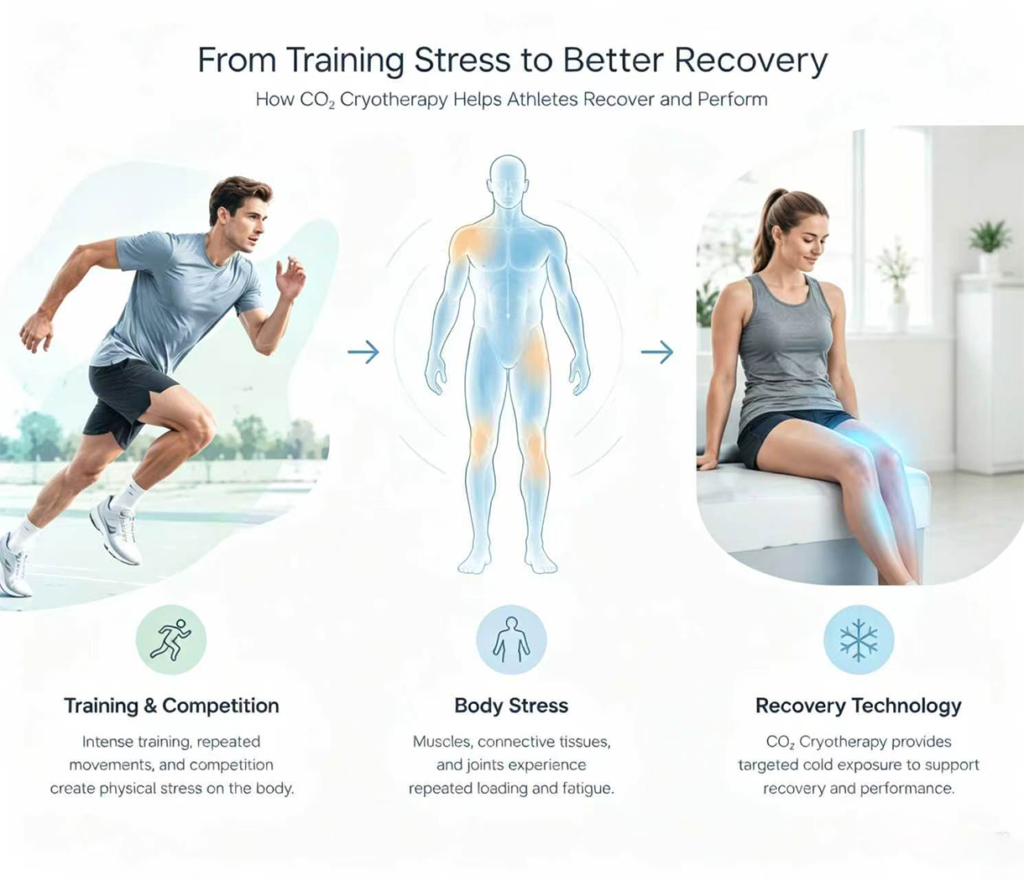
Professional and competitive athletes regularly experience physical stress from training sessions, competitions, and repeated movements. Sports teams now focus on recovery strategies because maintaining athlete readiness requires more than simply increasing training intensity.
During high-level athletic activity, muscles, connective tissues, and joints experience continuous mechanical stress. Recovery programs often include multiple approaches, such as mobility training, nutrition management, stretching, compression technology, and cold therapy.
Cryotherapy has gained attention in sports environments because controlled cold exposure may support comfort after intense physical activity. Research on cryostimulation has explored its role in sports recovery routines, especially regarding post-exercise discomfort and perceived muscle fatigue.
For sports teams, the value of recovery technology is not only related to individual sessions but also how easily it can integrate into daily training operations.
1.2 How CO₂ Cryotherapy Works in Sports Applications
CO₂ Cryotherapy uses compressed carbon dioxide to create rapid cooling when applied to targeted body areas. Unlike traditional cold methods that often require ice packs or water-based cooling, CO₂-based systems allow professionals to deliver focused cold exposure directly to specific areas.
The rapid temperature change activates physiological responses related to cold stimulation. These responses involve the nervous system, blood vessels, and surrounding tissues, creating a cooling effect that many athletes use as part of their recovery routine.
Localized CO₂ Cryotherapy is commonly considered for areas that experience repeated athletic stress, including:
- thighs
- calves
- shoulders
- knees
- lower back
- elbows
The targeted nature of CO₂ Cryotherapy allows sports professionals to adapt sessions according to athlete needs, training intensity, and recovery goals.
1.3 The Difference Between General Cold Therapy and Targeted CO₂ Cryotherapy
Traditional cold therapy methods, such as ice packs or cold water immersion, have been used in sports for many years. However, these methods may provide broader cooling rather than precise application to a specific body area.
CO₂ Cryotherapy focuses on localized cooling, which allows sports teams to address individual areas after training or competition. This targeted approach makes it suitable for performance facilities where athletes may require different recovery routines based on their position, training load, and physical demands.
For example, a soccer player may focus on lower body areas after repeated sprint training, while a tennis player may focus more on shoulder and elbow areas due to repetitive upper-body movements.
The flexibility of localized CO₂ Cryotherapy allows recovery professionals to create more personalized athlete maintenance programs.
2. Applications of CO₂ Cryotherapy in Professional Sports Environments
Sports organizations increasingly develop structured recovery systems that combine multiple technologies. CO₂ Cryotherapy can become one component within these systems by providing targeted cold stimulation that complements other recovery practices.
2.1 Supporting Athletes After High-Intensity Training Sessions
Intense training sessions create significant physical demands on athletes. Sprinting, strength training, jumping, and repeated movements can increase muscle workload and temporary discomfort.
Many sports teams include cold therapy within post-training routines because cooling methods have long been associated with athlete recovery practices. CO₂ Cryotherapy allows professionals to focus on specific areas that receive higher physical stress during training.
For example, football players may experience frequent stress around the hamstrings, calves, and knees, while basketball players may focus on lower-body areas affected by jumping and quick direction changes.
By integrating localized CO₂ Cryotherapy into recovery schedules, teams can provide athletes with an additional method to support comfort and preparation for future training sessions.
2.2 CO₂ Cryotherapy for Different Types of Athletes
Different sports create different physical demands. A recovery strategy designed for one sport may not fully match the needs of another.
Endurance athletes often experience repetitive muscle loading over long periods, while power athletes experience explosive movements that place greater stress on specific muscle groups.
CO₂ Cryotherapy can be adapted to different athletic environments because it allows targeted application.
Common sports applications may include:
- Soccer players focusing on legs and hips
- Basketball players focusing on knees and ankles
- Baseball players focusing on shoulders and elbows
- Cyclists focusing on thighs and calves
- Combat athletes focusing on multiple high-impact areas
This adaptability makes localized cryotherapy technology suitable for sports organizations managing athletes with different physical requirements.
3. Integrating CO₂ Cryotherapy Into Athlete Maintenance Programs
A complete athlete maintenance program requires consistency and proper planning. Recovery technology works most effectively when it becomes part of a structured system that includes training management, physical preparation, and professional monitoring.
3.1 The Role of Recovery Specialists and Sports Performance Teams
Modern sports teams often include professionals such as athletic trainers, strength coaches, rehabilitation specialists, and sports medicine staff. These professionals evaluate athlete conditions and design recovery plans based on training demands.
Within these environments, CO₂ Cryotherapy can serve as a supportive recovery tool. Professionals can determine when and where localized cooling may fit into an athlete’s routine.
The technology does not replace medical evaluation or rehabilitation programs. Instead, it provides another option that professionals can consider when developing comprehensive athlete care strategies.
3.2 Using CO₂ Cryotherapy During Competitive Seasons
Competitive seasons often require athletes to perform multiple times within short periods. Maintaining physical readiness becomes especially important when training sessions and competitions occur close together.
During these periods, recovery routines become more structured. Teams may combine mobility exercises, recovery sessions, nutrition strategies, and cold therapy technologies.
CO₂ Cryotherapy offers a practical option because it allows targeted application without requiring long preparation processes. This makes it suitable for busy sports environments where efficiency and consistency are important.
For teams managing multiple athletes, technology that supports flexible recovery workflows can become a valuable part of daily performance operations.
4. Choosing the Right CO₂ Cryotherapy Technology for Sports Facilities
As more sports organizations explore advanced recovery technologies, selecting suitable equipment becomes an important part of building an effective athlete maintenance system. Sports facilities need to consider application flexibility, operational convenience, and how well the technology fits into existing recovery workflows.
4.1 Important Features Sports Teams Should Consider
When evaluating CO₂ Cryotherapy equipment, sports professionals often consider several technical and practical factors. A suitable system should provide controlled cooling, targeted application, and efficient operation for different athletic needs.
Localized cryotherapy equipment is often designed to allow professionals to focus on specific body areas rather than applying general cooling methods. This targeted approach can be useful in sports environments where athletes from different disciplines have different recovery requirements.
Important considerations may include:
- precise application control
- consistent cooling performance
- ease of operation
- portability within training facilities
- compatibility with professional recovery routines
Local Cryotherapy’s CO₂ Cryotherapy technology focuses on localized cold application, allowing sports facilities and wellness centers to integrate targeted cooling into athlete maintenance programs.
4.2 Why Localized CO₂ Cryotherapy Fits Team-Based Recovery Environments
Sports teams manage multiple athletes with different training loads, positions, and physical demands. A recovery solution that works for one athlete may not be suitable for another.
Localized CO₂ Cryotherapy provides flexibility because professionals can focus on specific areas according to individual needs. A pitcher may require attention around the shoulder and elbow, while a runner may focus on lower-body muscle groups.
This personalized approach supports the growing trend of individualized athlete care. Instead of using a single recovery method for every athlete, performance teams can combine different strategies based on sport type, training intensity, and physical condition.
The ability to provide targeted cooling makes CO₂ Cryotherapy a practical option for facilities that manage diverse athlete populations.
4.3 Safety and Professional Guidelines in Sports Cryotherapy Use
Professional sports organizations typically emphasize responsible use of recovery technologies. Although cold therapy is widely used in athletic environments, proper application methods and professional guidance remain important.
Sports professionals consider factors such as exposure time, application area, athlete comfort, and individual health considerations when incorporating cryotherapy into recovery routines.
CO₂ Cryotherapy should be viewed as a supportive recovery technology rather than a replacement for medical assessment, rehabilitation programs, or professional sports care.
A structured approach allows teams to use recovery technologies more effectively while maintaining athlete safety and long-term performance goals.
5. The Future of CO₂ Cryotherapy in Sports Performance and Recovery
Sports science continues to develop as teams search for better ways to support athlete readiness. Recovery technology is becoming increasingly integrated into training environments, and localized CO₂ Cryotherapy represents one of the emerging approaches within this field.
5.1 The Growing Interest in Targeted Recovery Technology
Athletes and sports organizations are moving toward more personalized recovery methods. Instead of relying only on general recovery strategies, many teams now focus on targeted approaches that address specific physical demands.
Localized CO₂ Cryotherapy aligns with this trend because it allows professionals to apply cooling technology to selected areas based on athlete requirements.
As sports performance programs continue to evolve, technologies that provide flexibility, efficiency, and targeted application may become increasingly valuable parts of athlete maintenance systems.
5.2 How CO₂ Cryotherapy Supports the Evolution of Sports Wellness
The future of sports recovery will likely continue combining technology, professional expertise, and personalized care strategies.
CO₂ Cryotherapy represents one example of how traditional cold therapy concepts are developing through modern equipment design. By providing focused cooling through carbon dioxide-based technology, it offers sports facilities another option for supporting athlete comfort after demanding physical activity.
For training centers, athletic organizations, and performance professionals, localized cryotherapy technology provides an opportunity to expand recovery services while maintaining a science-based approach to athlete care.
FAQ
What is CO₂ Cryotherapy in sports recovery?
CO₂ Cryotherapy is a localized cold therapy method that uses carbon dioxide to create rapid cooling on targeted body areas. Sports teams use it as part of recovery and athlete maintenance routines.
Why do athletes use CO₂ Cryotherapy?
Athletes use CO₂ Cryotherapy as a supportive recovery method after training and competition. It may help support muscle comfort and recovery routines following physical stress.
Which athletes can use CO₂ Cryotherapy?
Different athletes, including runners, soccer players, basketball players, cyclists, and strength athletes, may incorporate localized cryotherapy into their recovery programs.
How is CO₂ Cryotherapy different from ice therapy?
CO₂ Cryotherapy provides targeted cooling through carbon dioxide application, while traditional ice methods usually provide broader cooling through direct contact with cold materials.
Can CO₂ Cryotherapy replace sports rehabilitation?
No. CO₂ Cryotherapy is a supportive recovery technology and does not replace professional medical evaluation, rehabilitation programs, or sports medicine guidance.
How do sports teams include CO₂ Cryotherapy in training programs?
Teams may include CO₂ Cryotherapy as part of post-training or post-competition recovery routines alongside mobility exercises, nutrition strategies, and other recovery methods.
Conclusion
CO₂ Cryotherapy is becoming an increasingly recognized technology in sports recovery environments because it provides targeted cooling that fits the needs of modern athlete maintenance programs. From professional teams to performance facilities, localized cryotherapy offers a flexible approach that can complement existing recovery strategies. By focusing on specific body areas and adapting to different athletic demands, CO₂ Cryotherapy provides sports professionals with another supportive tool for helping athletes maintain comfort, manage physical stress, and prepare for ongoing training challenges.
References
“Whole Body Cryotherapy in Athletes: From Recovery to Performance Enhancement”
https://www.ncbi.nlm.nih.gov/pmc/articles/PMC6470587
“Effects of Cryotherapy on Recovery After Exercise: A Review of Current Evidence”
“Cold Water Immersion and Other Cryotherapy Methods in Sports Recovery”
https://pubmed.ncbi.nlm.nih.gov/25539029
“Phototherapy and Cryotherapy Applications in Sports Medicine and Rehabilitation”
https://www.ncbi.nlm.nih.gov/pmc/articles/PMC5028039
“Recovery Strategies for Athletes: Current Concepts and Future Directions”