
Introduction
Strength training has become an important part of maintaining physical performance, muscle function, and mobility as people get older. However, many adults over 40 notice that their bodies may require more attention after intense workouts, especially when training volume increases or recovery time becomes longer. CO₂ cryotherapy, also known as localized carbon dioxide cryotherapy, has gained attention as a targeted cold therapy approach that supports post-workout comfort and recovery routines. By using controlled CO₂ cooling technology, this method allows users to focus on specific areas such as muscles, joints, and areas affected by exercise-related stress. Local Cryotherapy provides a modern approach for individuals who want to include localized cooling technology as part of their fitness and wellness routine.
1. Understanding Strength Training Recovery After 40
As people move beyond their 40s, maintaining muscle strength and mobility becomes an important part of an active lifestyle. Strength training remains a valuable way to support physical function, but recovery needs may change due to factors such as training intensity, lifestyle habits, and natural changes in muscle condition.
1.1 Why Recovery Becomes More Important With Age
Strength training places repeated demands on muscles, tendons, and joints. During workouts such as weightlifting, resistance exercises, or functional training, the body experiences temporary physical stress as muscles adapt to new challenges.
For adults over 40, recovery often becomes a greater focus because maintaining consistency in training requires balancing exercise intensity with proper rest and wellness habits. Many active individuals look for supportive methods that help them feel comfortable between workouts while continuing their fitness routines.
CO₂ cryotherapy provides a targeted cooling approach that fits into this type of recovery-focused lifestyle by focusing on specific areas after physical activity.
1.2 Common Recovery Concerns Among Active Adults Over 40
Many adults over 40 continue participating in activities such as strength training, resistance workouts, recreational sports, and fitness classes. However, repeated movement and higher training intensity may create areas of physical stress.
Common concerns include muscle tightness, joint stiffness, delayed muscle soreness, and general fatigue after exercise sessions. These experiences can affect how quickly someone returns to their next workout and how comfortable they feel during daily activities.
Localized CO₂ cryotherapy allows users to focus cooling on areas that receive frequent training stress, such as the shoulders, knees, thighs, calves, and lower back.
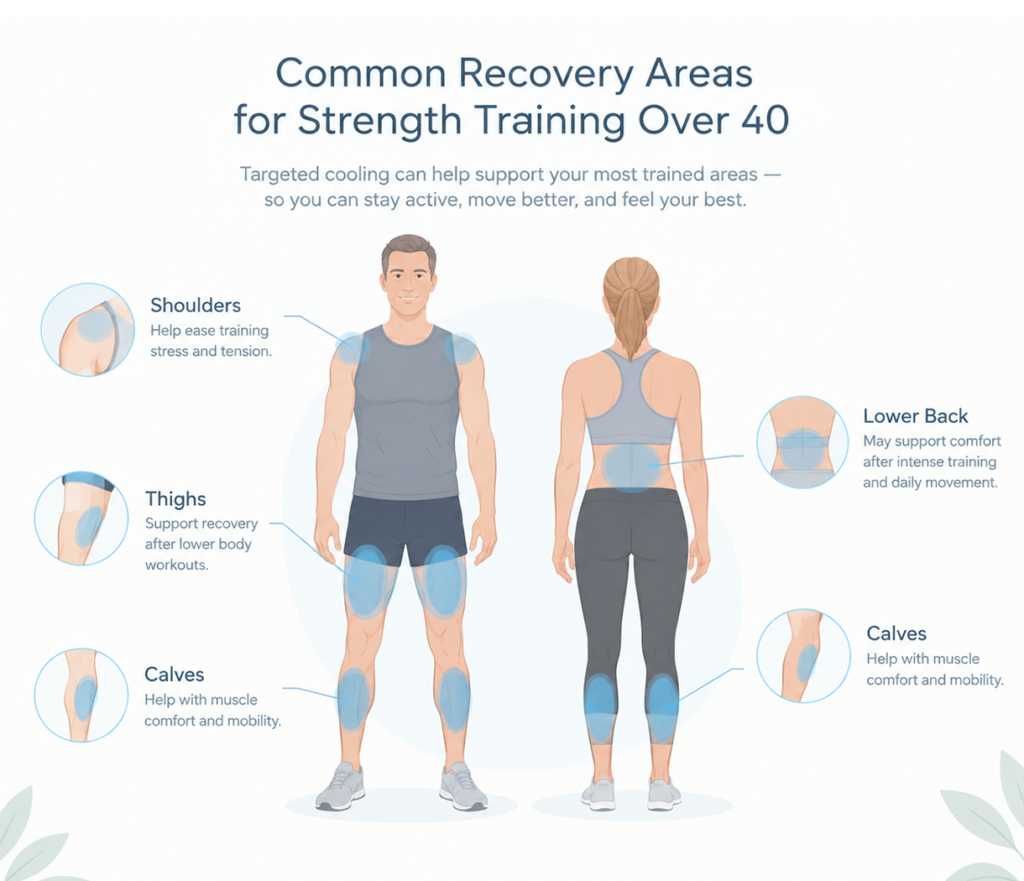
1.3 The Importance of Maintaining Mobility and Training Consistency
For many adults, the goal of strength training is not only improving performance but also supporting long-term mobility and independence. Maintaining a regular exercise routine requires strategies that support comfort and help individuals stay active.
A balanced fitness approach includes proper exercise programming, nutrition, sleep, and recovery habits. CO₂ cryotherapy can be considered one additional tool that supports a comprehensive wellness routine by providing targeted cooling after physical activity.
2. How CO₂ Cryotherapy Works for Targeted Cooling Support
CO₂ cryotherapy uses compressed carbon dioxide to create rapid localized cooling on targeted body areas. Unlike traditional ice packs that provide general cold application, CO₂ cryotherapy allows users to focus cooling more precisely on selected areas.
This targeted approach has made localized cryotherapy increasingly popular among fitness users who want a convenient recovery method after demanding workouts.
2.1 Understanding Localized CO₂ Cooling Technology
Localized CO₂ cryotherapy works by releasing carbon dioxide gas through a specialized device onto the skin surface. The rapid expansion of CO₂ creates a cooling effect that lowers skin temperature in the targeted area.
This controlled cooling process may influence the body’s natural responses to cold exposure, including changes related to blood circulation and tissue activity. The goal is not to replace traditional recovery methods but to provide another option for individuals interested in modern cold therapy technology.
Local Cryotherapy systems are designed around targeted application, allowing users to focus on specific muscle groups or areas that experience physical stress during training.
2.2 The Connection Between Cold Therapy and Exercise Recovery
Cold therapy has long been used in sports and wellness environments as part of post-exercise recovery routines. Research has explored different forms of cryotherapy and their relationship with muscle recovery, soreness, and physical performance.
For strength training enthusiasts over 40, localized CO₂ cryotherapy offers a practical approach because workouts often involve specific muscle groups. Instead of applying cooling to the entire body, users can focus on areas that receive the greatest workload during training.
This targeted method allows recovery routines to become more personalized based on individual exercise habits.
2.3 CO₂ Cryotherapy and Muscle Comfort After Training
Strength training creates temporary stress within muscles as the body adapts to resistance and increased workload. After challenging sessions, many people experience muscle tightness or delayed soreness.
CO₂ cryotherapy focuses on providing localized cooling support to areas commonly used during resistance training, including:
- Quadriceps after leg workouts
- Shoulders after upper-body training
- Lower back after compound exercises
- Calves after functional movements
Rather than replacing essential recovery practices, localized cryotherapy can complement stretching, mobility exercises, proper hydration, and rest.
3. CO₂ Cryotherapy Applications for Strength Training Enthusiasts Over 40
Adults over 40 often choose strength training to maintain an active lifestyle, improve physical confidence, and support daily movement. As training routines become more personalized, recovery methods also become more focused on individual needs.
3.1 Supporting Recovery After Resistance Training Sessions
Resistance training can include activities such as weightlifting, resistance bands, bodyweight exercises, and functional movements. These workouts often target multiple muscle groups and require proper recovery planning.
CO₂ cryotherapy can be incorporated after training sessions as part of a personal recovery routine. Users may apply localized cooling to areas that feel physically stressed after exercise, helping them focus on comfort before their next activity.
For example, someone completing a lower-body workout may choose to focus on the thighs, knees, or calves, while someone completing upper-body training may focus on shoulders or arms.
3.2 Common Areas for Localized CO₂ Cryotherapy Application
The advantage of localized cryotherapy is the ability to focus on specific body regions rather than using a general cooling method.
For strength training enthusiasts, commonly selected areas may include the thighs after squats or lunges, shoulders after pressing exercises, elbows after repetitive lifting movements, and lower back areas affected by compound exercises.
The ability to target specific regions makes CO₂ cryotherapy suitable for individuals who prefer a personalized recovery approach based on their workout routines.
3.3 Building a Recovery Routine That Supports Long-Term Fitness Goals
Consistency is one of the most important factors in maintaining a long-term fitness routine. Recovery strategies should fit naturally into daily schedules and support continued participation in physical activities.
Many active adults combine different recovery habits, including mobility exercises, stretching, balanced nutrition, quality sleep, and supportive technologies such as localized cryotherapy.
CO₂ cryotherapy can become part of this overall approach by providing a convenient method for targeted cooling after exercise while helping users focus on maintaining comfort and mobility.
4. Why CO₂ Cryotherapy Is Gaining Attention Among Active Adults Over 40
As fitness trends continue to evolve, more adults are looking beyond traditional workout routines and focusing on complete wellness strategies that include exercise, recovery, and mobility support. For strength training enthusiasts over 40, maintaining consistency often requires paying attention to how the body responds before, during, and after physical activity. CO₂ cryotherapy has become an emerging recovery technology because it offers a targeted approach that fits easily into modern fitness routines.
4.1 The Role of Targeted Cooling in a Modern Fitness Routine
Many active adults prefer recovery methods that are convenient and adaptable to their individual training schedules. Unlike general cooling approaches, localized CO₂ cryotherapy allows users to focus on specific areas that experience greater physical demand during exercise.
For example, individuals who perform regular strength workouts may focus on their shoulders after upper-body training, thighs after lower-body sessions, or lower back areas after compound movements. This targeted approach allows recovery routines to align more closely with personal workout patterns.
Local Cryotherapy’s CO₂ technology is designed around precision and efficiency, making localized cooling a practical option for fitness enthusiasts who want to include advanced recovery methods in their wellness routines.
4.2 Supporting Mobility for Active Aging
Maintaining mobility becomes increasingly important as adults continue strength training later in life. Mobility influences how comfortably people perform daily activities, participate in exercise, and maintain an active lifestyle.
Strength training supports muscle function, but recovery habits also play an important role in long-term fitness consistency. CO₂ cryotherapy may support a mobility-focused routine by providing targeted cooling for areas that experience temporary physical stress after exercise.
For adults over 40, combining strength training with appropriate recovery practices can help create a more balanced approach to maintaining an active lifestyle.
5. Choosing CO₂ Cryotherapy as Part of a Personalized Recovery Strategy
Every person’s fitness routine is different. Training frequency, exercise type, physical condition, and lifestyle factors all influence how individuals approach recovery. CO₂ cryotherapy provides another option for people who want to explore localized cold therapy as part of their personal wellness plan.
5.1 Who May Consider CO₂ Cryotherapy for Strength Training Recovery?
CO₂ cryotherapy may interest adults who regularly participate in resistance training and want to explore additional ways to support post-workout comfort. This includes individuals involved in weightlifting, functional fitness, recreational training, or general strength-focused exercise.
People who experience temporary muscle tightness, physical fatigue, or discomfort after demanding workouts may consider how localized cooling fits into their recovery habits.
However, individual experiences can vary. CO₂ cryotherapy should be viewed as a supportive wellness technology that complements proper training, recovery habits, and professional health guidance when needed.
5.2 Why Local Cryotherapy Provides a Targeted Recovery Approach
Local Cryotherapy focuses on localized CO₂ cooling technology, allowing users to apply cold therapy to specific areas rather than using a general whole-body approach.
The technology uses controlled carbon dioxide cooling to provide targeted application for areas commonly involved in physical activity. This makes it suitable for fitness environments where individuals often have different recovery needs based on their workout style.
For strength training enthusiasts over 40, localized CO₂ cryotherapy offers a modern way to include targeted cooling in a broader approach focused on maintaining mobility, comfort, and training consistency.
FAQ
What is CO₂ cryotherapy?
CO₂ cryotherapy is a localized cold therapy method that uses carbon dioxide cooling technology to provide targeted temperature reduction on selected body areas.
How can CO₂ cryotherapy support strength training recovery?
CO₂ cryotherapy may support post-workout comfort by providing targeted cooling to areas that experience temporary physical stress after exercise.
Which body areas can be used with localized CO₂ cryotherapy?
Common application areas include muscles, joints, and regions affected by exercise activity, such as shoulders, thighs, calves, knees, and lower back areas.
Is CO₂ cryotherapy only for professional athletes?
No. CO₂ cryotherapy can be considered by active adults, fitness enthusiasts, and individuals who include strength training in their regular lifestyle.
Can CO₂ cryotherapy replace exercise recovery habits?
No. CO₂ cryotherapy should complement important recovery practices such as proper rest, hydration, mobility exercises, and balanced fitness routines.
Conclusion
CO₂ cryotherapy has become an increasingly popular technology among active adults who want to support their fitness and recovery routines with targeted cooling. For strength training enthusiasts over 40, maintaining mobility and workout consistency often requires a balanced approach that includes exercise, recovery habits, and wellness strategies. Local Cryotherapy provides localized CO₂ cooling technology that allows users to focus on specific areas affected by training activities. While CO₂ cryotherapy is not a replacement for proper fitness practices or professional guidance, it can serve as a supportive option for individuals looking to enhance their personal recovery routines and maintain an active lifestyle.
References
Cryotherapy in Sports Medicine: A Review of the Current Evidence
https://pubmed.ncbi.nlm.nih.gov/34669081
The Effects of Cryotherapy on Recovery Following Exercise-Induced Muscle Damage
https://pubmed.ncbi.nlm.nih.gov/25979825
Cold Water Immersion and Other Cryotherapy Methods in Sports Recovery: A Review
https://pubmed.ncbi.nlm.nih.gov/31533639
The Use of Cryotherapy in Sports and Exercise: Mechanisms and Applications
https://pubmed.ncbi.nlm.nih.gov/28445345
Effects of Localized Cryotherapy on Muscle Recovery and Physical Performance