Introduction
You wake up in the middle of the night feeling like someone set your big toe on fire. Even the lightest touch of a bedsheet against your skin sends shockwaves of pain through your entire body. You wake up in the middle of the night feeling like someone set your big toe on fire. Even the lightest touch of a bedsheet against your skin sends shockwaves of pain through your entire body. There is no doubt – another gout attack has arrived. Reaching for anti-inflammatory medication brings little comfort when you know relief is hours away. Ice seems like a logical choice, but the cold only intensifies the agony of your already screaming joint. There is a better way. CO₂ cryotherapy delivers targeted cold therapy that stops inflammation in seconds, not hours. This technology works with your body’s natural nerve pathways, providing rapid relief when you need it most. There is a better way. CO₂ cryotherapy delivers targeted cold therapy that stops inflammation in seconds, not hours. This technology works with your body’s natural nerve pathways, providing rapid relief when you need it most.
1. Understanding the Gout Attack Nightmare
Gout is one of the most painful forms of arthritis. It occurs when uric acid crystals form inside your joints, triggering an explosive inflammatory response. Knowing what happens during an attack helps explain why CO₂ cryotherapy works so effectively.
1.1 What Causes a Gout Attack
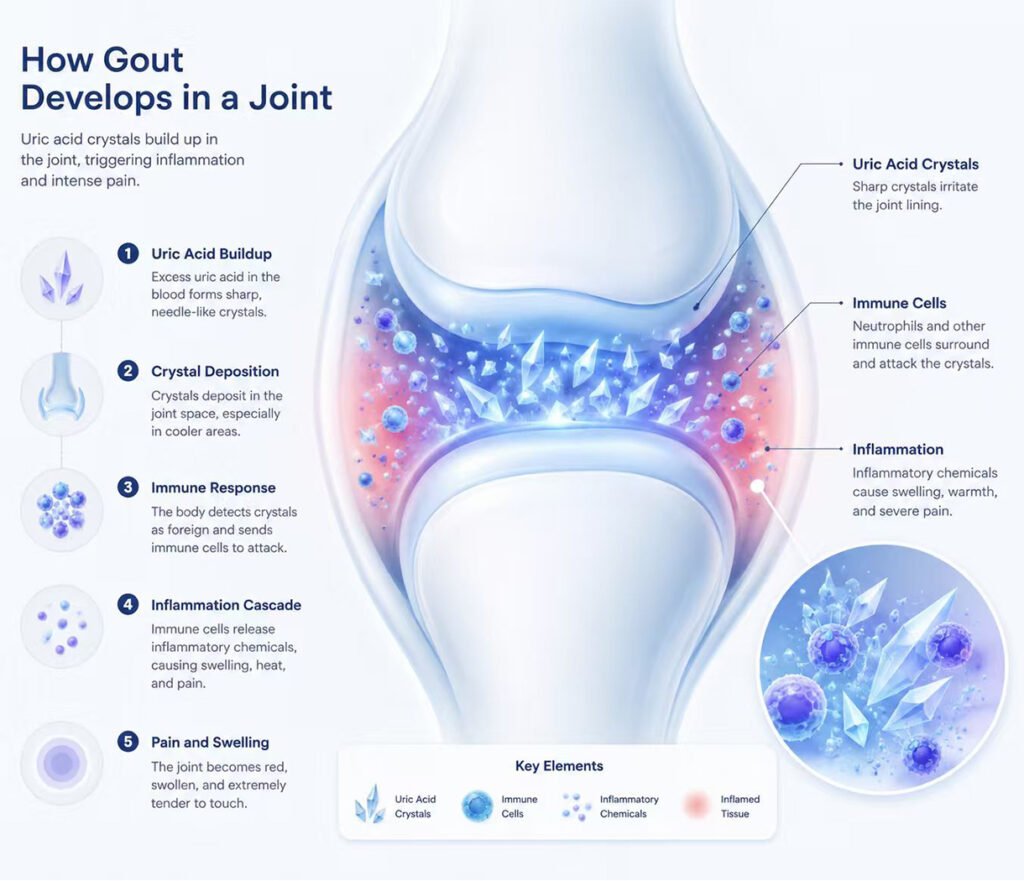
Your body produces uric acid when it breaks down purines, substances found naturally in your body and in certain foods. Normally, uric acid dissolves in your blood and passes through your kidneys. But sometimes your body produces too much uric acid, or your kidneys cannot eliminate enough of it. The excess uric acid forms sharp, needle-like crystals that deposit in your joints. These crystals irritate the joint lining, triggering a massive inflammatory response. Your immune system attacks the crystals, but in doing so, it also attacks your joint.
1.2 Why Gout Pain Hits at Night
Gout attacks often begin in the early morning hours for several reasons. Your body temperature drops slightly while you sleep, and lower temperatures encourage uric acid crystals to form. You may become slightly dehydrated overnight, which concentrates uric acid in your blood. Your natural cortisol levels, which help control inflammation, reach their lowest point around midnight and remain low until morning. These factors combine to create the perfect storm for crystal formation and inflammation, which is why you wake up in excruciating pain.
1.3 The Inflammation Cascade
Once uric acid crystals form in your joint, they trigger a cascade of inflammatory events. Your immune system sends neutrophils, a type of white blood cell, to attack the crystals. These neutrophils release inflammatory chemicals that cause redness, swelling, heat, and pain. The inflammation spreads to surrounding tissues, making the pain feel even more intense. This cascade happens rapidly, which is why gout attacks seem to come out of nowhere and reach peak intensity within hours.
2. How CO₂ Cryotherapy Works for Gout
CO₂ cryotherapy uses pressurized carbon dioxide gas to create an intense cooling effect on the skin surface. This rapid temperature drop triggers specific biological responses that interrupt the inflammatory cascade at multiple points.
2.1 The TRPM8 Pathway
Your skin contains millions of temperature sensors called TRPM8 channels. These channels detect cold temperatures and send signals to your nervous system. When pressurized CO₂ gas expands rapidly, it drops your skin temperature from normal down to near freezing in just seconds. This intense cold activates TRPM8 channels, which send powerful signals to your spinal cord and brain. These signals can override the pain signals coming from your inflamed gouty joint, providing almost immediate relief.
2.2 Rapid Vasoconstriction
The immediate response to intense cold is vasoconstriction, where your blood vessels narrow. In the context of a gout attack, this vasoconstriction serves an important purpose. It reduces blood flow to the inflamed joint, which limits the supply of inflammatory cells and chemicals reaching the area. Think of it as turning down the faucet on the inflammatory cascade. The swelling begins to subside, and the heat radiating from your joint decreases significantly within minutes of treatment.
2.3 Reactive Hyperemia Phase
What makes CO₂ cryotherapy different from an ice pack is what happens after the cold stimulus ends. As your tissue naturally rewarms, your blood vessels expand dramatically in a phase called reactive hyperemia. This surge of blood flow flushes away inflammatory byproducts that have accumulated in your joint. It delivers oxygen and nutrients that support tissue repair. Traditional ice application produces vasoconstriction but often fails to trigger this robust rebound circulation, which is why ice feels good while you use it but offers little lasting benefit.
2.4 Interrupting the Inflammatory Cycle
Gout pain persists because the inflammatory cycle feeds on itself. Inflammatory chemicals attract more immune cells, which release more inflammatory chemicals. CO₂ cryotherapy interrupts this cycle at multiple points. The initial cold reduces the activity of inflammatory enzymes. The vasoconstriction limits the supply of new immune cells. The rebound circulation removes inflammatory mediators. This multi-pronged approach stops the inflammatory cycle rather than just numbing the pain.
3. CO₂ Cryotherapy vs. Traditional Gout Treatments
Understanding how CO₂ cryotherapy compares with conventional options helps you make informed decisions about managing your gout attacks.
3.1 CO₂ vs. Ice Packs
An ice pack cools your skin slowly over many minutes. This gradual cooling produces vasoconstriction, but it does not trigger the strong TRPM8 activation or the robust reactive hyperemia that characterizes CO₂ therapy. Ice packs also require you to keep the ice on your joint for fifteen to twenty minutes, which can be intolerable when your toe is already painfully sensitive. CO₂ therapy delivers its full effect in seconds, not minutes. The intense cold is brief enough to be tolerable yet powerful enough to trigger meaningful physiological changes.
3.2 CO₂ vs. Oral Medications
NSAIDs like ibuprofen and naproxen are the standard first-line treatment for gout attacks. They work by blocking inflammatory enzymes, but they take one to two hours to start working and several hours to reach full effect. Prescription medications like colchicine work faster but often cause significant digestive side effects. CO₂ therapy provides relief within seconds. It does not require you to swallow pills, does not cause stomach upset, and does not interact with other medications you may be taking.
3.3 CO₂ vs. Corticosteroids
For severe gout attacks, doctors sometimes prescribe oral or injectable corticosteroids. These powerful anti-inflammatory medications work well, but they come with significant side effects, especially with repeated use. Weight gain, mood changes, high blood sugar, and weakened bones are all potential concerns. CO₂ therapy carries none of these risks. It is purely physical therapy, affecting your joint through temperature and nerve pathways rather than through chemicals that circulate throughout your body.
3.4 CO₂ as a Complement to Medication
CO₂ cryotherapy does not need to replace your gout medications. It works alongside them. You can use CO₂ therapy immediately when you feel an attack starting, while you wait for your oral medication to take effect. The rapid relief from CO₂ therapy can reduce your need for high doses of pain medication. Some patients find that regular use of CO₂ therapy helps them manage their condition with lower medication doses overall.
4. What to Expect During a CO₂ Cryotherapy Session for Gout
The treatment process is quick, simple, and designed to provide relief when you need it most. A session takes only a few minutes and requires no special preparation.
4.1 Before Your First Session
Your provider will examine your affected joint, ask about your gout history, and confirm that CO₂ cryotherapy is appropriate for your situation. You will sit or lie in a comfortable position that allows easy access to the painful joint. For toe or foot attacks, you will remove your shoe and sock. No needles, no gels, and no special preparation are required. The provider will explain what you will feel so nothing comes as a surprise.
4.2 The Treatment Experience
The provider positions the CO₂ cryotherapy device several inches from your skin and activates short bursts of pressurized gas. You will feel an intense cold rush that penetrates deeply but fades almost immediately. The provider moves the device across the inflamed area, covering the joint from multiple angles. For a gouty toe, this means treating the top, sides, and bottom of the joint. The entire active treatment takes between two and five minutes. Most patients find the sensation intense but tolerable, especially knowing that relief is coming.
4.3 What You Feel During Treatment
As the cold hits your skin, you will feel a sharp cooling sensation that peaks quickly and then begins to fade. Some patients describe it as feeling like your joint is being washed with ice water. Unlike applying an ice pack, where the cold becomes increasingly uncomfortable over time, the CO₂ cold is brief. By the time your brain registers the cold, the burst is already ending. Most patients find the experience surprisingly tolerable, even on a joint that is exquisitely sensitive to touch.
4.4 What You Feel Afterward
Immediately after treatment, the intense pain of your gout attack will likely feel reduced. Some patients report that their pain drops from an eight or nine out of ten to a three or four within minutes. The redness and heat radiating from your joint usually decrease noticeably. You may feel some residual coolness or tingling in the area, but this fades within minutes. The relief you feel after a single session can last for hours, giving your oral medications time to take effect and your body time to start resolving the attack naturally.
4.5 How Often to Return
For an acute gout attack, a single CO₂ cryotherapy session often provides significant relief. Some patients benefit from a second session twelve to twenty-four hours later. For those who experience frequent attacks, regular maintenance sessions may help prevent future flares. Many patients find that receiving CO₂ therapy at the very first sign of an impending attack, when they feel that subtle twinge in their toe, can stop the attack from fully developing.
5. Why Gout Sufferers Choose CO₂ Cryotherapy
People with gout choose CO₂ cryotherapy for many reasons. Some have tried traditional treatments without success. Others want to avoid medication side effects. Many simply want relief that works faster than anything else available.
5.1 Speed of Relief
When you wake up at 2 AM with a gout attack, waiting an hour for medication to work feels like an eternity. Every minute you wait, the pain intensifies. Your sleep is already ruined, and you know the rest of your night will be spent in agony. CO₂ cryotherapy works in seconds. You can be back in bed, already feeling relief, within ten minutes of deciding to seek treatment. That speed makes all the difference when you are in severe pain.
5.2 No Side Effects
Oral gout medications come with a long list of potential side effects. NSAIDs can cause stomach ulcers, kidney damage, and increased blood pressure. Colchicine frequently causes nausea, vomiting, and diarrhea. Steroids affect your mood, blood sugar, and bone density. When used as directed, CO₂ cryotherapy has no known side effects. Nothing enters your bloodstream, so your liver and kidneys face no extra burden. The therapy simply delivers cold to your joint and lets your body respond naturally.
5.3 Avoiding Medication Interactions
Many people with gout also have other health conditions like high blood pressure, diabetes, or heart disease. They may already take several medications for these conditions. Adding another medication increases the risk of interactions and side effects. CO₂ cryotherapy does not interact with any medications. It works through physical mechanisms, not chemical ones. You can use it safely regardless of what other medications you take.
5.4 Breaking the Medication Cycle
Some gout sufferers find themselves caught in a frustrating cycle. They take medication for an attack, feel better, then stop taking it. The attack returns, and they start again. Over time, they need higher doses to get the same effect. CO₂ cryotherapy offers a way out of this cycle. It provides relief without building tolerance. You can use it as often as you need without worrying about needing more or developing dependence.
FAQ
Q: Does CO₂ cryotherapy hurt?
A: Most patients describe an intense cold rush that fades within seconds. It is not painful, though some find the intensity surprising during their first session.
Q: How long does the relief last after one session?
A: Many patients experience significant pain reduction for several hours after a single session. The relief often lasts long enough for oral medications to take effect.
Q: How many sessions will I need for a gout attack?
A: A single session often provides substantial relief. Some patients benefit from a second session twelve to twenty-four hours later.
Q: Can I use CO₂ cryotherapy while taking gout medication?
A: Yes, CO₂ cryotherapy works alongside medications. There are no known interactions. Use it immediately when an attack starts while you wait for your medication to take effect.
Q: Are there any side effects?
A: Side effects are rare and temporary. Some patients experience mild redness or tingling in the treated area that resolves within minutes.
Q: Can CO₂ cryotherapy prevent future gout attacks?
A: Regular maintenance sessions may help reduce the frequency of attacks for some patients, especially when used at the very first sign of an impending flare.
Conclusion
A gout attack at 2 AM does not have to mean hours of waiting for medication to work. CO₂ cryotherapy offers rapid relief that works with your body’s natural nerve pathways to interrupt the inflammatory cascade in seconds. By activating TRPM8 cold sensors, triggering vasoconstriction, and promoting reactive hyperemia, this non-invasive treatment addresses gout inflammation at multiple levels without pills, needles, or side effects. For those who have endured the agony of nocturnal gout attacks and want a faster, drug-free option for relief, CO₂ cryotherapy represents a reasonable next step to discuss with your provider.
References
- Experience with high-pressure CO₂ cryotherapy in acute and chronic pain conditions in sports medicine. German Journal of Sports Medicine.
https://www.germanjournalsportsmedicine.com/archive/2025/4/topical-therapy-with-compressed-co2-in-sports-medicine/ - Cryotherapy for Acute Gout Attacks: Mechanisms and Clinical Applications. Journal of Pain Research.
https://www.dovepress.com/journal-of-pain-research - TRPM8 Channels in Cold Sensing and Pain Modulation. National Center for Biotechnology Information.
https://pubmed.ncbi.nlm.nih.gov/31123724/