
Introduction
With the increasing use of smartphones, tablets, and computers in daily life, many people experience discomfort related to prolonged forward head posture, commonly known as “Tech Neck.” Long periods of looking downward can place continuous stress on the cervical muscles, shoulders, and upper back, leading to stiffness, muscle fatigue, and reduced comfort during everyday activities. CO₂ Cryotherapy, also known as localized cryotherapy using carbon dioxide cooling technology, has gained attention as a targeted cold therapy method that supports muscle recovery and comfort management. By delivering extremely cold CO₂ gas to specific areas, this technology provides a convenient approach for people who want to include localized cooling into their wellness routines. This article explores how CO₂ Cryotherapy connects with Tech Neck, explains the science behind localized cold therapy, and discusses how this technology may support modern lifestyles.
1. Understanding Tech Neck and the Growing Need for Localized Cryotherapy
Modern technology has changed the way people work, communicate, and relax. However, frequent smartphone use and extended screen time can influence posture and create additional stress on the neck and shoulder muscles.
1.1 What Is Tech Neck and Why Does It Affect Daily Comfort?
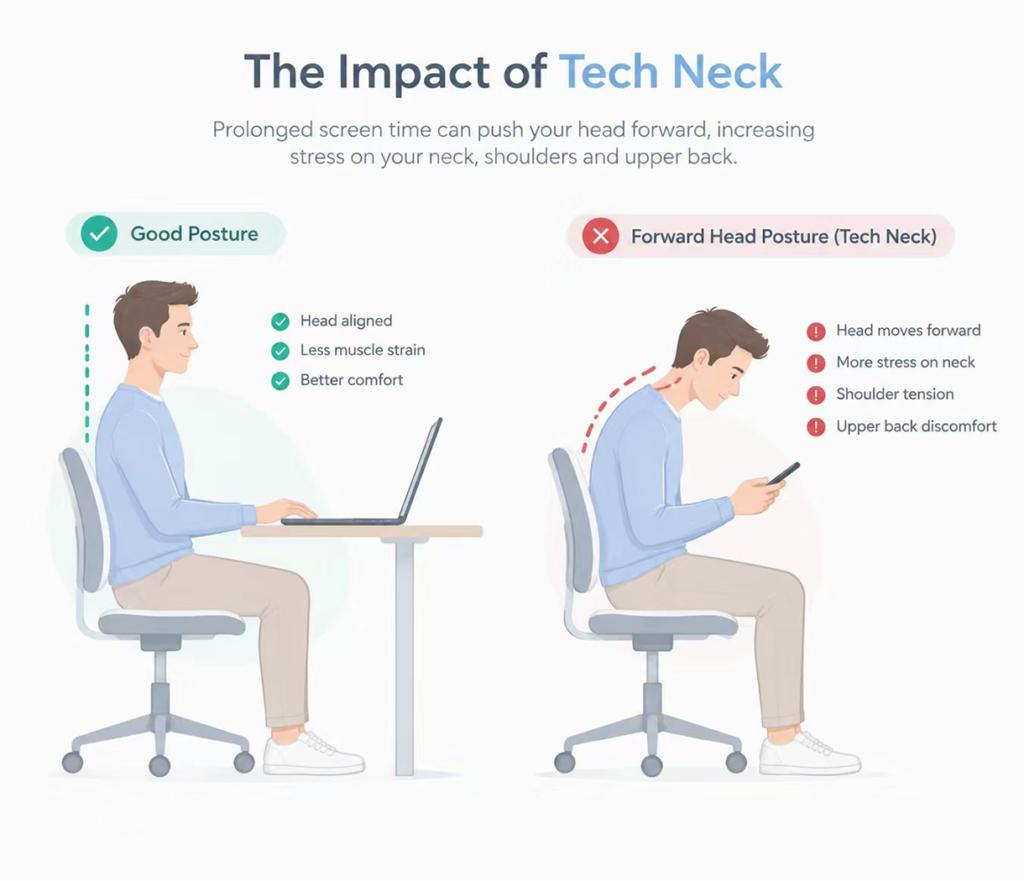
Tech Neck refers to neck discomfort associated with prolonged forward head posture while using smartphones, laptops, and other digital devices. When the head moves forward from its natural alignment, the cervical muscles may experience increased workload to support the weight of the head.
Over time, this posture may contribute to neck stiffness, shoulder tightness, upper back tension, and muscle fatigue. People who spend many hours texting, browsing social media, working remotely, or using computers may notice discomfort around the cervical region.
Although lifestyle adjustments such as improving posture and taking movement breaks are important, many individuals also explore supportive options such as CO₂ Cryotherapy to help manage areas affected by muscle tension.
1.2 How CO₂ Cryotherapy Supports Neck and Shoulder Comfort
CO₂ Cryotherapy uses compressed carbon dioxide gas that reaches temperatures around -78°C (-108°F) when released. Unlike traditional ice packs that cool larger areas, localized cryotherapy allows users to focus cooling on specific body regions.
When applied around areas such as the neck, shoulders, and upper back, CO₂ Cryotherapy creates a controlled cooling effect on the skin and underlying tissues. This process may support temporary comfort, reduce feelings of muscle fatigue, and become part of a recovery routine after prolonged screen use.
The targeted nature of CO₂ Cryotherapy makes it suitable for individuals who experience discomfort in specific areas rather than requiring full-body cooling.
1.3 Why Localized Cryotherapy Is Becoming Popular Among Digital Users
The modern digital lifestyle requires people to stay connected for long periods. Office workers, remote employees, students, and content creators often spend several hours daily in fixed positions.
Because of this, many people are searching for convenient wellness solutions that fit into busy schedules. Localized CO₂ Cryotherapy offers a quick application method that focuses on specific areas commonly affected by daily posture habits.
This approach allows users to include cold therapy as part of their personal recovery and relaxation routines.
2. The Science Behind CO₂ Cryotherapy and Cold Therapy Technology
Understanding how CO₂ Cryotherapy works helps explain why localized cooling has become a popular topic in recovery and wellness fields.
2.1 How Extreme Cooling Influences Muscles and Soft Tissues
Cold therapy has been widely used in sports recovery and physical wellness because temperature changes can influence the body’s normal responses. When cold energy reaches the skin surface, it interacts with local tissues and creates a cooling effect.
CO₂ Cryotherapy provides rapid temperature reduction through controlled carbon dioxide application. This process may help support a feeling of freshness, comfort, and relaxation in areas experiencing temporary muscle tension.
For people dealing with Tech Neck-related discomfort, localized cooling focuses on commonly affected areas such as the cervical muscles, trapezius muscles, and shoulder region.
2.2 The Role of Carbon Dioxide in Localized Cryotherapy
Carbon dioxide plays an important role in localized cryotherapy because of its ability to create very low temperatures during expansion. This allows practitioners and users to apply cold therapy precisely without requiring direct contact with ice.
Compared with traditional cooling methods, CO₂ Cryotherapy provides a more controlled approach. The application can focus on smaller regions, making it suitable for areas such as the neck and shoulders where precision is important.
The technology is commonly used in wellness, sports recovery, and muscle care environments.
2.3 CO₂ Cryotherapy and Muscle Recovery After Screen Time
Long periods of screen use can create repetitive stress on the same muscle groups. The neck, shoulders, and upper back often remain active for extended periods while maintaining posture.
CO₂ Cryotherapy may support recovery routines by providing localized cooling after prolonged activities. Many users combine cold therapy with healthy habits such as stretching, ergonomic adjustments, and regular movement.
A balanced approach helps address the daily factors that contribute to muscle tension.
3. Common Applications of CO₂ Cryotherapy for Tech Neck Discomfort
CO₂ Cryotherapy can be incorporated into different lifestyle scenarios depending on personal needs and comfort goals.
3.1 Areas Commonly Targeted During Localized Cryotherapy
People experiencing Tech Neck-related tension often focus on areas where muscle fatigue commonly appears.
Common application areas include:
- The back of the neck
- Upper trapezius muscles
- Shoulder areas
- Upper back muscles
These regions frequently experience stress from forward head posture and extended sitting positions.
CO₂ Cryotherapy allows targeted cooling, making it suitable for users who prefer focusing on specific areas rather than applying general cold therapy.
3.2 CO₂ Cryotherapy for Office Workers and Remote Professionals
Office workers and remote professionals often spend long hours looking at computer screens. Maintaining the same posture for extended periods may contribute to neck stiffness and shoulder tension.
For this group, CO₂ Cryotherapy can become part of a daily wellness routine after work sessions or during recovery periods. Localized cooling around the neck and shoulders may provide a refreshing sensation and help users feel more comfortable after long periods of sitting.
Combining CO₂ Cryotherapy with proper workstation setup, regular movement, and posture awareness creates a more complete approach to managing daily muscle stress.
4. Integrating CO₂ Cryotherapy Into a Modern Wellness Routine
As technology continues to influence daily habits, people are looking for efficient ways to support their physical comfort.
4.1 Why Targeted Cold Therapy Fits Busy Lifestyles
One advantage of localized CO₂ Cryotherapy is its ability to focus on specific body areas. Many people prefer solutions that do not require significant time changes in their daily schedules.
Whether used after computer work, during recovery periods, or as part of a wellness routine, targeted cold therapy provides flexibility for modern users.
The convenience of localized application makes CO₂ Cryotherapy appealing to individuals who experience occasional muscle fatigue from everyday activities.
4.2 Combining CO₂ Cryotherapy With Healthy Posture Habits
While CO₂ Cryotherapy can support comfort management, healthy daily habits remain essential for reducing the impact of prolonged screen use.
Important lifestyle practices include:
- Maintaining proper screen height
- Taking regular movement breaks
- Performing neck and shoulder mobility exercises
- Creating an ergonomic workspace
When combined with these habits, this therapy can become part of a broader approach to supporting neck and shoulder wellness.
5. Understanding Expectations Before Using CO₂ Cryotherapy
CO₂ Cryotherapy continues to attract attention because it combines advanced cooling technology with targeted application. However, users should understand its role clearly.
5.1 CO₂ Cryotherapy as a Supportive Recovery Method
It is designed to provide localized cooling support and improve comfort during recovery routines. It does not guarantee results for every individual and should not replace professional evaluation when persistent discomfort occurs.
Tech Neck-related issues often involve multiple factors, including posture, activity habits, muscle condition, and lifestyle patterns.
5.2 The Future of Localized Cryotherapy in Daily Health Management
As wearable technology and personal wellness solutions continue developing, localized cryotherapy may become increasingly integrated into everyday routines.
CO₂ Cryotherapy represents a connection between professional recovery technology and personal wellness management. Its targeted cooling approach provides another option for people seeking convenient ways to support muscle comfort in modern digital environments.
FAQ
What is CO₂ Cryotherapy?
It is a localized cold therapy method that uses carbon dioxide gas to create rapid cooling on targeted body areas.
Can CO₂ Cryotherapy help with Tech Neck discomfort?
It may support comfort and relaxation in areas affected by neck and shoulder tension related to prolonged screen use.
Which areas can be treated with localized CO₂ Cryotherapy?
Common areas include the neck, shoulders, upper back, and other muscle regions experiencing temporary tension.
How is CO₂ Cryotherapy different from an ice pack?
It provides targeted cooling through carbon dioxide gas, allowing more precise application compared with traditional cold packs.
Is CO₂ Cryotherapy only for athletes?
No. It can also be used by office workers, digital users, and individuals looking for localized muscle recovery support.
Conclusion
Tech Neck has become a common challenge in modern digital lifestyles, especially among people who spend extended periods using smartphones and computers. CO₂ Cryotherapy offers a targeted cooling approach that focuses on specific areas such as the neck, shoulders, and upper back. Through localized temperature control, this technology provides a convenient option for individuals who want to include cold therapy in their wellness routines. While CO₂ Cryotherapy is not a replacement for professional care or healthy lifestyle habits, it represents an innovative method for supporting everyday muscle comfort in a technology-driven world.
References
Cryotherapy With Mobilization Versus Cryotherapy With Mobilization Reinforced With Home Stretching Exercises in Treatment of Chronic Neck Pain: A Randomized Trial
https://pubmed.ncbi.nlm.nih.gov/32731960
Evaluation of the efficacy of subcutaneous carbon dioxide insufflations for treating acute non specific neck pain in general practice: A sham controlled randomized trial
https://pubmed.ncbi.nlm.nih.gov/17845862
Analgesic effectiveness of subcutaneous carbon-dioxide insufflations as an adjunct treatment in patients with non-specific neck or low back pain
https://pubmed.ncbi.nlm.nih.gov/11444885
Cryotherapy for acute non-specific neck pain
https://www.cochrane.org/CD010711/BACK_cryotherapy-for-acute-non-specific-neck-pain
Effect of ice massage with integrated neuromuscular inhibition technique on pain and function in subjects with mechanical neck pain: randomized controlled trial
https://bfpt.springeropen.com/articles/10.1186/s43161-020-00011-x