
مقدمة
CO2 Cryotherapy, also known as carbon dioxide cold therapy, is gaining popularity in the United States as a non-invasive treatment for pets. Veterinarians, rehabilitation centers, and pet owners are increasingly using it to help dogs and cats recover from injuries, manage chronic pain, and accelerate post-surgical recovery. Unlike traditional ice packs or cold compresses, CO2 Cryotherapy uses high-pressure carbon dioxide to create extremely low temperatures that stimulate blood flow, reduce inflammation, and promote tissue repair at the cellular level.
As interest grows, pet owners often ask questions about safety, effectiveness, treatment frequency, and home use. This article addresses the top 10 questions about CO2 Cryotherapy for pets, providing scientifically grounded information that helps pet owners make informed decisions.
1. What Is العلاج بالتبريد بثاني أكسيد الكربون for Pets?
Understanding the technology behind CO2 Cryotherapy is crucial before considering it for your pet. This therapy differs from conventional cold treatments by delivering precise, controlled cold directly to affected tissues. The extreme low temperature triggers physiological responses that promote recovery and reduce discomfort.
1.1 How Does It Work?
CO2 Cryotherapy uses high-pressure carbon dioxide gas to rapidly lower the surface temperature of the skin and underlying tissues to approximately -78°C (-108°F). This extreme cold induces vasoconstriction, followed by reactive vasodilation, which increases blood circulation once the tissue warms back up. At the cellular level, CO2 Cryotherapy stimulates ATP production, reduces inflammatory mediators such as prostaglandins, and promotes collagen remodeling. These effects collectively accelerate tissue repair, reduce edema, and provide analgesic benefits. Unlike ice packs that provide uneven cooling, CO2 Cryotherapy ensures targeted, consistent temperature exposure.
1.2 What Conditions Can It Treat in Pets?
CO2 Cryotherapy is particularly effective for musculoskeletal issues in pets. Common applications include:
- Chronic osteoarthritis in senior dogs and cats
- Post-operative recovery for soft tissue or orthopedic surgery
- Muscle strains, sprains, or sports-related injuries in active pets
- Inflammation-related pain, such as tendonitis or bursitis
Veterinarians also sometimes use it as part of photobiomodulation therapy, combining cold and light energy to enhance cellular recovery. The therapy is most effective when integrated into a multimodal rehabilitation program including exercise, diet, and veterinary oversight.
2. Is CO2 Cryotherapy Safe for Pets?
Safety is the primary concern for any pet owner considering cold therapy. While CO2 Cryotherapy is generally considered low-risk, understanding precautions is essential to avoid complications.
2.1 Risks and Precautions
Potential risks include frostbite, hypothermia, or stress from the unfamiliar sensation. To mitigate these risks, sessions are typically limited to 1–3 minutes, with proper positioning and observation. Avoid directing the gas stream toward sensitive areas like the eyes, ears, or genital regions. It’s also critical to monitor your pet’s reaction during treatment; signs of distress, such as trembling or vocalization, may indicate overstimulation. Maintaining safe distances, controlled pressure, and supervised sessions ensures that pets receive the benefits of therapy without harm.
2.2 Which Pets Should Avoid It?
Not all pets are ideal candidates for CO2 Cryotherapy. Pets with severe cardiovascular conditions, respiratory compromise, or extremely thin or sensitive skin may be at higher risk. Pregnant animals should avoid cold therapy in abdominal areas, as extreme temperatures could stress the mother or developing offspring. Additionally, pets with open wounds or infections require veterinary clearance before treatment. A veterinarian evaluation is always recommended to determine whether CO2 Cryotherapy is appropriate for an individual pet.
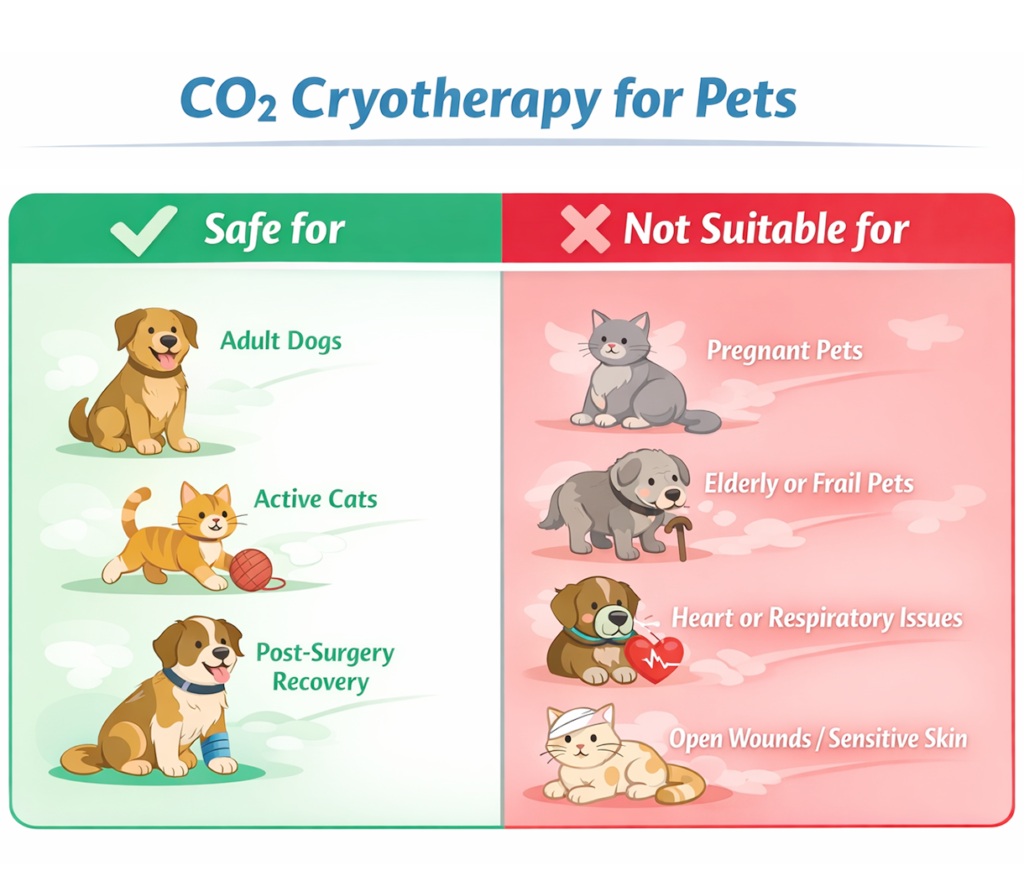
3. How Long Should a Cryotherapy Session Last for Pets?
Duration is a critical factor in both efficacy and safety. Overexposure to extreme cold can lead to tissue damage, whereas sessions that are too short may provide insufficient therapeutic effect.
Typical treatment sessions last 1–3 minutes, adjusted based on the pet’s size, weight, and health status. Smaller dogs and cats often require shorter sessions, while larger, more robust dogs may tolerate slightly longer exposure. It is essential to observe the pet for signs of discomfort, including shivering or excessive movement. In a clinical setting, technicians or veterinarians monitor tissue temperature and pet response, ensuring maximum benefit without risk. Proper session length is key to achieving pain reduction, anti-inflammatory effects, and accelerated recovery.
4. How Often Can Pets Receive CO2 Cryotherapy?
Frequency impacts both safety and effectiveness. Most rehabilitation protocols recommend 1–3 sessions per week, depending on the condition being treated. For acute injuries, initial sessions may be closer together, while chronic conditions benefit from consistent weekly treatments. Overuse can stress the pet and reduce the therapy’s effectiveness, potentially causing tissue fatigue or discomfort. Veterinarians often integrate CO2 Cryotherapy with physical therapy or laser therapy for a synergistic effect, maximizing recovery while minimizing risk.
5. Can CO2 Cryotherapy Replace Medications for Pets?
CO2 Cryotherapy is a complementary therapy, not a replacement for medications. While it can reduce inflammation and alleviate pain, prescription drugs such as NSAIDs or analgesics may still be required, especially for chronic conditions or post-surgical recovery. Cold therapy helps enhance tissue repair and reduce dosage needs, potentially lowering side effects associated with long-term drug use. Always consult a veterinarian to determine the appropriate combination of therapies for your pet, as each condition requires individualized assessment.
6. How Do Pets Usually React During Cryotherapy?
Pets react differently based on temperament, prior experiences, and session duration. Some pets may initially exhibit curiosity or mild apprehension, while others may tremble or vocalize. Many animals quickly adapt within a few seconds and remain calm for the duration. Owners can help by providing positive reinforcement, gentle handling, and familiar surroundings. It is important to never force a pet into a treatment session; gradual acclimation increases compliance and safety. Experienced veterinary technicians observe pet behavior closely to ensure sessions are stress-free and beneficial.
7. How Quickly Will Pets Show Improvement?
The timeline for noticeable improvement depends on the condition and individual response. For acute injuries, pets may show reduced swelling or improved mobility within 1–2 sessions. Chronic conditions, such as osteoarthritis, generally require 2–6 weeks of consistent therapy for visible improvement. Cellular effects, such as reduced inflammatory mediator activity and increased ATP production, accumulate over multiple sessions. Owners should track mobility, comfort, and activity levels to assess efficacy and adjust treatment frequency accordingly.
8. Can Cryotherapy Be Used at Home?
8.1 Home Devices vs Professional Clinics
Home CO2 Cryotherapy devices are becoming increasingly accessible, offering convenience for routine pet care. Home units typically have lower gas pressure and integrated safety features, making them suitable for small, supervised sessions. Professional clinics provide higher-pressure, more precise systems with trained staff, suitable for severe injuries or post-surgical rehabilitation. Choosing between home use and clinical treatment depends on pet health, severity of condition, and veterinarian guidance. In either case, adherence to session duration, frequency, and safety protocols is critical.
9. Key Safety and Operational Considerations
The effectiveness and safety of CO2 Cryotherapy depend primarily on correct handling and adherence to treatment guidelines. Key considerations include:
- Avoiding sensitive areas such as eyes, ears, and genitals
- Ensuring proper positioning and pet comfort
- Limiting session duration to 1–3 minutes
- Observing pets closely for signs of stress or discomfort
Home devices and clinic equipment differ mainly in precision and power control. Home units are ideal for small pets or routine care, while clinic systems allow more precise treatment for rehabilitation or post-surgical recovery. In all cases, veterinarian guidance and careful supervision are essential to maximize benefits safely.
10. Are There Any Scientific Studies on CO2 Cryotherapy for Pets?
Several veterinary studies support the use of cold therapy in animal rehabilitation. Research demonstrates that cold therapy reduces inflammation, improves joint mobility, and enhances post-surgical recovery. While human CO2 Cryotherapy literature is more abundant, veterinary research indicates similar mechanisms in dogs and cats, particularly regarding blood flow modulation, ATP production, and anti-inflammatory effects. Case studies from veterinary rehabilitation centers also show measurable improvements in mobility, pain reduction, and quality of life following consistent CO2 Cryotherapy.
الأسئلة الشائعة
Is CO2 Cryotherapy painful for pets?
Usually not; pets feel cold but not painful stimulation. Gradual acclimation helps.
Can it cause frostbite?
Rare, if sessions are properly timed and high-risk areas avoided.
Can all dog breeds safely use cryotherapy?
Most can, but small, elderly, or medically compromised dogs require veterinary evaluation.
Can cats benefit from cryotherapy?
Yes, with careful supervision and short sessions.
How to choose between home device and clinic session?
Consider severity, pet temperament, and professional guidance.
الخاتمة
CO2 Cryotherapy is a low-risk, non-invasive, and effective complementary therapy for pets with musculoskeletal issues, chronic pain, or post-surgical recovery needs. While it is not a substitute for medications or veterinary evaluation, it can significantly enhance rehabilitation outcomes when used safely. Proper session timing, monitoring, and adherence to professional guidance are essential to ensure maximum benefit and pet comfort.
المراجع
Local Cryotherapy – CO2 Therapy Overview
https://www.localcryotherapy.com/
PetMD – Cryotherapy for Dogs: Benefits and Risks
https://www.petmd.com/dog/general-health/cryotherapy-dogs
Veterinary Practice News – Cold Therapy in Animal Rehabilitation
https://www.veterinarypracticenews.com/cold-therapy-animal-rehab
Journal of Veterinary Science – Photobiomodulation and Cryotherapy in Pets
https://www.jvetsci.org/articles/photobiomodulation-cryotherapy