مقدمة
Holiday travel often brings excitement, social activities, and new experiences, but long journeys can also create physical stress on the body. Extended sitting during flights, road trips, and transportation transfers may contribute to temporary stiffness, muscle fatigue, and reduced comfort, especially after spending many hours in limited positions. CO₂ cryotherapy, also known as localized cryotherapy, has become an option that many people explore as part of their personal recovery routine after physically demanding travel schedules. By applying controlled cold exposure to specific areas, localized CO₂ cryotherapy may help support body comfort, relaxation, and recovery after long periods of inactivity or travel-related physical strain.
1. Understanding How Holiday Travel Affects the Body
1.1 Why Long Travel Days Can Create Physical Discomfort
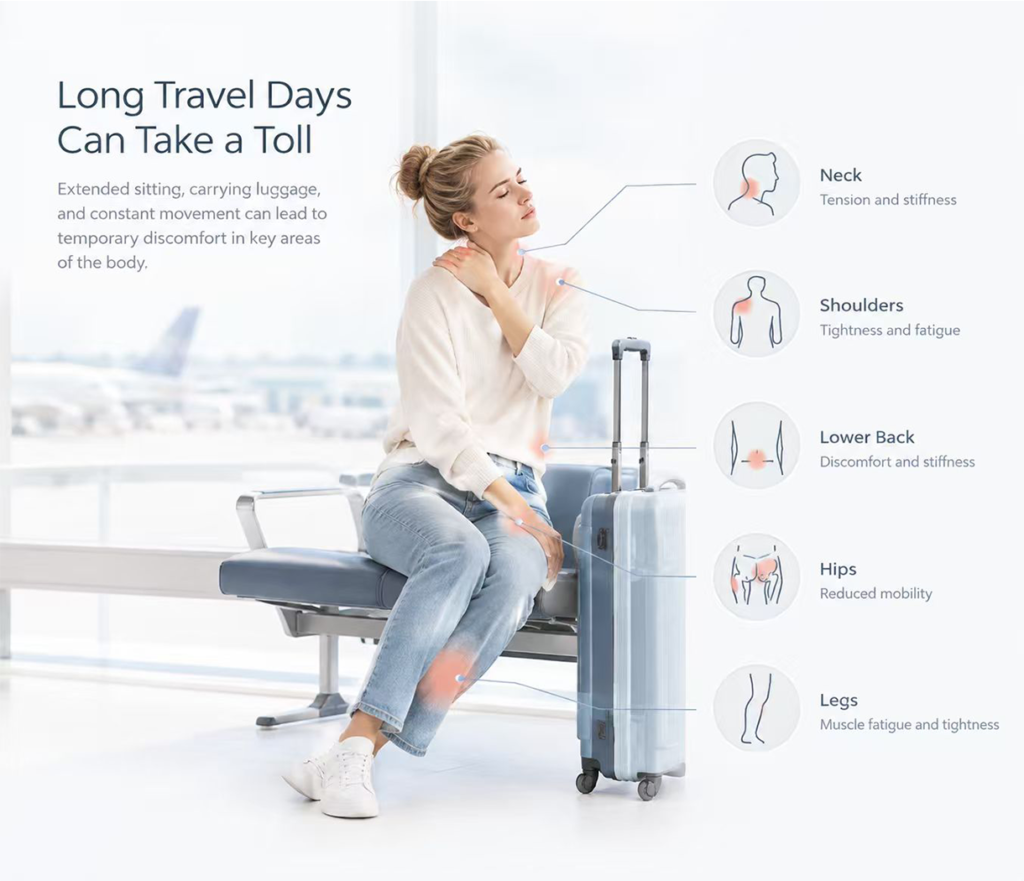
Holiday travel often involves several hours of sitting, carrying luggage, walking through airports, and adjusting to unfamiliar environments. These activities may place temporary stress on different areas of the body, including the neck, shoulders, lower back, hips, and legs.
When the body remains in a fixed position for extended periods, normal movement patterns change. Reduced mobility during travel may contribute to feelings of stiffness and muscle tightness once travelers arrive at their destination.
Unlike regular daily routines, travel days often combine multiple physical demands in a short period. A person may sit for several hours, carry bags, stand in lines, and walk long distances on the same day, creating a unique recovery situation.
1.2 Common Recovery Challenges After Flights and Road Trips
Different types of travel can affect the body in different ways. Air travel often includes prolonged sitting in limited space, while road trips may involve long periods behind the wheel or as a passenger.
After reaching a destination, many travelers notice temporary discomfort in areas that experience repeated stress during travel. The lower back, shoulders, calves, and legs are common areas people focus on when creating a post-travel recovery routine.
Supporting mobility, hydration, stretching, and relaxation habits can help travelers maintain comfort after long journeys. Localized CO₂ cryotherapy can be considered as one additional option within a broader wellness routine.
2. How CO₂ Cryotherapy Fits Into Post-Travel Recovery Routines
2.1 Understanding Localized CO₂ Cryotherapy
Localized CO₂ cryotherapy uses carbon dioxide cooling technology to deliver controlled cold exposure to targeted areas of the body. Unlike traditional ice packs that require direct contact with frozen materials, CO₂ cryotherapy provides focused cooling through a specialized application process.
The rapid temperature change created by localized cryotherapy may influence the body’s natural response to cold exposure. Many users choose this approach because it allows attention to specific areas instead of applying cooling to the entire body.
Cold-based recovery methods have been used in sports and wellness environments for years. Current approaches continue to explore how localized cooling can support comfort and recovery routines.
2.2 Why Targeted Cooling Can Be Useful After Travel
After a long journey, people may prefer recovery methods that focus on specific areas affected by their travel activities. For example, someone who spends hours sitting may focus on areas around the lower back or hips, while travelers carrying luggage may pay attention to shoulder and arm areas.
Localized CO₂ cryotherapy allows users to select areas based on their personal comfort needs. This targeted approach makes it different from general relaxation methods because it focuses on specific body regions that experience temporary stress.
A balanced post-travel routine may include movement, stretching, proper hydration, rest, and localized recovery techniques such as CO₂ cryotherapy.
3. Travel Situations Where CO₂ Cryotherapy May Support Recovery
3.1 After Long Flights and Airport Transfers
Long flights often require travelers to remain seated for extended periods while also managing luggage, security procedures, and walking between terminals. These combined activities may leave some individuals feeling physically tired after reaching their destination.
A localized CO₂ cryotherapy session can become part of a recovery routine focused on areas that feel uncomfortable after travel. Many people prefer targeted approaches because they can address specific areas without interrupting their normal schedule.
For frequent travelers, creating a consistent recovery routine after flights may help improve overall travel comfort and prepare the body for upcoming activities.
3.2 After Road Trips and Extended Driving
Road trips create different physical challenges compared with air travel. Drivers and passengers may spend several hours in the same seated position, which can contribute to temporary muscle stiffness.
Long-distance driving often involves limited movement, repeated posture maintenance, and occasional lifting of bags or personal items. After arriving, some travelers choose recovery methods that help them relax and return to normal movement patterns.
Localized CO₂ cryotherapy can be incorporated into a post-driving wellness routine alongside light movement and stretching.
4. Building a Better Post-Travel Recovery Routine With CO₂ Cryotherapy
4.1 Combining Localized Cryotherapy With Healthy Travel Habits
CO₂ cryotherapy works best when it becomes part of a complete recovery routine rather than a single approach. After holiday travel, simple habits such as walking, gentle stretching, maintaining hydration, and getting sufficient rest can help the body transition back into normal daily activities.
Travel schedules often interrupt regular movement patterns. Returning to consistent routines gradually can support overall comfort, especially after long periods of sitting or carrying luggage. Localized CO₂ cryotherapy can complement these habits by providing focused cooling support for areas that feel temporarily tired after travel.
Many wellness routines today combine different approaches based on individual preferences. Instead of relying on one method, travelers often create personalized recovery plans that match their lifestyle and activity level.
4.2 Choosing the Right Timing for Post-Travel CO₂ Cryotherapy
The timing of a recovery routine depends on personal schedules, travel duration, and individual comfort needs. Some people prefer to focus on recovery shortly after arriving at their destination, while others include localized cooling after returning home from a holiday trip.
For shorter journeys, CO₂ cryotherapy may fit into a general relaxation routine. For longer trips involving multiple flights, extended driving, or increased physical activity, targeted recovery methods may become more valuable as part of a regular wellness plan.
Understanding personal body responses and combining different recovery habits can help travelers create a practical approach that fits their lifestyle.
5. Why Localized CO₂ Cryotherapy Is Becoming Part of Modern Travel Wellness
5.1 The Growing Interest in Targeted Recovery Methods
Modern wellness trends increasingly focus on personalized approaches rather than general solutions. Travelers, athletes, and active individuals often look for recovery methods that fit specific situations and daily routines.
Localized CO₂ cryotherapy reflects this shift by focusing on selected body areas instead of applying the same approach to the entire body. This makes it suitable for people who want a more targeted option after activities such as travel, exercise, or long periods of sitting.
As more people prioritize wellness during busy schedules, recovery methods that are convenient and adaptable continue to attract attention.
5.2 How CO₂ Cryotherapy Supports Travel Recovery Planning
Holiday travel does not always follow a predictable schedule. Delayed flights, long drives, changing time zones, and increased activity can affect how people feel physically during and after trips.
Including localized CO₂ cryotherapy in a broader recovery plan allows travelers to consider their own comfort needs and choose appropriate wellness strategies. It can be combined with movement, stretching, sleep routines, and other healthy habits to support a balanced approach after travel.
The goal of a post-travel routine is not only recovery after discomfort but also maintaining physical readiness for future activities and daily responsibilities.
الأسئلة الشائعة
What is CO₂ cryotherapy?
CO₂ cryotherapy is a localized cold therapy method that uses carbon dioxide to provide targeted cooling to specific areas of the body.
Can CO₂ cryotherapy be used after long flights?
Many people include localized CO₂ cryotherapy in their post-flight wellness routines to support comfort after extended sitting and travel-related physical stress.
Which areas are commonly focused on after travel?
Common areas include the lower back, shoulders, legs, and other regions that may feel tired after long periods of sitting or carrying luggage.
How long does a typical CO₂ cryotherapy session take?
Session duration can vary depending on the equipment and application area. Many localized cryotherapy sessions are designed to be completed within a short period.
Is CO₂ cryotherapy only for athletes?
No. While athletes often use recovery methods, localized CO₂ cryotherapy is also considered by travelers, active individuals, and people looking for targeted wellness support.
الخاتمة
Holiday travel can create unique physical challenges due to extended sitting, carrying luggage, changing routines, and increased activity levels. CO₂ cryotherapy provides a localized cooling approach that many people consider as part of their post-travel wellness routine. When combined with healthy habits such as movement, hydration, stretching, and proper rest, localized cryotherapy may support overall comfort and help travelers return to their normal activities after busy journeys.
المراجع
Cryotherapy in Sports Medicine: A Review of the Effects of Cold Application on Recovery
https://www.ncbi.nlm.nih.gov/pmc/articles/PMC4045952
Cold Exposure and Human Health: From Physiology to Therapeutic Applications
https://www.ncbi.nlm.nih.gov/pmc/articles/PMC6470377
The Effects of Local Cryotherapy on Pain and Inflammation-Related Responses
https://pubmed.ncbi.nlm.nih.gov
Cryotherapy: Mechanisms and Applications in Rehabilitation and Recovery
https://www.physio-pedia.com/Cryotherapy
Local Cryotherapy: Targeted Cold Application for Recovery and Wellness