
Introdução
Roller derby is a full‑contact sport played on a hard oval track. Players wear helmets, mouth guards, wrist guards, elbow pads, and knee pads—but nothing covers the rib cage. When a skater takes a direct shoulder check or falls rib‑first onto the concrete, the force transfers straight into the chest wall. The result is often a deep, painful bruise or a cracked rib that benches the athlete for weeks. Ice packs help, but they do not speed up the body‘s slow process of clearing trapped blood. Localized CO₂ cryotherapy offers a faster, more targeted solution. This article explains why roller derby ribs keep getting injured, how CO₂ cold therapy rapidly shrinks deep hematomas, and how skaters use it to return to the track before the next bout.
1. Why Roller Derby Athletes Keep Injuring Their Ribs
Roller derby is a full-contact sport played on a hard surface. Even with a full set of protective gear, many areas of the body remain exposed. Understanding where and why injuries occur helps explain why the rib cage is a frequent casualty.
1.1 Where Protective Gear Stops
Standard roller derby gear covers the knees, elbows, wrists, and head. Some leagues also require padded shorts that protect the hips and tailbone. However, the rib cage sits between the elbow pads and the padded shorts, completely uncovered. A skater falling sideways or taking a direct shoulder check to the torso receives zero cushioning. This unprotected zone spans from just below the armpit down to the waistband of the padded shorts, and the ribs are particularly vulnerable because they are attached to the spine only at the back and curve around to the front. A single fall onto the edge of a skate or an opponent’s hip can crack one or more ribs.
1.2 Common Mechanisms of Rib Injury in Derby
Most rib injuries in roller derby result from three situations. The first is a direct hit. A blocker plants a shoulder into an opponent’s ribs during a jam. The second is a hard fall onto the floor. A skater loses balance during a whip or a transition and lands on her side, with her arm trapped under her body and the full weight of her torso driving into the ribs. The third is collision with another skater’s gear. Elbow pads or kneepads are hardened plastic, and when they make contact with an unprotected rib cage at high speed, the impact mechanism resembles a blunt object striking the chest. The ribs themselves bend slightly; if the bending force exceeds their elastic limit, they crack.
1.3 The Difference Between a Bruised Rib and a Fractured Rib
A bruised rib, also known as a rib contusion, means the soft tissue between and around the ribs has been crushed, causing capillaries to rupture and blood to pool into the intercostal spaces. A fractured rib means the bone itself has cracked. Both injuries produce severe pain with deep breathing, coughing, laughing, or any twisting motion. However, a fracture typically takes longer to heal and carries the risk of a displaced bone fragment puncturing the lung. A contusion does not show up on X‑ray, making it harder to diagnose but not necessarily less painful. Skaters often underestimate a bruised rib because “nothing is broken,” yet the pain can be just as debilitating as a fracture. In either case, the standard treatment has always been rest, ice, and anti‑inflammatories—but ice alone does not accelerate the reabsorption of the trapped blood inside a deep contusion.
2. How CO₂ Cryotherapy Targets Deep Rib Contusions
Localized CO₂ cryotherapy is a form of targeted cold therapy that uses pressurized carbon dioxide gas to rapidly cool a specific area of the body. Unlike ice packs, which cool the skin slowly and unevenly, CO₂ cryotherapy produces a sudden, precise temperature drop that triggers a cascade of physiologic responses uniquely suited for deep soft‑tissue injuries like rib contusions.
2.1 Precise Application to the Uncovered Rib Cage
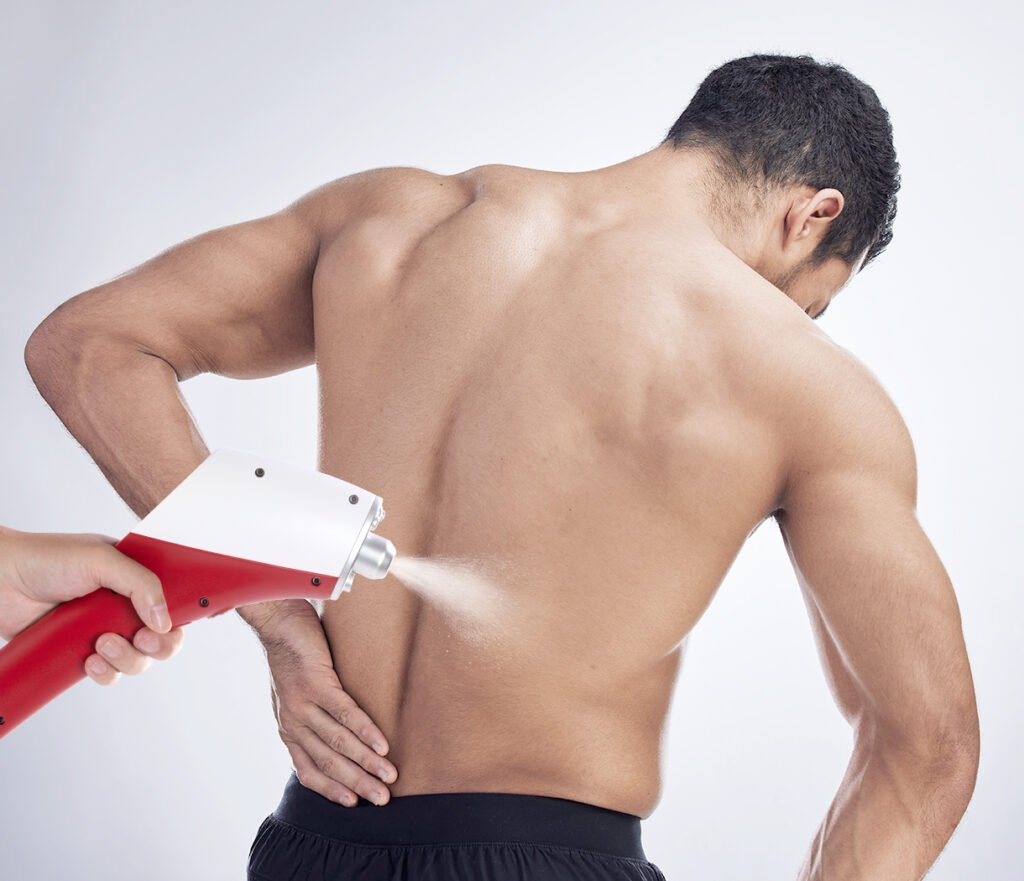
Because ribs are a large, curved area with underlying lung tissue, any cold treatment must be applied carefully. Ice packs require 15 to 30 minutes of continuous contact to reach effective tissue temperatures, which means they must cover the entire rib cage area. The prolonged cold can cause skin irritation, numbness, and discomfort. CO₂ cryotherapy applicators, on the other hand, deliver a concentrated jet of hyper‑cold gas at approximately –78°C for only 10 to 15 seconds per treatment zone. This allows the therapist to precisely follow the contours of the rib cage, treating each tender spot individually without overcooling the surrounding skin or causing frostbite. The short application time also means the athlete breathes normally during treatment—there is no need to hold still under a heavy ice bag for half an hour.
2.2 The Vascular Rollercoaster: Vasoconstriction Then Vasodilation
The therapeutic mechanism of CO₂ cryotherapy centers on a two‑phase vascular response. In the first phase, the extreme cold causes immediate vasoconstriction—the blood vessels in the treated area narrow dramatically. This reduces local blood flow, limits further internal bleeding from capillaries that may still be leaking, and restricts the spread of plasma and inflammatory mediators into the already damaged tissue. For a fresh rib contusion sustained during a bout, this rapid vasoconstriction acts as a brake on the hematoma, preventing it from expanding into a larger, more painful mass.
The second phase begins as the tissue gradually rewarms. The body detects the cold‑induced drop in tissue temperature and responds with reactive vasodilation. Blood vessels open wider than before the treatment, flooding the injured area with fresh, oxygenated blood. This sudden influx flushes out metabolic waste products (including the broken‑down blood cells from the contusion) and delivers the nutrients needed for tissue repair. Ice packs do not produce this reactive vasodilation; they simply keep vessels constricted for the entire duration of application, which can delay the clearance of hematoma.
2.3 Metabolic Slowdown and Inflammation Control
When tissue temperature drops rapidly, cellular metabolism slows down. For a fresh rib injury, this metabolic slowdown is beneficial because it reduces the activity of destructive enzymes that would otherwise break down healthy tissue in the area. The cold also lowers the production of pro‑inflammatory cytokines, which keeps the local inflammatory response contained. Less inflammation means less swelling, less pain, and a shorter window of disability. Unlike oral anti‑inflammatories, which affect the entire body and can cause stomach upset or interact with other medications, CO₂ cryotherapy delivers its anti‑inflammatory effects exactly where they are needed—on the bruised ribs—without any systemic side effects.
2.4 Nerve Conduction Slowing for Immediate Pain Relief
Rib contusions hurt because the injured tissue compresses the intercostal nerves that run between each rib. Every breath stretches these nerves against the inflamed and swollen tissue. CO₂ cryotherapy temporarily slows the conduction velocity of these small nerve fibers, effectively turning down the volume of the pain signals reaching the brain. This analgesic effect starts within seconds of application and can last for several hours after the treatment. For a roller derby athlete who needs to sleep, breathe comfortably, or return to light movement, this immediate pain relief is a game‑changer. Ice packs also provide some pain relief, but they require much longer contact time and often become unbearably cold before the pain subsides fully.
3. Practical Application for Roller Derby Athletes
Roller derby skaters have demanding schedules with practices, bouts, and off‑skate conditioning. CO₂ cryotherapy fits into this schedule without requiring days off or complicated protocols.
3.1 When to Treat After a Rib Injury
Start CO₂ cryotherapy as soon as possible after the injury, ideally within the first 24 hours. In the acute phase, the priority is limiting hematoma expansion and controlling pain. Apply the cold gas for 10 to 15 seconds over each tender spot along the rib cage, using a slow circular motion. For a bruised rib area, treat the focal point of pain plus the surrounding tissue where swelling may develop. Repeat the treatment two to three times per day for the first 48 hours, then reduce to once or twice daily as the pain and discoloration decrease.
3.2 How Many Sessions Are Needed
A mild rib contusion with only surface tenderness usually improves within two to three days of consistent CO₂ cryotherapy. A moderate contusion with visible bruising, swelling, and pain with deep breathing typically requires five to seven days of daily treatments. A severe contusion that makes sleeping on that side impossible may take 10 to 14 days of regular sessions. Compare this to natural healing: a rib contusion that would naturally take three to four weeks to stop hurting and six weeks to fully resolve can be reduced to one to two weeks of significant pain followed by mild discomfort that resolves quickly. Many roller derby athletes report returning to light practice within one week of starting CO₂ cryotherapy, compared to three or four weeks with ice alone.
3.3 Safety Considerations for Rib Treatments
The rib cage overlies the lungs. Unlike a thigh or a shoulder, the chest contains vital organs that cannot tolerate extreme pressure or excessive cold. Always keep the CO₂ applicator moving; do not hold it in one spot for longer than a few seconds. The gas jet should never be so close to the skin that it causes an ice crystal burn. If the skin becomes white, numb, or develops a burning sensation, stop immediately and allow it to rewarm. Never treat a known fractured rib without medical clearance, as the cold may mask important symptoms. For bruised ribs with no evidence of fracture, CO₂ cryotherapy is both safe and effective when applied correctly.
3.4 Combining Cold Therapy with Compression and Breathing
For rib injuries, gentle movement and breathing exercises are as important as cold therapy. After each CO₂ session, practice slow, deep diaphragmatic breathing. This prevents the shallow breathing pattern that leads to atelectasis (partial lung collapse) and keeps the intercostal muscles from tightening into protective spasm. Light compression with a rib belt or elastic wrap can provide additional support, but do not apply compression so tight that it restricts breathing. Avoid heavy upper‑body training, contact drills, or any activity that requires twisting through the torso until the pain with deep breathing has fully resolved. When the athlete can cough without sharp pain, light skating on a flat surface may begin.
4. Long‑Term Benefits for Roller Derby Athletes
Roller derby is a sport of high repetition. Skaters who fall repeatedly on the same side of their body develop cumulative tissue damage. Using CO₂ cryotherapy consistently offers benefits beyond healing a single rib contusion.
4.1 Preventing Chronic Rib Sensitivity
Untreated rib contusions can leave behind a permanent tender spot that flares up with every fall. The repeated trauma without adequate healing creates a cycle of chronic inflammation, scar tissue formation, and nerve sensitization. CO₂ cryotherapy, when used after each significant impact, reduces the baseline level of tissue damage and prevents the buildup of chronic sensitivity. Skaters who incorporate cold therapy into their regular recovery routine report that their ribs no longer ache for days after a hard practice.
4.2 Faster Return to Contact Readiness
In roller derby, the ability to take contact is both a physical and a psychological requirement. An athlete who has been off the track for four weeks with a rib injury may hesitate during her first few practices back, afraid of re‑injury. CO₂ cryotherapy shortens the healing window so dramatically that the athlete loses less conditioning and less confidence. Returning to contact after one week instead of four means the skater maintains her pain tolerance, her nerve conditioning, and her willingness to engage. This psychological edge is a real advantage in a sport where hesitation leads to falls.
4.3 Building CO₂ Cryotherapy into a Bout‑Day Routine
Some roller derby leagues are now offering CO₂ cryotherapy as part of their athletic training services. Before a bout, a quick 30‑second treatment on the lower ribs and flanks can reduce nerve sensitivity without dulling proprioception. Between jams, a spot treatment on a freshly bumped area can prevent a small bruise from turning into a large hematoma. After the final whistle, a full rib‑cage session accelerates recovery for the next day‘s practice. Skaters who own or have access to portable CO₂ cryotherapy devices keep them in their gear bags alongside their mouth guards and wrist braces.
Perguntas frequentes (FAQ)
Q1: Will CO₂ cryotherapy hurt my ribs if they are already bruised?
The treatment itself is not painful. You will feel intense cold, but the short application time prevents discomfort. Many skaters report immediate relief after the first session.
Q2: Can I use CO₂ cryotherapy on a rib that might be fractured?
Only after medical clearance. A known fracture should be evaluated by a doctor before any cold therapy. For confirmed bruised ribs, CO₂ cryotherapy is safe.
Q3: How soon after a bout can I start treating my ribs?
Immediately, as long as there is no open wound or broken skin over the ribs. In the locker room after a bout is the ideal time to start.
Q4: Will CO₂ cryotherapy prevent my rib from healing?
No. It accelerates healing by improving blood flow in the reactive vasodilation phase and reducing harmful inflammation in the acute phase.
Conclusão
Roller derby is a sport that demands full commitment and expects hard falls. Pads protect the knees, elbows, wrists, and head, but the rib cage remains exposed—and it pays the price. Bruised ribs are not just painful; they sideline athletes for weeks, disrupt breathing, and erode confidence. Localized CO₂ cryotherapy offers a simple, drug‑free, non‑invasive way to treat deep rib contusions. By triggering rapid vasoconstriction followed by reactive vasodilation, CO₂ cold therapy limits hematoma expansion, controls inflammation, and accelerates the reabsorption of trapped blood. The treatment takes seconds, fits into a bout‑day schedule, and dramatically shortens recovery time. For roller derby athletes, the message is clear: fall hard, treat fast, and get back on the track before the next jam.
Referências
Local Cryotherapy. Stop Nighttime Leg Cramps: How CO₂ Cryotherapy Enhances Senior Muscle Health.
https://www.localcryotherapy.com/ja/co₂-cryotherapy-nighttime-leg-cramps.html
Cryofos Paintherapy. Cryofos Therapy.
https://www.cryofos.com/en/cryofos-therapy.feed
Abdelhakiem NM, Mahmoud TH, Saleh HM, et al. Effect of cryotherapy in controlling spasticity of calf muscles in patients with multiple sclerosis. NeuroRehabilitation. 2024.
https://www.x-mol.com/paper/1802017377397305344
Hirata K, Shiozaki D, Yamada K, et al. Cryotherapy with carbon dioxide hydrate enhances immediate recovery of muscle function from neuromuscular fatigue. Journal of Sports Sciences. 2024;42(22):2103-2114.
https://www.tandfonline.com/doi/full/10.1080/02640414.2024.2423135
Niyti, Goyal K, Goyal M. Physiotherapy Intervention in Nocturnal Leg Cramps: A Review. JCDR. 2024;18(3):23.