소개
When you get a cut or undergo surgery, your body starts a complex healing process. This process moves through several phases, beginning with inflammation. Some inflammation is necessary, but when the inflammatory phase lasts too long, healing stalls. The wound stays red, swollen, and painful. New tissue cannot form properly. Finding ways to help wounds transition from inflammation to repair is a major goal of wound care. CO₂ cryotherapy offers a unique approach. This technology delivers controlled cooling that may help wounds move through the healing phases more efficiently, supporting the body‘s natural repair mechanisms without drugs or invasive procedures.
1. Understanding the Wound Healing Process
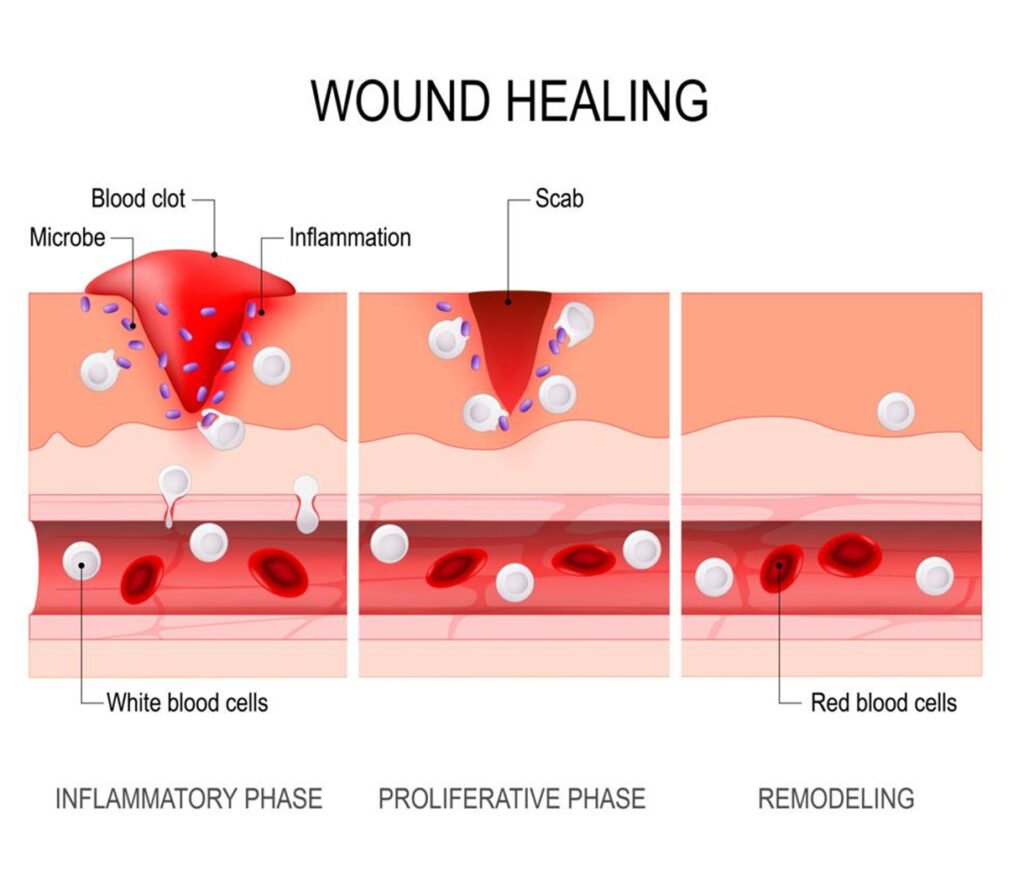
Wound healing follows a predictable sequence. Each phase has a specific purpose, and the timing of each phase affects how well the wound eventually closes.
1.1 The Inflammatory Phase
The inflammatory phase begins immediately after injury. Blood vessels constrict to limit bleeding, then dilate to allow healing cells to reach the wound. White blood cells arrive to clean up debris and fight potential infection. This phase is essential. Without inflammation, wounds would not heal at all. However, inflammation causes redness, swelling, heat, and pain. In healthy healing, this phase lasts only a few days. In chronic wounds, inflammation persists for weeks or months, preventing progression to the next phase.
1.2 The Proliferative Phase
Once inflammation subsides, the wound enters the proliferative phase. During this stage, the body builds new tissue to fill the wound. Fibroblasts produce collagen, the structural protein that gives skin its strength. New blood vessels grow to supply oxygen and nutrients. The wound edges pull together, and new skin cells begin to cover the surface. This phase requires a specific environment. Too much inflammation interferes with collagen production and blood vessel formation. The transition from inflammation to proliferation is a critical step that determines whether a wound will close properly.
1.3 When Healing Gets Stuck
Some wounds never make the transition from inflammation to proliferation. These are chronic wounds. The inflammatory phase continues indefinitely, with high levels of inflammatory chemicals circulating in the wound tissue. These chemicals break down collagen instead of building it. New blood vessels cannot form properly. The wound remains open, painful, and vulnerable to infection. Helping the wound switch phases is the key to restarting healing. This is where CO₂ cryotherapy may play a supporting role.
2. How CO₂ Cryotherapy Affects Wound Healing
CO₂ cryotherapy delivers pressurized carbon dioxide gas to the skin, creating a controlled cooling effect. This cooling triggers specific biological responses that may help wounds transition from inflammation to repair.
2.1 The NF-κB Pathway
Inside cells, a protein complex called NF-κB acts as a master switch for inflammation. When NF-κB is activated, it turns on genes that produce inflammatory chemicals. These chemicals attract immune cells and keep the wound in an inflammatory state. In chronic wounds, NF-κB stays activated for too long. Research suggests that CO₂ cryotherapy may help suppress NF-κB activity. By reducing this inflammatory signal, the therapy may allow the wound to move out of the inflammatory phase and into the proliferative phase.
2.2 Reducing Inflammatory Markers
Studies have measured specific inflammatory markers in wounds treated with CO₂ cryotherapy. Tumor necrosis factor-alpha (TNF-α) is one of the key drivers of inflammation. Interleukin-1 beta (IL-1β) and monocyte chemoattractant protein-1 (MCP-1) also contribute to prolonged inflammation. Research has shown that wounds treated with CO₂ cryotherapy have significantly lower levels of these markers compared to untreated wounds. This reduction in inflammatory chemicals creates an environment where healing can proceed.
2.3 Supporting Collagen Production
Once inflammation decreases, the wound can begin building new tissue. Collagen is the primary structural protein in skin. Healthy wounds need organized collagen fibers to close properly. Research has shown that wounds treated with CO₂ cryotherapy have more collagen deposition than untreated wounds. The collagen fibers also appear more organized. This suggests that the therapy not only reduces inflammation but also supports the constructive phase of healing. The combination of less inflammation and better collagen formation helps wounds close more effectively.
2.4 The Timing of Treatment
The timing of CO₂ cryotherapy matters for wound healing. Applying cold too early or too aggressively may interfere with the early inflammatory phase that the body needs. However, when inflammation persists longer than it should, controlled cooling may help reset the system. The goal is not to eliminate inflammation entirely but to help the wound transition out of this phase at the appropriate time. This nuanced approach distinguishes CO₂ cryotherapy from simple ice application, which primarily provides temporary pain relief without addressing the underlying inflammatory process.
3. What Research Shows About CO₂ Cryotherapy and Wound Healing
Clinical studies have examined how CO₂ cryotherapy affects wound healing outcomes. The evidence suggests benefits for wound closure and tissue quality.
3.1 Wound Closure Rates
A study published in 2025 examined full-thickness skin wounds treated with CO₂ cryotherapy combined with epidermal growth factor. The treated wounds showed significantly faster closure compared to untreated wounds. The combination of cold therapy and growth factor delivery appeared to work better than either treatment alone. This suggests that CO₂ cryotherapy may be useful not just for its direct effects but also as a method to enhance the delivery of other healing agents into the wound tissue.
3.2 Tissue Quality After Healing
Healing speed matters, but the quality of healed tissue is equally important. Research has examined the structure of healed skin after CO₂ cryotherapy treatment. Treated wounds showed thinner, more organized epidermis compared to untreated wounds. The thickness of the healed tissue was more consistent with normal skin. This suggests that CO₂ cryotherapy may help wounds heal not just faster but also with better structural quality. Less scarring and more normal skin architecture are desirable outcomes for any wound treatment.
3.3 Comparison to Other Treatments
Researchers have compared CO₂ cryotherapy to other wound healing approaches. When combined with growth factors, CO₂ cryotherapy showed better results than growth factors alone. The cold therapy may help the growth factors penetrate deeper into the tissue or may prepare the wound bed to respond more effectively. This combination approach represents a promising direction for treating wounds that have not responded to conventional care.
4. Practical Applications for Wound Care
Understanding how CO₂ cryotherapy supports wound healing helps clinicians and patients make informed decisions about its use.
4.1 Types of Wounds That May Benefit
The research on CO₂ cryotherapy has focused primarily on full-thickness skin wounds. These are wounds that extend through the entire thickness of the skin. Surgical incisions, traumatic wounds, and certain chronic ulcers may fall into this category. The therapy may be most helpful for wounds that have become stuck in the inflammatory phase and are not progressing normally. Patients with wounds that have not responded to standard care may be appropriate candidates for CO₂ cryotherapy.
4.2 The Treatment Process
CO₂ cryotherapy for wound healing is typically performed in a clinical setting. The provider applies pressurized CO₂ gas to the wound area in controlled bursts. The cooling effect is brief, lasting only seconds. The patient feels an intense cold sensation, but the discomfort is temporary. The treatment can be repeated over several sessions. The exact protocol depends on the wound type, size, and chronicity. Your wound care provider can determine the appropriate treatment plan for your specific situation.
4.3 Combining with Other Treatments
CO₂ cryotherapy works well alongside other wound care approaches. Standard wound care includes cleaning the wound, applying appropriate dressings, and managing any infection. Adding CO₂ cryotherapy may enhance the healing process without interfering with these essential steps. The therapy may be particularly useful when combined with growth factors or other biologic agents. The cold may help these agents penetrate the wound tissue and work more effectively.
4.4 What to Expect
If you receive CO₂ cryotherapy for a wound, you will not see immediate results. The healing process takes time. The therapy supports the biological processes that lead to wound closure, but these processes unfold over days and weeks. Your provider will monitor the wound regularly to track progress. They may adjust the treatment plan based on how the wound responds. Patience is important. Wound healing is a complex process, and even with effective treatment, it takes time for new tissue to form.
자주 묻는 질문
Q: Does CO₂ cryotherapy hurt?
A: You will feel an intense cold sensation during the spray, which lasts only seconds. The discomfort is brief and most patients tolerate it well.
Q: How many sessions will I need?
A: The number of sessions depends on the wound type and how it responds to treatment. Your provider will monitor your wound and adjust the plan as needed.
Q: How long does each session take?
A: The active treatment portion takes only seconds to minutes. The total visit time may be longer for wound assessment and dressing changes.
Q: Are there any side effects?
A: Side effects are generally mild and temporary. Some patients experience temporary redness or mild discomfort in the treated area.
Q: Can CO₂ cryotherapy be used on infected wounds?
A: Active infections should be treated before starting CO₂ cryotherapy. Your provider will assess your wound to determine if the therapy is appropriate.
Q: Will CO₂ cryotherapy replace my current wound care?
A: No. CO₂ cryotherapy is typically used alongside standard wound care, including cleaning, dressing, and infection management. It is an additional treatment, not a replacement.
Q: How soon will I see improvement in my wound?
A: Wound healing takes time. You may not see immediate changes. Your provider will track wound size and appearance over several weeks to assess progress.
결론
Wounds that stay stuck in the inflammatory phase can be frustrating and slow to heal. CO₂ cryotherapy offers a non-invasive approach that may help wounds transition from inflammation to repair more efficiently. By influencing the NF-κB pathway and reducing inflammatory markers like TNF-α, IL-1β, and MCP-1, this technology supports the body‘s natural healing processes. Research shows that wounds treated with CO₂ cryotherapy close faster and heal with better tissue quality. For patients with wounds that have not responded to conventional care, CO₂ cryotherapy represents a reasonable option to discuss with their wound care provider.
참조
- AcuCool™ Cryotherapy and EGF Delivery for Full-Thickness Wound Healing. International Journal of Molecular Sciences.
https://www.mdpi.com/1422-0067/26/10/456 - NF-κB Pathway Modulation by Cryotherapy in Wound Inflammation. National Center for Biotechnology Information.
https://pubmed.ncbi.nlm.nih.gov/38946616/ - Collagen Deposition and Tissue Remodeling After Cryotherapy Treatment. Journal of Investigative Dermatology.
https://www.jidonline.org/article/S0022-202X(25)01234-5/fulltext - Wound Healing Phases and Therapeutic Interventions. National Center for Biotechnology Information.
https://pubmed.ncbi.nlm.nih.gov/31482121/