소개
Professional housekeeping and cleaning work demands more physical effort than many people realize. From making beds and scrubbing bathrooms to vacuuming floors, moving supply carts, and repeatedly bending or reaching, cleaning professionals place continuous demands on their muscles and joints throughout the day. Over time, these repetitive movements and prolonged working positions may contribute to discomfort in the shoulders, wrists, lower back, and legs. Although proper ergonomics, regular breaks, and physical conditioning remain essential, complementary recovery approaches may also help manage everyday muscle soreness. CO₂ cryotherapy offers a localized cooling approach that may support temporary pain relief and physical comfort after demanding shifts. Understanding how it works, which areas may benefit from targeted cooling, and how to use it responsibly can help cleaning professionals make more informed recovery decisions.
1. Understanding the Physical Demands of Professional Cleaning Work
Professional cleaners perform a wide range of repetitive physical tasks. Unlike jobs that allow workers to alternate between sitting and standing, housekeeping often requires continuous movement, lifting, reaching, and maintaining awkward body positions. These demands can gradually contribute to work-related musculoskeletal discomfort.
1.1 Common Causes of Muscle Fatigue Among Housekeepers
Cleaning professionals frequently repeat movements such as pushing vacuum cleaners, wringing cleaning cloths, scrubbing surfaces, lifting mattresses, and carrying supplies. These activities require repeated muscle contractions and sustained physical effort.
According to research published in Musculoskeletal Science and Practice, hotel housekeepers and cleaners frequently report musculoskeletal symptoms, particularly in the lower back, shoulders, and wrists or hands. These findings highlight the physical demands associated with repetitive cleaning tasks.
Several workplace factors may contribute to discomfort:
- Repeated bending and twisting while cleaning floors or bathrooms.
- Prolonged standing and walking between work areas.
- Forceful gripping when using cleaning tools.
- Frequent pushing and pulling of heavy equipment.
- Reaching overhead or working with the arms away from the body.
- Limited recovery time between physically demanding tasks.
Over time, these activities may contribute to localized muscle fatigue, joint discomfort, and reduced physical comfort during daily work.
1.2 Body Areas Commonly Affected by Repetitive Cleaning Tasks
Different cleaning activities place different demands on the musculoskeletal system. Understanding these patterns helps identify areas that may require additional recovery attention.
Shoulders and upper arms: Repeated wiping, window cleaning, and reaching overhead can increase the workload on the deltoid muscles, trapezius, and rotator cuff muscles.
Wrists and hands: Repetitive gripping, squeezing, and scrubbing may place stress on the wrist flexor and extensor muscles. Some workers may also experience symptoms associated with repetitive strain.
Lower back: Frequent bending, twisting, lifting, and moving equipment can increase mechanical loading on the lumbar spine and surrounding paraspinal muscles.
Calves and legs: Prolonged standing and continuous walking may contribute to lower-limb muscle fatigue, particularly in the gastrocnemius and soleus muscles.
Recognizing these physical demands is an important first step toward developing a more effective recovery routine.
2. How CO₂ Cryotherapy May Support Muscle Recovery
After understanding the physical demands of cleaning work, it is useful to explore how localized cooling may contribute to post-shift comfort. CO₂ cryotherapy uses rapidly delivered carbon dioxide gas to cool a targeted body area without requiring direct contact with ice packs.
2.1 What Is CO₂ Cryotherapy?
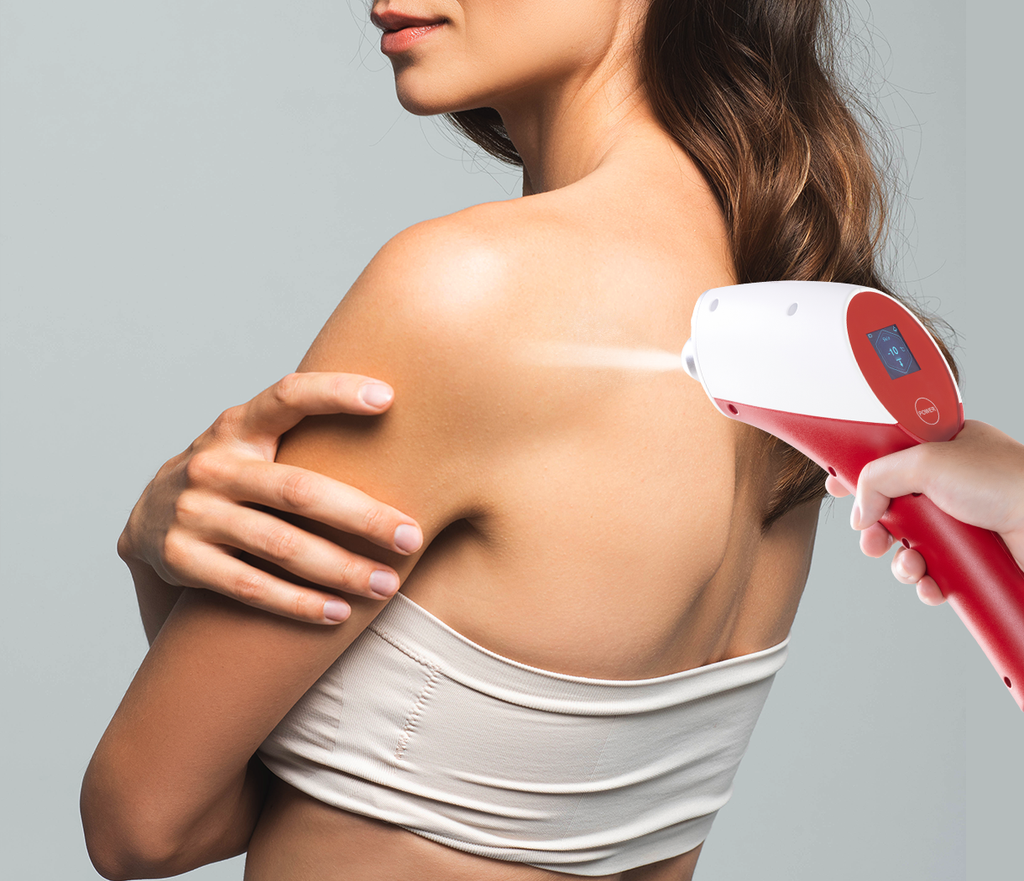
CO₂ cryotherapy is a localized cooling technique that delivers pressurized carbon dioxide gas to a selected area of the body. Some professional systems use CO₂ gas at approximately -78°C to create a rapid temperature change at the skin surface.
Unlike traditional ice packs, which remain in direct contact with the skin for an extended period, a CO₂ cryotherapy device delivers a controlled stream of cold gas toward a specific treatment area.
The sudden cooling activates cutaneous thermoreceptors, which detect changes in skin temperature and transmit sensory signals through the nervous system.
This response may temporarily influence pain perception and provide a cooling sensation that some individuals find helpful after physical exertion.
2.2 The Physiological Response to Localized Cooling
The effects of cryotherapy involve several physiological processes. When the skin experiences rapid cooling, local blood vessels may undergo vasoconstriction, temporarily reducing superficial blood flow.
Cooling also influences sensory nerve activity. Reduced nerve conduction velocity and changes in nociceptive signaling may contribute to temporary analgesia, or a reduction in the perception of discomfort.
These responses help explain why localized cooling is commonly explored for short-term symptom management following physical activity.
However, the physiological response varies according to cooling intensity, exposure duration, treatment area, and individual sensitivity. Cryotherapy should not be interpreted as a method that automatically accelerates tissue regeneration or resolves underlying musculoskeletal conditions.
2.3 How CO₂ Cryotherapy Differs from Traditional Cold Therapy
Traditional cold therapy often involves ice packs, cold compresses, or cooling wraps. These methods can provide localized temperature reduction, but they may be less convenient when workers need to target specific anatomical areas.
CO₂ cryotherapy offers several distinct characteristics:
- Targeted application: A directed gas stream allows practitioners to focus on a selected body region.
- Rapid cooling: Pressurized CO₂ can produce a noticeable cooling response over a relatively short application period.
- Non-contact delivery: The gas stream does not require an ice pack to remain pressed against the skin.
- Adjustable application: Trained operators can adapt treatment distance, movement, and exposure according to the device instructions.
These characteristics make localized CO₂ cooling an option worth exploring in professional recovery settings.
3. Exploring CO₂ Cryotherapy for Common Cleaning-Related Discomfort
Because cleaning professionals use different muscle groups throughout their shifts, recovery needs may vary from one body region to another. Localized cooling allows attention to specific areas rather than applying the same approach to the entire body.
3.1 Shoulder and Upper Back Discomfort
Repeated overhead reaching, window cleaning, and wiping large surfaces can place sustained demands on the shoulder complex.
The trapezius, deltoid, supraspinatus, and other rotator cuff muscles help stabilize and control shoulder movement. Repetitive activity may contribute to muscle soreness and a feeling of tightness around the shoulders and upper back.
Localized CO₂ cryotherapy may provide temporary cooling and help manage discomfort in appropriate treatment areas. This approach can complement appropriate rest, gentle mobility exercises, and adjustments to repetitive work activities.
Workers experiencing persistent shoulder pain, weakness, or restricted movement should seek professional assessment rather than relying on cooling alone.
3.2 Wrist and Forearm Muscle Fatigue
Cleaning tasks often involve repeated gripping, squeezing, scrubbing, and operating handheld equipment. These movements activate the wrist flexors, wrist extensors, and forearm muscles.
Continuous repetition may contribute to muscle fatigue and discomfort around the wrist and forearm. Some workers may also develop symptoms associated with conditions such as tendinopathy or nerve compression.
A localized cooling approach may help temporarily reduce the sensation of discomfort in suitable areas. However, it does not correct the underlying mechanical causes of repetitive strain.
Proper tool selection, neutral wrist positioning, and alternating tasks remain important parts of long-term occupational health management.
3.3 Lower Back and Calf Muscle Discomfort
Making beds, lifting supplies, moving equipment, and cleaning low surfaces can place repeated demands on the lumbar region.
The erector spinae and other supporting muscles help maintain spinal stability during bending and lifting. Repeated loading without adequate recovery may contribute to lower back muscle fatigue.
Meanwhile, prolonged standing and walking can place continuous demands on the gastrocnemius and soleus muscles, which support ankle movement and contribute to lower-limb function.
CO₂ cryotherapy may offer temporary localized cooling for selected muscle groups when a qualified practitioner determines that treatment is appropriate. It should complement, rather than replace, proper lifting techniques, movement breaks, and physical conditioning.
4. Understanding the Technology Behind Professional CO₂ Cryotherapy Devices
Beyond the cooling effect itself, professional CO₂ cryotherapy equipment incorporates technical features and application procedures that influence how practitioners deliver localized treatment.
4.1 High-Pressure CO₂ Delivery and Temperature Control
Professional CO₂ cryotherapy devices use pressurized carbon dioxide gas to generate rapid cooling at the treatment site.
Some systems deliver CO₂ at approximately -78°C. Because this temperature is extremely low, correct operating technique is essential.
The practitioner must follow the manufacturer’s instructions regarding treatment distance, nozzle movement, exposure time, and skin monitoring. The gas stream should never remain stationary over one spot unless the specific device protocol explicitly permits it.
Appropriate temperature management helps practitioners maintain controlled application while reducing the risk of excessive skin cooling.
4.2 Treatment Area Assessment and Individualized Application
Effective localized cooling begins with identifying the area of discomfort and assessing whether cooling is appropriate. For cleaning professionals, this may involve areas that experience repeated physical demands, such as the shoulders, forearms, lumbar region, or calves.
A practitioner should consider the location and nature of the discomfort, the condition of the skin, and the individual’s sensitivity to cold before selecting a treatment area. The application technique should also follow the equipment manufacturer’s instructions and account for the anatomical characteristics of the targeted region.
For example, the shoulder and upper back involve several overlapping muscle groups, while the forearm contains muscles responsible for wrist and finger movement. The lower back and calves have different tissue structures and functional demands. These differences make careful area selection and appropriate application technique important.
An individualized approach also helps avoid treating every type of discomfort in the same way. Localized cooling may support temporary comfort, but persistent pain, unexplained symptoms, or suspected injuries require further assessment rather than repeated cooling alone.
4.3 Why Professional Application Matters
Although localized CO₂ cryotherapy is non-invasive, extremely cold gas requires careful handling.
Professional application allows trained operators to assess the treatment area, monitor skin responses, and adjust the delivery technique according to the equipment’s operating guidelines.
Before treatment, practitioners should consider factors such as:
- Skin integrity and sensitivity.
- Circulatory conditions affecting the treatment area.
- Reduced sensation or peripheral neuropathy.
- Cold hypersensitivity or a history of cold-related reactions.
- Existing injuries or unexplained pain.
Direct or excessive exposure can cause cold injury, including skin damage or frostbite. Therefore, professional supervision and appropriate protective measures remain essential.
5. Building a Practical Recovery Routine for Cleaning Professionals
CO₂ cryotherapy works best as a complementary recovery option within a broader approach to physical well-being. Cleaning professionals should focus on reducing unnecessary physical strain while giving their muscles sufficient time to recover.
5.1 Combining Localized Cooling with Ergonomic Practices
Workplace ergonomics can help reduce repetitive stress and excessive mechanical loading.
Simple adjustments may make daily cleaning tasks more manageable:
- Use cleaning tools with comfortable, non-slip handles.
- Choose adjustable or extended handles to reduce excessive reaching.
- Keep frequently used supplies within easy reach.
- Use carts with smooth-rolling wheels when transporting equipment.
- Avoid prolonged bending and twisting.
- Alternate tasks that require different muscle groups.
- Take brief movement breaks throughout the shift.
These strategies address some of the physical demands that contribute to occupational muscle fatigue.
5.2 Supporting Recovery Through Rest and Physical Conditioning
Adequate sleep, balanced nutrition, hydration, and regular physical activity all contribute to general musculoskeletal health.
Gentle stretching and mobility exercises may help maintain comfortable movement, while appropriate strengthening exercises can improve muscular endurance and physical capacity.
When a qualified practitioner recommends CO₂ cryotherapy, localized cooling may become an additional part of the recovery routine. Treatment should follow the device’s instructions and professional guidance rather than an arbitrary schedule.
Workers should also monitor changes in pain, swelling, mobility, and skin condition. Persistent or worsening symptoms require medical evaluation.
자주 묻는 질문
Can CO₂ cryotherapy help housekeepers with muscle soreness?
It may provide temporary cooling and help reduce the perception of localized muscle discomfort after physically demanding work. Individual responses vary.
Which body areas can be considered for localized CO₂ cryotherapy?
Depending on professional assessment and device instructions, practitioners may consider areas such as the shoulders, forearms, lower back, and calves.
How does CO₂ cryotherapy differ from an ice pack?
CO₂ cryotherapy delivers a directed stream of cold gas, while ice packs rely on direct contact with a cold surface. Both are cooling approaches, but their application methods differ.
What should cleaning professionals consider before a CO₂ cryotherapy session?
They should consider skin condition, cold sensitivity, circulation, and any existing injuries or unexplained pain. A qualified practitioner can help determine whether localized cooling is appropriate.
Is CO₂ cryotherapy suitable for everyone?
No. People with cold hypersensitivity, certain circulation problems, reduced skin sensation, or other relevant medical conditions should receive professional assessment before treatment.
Can CO₂ cryotherapy replace stretching and rest?
No. It should complement appropriate rest, ergonomic adjustments, physical activity, and other recommended recovery practices.
결론
Professional cleaning work places repeated demands on the shoulders, wrists, lower back, and legs, making physical recovery an important part of maintaining everyday comfort and work capacity. CO₂ cryotherapy offers a localized cooling approach that may help manage temporary muscle soreness and discomfort after demanding shifts. Through high-pressure CO₂ delivery, targeted application, and individualized treatment-area assessment, professional cryotherapy systems provide practitioners with another option for localized recovery support. However, cooling should remain part of a broader approach that includes ergonomic improvements, adequate rest, and appropriate physical conditioning. When applied responsibly under professional guidance, CO₂ cryotherapy may help cleaning professionals take a more proactive approach to post-shift comfort and muscular recovery.
참조
- Prevalence of Musculoskeletal Disorders Among Hotel Housekeepers and Cleaners: A Systematic Review With Meta-Analysis
https://pubmed.ncbi.nlm.nih.gov/38081106
- Cleaning in the 21st Century: The Musculoskeletal Disorders Associated With the Centuries-Old Occupation – A Literature Review
https://pubmed.ncbi.nlm.nih.gov/35809429
- OSHA – Work-Related Musculoskeletal Disorders: Housekeeping
https://www.osha.gov/etools/hospitals/housekeeping/work-related-musculoskeletal-disorders
- Clinical Practice Guidelines for Pain Management in Acute Musculoskeletal Injury
https://pmc.ncbi.nlm.nih.gov/articles/PMC6485308
- Cryotherapy for Treating Soft Tissue Injuries in Sport Medicine: A Critical Review