
소개
Intense physical training places significant demands on muscles, joints, and connective tissues. Whether during strength training, functional fitness sessions, or regular gym workouts, many active individuals experience temporary muscle soreness and stiffness after exercise. This common response is often related to the body’s natural adaptation process following physical stress. CO₂ cryotherapy, also known as localized carbon dioxide cryotherapy, has gained attention as a targeted cold therapy approach that supports post-workout recovery routines. By delivering controlled cooling to specific body areas, CO₂ cryotherapy may help support circulation changes, muscle comfort, and overall recovery after demanding exercise sessions. Unlike traditional cooling methods that affect broad areas, localized CO₂ cryotherapy allows users to focus on specific muscles involved in training.
1. Understanding CO₂ Cryotherapy and Post-Workout Muscle Soreness
As fitness participation continues to grow, recovery has become an important part of many training programs. Understanding how muscle soreness develops helps explain why targeted cold therapy has become a popular recovery option among active individuals.
1.1 What Causes Muscle Soreness After Exercise?
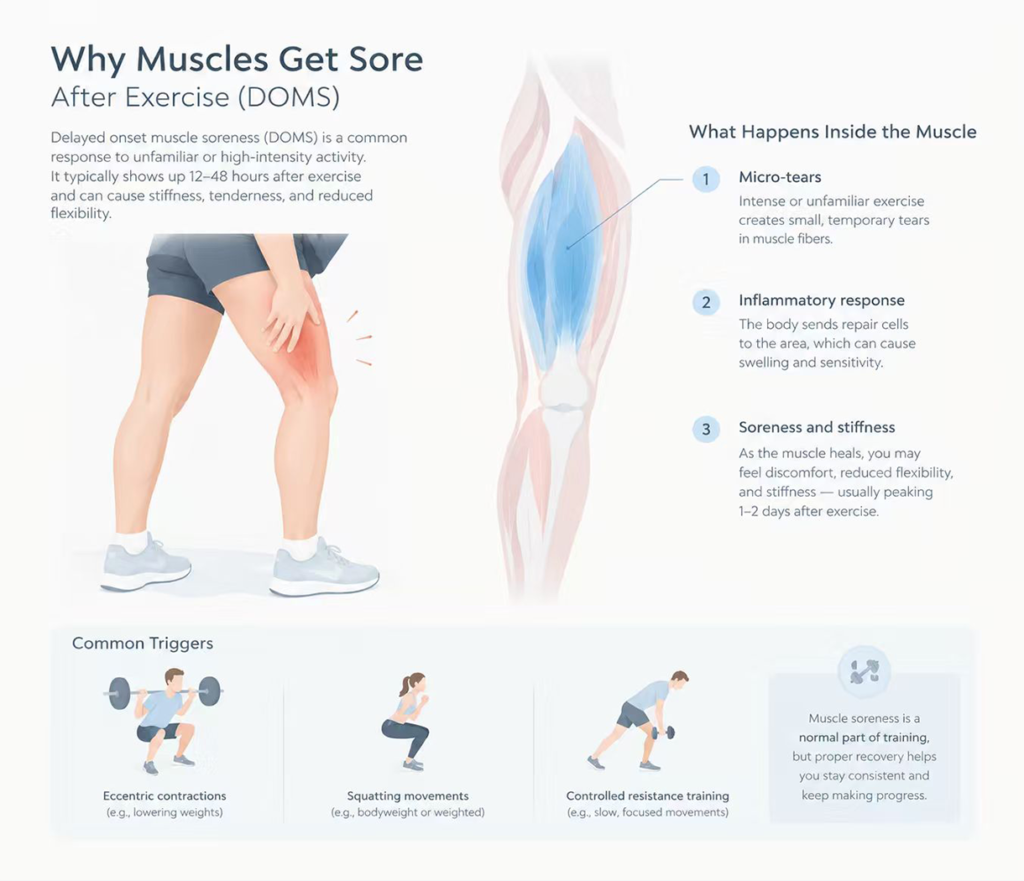
Post-workout muscle soreness, often associated with delayed onset muscle soreness (DOMS), commonly appears after unfamiliar or high-intensity physical activity. It may occur after exercises involving eccentric muscle contractions, such as lowering weights, squatting movements, or controlled resistance training.
During intense exercise, muscles experience temporary stress that triggers a series of natural biological responses. Small-scale changes occur within muscle fibers, and the surrounding tissues may experience temporary sensitivity. As the body adapts, individuals may notice stiffness, reduced flexibility, or discomfort during movement.
Muscle soreness is a normal part of many training experiences, but managing recovery properly allows individuals to maintain consistent exercise habits. This is why many athletes and fitness enthusiasts explore supportive recovery methods such as stretching, mobility work, hydration strategies, and localized cold therapy.
1.2 The Role of Localized Cold Therapy in Recovery Routines
Cold therapy has been used in sports and wellness settings for many years because temperature changes can influence how the body responds after physical activity. Localized cold therapy focuses cooling on specific areas rather than exposing the entire body to low temperatures.
CO₂ cryotherapy uses carbon dioxide released through a specialized applicator to create rapid cooling on targeted skin areas. The cooling effect may support temporary changes in blood flow, nerve sensation, and tissue comfort.
For post-workout recovery, targeted application allows users to focus on muscles that experience higher training demands, such as the quadriceps after leg workouts, shoulders after upper-body training, or calves after endurance activities.
1.3 How CO₂ Cryotherapy Differs From Traditional Cooling Methods
Traditional recovery methods, such as ice packs, often require direct contact and may provide less precise coverage of specific areas. CO₂ cryotherapy offers a different approach by allowing controlled cooling through a focused application method.
The ability to target specific muscles makes CO₂ cryotherapy suitable for individuals who want a convenient recovery routine after exercise. Instead of cooling large body areas, users can focus on regions that feel more affected after training.
This targeted approach is one reason localized cryotherapy has become increasingly discussed within fitness, rehabilitation, and wellness environments.
2. CO₂ Cryotherapy for Different Types of Training Recovery
Different exercise styles create different physical demands. Understanding how localized cold therapy fits into various training environments helps active individuals choose recovery methods that match their routines.
2.1 Supporting Recovery After Strength Training and Weightlifting
Strength training places repeated stress on muscles through resistance and controlled movement patterns. Exercises such as squats, deadlifts, bench presses, and resistance circuits often involve multiple muscle groups working at high intensity.
After strength workouts, individuals commonly focus on areas such as:
- Quadriceps and hamstrings after lower-body training
- Shoulders and arms after upper-body exercises
- Lower back muscles after compound movements
CO₂ cryotherapy can be incorporated into recovery routines by providing targeted cooling to these high-demand areas. The goal is to support muscle comfort and help individuals maintain mobility between training sessions.
For people following structured workout programs, recovery plays an important role because consistent training requires attention to both exercise performance and physical readiness.
2.2 Supporting Recovery After High-Intensity Functional Training
Functional training programs often combine strength, endurance, and dynamic movements. These workouts may include repeated lifting, jumping, pushing, and pulling motions that involve multiple muscle groups.
Because functional training requires full-body coordination, athletes may experience temporary muscle fatigue across several areas. Localized CO₂ cryotherapy allows users to focus on specific regions depending on their workout intensity.
For example, after lower-body functional exercises, individuals may focus on the legs and hips. After upper-body sessions, shoulders and arms may receive more attention.
By becoming part of a balanced recovery strategy, targeted cold therapy can support comfort while allowing individuals to continue their fitness routines.
2.3 Supporting Recovery Between Training Sessions
Many active individuals train multiple times per week and need recovery strategies that fit their schedules. Maintaining muscle comfort between sessions can help support consistent participation in exercise programs.
CO₂ cryotherapy is often considered alongside other recovery habits, including proper rest, mobility exercises, adequate nutrition, and hydration. It does not replace fundamental recovery practices but can serve as an additional tool within a broader wellness routine.
For recreational athletes and fitness enthusiasts, the ability to focus on specific areas makes localized cryotherapy a practical option for post-workout care.
3. How Localized CO₂ Cryotherapy Fits Into Modern Fitness Recovery
As recovery science continues to develop, active individuals are looking for methods that are efficient, targeted, and easy to integrate into regular training schedules. Localized CO₂ cryotherapy provides another option for people who want to focus on specific muscles instead of applying general cooling methods.
3.1 Targeted Cooling for Specific Muscle Groups
One of the main advantages of localized CO₂ cryotherapy is its ability to focus on individual areas affected by physical activity. Different workouts place different levels of demand on the body, meaning recovery needs may vary from one training session to another.
For example, lower-body workouts may create greater stress around the quadriceps, hamstrings, calves, and knees, while upper-body training may involve more shoulder, arm, and chest muscle activity. With targeted CO₂ cooling, users can select areas that receive the most workload during exercise.
This approach fits well with personalized recovery routines because it allows individuals to adjust their focus based on their training style, exercise intensity, and personal comfort.
3.2 The Role of Cooling Response in Muscle Comfort
Cold exposure influences the body’s response to temperature changes through interactions between the skin, nervous system, and local tissues. When a specific area receives controlled cooling, the body responds through natural physiological processes related to circulation and sensory perception.
Localized CO₂ cryotherapy creates a rapid cooling effect on the targeted surface area. This process may help support temporary comfort in muscles that feel fatigued after demanding activities.
For fitness enthusiasts, the purpose of incorporating cold therapy is not to replace essential recovery habits but to complement a complete routine that includes proper rest, movement, and training management.
3.3 Combining CO₂ Cryotherapy With a Balanced Recovery Strategy
Recovery involves multiple factors, and no single method can replace a complete approach to physical wellness. Sleep quality, hydration, nutrition, mobility exercises, and appropriate training intensity all influence how the body adapts to exercise.
CO₂ cryotherapy can be included as one part of this process. Many active individuals use targeted cold therapy after challenging workouts, during training cycles, or when focusing on specific areas that experience repeated physical demand.
By combining localized cold therapy with healthy training practices, individuals can create a recovery routine that supports long-term fitness goals.
4. Applications of CO₂ Cryotherapy in Fitness and Wellness Environments
As interest in recovery technology grows, localized cryotherapy has become increasingly common in fitness facilities, recovery centers, and wellness environments. Its targeted application method makes it suitable for individuals who prefer focused recovery options.
4.1 Why Fitness Communities Are Exploring Localized Cryotherapy
Modern fitness culture places greater attention on recovery quality rather than only workout performance. Many people now understand that maintaining consistency requires balancing exercise intensity with proper recovery strategies.
CO₂ cryotherapy has attracted attention because it provides a quick and focused cooling method that can be used on specific body areas. Compared with traditional approaches that may require larger equipment or preparation, localized systems offer a more flexible way to incorporate cold therapy into daily routines.
For gym members, trainers, and wellness professionals, targeted cryotherapy represents an additional tool for supporting muscle comfort after demanding physical activities.
4.2 CO₂ Cryotherapy for Different Fitness Levels
Localized cold therapy is not limited to professional athletes. Recreational exercisers, weekend gym users, and individuals beginning new fitness programs may also experience temporary muscle soreness after increasing their activity levels.
Beginners often experience soreness when introducing unfamiliar movements, while experienced athletes may experience fatigue during high-volume training periods. Because exercise demands vary widely, recovery methods that allow targeted application can be adapted to different fitness backgrounds.
CO₂ cryotherapy can support a flexible recovery approach by focusing on individual needs rather than using a one-size-fits-all method.
5. The Future of CO₂ Cryotherapy in Exercise Recovery
The fitness industry continues to evolve as more people search for effective ways to maintain performance and comfort. Localized CO₂ cryotherapy represents one of the technologies contributing to this changing recovery landscape.
5.1 Growing Interest in Targeted Recovery Technologies
Traditional recovery methods remain widely used, but many active individuals are exploring technologies that offer greater convenience and customization. Localized cryotherapy fits this trend because it focuses on specific areas instead of applying cold exposure broadly.
Research discussions around cryotherapy and recovery methods continue to examine how different cooling approaches may influence post-exercise soreness and recovery experiences. Existing literature has explored cryotherapy alongside other recovery technologies, highlighting the importance of understanding different methods and their appropriate applications.
As recovery technology develops, personalized approaches may become increasingly important for people with different exercise habits and physical goals.
5.2 Maintaining Consistent Training Through Better Recovery Habits
For many fitness enthusiasts, the ability to maintain a regular workout schedule depends on how well they manage recovery between sessions. Supporting muscle comfort and mobility can help individuals stay engaged with their fitness routines.
CO₂ cryotherapy is one supportive option that can be integrated into a broader recovery plan. When combined with appropriate exercise programming, rest, and healthy lifestyle habits, localized cold therapy may help individuals create a more complete approach to post-workout care.
The future of recovery is likely to focus on personalized solutions that help people better understand their bodies and develop routines that match their training demands.
자주 묻는 질문
What is CO₂ cryotherapy for muscle recovery?
CO₂ cryotherapy is a localized cold therapy method that uses carbon dioxide cooling technology to provide targeted temperature changes to specific body areas after exercise.
How does CO₂ cryotherapy support post-workout recovery?
CO₂ cryotherapy may support muscle comfort by providing targeted cooling to areas affected by physical activity and helping individuals maintain a consistent recovery routine.
Which areas are commonly used with localized CO₂ cryotherapy?
Common areas include the legs, shoulders, arms, calves, and other muscle groups that experience high training demands.
Is CO₂ cryotherapy only for professional athletes?
No. CO₂ cryotherapy can be used by different fitness levels, including recreational exercisers who want to support their recovery routine.
Can CO₂ cryotherapy replace stretching and rest?
No. It works as a supportive recovery method and should be combined with proper rest, hydration, mobility exercises, and balanced training habits.
결론
CO₂ cryotherapy provides a targeted approach to post-workout recovery by focusing on specific areas affected by physical activity. Through controlled localized cooling, this technology may support muscle comfort, mobility, and recovery routines for individuals involved in strength training, functional fitness, and regular exercise programs. Unlike general cooling methods, localized CO₂ cryotherapy allows users to focus on specific muscle groups based on their training demands. While it is not a replacement for proper recovery habits, it can serve as a valuable addition to a comprehensive fitness routine.
참조
Comparison between cryotherapy and photobiomodulation in muscle recovery: a systematic review and meta-analysis
https://pubmed.ncbi.nlm.nih.gov/34669081
Photobiomodulation therapy (PBMT) and/or cryotherapy in skeletal muscle restitution, what is better? A randomized, double-blinded, placebo-controlled clinical trial
https://pubmed.ncbi.nlm.nih.gov/27624781
The Effectiveness of Photobiomodulation Therapy Versus Cryotherapy for Skeletal Muscle Recovery: A Critically Appraised Topic
https://pubmed.ncbi.nlm.nih.gov/29952693
Physical therapy interventions for the treatment of delayed onset muscle soreness (DOMS): Systematic review and meta-analysis
https://doi.org/10.1016/j.ptsp.2021.07.005
Whole-body cryotherapy for preventing and treating muscle soreness after exercise in adults