소개
Long-distance travel can be a challenging experience for dogs, especially when they spend many hours inside vehicles, aircraft cabins, or transport carriers. Extended periods of limited movement, unfamiliar environments, and changes in routine may affect a dog’s overall comfort and mobility after travel. CO₂ Cryotherapy, also known as localized carbon dioxide cryotherapy, has gained attention as a targeted cooling approach that supports post-travel wellness routines for dogs. By delivering controlled cold stimulation to specific areas, this technology can help support circulation changes, muscle comfort, and normal recovery processes. For pet owners, breeders, rescue organizations, and professional handlers who regularly transport dogs, localized CO₂ Cryotherapy provides another option to include in comprehensive canine care plans.
1. Understanding How Long-Distance Travel Affects Dogs
Traveling over long distances requires dogs to adapt to physical and environmental changes. Understanding these challenges can help owners create better wellness routines before, during, and after transportation.
1.1 Physical Challenges Dogs May Experience During Extended Transport
Long-distance transportation can limit a dog’s ability to move naturally. Unlike normal daily activities where dogs can walk, stretch, and change positions freely, travel often requires them to remain in a restricted space for extended periods.
Limited movement may influence muscle flexibility and overall comfort, especially in active dogs, senior dogs, large breeds, and dogs that frequently participate in competitions or events.
During transportation, dogs may experience changes related to:
- Reduced stretching opportunities
- Long periods of sitting or lying down
- Muscle tension from maintaining one position
- Temporary changes in normal movement patterns
Supporting a dog’s comfort after travel involves a combination of proper hydration, gentle movement, rest, and appropriate wellness practices. Localized CO₂ Cryotherapy can be considered as part of this type of recovery-focused routine.
1.2 Why Travel Recovery Matters for Active and Frequently Transported Dogs
Some dogs experience frequent transportation due to competitions, breeding programs, adoption transfers, professional activities, or relocation. For these dogs, travel is not an occasional event but a repeated part of their lifestyle.
Sporting dogs and show dogs often travel between different locations while maintaining regular training schedules. Rescue dogs may also experience transportation stress when moving between shelters, rehabilitation facilities, and new homes.
Maintaining comfort after transportation is important because healthy mobility supports daily activities, social interaction, and quality of life. A structured post-travel wellness routine can help dogs transition back into their normal environment more comfortably.
1.3 Common Areas of Focus After Long-Distance Travel
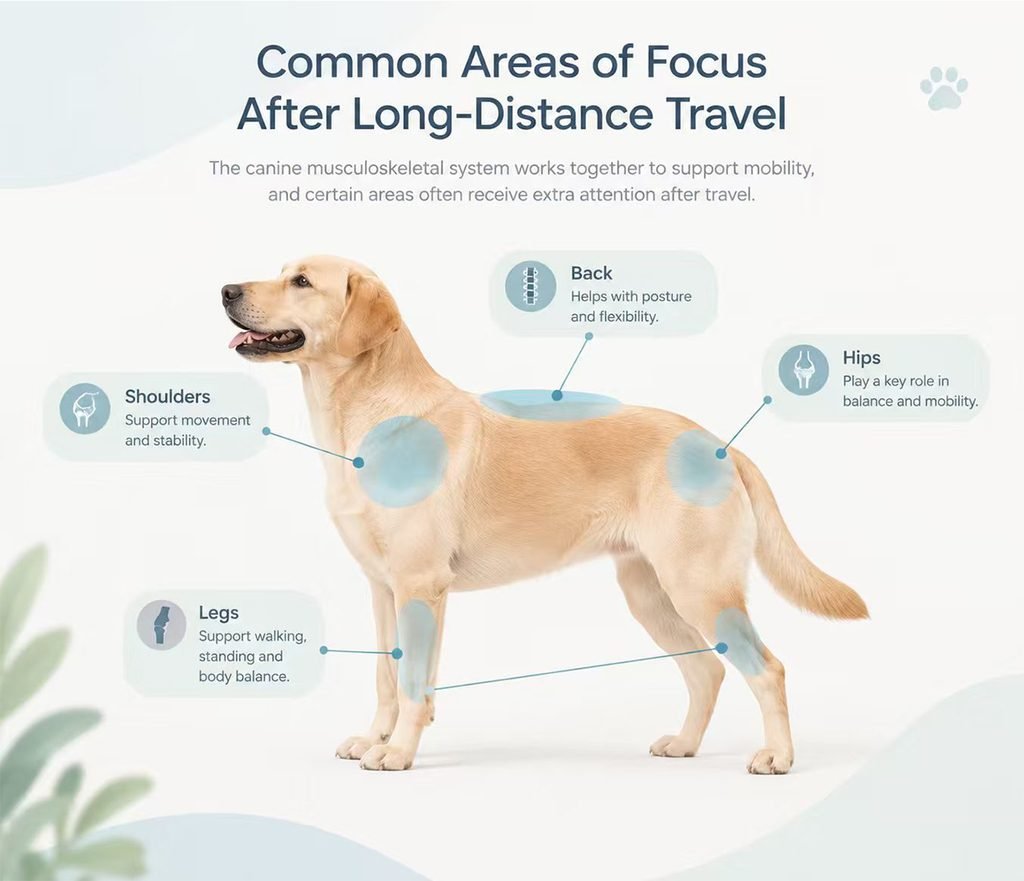
After extended travel, many owners pay attention to areas involved in movement and posture. The canine musculoskeletal system includes muscles, joints, ligaments, tendons, and connective tissues that work together to support mobility.
Common areas that may receive additional attention include the shoulders, back, hips, and legs because these regions contribute significantly to walking, standing, and body balance.
Localized CO₂ Cryotherapy focuses on targeted cooling rather than whole-body exposure, allowing owners and professionals to consider specific areas as part of a customized wellness approach.
2. How CO₂ Cryotherapy Supports Canine Travel Recovery
Understanding the technology behind CO₂ Cryotherapy helps explain why localized cooling has become an option in modern animal wellness and rehabilitation environments.
2.1 What Is Localized CO₂ Cryotherapy for Dogs?
Localized CO₂ Cryotherapy uses pressurized carbon dioxide to create a rapid cooling effect on targeted areas of the body. Unlike traditional cold packs, CO₂ Cryotherapy delivers controlled cold application through a specialized system designed for precise use.
The rapid temperature change creates a thermal response within the treated area. This process may encourage natural physiological reactions, including temporary vasoconstriction followed by increased circulation responses as tissues return toward normal temperature.
In canine wellness settings, localized cryotherapy is generally used as a supportive method to maintain comfort and assist recovery routines rather than replace veterinary evaluation or professional care.
2.2 The Science Behind Carbon Dioxide Cooling Technology
The effectiveness of CO₂ Cryotherapy is connected to the body’s natural response to controlled cold exposure. When tissues experience a cooling stimulus, blood vessels temporarily narrow, which is known as vasoconstriction.
After the cooling period, the body naturally works toward restoring normal temperature balance. This process may involve changes in circulation and tissue responses.
For dogs recovering after travel, this targeted cooling approach can be incorporated into wellness routines focused on muscle comfort, mobility support, and maintaining normal tissue function.
2.3 CO₂ Cryotherapy Compared With Traditional Cooling Methods
Traditional cooling methods, such as ice packs or cold compresses, have been used in animal rehabilitation for many years. These approaches are often practical but may be less convenient when owners need targeted application in specific situations.
CO₂ Cryotherapy provides a different approach by allowing focused cooling without placing heavy packs or materials directly on the animal. This can be useful for dogs that are sensitive to traditional cooling methods or for professional environments that require efficient targeted applications.
Veterinary rehabilitation programs commonly use various physical modalities, including cold therapy, exercise programs, massage, and other supportive techniques depending on individual animal needs.
3. Supporting Different Types of Dogs During Travel Recovery
Not every dog experiences travel in the same way. Age, activity level, breed characteristics, and travel purpose all influence how owners approach post-transport care.
3.1 Supporting Show Dogs After Transportation Between Events
Show dogs frequently travel for competitions, exhibitions, and professional events. These dogs often spend significant time in vehicles or transport carriers while maintaining strict grooming and performance schedules.
After transportation, owners usually focus on helping dogs return to normal routines. Areas such as shoulder muscles, back regions, and legs may receive additional attention because these areas contribute to posture and movement.
CO₂ Cryotherapy can be included as part of a broader wellness routine designed to support comfort before and after demanding travel schedules.
3.2 Supporting Rescue Dogs During Transportation Transitions
Rescue organizations often transport dogs between shelters, foster homes, rehabilitation facilities, and adoption locations. These journeys can involve unfamiliar environments and extended periods of confinement.
For rescue dogs, maintaining comfort during transitions is an important part of overall animal welfare. Supportive care routines may include rest, proper nutrition, gentle movement, and wellness technologies that help animals adjust after transportation.
Localized CO₂ Cryotherapy may provide another option for organizations interested in supporting canine comfort during rehabilitation and transition periods.
3.3 Supporting Senior Dogs During Long Trips
Senior dogs may require additional consideration during long-distance transportation because aging can naturally affect flexibility, muscle condition, and movement patterns.
Long travel periods may make older dogs feel less comfortable when they return to normal activity. A gentle recovery routine that includes controlled movement, rest, and supportive care can help senior dogs maintain daily mobility.
CO₂ Cryotherapy can be considered as part of a senior dog wellness plan focused on maintaining comfort and supporting an active lifestyle.
4. Integrating CO₂ Cryotherapy Into Canine Travel Wellness Routines
As pet transportation becomes more common, owners and animal care professionals are paying more attention to structured recovery routines after long journeys. A complete post-travel wellness plan often combines rest, hydration, gentle movement, environmental adjustment, and supportive technologies that focus on maintaining comfort.
4.1 Creating a Post-Travel Recovery Routine for Dogs
After a long journey, dogs usually benefit from a gradual transition back into their normal lifestyle. Immediately returning to intense activity may not allow enough time for the body to adjust after hours of limited movement.
A balanced recovery routine may include short walks, stretching opportunities, comfortable resting areas, and observation of normal behavior. For dogs that experience frequent transportation, such as competition dogs, service dogs, or rescue animals, consistency is especially important.
Localized CO₂ Cryotherapy can be incorporated into this type of routine by focusing on areas associated with movement and daily activity. The goal is to support tissue comfort and mobility as dogs return to their regular schedule.
4.2 Common Areas Where CO₂ Cryotherapy May Be Applied
Because CO₂ Cryotherapy provides targeted cooling, it allows attention to specific areas rather than applying cold therapy broadly across the entire body.
Common areas considered in canine wellness routines may include:
- Shoulder muscles involved in movement and posture
- Back areas that support balance
- Hip regions related to mobility
- Leg muscles affected by prolonged positioning
The application area can vary depending on the dog’s size, activity level, age, and individual needs. Professional guidance can help determine appropriate approaches for dogs with specific health considerations.
4.3 The Role of Localized Cooling in Modern Canine Rehabilitation
Canine rehabilitation focuses on supporting movement, strength, and quality of life through structured care approaches. Modern rehabilitation programs often combine multiple methods, including controlled exercise, physical therapy techniques, and supportive technologies.
CO₂ Cryotherapy represents one type of localized cooling approach that may complement rehabilitation routines. Its targeted nature makes it suitable for situations where owners or professionals want to focus on specific body areas after physical stress or transportation.
Rather than replacing rehabilitation strategies, localized cryotherapy can become one part of a broader approach to supporting canine wellness.
5. The Future of CO₂ Cryotherapy in Animal Wellness and Rehabilitation
Advances in animal care continue to create new opportunities for supporting pet health and comfort. As more owners seek non-invasive and convenient wellness solutions, localized technologies such as CO₂ Cryotherapy continue to gain attention.
5.1 Growing Interest in Targeted Recovery Technologies for Animals
Animal wellness is increasingly moving toward personalized care approaches. Instead of using one general method for every animal, owners and professionals are looking for solutions that consider breed, lifestyle, age, and activity level.
Targeted cooling technologies fit into this trend because they allow attention to specific areas that may experience greater physical demands.
For frequently transported dogs, this personalized approach can help create recovery routines that match their unique lifestyle, whether they are family pets, competition dogs, working dogs, or rescue animals.
5.2 Why Localized CO₂ Cryotherapy May Become More Common in Pet Care
Convenience and precision are two important factors influencing modern pet care choices. Many owners prefer supportive methods that can fit naturally into existing routines without creating additional stress for their animals.
CO₂ Cryotherapy provides a focused approach that can be adapted for different canine wellness environments, including rehabilitation facilities, professional animal care settings, and specialized training programs.
As awareness of animal wellness continues to grow, technologies that support comfort and mobility may become an increasingly common part of comprehensive pet care.
5.3 Supporting Better Travel Experiences for Dogs
Travel will continue to be part of many dogs’ lives, whether for competitions, relocation, rescue transportation, or family adventures. Preparing dogs before travel and supporting them afterward can make the overall experience more comfortable.
CO₂ Cryotherapy offers another option for owners who want to include localized cooling as part of their dog’s wellness routine. Combined with proper preparation, appropriate rest, and responsible care practices, it can help support dogs as they return to normal activities after long-distance transportation.
Frequently Asked Questions
What is CO₂ Cryotherapy for dogs?
CO₂ Cryotherapy is a localized cooling method that uses carbon dioxide to create a controlled cold effect on targeted areas of the body.
Can CO₂ Cryotherapy help dogs after long-distance travel?
CO₂ Cryotherapy may support comfort and mobility as part of a post-travel wellness routine for dogs.
Which dogs may benefit from travel recovery routines?
Dogs that frequently travel, including show dogs, service dogs, rescue dogs, and senior dogs, may benefit from structured post-travel care.
How does CO₂ Cryotherapy work?
CO₂ Cryotherapy creates a rapid cooling response that interacts with the body’s natural temperature regulation processes and circulation response.
Can CO₂ Cryotherapy replace veterinary care?
No. CO₂ Cryotherapy is a supportive wellness approach and should be used alongside appropriate veterinary guidance when needed.
결론
Long-distance travel can create unique challenges for dogs, especially those that frequently participate in competitions, assist humans, move between rescue facilities, or accompany owners on extended journeys. CO₂ Cryotherapy provides a targeted cooling approach that can be included in canine wellness routines focused on comfort, mobility, and tissue support after transportation. By using controlled carbon dioxide cooling technology, owners and animal care professionals can explore additional ways to support dogs as they transition back into normal activities. When combined with proper rest, hydration, movement, and professional care, localized CO₂ Cryotherapy can become a valuable part of modern canine recovery and wellness management.
참조
- Cold Therapy in Veterinary Rehabilitation: Principles and Applications
https://pubmed.ncbi.nlm.nih.gov/25432680
- Physical Rehabilitation for Veterinary Patients: Principles and Techniques
- Cryotherapy and Its Physiological Effects on Tissue Response
https://pmc.ncbi.nlm.nih.gov/articles/PMC8636653
- Canine Rehabilitation and Physical Therapy: Supporting Mobility and Function
https://www.vetmed.ucdavis.edu/hospital/small-animal/rehabilitation
5. LocalCryotherapy: Localized CO₂ Cryotherapy Technology
https://www.localcryotherapy.com/