はじめに
Quilting and sewing offer a creative way to relax, make personalized projects, and enjoy hands-on hobbies. However, hours spent cutting fabric, guiding material through a sewing machine, hand-stitching details, or working with a rotary cutter can place repeated demands on the neck, shoulders, wrists, and hands. Over time, an uncomfortable workstation or limited movement breaks may contribute to muscle fatigue and localized discomfort. CO₂ cryotherapy is one approach that uses targeted cooling and may support short-term comfort in selected situations. Understanding how it works, what it can realistically offer, and how to build healthier sewing habits can help enthusiasts make more informed recovery choices.
1. Why Sewing and Quilting Can Cause Physical Discomfort
Sewing may look like a gentle activity, but many projects involve sustained concentration, repetitive movements, and prolonged static postures. A quilter might spend an afternoon leaning over a cutting table, sitting at a sewing machine, or holding small pieces of fabric during detailed handwork. These activities can place repeated demands on different parts of the upper body.
1.1 Neck and Shoulder Tension From Detailed Work
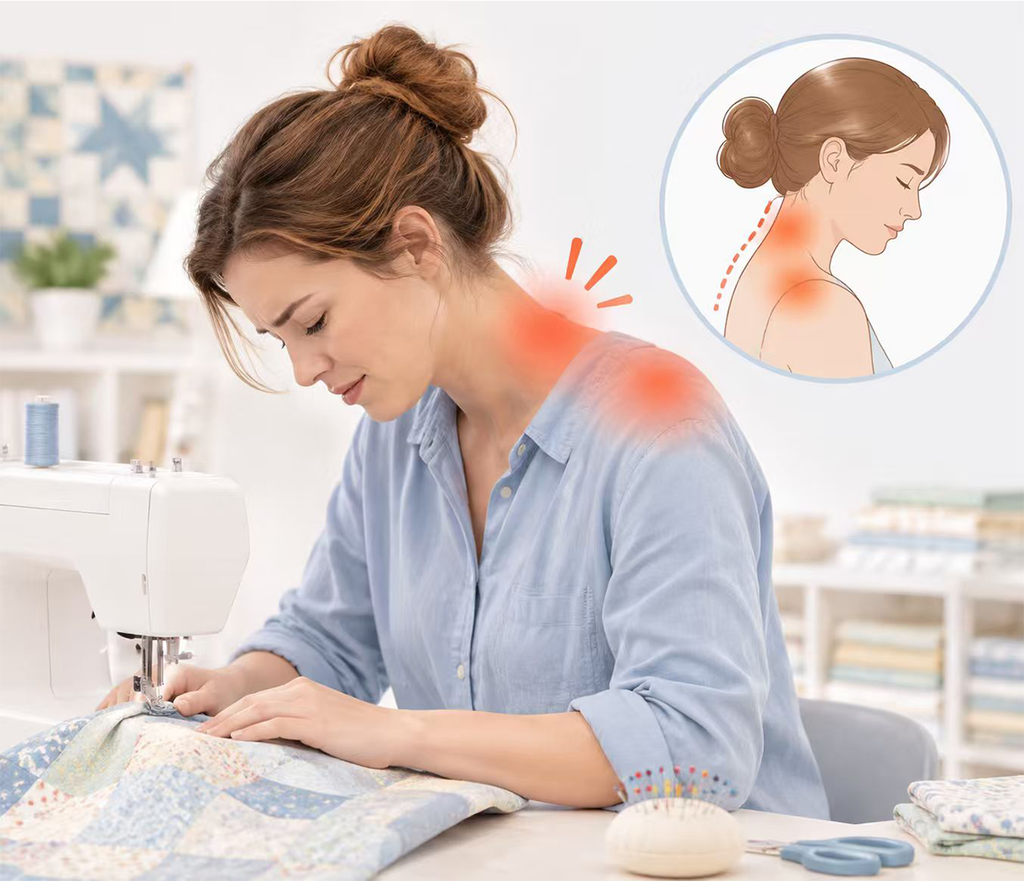
Looking down at small stitches, aligning fabric edges, and inspecting intricate patterns can encourage a forward-head posture. When the work surface sits too low, the shoulders may also round forward as the person leans closer to the project. Holding this position for extended periods can contribute to neck stiffness and tension around the shoulders and upper back. Reaching across a large quilting surface or lifting heavy fabric bundles may add further strain, especially when the same movements happen repeatedly without enough breaks.
1.2 Hand and Wrist Fatigue From Repetitive Movements
Quilting requires frequent gripping, pinching, cutting, guiding, and stitching. Hand sewing involves repeated finger movements, while machine sewing often requires precise fabric control and steady hand positioning. Rotary cutting and trimming can also place repeated demands on the thumb, fingers, wrist, and forearm. These activities may lead to temporary fatigue or discomfort, particularly when someone grips tools too tightly or works for long periods without changing tasks. Persistent numbness, tingling, weakness, or swelling should not be dismissed as ordinary hobby-related fatigue.
1.3 How Long Sessions Affect the Rest of the Body
A long sewing session often involves more than the hands and shoulders. Sitting in one position may contribute to back stiffness, while standing for extended periods at a cutting table can tire the legs. Large quilts can also require frequent reaching, lifting, and repositioning. These demands vary with the project, workstation, and individual habits. Recognizing the physical workload of sewing is the first step toward creating a more comfortable and sustainable hobby routine.
2. Understanding CO₂ Cryotherapy
Once sewing-related discomfort becomes noticeable, some enthusiasts explore localized cooling as part of a broader approach to physical comfort. CO₂ cryotherapy is different from simply placing an ice pack on a sore area, so it helps to understand how the method works before considering its potential role.
2.1 What Is Localized CO₂ Cryotherapy?
Localized CO₂ cryotherapy uses pressurized carbon dioxide gas to deliver a concentrated cooling stimulus to a selected area of the body. As the gas expands through an applicator, it cools rapidly and draws heat away from the skin surface. Unlike whole-body cryotherapy, this method focuses on a specific treatment area, such as a shoulder or another region selected by a trained provider. The LocalCryotherapy system describes a gas temperature of approximately −78°C at the outlet. This is the gas-source temperature, not the temperature that the skin or deeper tissues necessarily reach.
2.2 How Cooling May Affect Discomfort
Cold exposure can temporarily influence sensory nerve activity and reduce the perception of discomfort in some circumstances. Cooling can also cause local blood vessels to narrow, which changes blood flow near the treated area. These short-term responses help explain why different forms of cryotherapy appear in some musculoskeletal care settings. However, the effects depend on the cooling method, application conditions, and individual response. Evidence supporting conventional cold therapy does not automatically prove that localized CO₂ cryotherapy produces the same outcomes for sewing-related discomfort.
2.3 CO₂ Cryotherapy Is Not Laser Therapy
The term CO₂ cryotherapy can sometimes cause confusion when a device also includes a red laser pointer. In some systems, the laser serves as a visual targeting aid that helps the operator identify the intended treatment area. It does not mean the device delivers therapeutic laser energy. This distinction matters because photobiomodulation, also called low-level light therapy, uses specific wavelengths of light to interact with tissue, while CO₂ cryotherapy relies on rapid cooling. They are different modalities with different mechanisms.
3. Areas That May Need Attention
Quilters and sewing enthusiasts may experience discomfort in several areas, depending on their preferred techniques and the length of each session. Localized cooling may be considered as a supportive option for selected symptoms, but it should not replace identifying the underlying cause or improving the habits that contribute to repeated strain.
3.1 Neck and Shoulder Discomfort
Neck and shoulder discomfort may develop after extended periods of looking down, leaning toward a sewing machine, or reaching across a worktable. A qualified provider may consider localized CO₂ cryotherapy when short-term cooling is appropriate for a specific area of discomfort. However, cooling does not correct forward-head posture, restore workstation ergonomics, or resolve an underlying neck or shoulder condition. Adjusting the chair and table, improving task lighting, and changing position regularly remain important parts of managing recurring tension.
3.2 Hand, Wrist, and Forearm Discomfort
Repeated cutting, pinching, gripping, and stitching can make the hands and forearms feel tired after a demanding project. Localized cooling may offer temporary comfort in selected circumstances, but the hands and wrists require particular care because superficial structures are close to the skin. Intense cooling should only be performed according to the device’s instructions and appropriate professional guidance. Anyone experiencing persistent tingling, numbness, reduced grip strength, or worsening pain should seek an assessment rather than relying on cooling alone.
3.3 Why the Source of Pain Matters
Not every uncomfortable sensation after sewing comes from simple muscle fatigue. Tendon irritation, nerve compression, joint conditions, and other problems can produce similar symptoms. For example, persistent thumb-side wrist pain or nighttime hand numbness may need a more specific evaluation. Identifying the cause helps determine whether localized cooling is appropriate or whether another approach is more suitable. A temporary reduction in discomfort should never be treated as proof that an underlying injury has healed.
4. Make Your Sewing Space More Comfortable
CO₂ cryotherapy is only one possible part of a broader comfort strategy. In many cases, practical changes to the sewing environment and daily routine can reduce unnecessary physical strain before discomfort becomes a regular problem.
4.1 Adjust Your Chair and Work Surface
Set the chair height so your feet rest comfortably on the floor or a foot support. Position the sewing table at a height that allows your shoulders to relax and your elbows to remain close to your sides. Keep the fabric and frequently used tools within easy reach to avoid repeated twisting or stretching. If you often lean forward to see small details, consider adjustable task lighting or a suitable magnifying aid. A comfortable setup should allow you to see your work without constantly bending your neck.
4.2 Take Short Breaks and Change Tasks
Instead of completing every stage of a project in one long session, divide the work into smaller blocks. Alternate machine sewing with measuring, organizing fabric, or other tasks that use different movements. Stand up, gently move your shoulders, and change your hand position during breaks. These simple adjustments help reduce the time spent repeating one posture or movement. Even experienced quilters can benefit from pacing a project rather than pushing through discomfort.
4.3 Choose Tools That Reduce Unnecessary Effort
Comfortable tools can make a noticeable difference during detailed projects. Ergonomic scissors, rotary cutters with suitable handles, supportive seating, and stable cutting surfaces may reduce unnecessary gripping or awkward wrist positions. Keep cutting tools sharp and use them as intended instead of applying excessive force. When handling large quilts, support the fabric so its weight does not pull repeatedly on your arms and shoulders. Small improvements across several stages of a project can make longer sewing sessions easier to manage.
5. Using CO₂ Cryotherapy Responsibly
Understanding the potential role of localized cooling also means recognizing its limitations. A responsible approach considers the person’s symptoms, health history, and the specific equipment rather than assuming that every sore area needs intensive cold exposure.
5.1 Set Realistic Expectations
CO₂ cryotherapy may provide short-term relief from certain types of localized discomfort, but it is not a cure for repetitive strain, tendon disorders, nerve compression, or poor posture. Research on cryotherapy supports some uses as an adjunct in musculoskeletal care, but evidence varies by condition and delivery method. There is not enough condition-specific evidence to conclude that CO₂ cryotherapy reliably prevents or resolves pain caused by quilting and sewing. It is best viewed as a possible addition to a broader plan that includes ergonomic changes, activity adjustments, and appropriate care.
5.2 Understand Safety Precautions
Localized CO₂ cooling can create an intense cold stimulus, so proper application matters. People with cold sensitivity, Raynaud’s phenomenon, impaired circulation, reduced skin sensation, or compromised skin should seek medical guidance before considering this type of treatment. A trained operator should follow the device manufacturer’s instructions, monitor the treatment area, and avoid improvised exposure times or distances. Stop the procedure if unexpected pain, burning, unusual numbness, or concerning skin changes occur. Persistent or worsening symptoms deserve professional assessment.
5.3 Build a Balanced Recovery Routine
A comfortable sewing routine combines sensible workstation adjustments, regular movement, appropriate rest, and attention to early symptoms. If localized CO₂ cryotherapy is considered suitable, it should complement these habits rather than replace them. Pay attention to how your body responds after different activities, and adjust the length or intensity of sewing sessions when discomfort appears. If symptoms repeatedly interfere with hobbies or daily tasks, a healthcare professional can help identify the cause and recommend an appropriate plan.
Frequently Asked Questions
1. Can CO₂ cryotherapy help with neck discomfort after sewing?
It may provide temporary comfort in selected situations, but it does not correct posture-related strain or treat every cause of neck pain.
2. Is CO₂ cryotherapy the same as using an ice pack?
No. Both use cooling, but CO₂ cryotherapy delivers pressurized cold gas, while an ice pack cools through direct contact.
3. Can it help with hand and wrist fatigue?
Localized cooling may support short-term comfort, but hand and wrist applications require careful technique and appropriate professional guidance.
4. Does CO₂ cryotherapy treat carpal tunnel syndrome or tendon injuries?
It should not be considered a proven treatment for these conditions. Persistent numbness, weakness, or tendon pain needs proper evaluation.
5. How can quilters reduce neck and shoulder tension?
Adjust your chair and work surface, improve lighting, keep materials within reach, and take regular movement breaks.
6. Is localized CO₂ cryotherapy suitable for everyone?
No. People with cold sensitivity, circulation problems, reduced sensation, or certain skin conditions should seek professional advice first.
7. Should I continue sewing if my hands start to hurt?
Pause and reduce the activity that triggers discomfort. If pain, numbness, or weakness persists or worsens, seek professional assessment.
結論
Quilting and sewing should remain enjoyable activities rather than sources of recurring physical discomfort. Long periods of detailed work, repetitive hand movements, and awkward postures can place extra demands on the neck, shoulders, wrists, and hands. CO₂ cryotherapy offers a localized cooling approach that may support short-term comfort in selected circumstances, but it cannot replace ergonomic improvements or professional care when symptoms persist. By creating a more comfortable sewing space, taking regular breaks, choosing suitable tools, and understanding the limits of cold therapy, sewing enthusiasts can make their creative routines more comfortable and sustainable.
参考文献
1. OSHA – Sewing and Related Procedures: Overview
https://www.osha.gov/etools/sewing
2. OSHA – Sewing Station Design
https://www.osha.gov/etools/sewing/station-design
3. Clinical Practice Guidelines for Pain Management in Acute Musculoskeletal Injury
https://pmc.ncbi.nlm.nih.gov/articles/PMC6485308
4. Musculoskeletal Symptoms Among Handicraft Workers Engaged in Hand Sewing Tasks
https://pmc.ncbi.nlm.nih.gov/articles/PMC5373915
5. Local Cryotherapy – The Ins and Outs of CO₂ Cryotherapy
https://www.localcryotherapy.com/the-ins-and-outs-of-co%E2%82%82-cryotherapy.html