
はじめに
Professional baking is physically demanding, especially for those who begin working before sunrise and spend hours standing on hard floors. From preparing dough and shaping pastries to loading ovens and organizing finished products, bakers rely heavily on their feet and lower legs throughout the day. Over time, prolonged standing, repetitive walking, and limited opportunities to rest can contribute to foot soreness, ankle discomfort, and lower leg fatigue. CO₂ cryotherapy offers a localized cooling approach that may support short-term comfort in targeted areas. By understanding how this technology works and how it can complement workplace recovery habits, professional bakers can make more informed decisions about managing physical discomfort during demanding shifts.
1. Why Early-Morning Baking Can Be Hard on the Feet and Legs
A typical bakery shift involves much more than preparing bread and pastries. Bakers often move between workstations, handle ingredients, operate ovens, and remain on their feet for extended periods. These repeated demands can place considerable stress on the lower extremities.
1.1 Prolonged Standing on Hard Bakery Floors
Many professional bakers work on concrete, tile, or other firm flooring surfaces. Standing in one position while mixing ingredients, shaping dough, decorating products, or monitoring ovens can place continuous pressure on the feet. The heel, arch, and ball of the foot may experience increasing discomfort as the shift progresses. Limited movement can also contribute to lower leg fatigue, particularly when workers have few opportunities to change positions.
1.2 Repetitive Walking and Frequent Weight Shifting
Bakery employees rarely remain at one workstation for an entire shift. They frequently walk between preparation tables, storage areas, ovens, cooling racks, and packaging stations. Although this movement is necessary, repeated short-distance walking and frequent changes in direction can increase the workload on the calves, ankles, and foot muscles. Carrying ingredient containers or trays while moving can add further physical demands.
1.3 Early Starts and Limited Recovery Opportunities
Early-morning shifts often begin before the body has fully adjusted to the demands of the day. Bakers may start preparing products while feeling tired or stiff, then continue working through busy production periods with limited breaks. When physical activity accumulates without sufficient recovery, soreness and fatigue may become more noticeable around the feet, ankles, and lower legs.
2. Common Foot and Lower Leg Discomfort Among Professional Bakers
Understanding which areas experience the most strain can help bakers recognize recurring discomfort and determine when professional assessment may be appropriate. Not every episode of soreness has the same cause, so identifying the location and pattern of symptoms matters.
2.1 Heel and Arch Discomfort After Long Hours of Standing
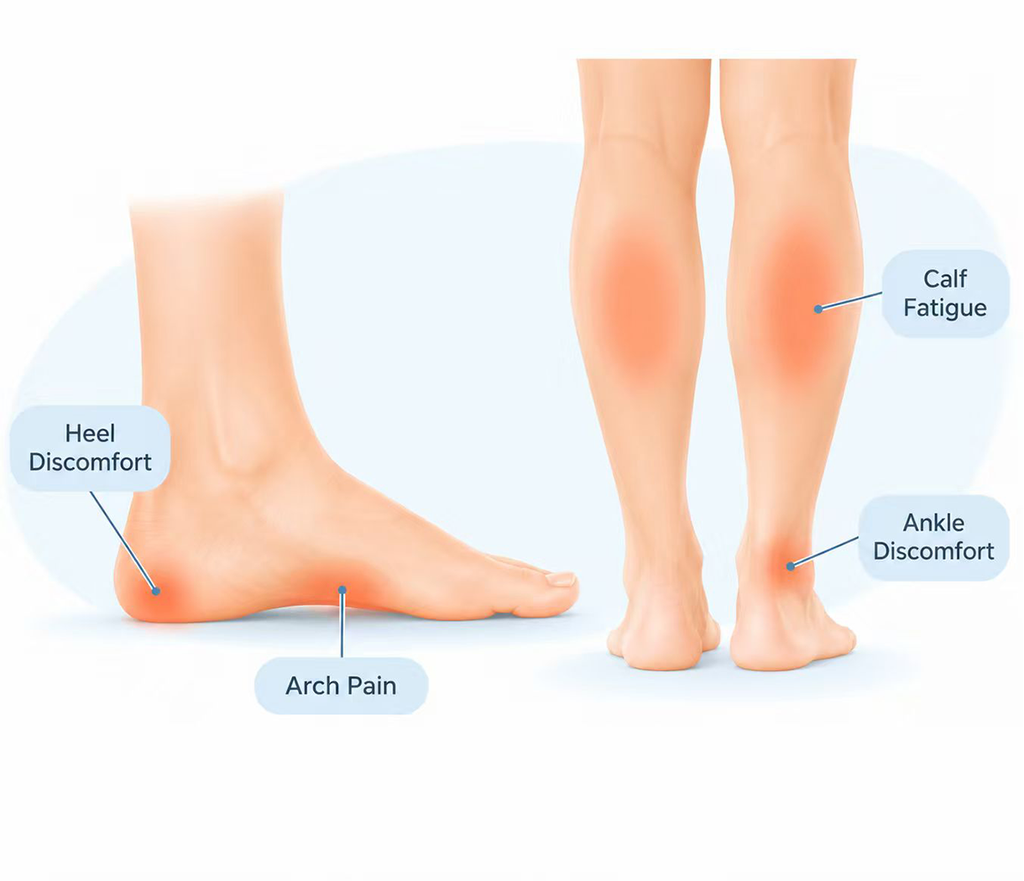
The heel and arch help support body weight and absorb forces during standing and walking. After hours of repetitive loading, some bakers may notice soreness beneath the heel or along the arch. Discomfort that is especially noticeable during the first steps in the morning may have several possible causes, including plantar fascia irritation. Persistent or worsening heel pain should not automatically be attributed to ordinary work fatigue.
2.2 Calf Muscle Tightness and Lower Leg Fatigue
The gastrocnemius and soleus muscles help control ankle movement and contribute to walking and standing. These muscles remain active throughout a baker’s shift, particularly when workers repeatedly step, turn, reach, and transfer their weight. As physical demands accumulate, the calves may feel tight, heavy, or fatigued. This sensation can be influenced by workload, footwear, recovery time, and individual health factors.
2.3 Ankle and Foot Discomfort From Repeated Loading
The ankles and feet work together to maintain balance and support movement across different bakery workstations. Repeated weight-bearing, turning, and walking on firm surfaces can contribute to localized discomfort around the ankle and foot. However, noticeable swelling, persistent tenderness, instability, or difficulty bearing weight may indicate a condition that requires medical evaluation rather than routine recovery measures alone.
3. Understanding CO₂ Cryotherapy for Localized Foot and Leg Comfort
CO₂ cryotherapy is a form of localized cooling that applies pressurized carbon dioxide gas to a selected body area. Unlike whole-body cryotherapy, this approach focuses on a specific treatment location, making it relevant to discussions about targeted foot and lower leg comfort.
3.1 How Pressurized CO₂ Cooling Works
The CO₂ cryotherapy device featured on the Local Cryotherapy website delivers pressurized carbon dioxide gas at a source temperature of approximately −78°C. When applied according to the device’s instructions, the gas rapidly cools the targeted skin area. Localized cooling can temporarily reduce skin temperature and slow sensory nerve conduction, which may influence how discomfort is perceived. However, the gas source temperature should not be confused with the actual temperature reached by the skin or deeper tissues.
3.2 The Role of Targeted Cooling in Temporary Comfort
Cold exposure can produce several local physiological responses, including temporary vasoconstriction and changes in sensory nerve activity. These responses help explain why cryotherapy is used as an adjunctive approach in some musculoskeletal care settings. For professional bakers, the potential role of localized CO₂ cooling is to support short-term comfort in selected areas after physically demanding work. It should not be presented as a treatment that corrects the underlying cause of persistent foot or leg pain.
3.3 Red Laser Positioning and Temperature Monitoring
The human-use CO₂ cryotherapy device described on the product page combines high-pressure CO₂ cooling with a red laser positioning feature. The red laser serves as a targeting aid, helping the operator identify the intended treatment area. It is not the cooling source itself. The device also includes real-time temperature monitoring, allowing the operator to observe cooling conditions during application. Its specified treatment distance is approximately 150 ± 5 mm, which should be followed alongside the manufacturer’s operating instructions and safety procedures.
4. How CO₂ Cryotherapy Can Fit Into a Baker’s Recovery Routine
Localized cooling is best considered one component of a broader recovery approach. For bakery professionals, managing foot and lower leg discomfort also involves adjusting work habits, selecting appropriate footwear, and recognizing when symptoms require additional care.
4.1 Identifying Suitable Treatment Areas
The heel, arch, ankle region, and calf muscles may be areas of interest when evaluating localized cooling for work-related discomfort. However, the correct treatment location depends on the individual’s symptoms and the intended purpose of the session. A trained operator or qualified healthcare professional should assess the area rather than assuming that every sore spot requires the same approach. Treatment should also avoid damaged skin and any area where cold exposure is medically inappropriate.
4.2 Using Localized Cooling Alongside Workplace Ergonomics
CO₂ cryotherapy does not replace practical workplace improvements. Bakers can reduce unnecessary lower limb strain by alternating tasks when possible, changing standing positions, using suitable anti-fatigue mats, and choosing supportive footwear that fits properly. Adjustable work surfaces and opportunities to sit briefly during appropriate tasks can also help reduce uninterrupted standing. These measures address everyday physical demands, while localized cooling may serve as an additional comfort-management option.
4.3 Planning Recovery Around Demanding Production Shifts
A structured recovery routine can help bakers pay attention to recurring discomfort instead of waiting until symptoms become difficult to manage. After a demanding shift, workers can change out of work footwear, allow time for rest, perform gentle ankle movements, and elevate their legs when appropriate. If localized CO₂ cryotherapy is included in a professional care plan, the treatment area, exposure, and application technique should be selected according to the device instructions and individual assessment. There is no single cooling duration or frequency that is appropriate for every person or body area.
4.4 Recognizing the Limits of Cold Therapy
Although cryotherapy may temporarily influence pain perception, it does not repair damaged tendons, resolve structural foot problems, or eliminate the physical demands of prolonged standing. Evidence supporting cryotherapy varies by condition and delivery method, and findings from one treatment approach cannot automatically be applied to every CO₂ device. Bakers with persistent heel pain, recurring ankle swelling, numbness, or worsening symptoms should seek an appropriate clinical evaluation instead of relying solely on cooling.
5. Choosing a Safe and Balanced Approach to Foot Recovery
Before introducing any localized cooling method, professional bakers should consider their health history, current symptoms, and the characteristics of the equipment. A careful approach helps keep recovery decisions realistic and reduces avoidable risks.
5.1 Understanding Cold Sensitivity and Circulation Concerns
Cold therapy may not be suitable for everyone. People with Raynaud’s phenomenon, cold urticaria, impaired circulation, reduced skin sensation, or certain vascular and neurological conditions may face a higher risk of cold-related injury. Areas with open wounds, damaged skin, or impaired sensation also require particular caution. Anyone with these concerns should consult a qualified healthcare professional before using localized cryotherapy.
5.2 Following Equipment Instructions and Professional Guidance
CO₂ cryotherapy devices use concentrated, very cold gas, so correct operation is essential. Operators should follow the manufacturer’s instructions for treatment distance, positioning, monitoring, and exposure. The device’s temperature monitoring and red laser positioning features can support controlled application, but they do not replace proper training, symptom assessment, or safety judgment. Users should never improvise treatment duration or direct the gas toward an area without understanding the equipment requirements.
5.3 Knowing When Foot or Leg Pain Needs Medical Attention
Work-related fatigue often improves with appropriate rest and changes in activity. However, sudden severe pain, significant swelling, redness, warmth, skin discoloration, new numbness, or difficulty walking should not be treated as ordinary post-shift soreness. Persistent heel pain or recurring calf discomfort also deserves professional assessment. Chest pain or shortness of breath occurring alongside leg swelling requires urgent medical attention because these symptoms may indicate a serious condition.
よくあるご質問
1. Can CO₂ cryotherapy help bakers with foot fatigue?
Localized CO₂ cooling may support temporary comfort in selected areas after demanding shifts. However, it does not address every cause of foot fatigue or replace appropriate medical care.
2. Which areas can be considered for localized CO₂ cooling?
Depending on the symptoms and professional assessment, the heel, arch, ankle region, or calf muscles may be considered. The treatment area should always be selected according to the individual’s needs and device instructions.
3. Is CO₂ cryotherapy the same as whole-body cryotherapy?
No. Localized CO₂ cryotherapy focuses on a specific body area using a targeted stream of cold gas. Whole-body cryotherapy exposes a much larger portion of the body to a cold environment.
4. Does the −78°C CO₂ temperature mean the skin reaches −78°C?
No. This figure describes the approximate temperature of the gas source, not the actual temperature of the skin or deeper tissues. Skin temperature depends on application conditions and other factors.
5. Can localized CO₂ cooling replace supportive footwear and rest breaks?
No. Appropriate footwear, anti-fatigue flooring, movement breaks, and task variation remain important parts of managing the physical demands of bakery work. Cooling should only be considered an additional option.
6. Who should avoid or seek advice before using CO₂ cryotherapy?
People with cold sensitivity, Raynaud’s phenomenon, circulation problems, reduced sensation, or damaged skin should seek professional guidance before treatment. Individual medical conditions and device-specific precautions must be considered.
結論
Professional bakers place continuous demands on their feet and lower legs through prolonged standing, repetitive walking, and early-morning production schedules. These working conditions can contribute to heel soreness, calf fatigue, and ankle discomfort over time. Localized CO₂ cryotherapy offers a targeted cooling approach that may support temporary comfort in selected areas, particularly when used as part of a carefully considered recovery plan. However, it should complement rather than replace workplace ergonomics, supportive footwear, adequate rest, and appropriate medical assessment. By combining practical work habits with informed recovery choices, bakers can take a more balanced approach to maintaining foot and lower leg comfort throughout demanding shifts.
参考文献
- CO₂ Cryotherapy Machine for Humans – Local Cryotherapy
https://www.localcryotherapy.com/cryotherapy-machine-product-list/cryotherapy-machine-for-human - Guidelines for Retail Grocery Stores – Ergonomics for the Prevention of Musculoskeletal Disorders – OSHA
https://www.osha.gov/sites/default/files/publications/OSHA3192.pdf - Evidence of Health Risks Associated with Prolonged Standing at Work and Intervention Effectiveness
https://pubmed.ncbi.nlm.nih.gov/25041875/ - Associations of Prolonged Standing with Musculoskeletal Symptoms: A Systematic Review of Laboratory Studies
https://pubmed.ncbi.nlm.nih.gov/28863296/ - Clinical Practice Guidelines for Pain Management in Acute Musculoskeletal Injury
https://pmc.ncbi.nlm.nih.gov/articles/PMC6485308/