はじめに
Teaching is one of the most demanding professions, often requiring long hours of standing, grading, lesson planning, and constant interaction with students. Over time, these responsibilities can lead to chronic neck and shoulder pain, muscle stiffness, and heightened stress levels. Many educators struggle to find effective, non-invasive solutions that do not interfere with their daily routine. CO₂ Cryotherapy, or carbon dioxide cold therapy, has emerged as a promising approach. By leveraging extreme cold exposure and vascular modulation, this therapy targets inflammation, enhances microcirculation, and promotes neuromuscular relaxation, providing teachers with an innovative way to manage discomfort and stress naturally.
1. Understanding the Physical Challenges of Teaching
1.1 Chronic Neck and Shoulder Strain
Long hours spent grading, typing, or standing in front of a classroom can result in chronic musculoskeletal strain. Neck and shoulder muscles often become tense due to sustained postures and repetitive movements. CO₂ Cryotherapy works at the cellular level by inducing vasoconstriction followed by reactive vasodilation, which can reduce inflammation and ease muscle tension, helping these key areas recover from daily stressors.
1.2 Repetitive Stress and Muscle Fatigue
Teachers frequently perform repetitive tasks such as writing on boards, lifting educational materials, or adjusting seating arrangements. This repetitive motion can accumulate microtrauma in muscles and tendons, leading to fatigue and soreness. Cryotherapy has been shown to improve microvascular blood flow and reduce inflammatory cytokines, supporting faster muscle recovery without pharmaceutical intervention.
1.3 Stress-Related Physical Symptoms
Professional stress can manifest physically, contributing to headaches, jaw tension, and upper back discomfort. By triggering sympathetic nervous system responses, CO₂ Cryotherapy promotes endorphin release and modulates stress hormones, which can alleviate the somatic effects of chronic stress in educators.
2. How CO₂ Cryotherapy Targets Chronic Pain
2.1 Inflammatory Pathways and Cold Exposure
Chronic neck and shoulder pain is often linked to persistent low-grade inflammation in muscle tissues. CO₂ Cryotherapy exposes the skin to extremely low temperatures, temporarily constricting blood vessels and reducing inflammatory mediator activity. When normal circulation resumes, increased blood flow delivers oxygen and nutrients to repair tissue, aiding recovery from inflammation-induced discomfort.
2.2 Microcirculation Enhancement
Efficient blood flow is crucial for muscle health. Poor circulation can prolong muscle soreness and stiffness, which teachers commonly experience after long workdays. Cryotherapy promotes vascular dilation after cold exposure, improving nutrient delivery and waste removal at the cellular level. Enhanced microcirculation accelerates the body’s natural healing processes and reduces lingering tension in the neck and shoulders.
2.3 Neuromuscular Relaxation
Cold exposure influences neuromuscular control by decreasing muscle spindle sensitivity and promoting relaxation of overactive muscle fibers. For educators, this effect can reduce the frequency of involuntary muscle contractions, lessen stiffness, and improve posture, contributing to a more comfortable and sustainable workday.
3. Stress Management Benefits of CO₂ Cryotherapy
3.1 Hormonal Modulation
Teaching can elevate cortisol levels and other stress-related hormones, leading to fatigue, irritability, and physical discomfort. CO₂ Cryotherapy triggers controlled stress responses that prompt endorphin and norepinephrine release. These natural biochemical changes help teachers feel more alert, less tense, and better able to cope with daily challenges.
3.2 Mental Clarity and Focus
Cold therapy has been associated with improved alertness and cognitive performance. For educators, even brief sessions can enhance focus and mental clarity, helping them manage lesson plans, grading, and student interactions more effectively. By reducing physical discomfort, teachers can concentrate more fully on pedagogical tasks.
3.3 Supporting Work-Life Balance
Physical strain and stress can spill over into personal life, affecting sleep quality and overall well-being. CO₂ Cryotherapy contributes to better recovery after a long day, which can improve energy levels, sleep patterns, and resilience against occupational stressors. Regular recovery routines may indirectly support a healthier work-life balance.
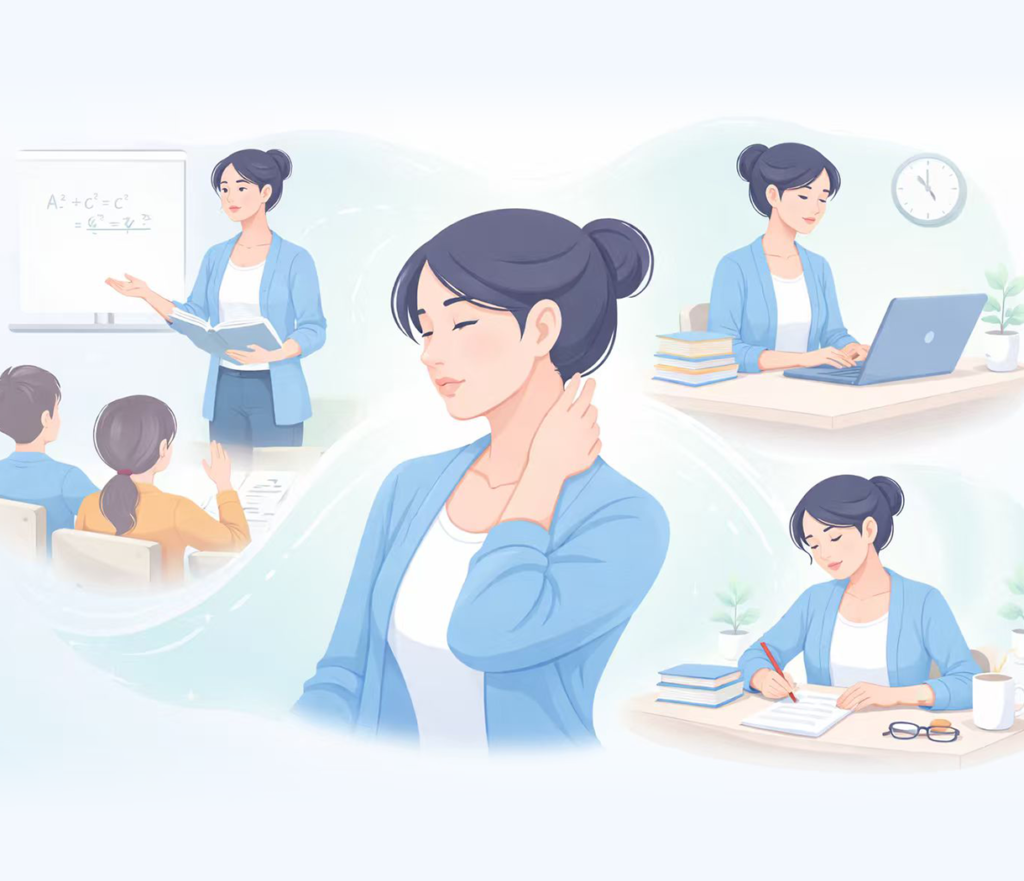
4. Common Physical Issues in Teachers Addressed by Cryotherapy
4.1 Neck Pain and Cervical Muscle Tension
Persistent neck strain is a hallmark complaint among educators. CO₂ Cryotherapy reduces localized inflammation and promotes vasodilation in cervical muscles, alleviating stiffness and discomfort. This non-invasive approach can be integrated into wellness routines without disrupting classroom responsibilities.
4.2 Shoulder and Upper Back Stiffness
Standing for long periods or performing repetitive motions often causes upper back discomfort. Cold therapy stimulates microcirculation and decreases cytokine activity in these muscle groups, improving flexibility and relieving tension. Teachers may notice a reduction in soreness after repeated exposure.
4.3 Headaches and Migraines Triggered by Muscle Fatigue
Chronic muscle tension can contribute to tension-type headaches. By relaxing overactive muscle fibers and modulating inflammatory processes, CO₂ Cryotherapy may reduce the intensity and frequency of headache episodes, enhancing occupational comfort and performance.
5. Integrating CO₂ Cryotherapy into Teacher Wellness Routines
5.1 Trends in Workplace Wellness
More educational institutions are recognizing the importance of teacher wellness programs. CO₂ Cryotherapy fits into this trend by offering a quick, non-invasive recovery option that supports physical health and reduces work-related stress.
5.2 Practical Benefits for Daily Teaching Life
Regular cryotherapy sessions can help teachers recover after long teaching days, reduce muscle tension from prolonged standing or desk work, and improve energy levels for evening grading or lesson preparation. Its non-disruptive nature allows teachers to integrate it into their schedules easily.
5.3 Encouraging Proactive Health Management
Teachers can use CO₂ Cryotherapy as part of a broader wellness strategy, combining cold therapy with proper ergonomics, stretching, and stress-reduction practices. This proactive approach can decrease the likelihood of chronic pain development and support long-term occupational performance.
よくあるご質問
Q1: Can CO₂ Cryotherapy help all teachers with chronic neck pain?
It may benefit most, but effectiveness varies depending on individual conditions and severity of muscle tension.
Q2: Is cryotherapy safe for daily use?
Most CO₂ Cryotherapy sessions are safe when performed according to established protocols and under professional supervision.
Q3: How quickly can teachers notice benefits?
Some report immediate relief in muscle tension and alertness, while repeated sessions may enhance long-term recovery.
Q4: Does cryotherapy replace physical therapy or exercise?
No, it complements but does not replace standard care, exercise, or ergonomic practices.
Q5: Can CO₂ Cryotherapy reduce work-related stress?
Yes, it can help by modulating stress hormones and promoting endorphin release, improving relaxation and mental clarity.
結論
Teachers face unique physical and mental demands that contribute to chronic neck pain, shoulder stiffness, and elevated stress levels. CO₂ Cryotherapy provides a science-backed, non-invasive method to relieve discomfort, enhance recovery, and promote neuromuscular relaxation. By integrating it into wellness routines, teachers can support occupational health, improve energy levels, and maintain sustainable performance throughout the school year.
参考文献
Local Cryotherapy – Cryotherapy Overview:
https://www.localcryotherapy.com/
Bleakley, C., et al. “The Use of Cryotherapy in Musculoskeletal Injury Management.” British Journal of Sports Medicine, 2012.
https://bjsm.bmj.com/content/46/4/249
Costello, J.T., et al. “Whole-Body Cryotherapy (−110°C) Following Exercise-Induced Muscle Damage.” European Journal of Applied Physiology, 2012.
https://link.springer.com/article/10.1007/s00421-012-2342-4
Lombardi, G., et al. “Effects of Local Cryotherapy on Musculoskeletal Pain and Recovery.” Journal of Sports Science & Medicine, 2017.