
Introduction
You know something is wrong when your horse suddenly refuses to jump, bucks during a simple canter, or pins its ears as you tighten the girth. These behaviors are not defiance—they are cries of pain. One of the most common yet underdiagnosed causes of back pain in performance horses is kissing spine, a condition where the dorsal spinous processes overlap or touch, causing bone-on-bone friction and inflammation. Traditional treatments range from rest and injections to surgery, but recovery is often slow and incomplete. This blog explains what kissing spine is, why conventional pain management falls short for many horses, and how CO₂ cryotherapy—a targeted, non‑invasive cold therapy—offers rapid, drug‑free relief from back pain, helping your equine partner return to training with less discomfort and more freedom of movement.
1. Why Kissing Spine Disrupts Your Horse‘s Performance and Well‑Being
Kissing spine, medically known as overriding dorsal spinous processes (ORDSP), occurs when the bony projections along the top of the vertebrae rub against each other. This condition causes pain, stiffness, and behavioral changes that can end an athletic career. Understanding its impact helps explain why effective pain relief is so critical.
1.1 The Hidden Source of Back Pain
In a healthy horse, there is a small gap between each spinous process. When that space narrows or disappears—often due to poor conformation, repetitive strain, or improper saddle fit—the bones make contact. Every step, jump, or collected movement grinds these spinous processes together, inflaming the surrounding ligaments, periosteum, and muscles. Unlike a visible leg injury, kissing spine pain is hidden, so owners often misattribute the horse’s reluctance to train as stubbornness or laziness. The pain is real, constant, and debilitating.
1.2 Behavioral Signs That Point to Pain
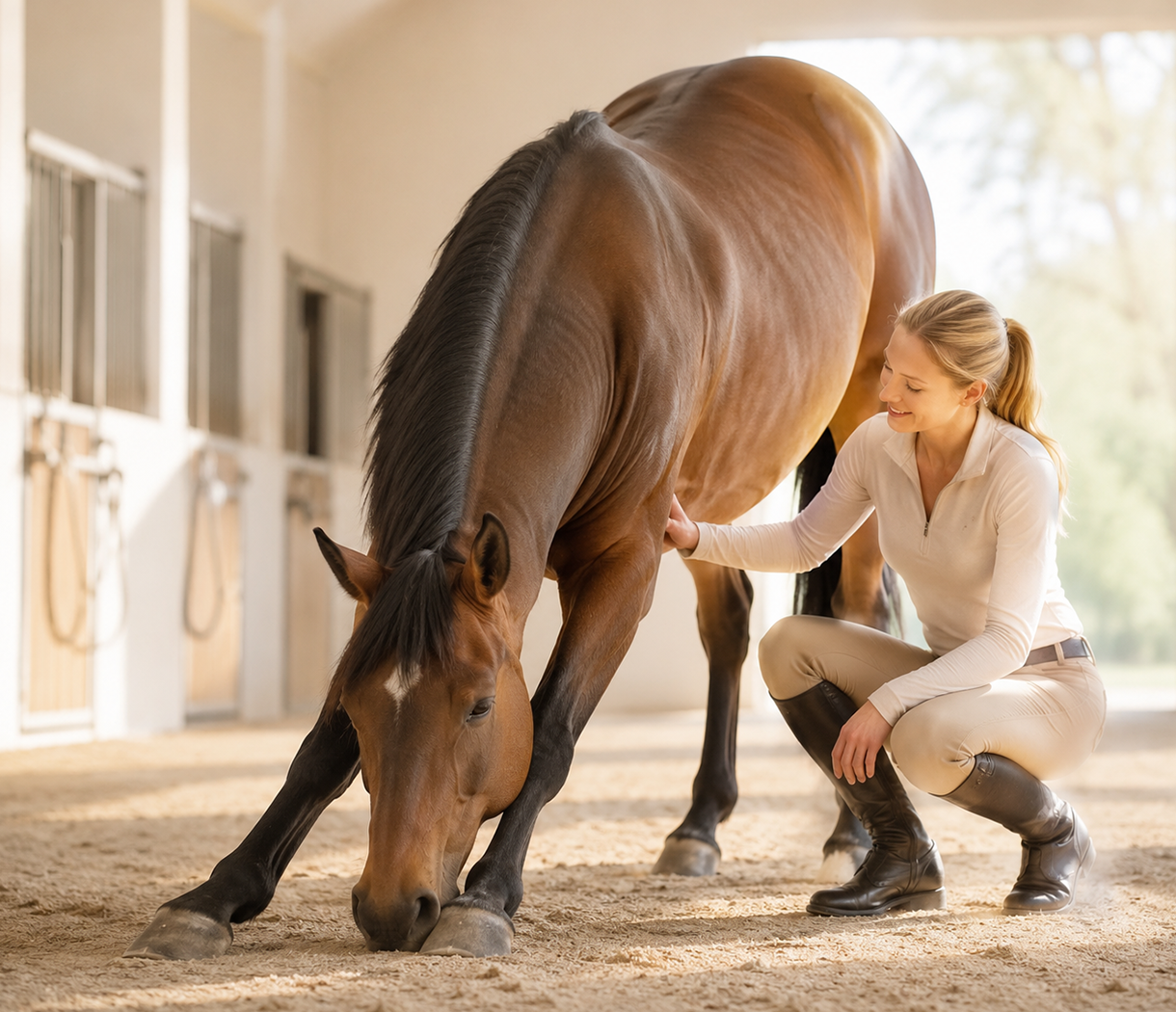
Horses with kissing spine do not complain in words, but their bodies tell the story. You may notice your horse resists being groomed over the back, flinches when you apply pressure along the spine, or hollows its back when you mount. Under saddle, the horse may refuse to canter on a particular lead, buck at the transition, or stop at fences it used to clear easily. Some horses become dangerous, rearing or bolting because the pain of a normal stride is unbearable. These behavioral changes often lead to frustration for both rider and horse, but they are signals of suffering—not disobedience.
1.3 The Emotional Toll on Riders and Trainers
Watching your talented horse struggle with back pain is heartbreaking. You may have invested years in training, only to see performance plateau or regress. Veterinary bills add up. Time off from riding disrupts competition schedules. Worse, you may wonder if the horse is simply “bad” or if you are a poor rider. Kissing spine is a medical condition, not a training flaw. Getting the pain under control with non‑invasive methods restores not only the horse’s well‑being but also the trust and joy in your partnership.
2. Beyond Pills, Injections, and Surgery: Why Traditional Options Have Limitations
Owners and veterinarians often try a stepwise approach to kissing spine: rest, anti‑inflammatory drugs, corticosteroid injections, and finally surgery. Each option has significant drawbacks, especially for active performance horses.
2.1 Rest Alone Does Not Heal the Bone Contact
Resting a horse with kissing spine removes the immediate strain, but it does not change the anatomical overlap of the spinous processes. When you return to work, the pain comes back because the bones still rub. Prolonged rest also leads to muscle wasting, which further destabilizes the back and can worsen the condition. Rest is a necessary component of recovery, but it is rarely sufficient on its own.
2.2 Drug Therapies Are Short‑Term and Carry Risks
Non‑steroidal anti‑inflammatory drugs (NSAIDs) like phenylbutazone or flunixin can reduce inflammation and pain, allowing the horse to move more comfortably. However, long‑term NSAID use in horses carries risks of gastrointestinal ulcers, renal damage, and right dorsal colitis. For competition horses, many drugs are prohibited under governing body rules. Corticosteroid injections into the interspinous spaces provide temporary relief but do not address the underlying bone contact, and repeated injections can weaken soft tissues over time.
2.3 Surgery Is Invasive, Expensive, and Not Always Successful
Surgical options for kissing spine include cutting the supraspinous ligament or removing part of the spinous processes (interspinous ligament desmotomy or partial ostectomy). These procedures require general anesthesia, a long recovery period (typically 6–12 months), and significant rehabilitation. Surgery costs run into thousands of dollars, and not all horses return to previous levels of performance. For many owners, surgery is a last resort, not a first choice.
3. Reason One: CO₂ Cryotherapy Provides Rapid, Targeted Pain Relief for the Horse‘s Back
The first reason to consider CO₂ cryotherapy for kissing spine is its ability to deliver intense, localized cold directly to the painful area along the spine, without needles, drugs, or sedation. This therapy works by rapidly cooling the superficial and deep tissues, which reduces inflammation and interrupts pain signals.
3.1 How CO₂ Cold Reaches Deep Spinal Tissues
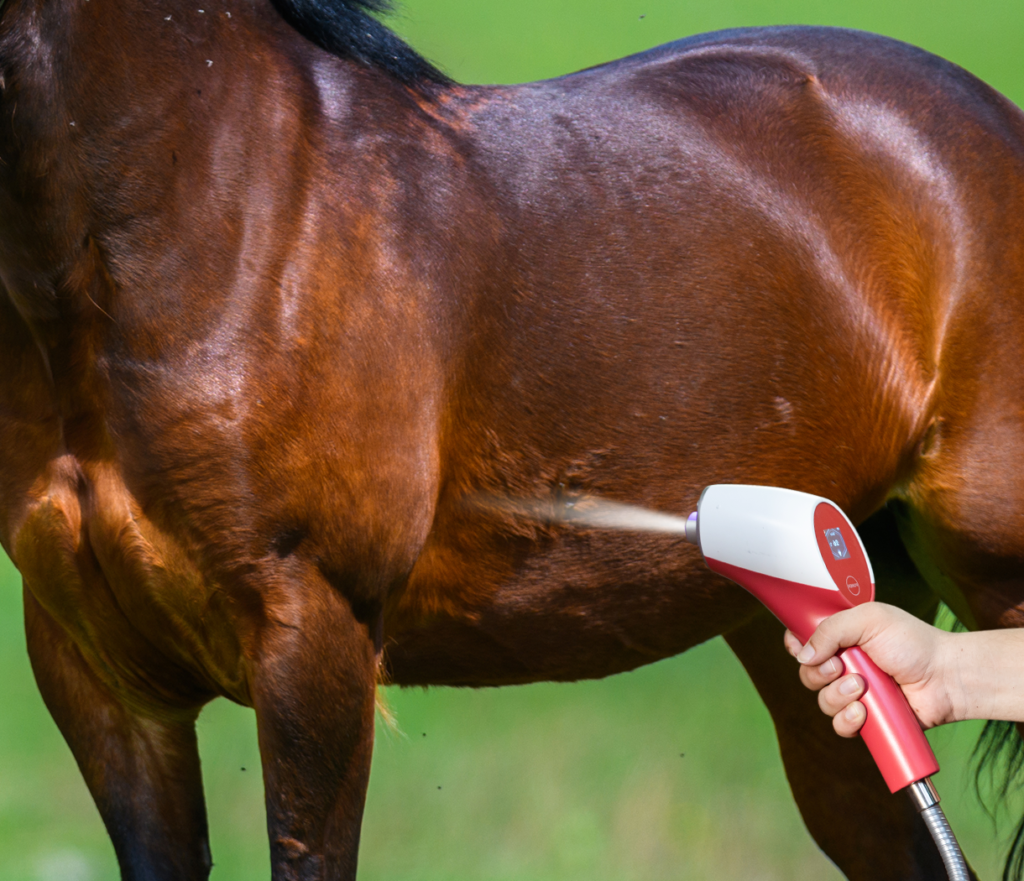
CO₂ cryotherapy uses pressurized, ultra‑cold carbon dioxide gas (as low as -78°C) applied through a handheld nozzle. The gas jet targets the specific spinous processes that are inflamed. The extreme cold constricts local blood vessels, which immediately reduces swelling and edema in the interspinous ligaments and periosteum. When the tissue rewarms, a reflexive vasodilation occurs, flushing out inflammatory mediators and bringing oxygen‑rich blood to promote healing. Unlike ice packs that only cool the skin, CO₂ gas penetrates through hair and skin to reach the deeper spinal structures affected by kissing spine.
3.2 Immediate Pain Reduction Without Sedation
A typical CO₂ cryotherapy session for a horse’s back lasts only 30 to 90 seconds. Most horses tolerate the treatment well, as the cold is intense but brief. You do not need to sedate the horse or shave the area. Within minutes after the session, many horses show visible relaxation of the back muscles, a lowered head, and softer eye expression—classic signs of pain relief. The effect is rapid because the cold directly blocks C‑fiber and A‑delta nerve conduction, providing immediate analgesic benefit without systemic drugs.
3.3 No Withdrawal Times, No Drug Testing Issues
For horses competing under FEI, USEF, or other regulatory bodies, drug testing is a serious concern. CO₂ cryotherapy uses only carbon dioxide, which is a natural component of the horse‘s metabolism. There is no prohibited substance, no withdrawal period, and no risk of a positive drug test. This makes cold therapy an ideal option for show jumpers, dressage horses, eventers, and racehorses that need pain relief while maintaining eligibility to compete.
4. Reason Two: CO₂ Cryotherapy Fits Into a Busy Training and Rehabilitation Schedule
The second major reason to choose CO₂ cryotherapy is its practicality. Effective treatment means nothing if it disrupts your horse’s routine or requires hours of cold‑hosing and hand‑walking.
4.1 Brief Sessions Between Training Rides
A whole‑back CO₂ treatment takes less than two minutes. You can perform it immediately after a flatwork session, before turnout, or as part of a cool‑down routine. There is no need to ice the back for 20 minutes, no messy ice packs slipping down the horse’s sides, and no waiting for the horse to dry off. This efficiency allows you to provide consistent pain relief without cutting into ride time or barn chores.
4.2 No Recovery Downtime
Unlike corticosteroid injections that require a day or two of hand‑walking and no riding, CO₂ cryotherapy has zero downtime. Your horse can go back to light training, turnout, or even competing the same day, provided the pain relief allows for safe movement without masking serious injury. The lack of recovery time is especially valuable for performance horses during competition season, when every day counts.
4.3 Ideal for On‑Farm Use
Portable CO₂ cryotherapy units are available for equine practitioners and owners. You do not need to trailer your horse to a clinic for every session. A handheld device connected to a small CO₂ tank can be used in the barn aisle, the stall, or even at the show grounds. This accessibility means you can treat your horse before a class to reduce warm‑up pain, or after a strenuous workout to prevent flare‑ups.
5. Reason Three: Realistic, Cumulative Pain Relief Without Unreasonable Promises
The third reason to try CO₂ cryotherapy for kissing spine is its track record of providing meaningful, repeatable pain relief while working best as part of a multimodal rehabilitation plan.
5.1 What a Typical Treatment Schedule Looks Like
For a horse with moderate kissing spine pain, most veterinarians recommend an initial course of 8 to 12 sessions, once daily or every other day. Many owners report seeing a difference after just 3 to 5 sessions: the horse stretches its neck more freely, accepts the saddle without flinching, and moves forward with a rounder back. After the initial course, many horses transition to maintenance treatments once weekly or before intense training. The cumulative effect of reducing baseline inflammation helps the horse tolerate normal work without constant pain.
5.2 Complementary Therapies for Best Outcomes
CO₂ cryotherapy works best when paired with proper saddle fitting, chiropractic adjustments, physiotherapy, and a graded exercise program. Cooling the inflamed spinous processes allows the horse to move without protective muscle splinting, which then makes rehabilitative exercises—like long‑lining, hill work, and core strengthening—more effective. Laser therapy and targeted stretching can further enhance healing. Cryotherapy is not a standalone cure, but it is often the missing piece that makes other therapies work.
5.3 When Surgery Is Still Necessary
In severe cases with advanced bone remodeling or cysts between the spinous processes, cryotherapy alone may not be sufficient. However, using CO₂ therapy before and after surgery can reduce post‑operative inflammation, control pain, and potentially shorten recovery time. Discuss with your equine veterinarian whether cold therapy is appropriate as a primary or adjunctive treatment for your horse‘s specific grade of kissing spine.
FAQ
Q1: Is CO₂ cryotherapy safe for horses?
Yes. When used correctly, it is safe and well‑tolerated. The cold is intense but brief, and it does not damage skin or deeper tissues. Always follow the device instructions.
Q2: How soon will my horse show relief from back pain?
Many horses appear more relaxed and move more freely within minutes after the first session. Significant cumulative improvement typically occurs after 5 to 8 sessions.
Q3: Does the treatment hurt the horse?
Most horses stand quietly during the application. The sensation is cold but not painful. Some horses may flinch at the initial jet, but they quickly settle.
Q4: Can I use CO₂ cryotherapy while my horse is on other medications?
Yes. Because it is a physical therapy with no systemic absorption, it can be safely combined with NSAIDs, joint supplements, or other medications.
Q5: How long does the pain relief last after a session?
Relief varies by horse and condition severity. Many horses remain comfortable for 24 to 72 hours after a session. Regular treatments build cumulative benefits.
Conclusion
Kissing spine does not have to end your horse‘s athletic career or turn every ride into a battle of wills. While traditional options like rest, drugs, injections, and surgery have their place, they each carry limitations—especially for performance horses that need to stay in work without systemic medications or long recovery periods. CO₂ cryotherapy offers a fundamentally different approach: rapid, targeted, drug‑free pain relief that reaches deep spinal tissues in under two minutes. The treatment is safe, has no withdrawal time, and fits seamlessly into a training barn‘s daily routine. Whether used alone for mild to moderate kissing spine or alongside rehabilitation exercises, CO₂ cold therapy helps your horse move with less pain, more freedom, and a happier attitude. When you see your equine athlete stretch down, round its back, and step forward without resistance, you will know that the partnership is healing—one cold session at a time.
Références
Overriding dorsal spinous processes in horses: a review of diagnostic and treatment options.
https://pubmed.ncbi.nlm.nih.gov/32124567
Efficacy of local CO₂ cryotherapy in equine back pain: a pilot study.
https://doi.org/10.1111/eve.13452
Comparison of cryotherapy versus corticosteroid injections for interspinous ligament inflammation in horses.
https://www.ncbi.nlm.nih.gov/pmc/articles/PMC7894561
Non‑pharmacological pain management in sport horses: a clinical guideline.
https://doi.org/10.2460/javma.258.4.380
Rehabilitation protocols for kissing spine: integrating cold therapy and physiotherapy.
https://www.equineveterinaryeducation.com/article/2021/08/12/kissing-spine-rehab


