Introduction
A teacher who has spent the day explaining concepts to a room full of students. A customer service representative who has taken call after call without a break. A singer who has just finished a three-hour rehearsal. These are professional voice users, and they share a common experience: the gradual onset of vocal fatigue. The voice becomes tired, the throat feels tight, and the neck muscles grow tense. The next day, the voice may feel weaker, and the cycle begins again. For those who depend on their voices for their livelihood, this pattern is not merely an inconvenience but a professional challenge. While vocal rest and hydration are standard recommendations, they do not always address the physical tension that accompanies vocal strain. CO₂ cryotherapy offers a targeted, non-invasive approach that may help relieve the neck and throat tension associated with vocal fatigue, supporting faster recovery and helping professional voice users maintain their vocal health.
1. Understanding Vocal Fatigue in Professional Voice Users
Vocal fatigue is more than just feeling tired after talking. It is a measurable change in how the voice functions, often accompanied by physical discomfort in the neck and throat.
1.1 What Happens During Vocal Fatigue
When the voice is used extensively, the muscles of the larynx and the surrounding neck region work continuously to maintain phonation. Over time, this sustained effort leads to muscular fatigue. The vocal folds themselves may experience microtrauma from repeated vibration, and the muscles that control them can become overworked. The result is a voice that feels effortful to produce, may sound hoarse or weak, and requires more effort to maintain volume or pitch. This fatigue can accumulate over a single day or across several days of heavy voice use.
1.2 Why the Neck Becomes Involved
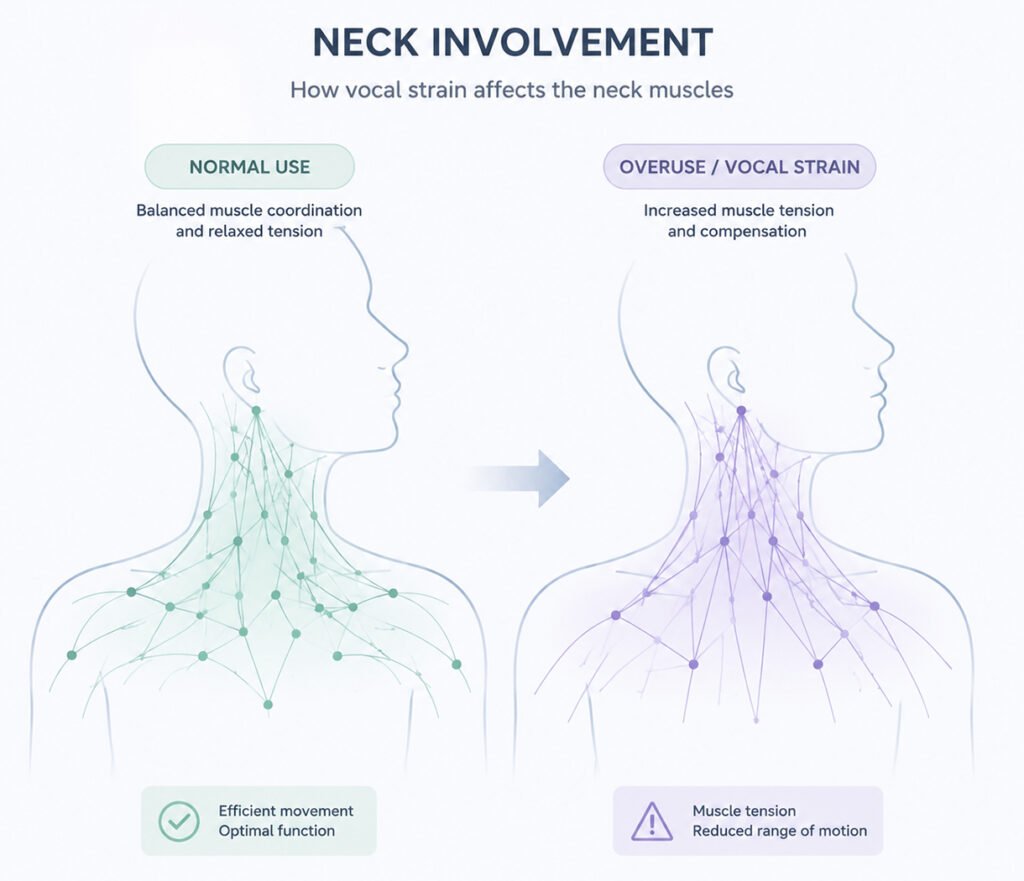
Vocal production is not isolated to the larynx. The muscles of the neck, shoulders, and upper back all contribute to breath support and vocal control. When the voice is pushed beyond its comfortable limits, these accessory muscles often engage more than necessary, creating a pattern of tension that radiates through the neck. This tension can manifest as stiffness, soreness, and reduced range of motion. Over time, the cumulative effect of vocal strain and neck tension can create a cycle where physical discomfort makes vocal production even more difficult.
1.3 Who Is Most Affected
Professional voice users include anyone whose work depends on reliable vocal function. Teachers, professors, and lecturers spend hours speaking each day. Singers and performers rely on precise vocal control. Customer service representatives and call center staff use their voices continuously. Lawyers, clergy members, and public speakers also fall into this category. Even fitness instructors and coaches who project their voices over music or large spaces are at risk. The common thread is prolonged, often intense vocal use without adequate recovery time.
2. How CO₂ Cryotherapy Works for Vocal Strain
CO₂ cryotherapy delivers a stream of pressurized carbon dioxide gas directly to the skin over the targeted area. This approach provides rapid, dry cooling that can be applied precisely to the neck and throat region. Unlike ice packs, which cool unevenly and leave moisture behind, CO₂ cryotherapy offers consistent, controlled cooling that can be directed exactly where it is needed.
2.1 Reducing Muscle Tension
The cooling effect of CO₂ cryotherapy influences the neuromuscular junction, helping to reduce the activity of overactive muscle fibers. For a professional voice user with chronic neck tension from vocal strain, this can provide meaningful relief. The cold stimulus interrupts the cycle of sustained muscle contraction, allowing the muscles to relax and return to a more resting state. This relaxation can help reduce the stiffness and discomfort that often accompany vocal fatigue.
2.2 Modulating Inflammation
Vocal strain can trigger a low-grade inflammatory response in the muscles and soft tissues of the neck and throat. CO₂ cryotherapy helps modulate this inflammatory response by promoting vasoconstriction, the narrowing of blood vessels, which reduces the accumulation of inflammatory fluid. This is followed by a rebound phase called reactive hyperemia, where blood vessels dilate more widely than before, bringing fresh oxygen and nutrients to the tissues. This cycle can help manage the inflammation associated with vocal strain and support tissue recovery.
2.3 Supporting Tissue Recovery
Beyond immediate symptom relief, CO₂ cryotherapy may support the longer-term recovery of the tissues involved in vocal production. The enhanced circulation that follows treatment can help clear metabolic waste products that accumulate in fatigued muscles. This may help reduce the residual soreness that professional voice users often experience after a demanding day of speaking or singing. For those who use their voices professionally, this support can make a difference in how quickly they feel ready to perform again.
3. Benefits for Professional Voice Users
For individuals who depend on their voices for work, CO₂ cryotherapy offers several practical advantages.
3.1 A Drug-Free Option
Many professional voice users are cautious about taking medications that could affect their vocal function. Antihistamines can dry the vocal folds, and some pain relievers may have other unwanted effects. CO₂ cryotherapy provides a drug-free alternative that works through physical mechanisms rather than chemical ones. It does not interfere with vocal function and carries no risk of systemic side effects, making it a suitable option for those who want to manage their vocal strain without medication.
3.2 Brief and Practical Treatment
A typical CO₂ cryotherapy session for the neck and throat region lasts only a few minutes. This brief treatment time makes it practical for busy professionals who cannot spare long periods for recovery. The applicator moves in sweeping motions over the targeted area, and the session can be completed during a lunch break or between appointments. There is no downtime required, and individuals can return to their normal activities immediately after treatment.
3.3 Targeting the Source of Tension
The precision of CO₂ cryotherapy allows it to be applied directly to the areas where tension accumulates most. For voice professionals, this often means the anterior and lateral neck, where the laryngeal muscles and associated structures are located. By targeting these specific areas, the therapy can address the localized tension that contributes to vocal fatigue, rather than relying on whole-body approaches that may not reach the affected tissues.
4. What to Expect from Treatment
For professional voice users considering CO₂ cryotherapy, understanding the treatment process helps set realistic expectations.
4.1 The Treatment Experience
A localized CO₂ cryotherapy session targeting the neck and throat area involves the application of the cold gas to the bare skin of the anterior neck and upper chest. The practitioner moves the applicator in slow, sweeping motions to ensure even cooling and avoid prolonged exposure to any single spot. Most individuals describe the sensation as intensely cold but not painful—a dry, tingling cold that passes quickly as the applicator moves. The treatment leaves no moisture behind, so there is no dripping or wet clothing to manage.
4.2 Frequency and Consistency
The benefits of CO₂ cryotherapy for vocal strain often accumulate with consistent use. A single session may provide temporary relief from neck tension, but regular use over time tends to produce more noticeable improvements in vocal recovery. Many practitioners recommend a series of sessions, particularly during periods of heavy vocal use. The exact frequency depends on individual needs and the demands of the professional voice user’s schedule. Some may benefit from treatment after each demanding day, while others may use it more strategically before important performances or presentations.
4.3 Combining with Vocal Hygiene
CO₂ cryotherapy works best when combined with good vocal hygiene practices. Staying hydrated, avoiding vocal overuse, and allowing adequate rest remain essential for maintaining vocal health. The therapy does not replace these foundational measures but can complement them by addressing the physical tension that often accompanies vocal strain. By reducing neck and throat tension, cryotherapy may make it easier for voice professionals to maintain good vocal habits and recover more quickly from demanding vocal use.
5. Long-Term Strategies for Vocal Health
Managing vocal fatigue is about more than treating symptoms. It involves building resilience and maintaining the vocal instrument over a career.
5.1 Regular Warm-Ups and Cool-Downs
Just as athletes warm up before exercise, voice professionals benefit from warming up their voices before heavy use. Gentle humming, lip trills, and other vocal exercises can prepare the vocal folds for the demands ahead. After a long period of speaking or singing, a cool-down period with gentle vocalization can help the voice return to a resting state. These practices, combined with CO₂ cryotherapy, can help maintain vocal flexibility and reduce the risk of fatigue.
5.2 Posture and Body Awareness
Vocal production is influenced by overall body alignment. Forward head posture, rounded shoulders, and a tight chest can all contribute to inefficient vocal use and increased neck tension. Voice professionals who pay attention to their posture and work with voice coaches or physical therapists on alignment often find that their voices function more easily. CO₂ cryotherapy can help address the muscle tension that develops when posture is compromised, making it easier to maintain good alignment.
5.3 Listening to Early Signals
The most effective strategy for managing vocal fatigue is recognizing the early signs before they become problematic. A slight roughness in the voice, a feeling of effort when speaking, or a persistent tightness in the neck are all signals that the voice needs attention. Addressing these signals early, with rest, hydration, and supportive measures like CO₂ cryotherapy, can often prevent a minor issue from becoming a more significant limitation.
FAQ
Q1: Is CO₂ cryotherapy painful for vocal strain?
Most voice users describe a very cold sensation that is intense but not painful. The applicator moves continuously, so no single spot stays cold for more than a moment.
Q2: How many sessions does a voice user typically need?
The number varies. Some users benefit from treatment after each demanding day, while others use it two to three times per week. A typical supportive protocol may include several sessions during periods of heavy vocal use.
Q3: Can I use CO₂ cryotherapy along with vocal rest?
Yes. Cryotherapy complements vocal rest by addressing the physical tension that often accompanies vocal strain. It does not replace the need for rest but can support recovery.
Q4: How soon after a session will I feel less neck tension?
Many voice users notice reduced tightness and discomfort within minutes after the session. The effects can last for several hours, providing relief during demanding vocal use.
Q5: Will CO₂ cryotherapy prevent vocal fatigue from returning?
Cryotherapy helps manage existing tension and supports tissue recovery. However, maintaining good vocal hygiene, proper hydration, and adequate rest remain important for long-term vocal health.
Conclusion
For professional voice users, vocal fatigue is not just an occasional inconvenience but a recurring challenge that can affect performance, career longevity, and quality of life. The neck and throat tension that accompanies vocal strain can create a cycle of discomfort and reduced vocal function. CO₂ cryotherapy offers a non-invasive, drug-free approach that targets this tension directly. By reducing muscle tightness, modulating inflammation, and supporting tissue recovery, the therapy can help voice professionals manage the physical demands of their work. When combined with good vocal hygiene practices, proper posture, and attention to early warning signs, CO₂ cryotherapy may help voice users maintain their vocal health and continue doing what they do best.
Références
CO₂ Cryotherapy Insights: What Doctors Really Think – Local Cryotherapy
https://www.localcryotherapy.com/co2-cryotherapy-insights-what-doctors-really-think
How It Works: Localised Cryotherapy – Cryobright
https://www.cryobright.co.uk/how-it-works
Cryotherapy: Uses, Procedure, Risks & Benefits – District Cryo
https://districtcryo.com/cryotherapy-uses-procedure-risks-benefits
Cryotherapy has antifibrotic and regenerative effects on human vocal fold fibroblasts – Wiley Online Library
https://onlinelibrary.wiley.com/doi/10.1002/lary.27550
Exertion‑induced changes in voice measures – hammer.purdue.edu
https://hammer.purdue.edu/articles/Exertion-_induced_changes_in_voice_measures