Introduction
You crushed that high‑intensity workout. You finished last, but you finished. Then the next morning arrives, and every step down the stairs feels like a punishment. Your quads scream, your glutes refuse to cooperate, and you wonder if you will ever walk normally again. This post‑workout muscle soreness—often called DOMS—is the number one reason many beginners quit their fitness journey after just a few weeks. CO₂ cryotherapy offers a painless, drug‑free way to help manage that deep leg burn so you can stay consistent, recover faster, and actually look forward to your next workout instead of dreading it.
1. Why HIIT Beginners Struggle the Most with Post‑Workout Soreness
High‑intensity interval training pushes your muscles far beyond their accustomed workload. For someone new to this style of training, the shock to the system is intense. The eccentric loading from squats, lunges, and box jumps creates microscopic tears in muscle fibers, leading to inflammation and that familiar heavy, aching feeling.
1.1 Understanding DOMS and Its Impact on Training Consistency
Delayed onset muscle soreness typically peaks 24 to 72 hours after a tough workout. For a beginner, this soreness can feel alarming. Simple actions like sitting down on a toilet or climbing a flight of stairs become difficult. This discomfort discourages many people from returning to the gym, creating a cycle of starting and stopping. Consistency matters more than intensity for long‑term fat loss and fitness gains. When soreness interferes with daily movement, it also reduces non‑exercise activity thermogenesis (NEAT)—the calories you burn just by moving around. Managing post‑workout discomfort effectively helps beginners stay active both in and out of the gym.
1.2 Why Traditional Recovery Methods Often Fall Short for New Athletes
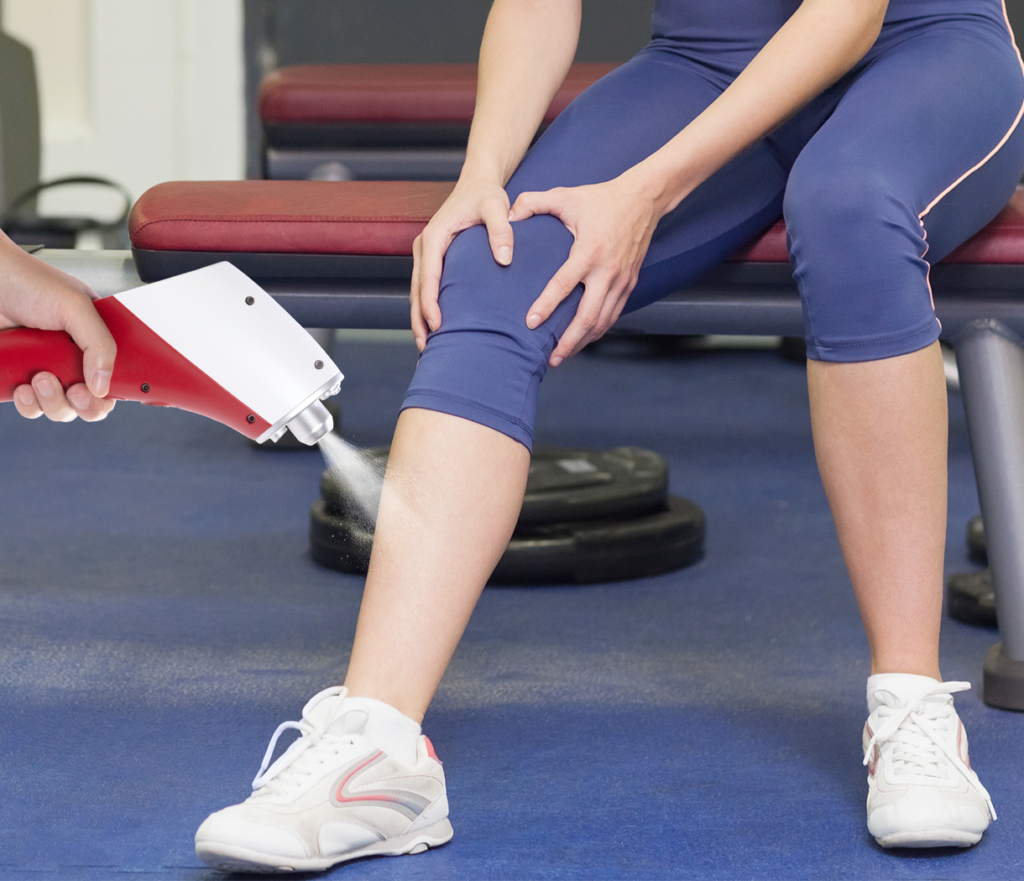
Ice baths require filling a tub, sitting in freezing water for ten minutes, and dealing with whole‑body discomfort—an intimidating prospect for someone who just finished their first HIIT class. Rest alone means losing momentum and risking the habit of skipping workouts. Over‑the‑counter pain relievers only mask the sensation; they do not help the underlying muscle recovery process. Many beginners also worry about relying on medication. CO₂ cryotherapy offers a different approach. It targets specific sore areas—like your quads or glutes—with ultra‑cold CO₂ vapor for just a few seconds. No tub, no full‑body freezing, no pills. Just quick, localized cooling where you need it most.
1.3 The Emotional Barrier: Fear of the Next Leg Day
The psychological impact of severe post‑workout soreness is real. After a brutal leg day, many beginners spend the next two days dreading their return to the gym. That fear leads to skipped sessions, which then leads to guilt and loss of motivation. The “last finisher” mindset—already feeling behind others—makes this worse. When you struggle to walk, you feel even less like an athlete. CO₂ cryotherapy helps break this cycle. By easing the immediate discomfort after a tough workout, it removes the emotional barrier to showing up again. You stop fearing leg day and start seeing it as just another part of your routine.
2. How CO₂ Cryotherapy Helps Manage Post‑HIIT Muscle Discomfort
CO₂ cryotherapy is not the same as whole‑body cryotherapy or an ice pack. It uses pressurized carbon dioxide gas at very low temperatures, applied directly to specific muscles for a short burst of intense cooling. This targeted approach makes it especially useful for HIIT beginners who mainly feel soreness in their legs, glutes, or lower back.
2.1 What Happens When You Apply CO₂ Cryotherapy to Sore Muscles
When the stream of cold CO₂ hits your skin, the temperature drops rapidly on the surface and in the underlying tissue. This intense but brief cooling triggers a local response: blood vessels constrict, then quickly dilate afterward. This natural process helps move fluid through the area and supports the body’s own recovery mechanisms. Unlike an ice pack that stays cold for many minutes and can feel uncomfortable, CO₂ cryotherapy lasts only seconds. The sensation is sharp but quickly fades. Beginners appreciate that the treatment does not require them to endure prolonged cold exposure. It fits easily into a post‑workout routine without adding extra stress or discomfort.
2.2 How Localized Cooling Supports Muscle Comfort After Exercise
During high‑intensity exercise, working muscles generate metabolic byproducts and experience minor structural stress. This normal response leads to the familiar sensation of soreness and stiffness. Applying targeted cold to those specific muscles helps calm local activity, reducing the feeling of deep ache. CO₂ cryotherapy does not stop the natural repair process; instead, it helps manage the uncomfortable sensations that make recovery feel miserable. For a beginner who just completed a challenging HIIT session, a quick application of cryotherapy to the quads, hamstrings, and glutes can mean the difference between feeling “pleasantly tired” versus “unable to walk.” That manageable level of soreness keeps you coming back.
2.3 Why CO₂ Cryotherapy Appeals to Beginners Specifically
Many advanced athletes already use ice baths and compression boots. Beginners often feel intimidated by those expensive and time‑consuming methods. CO₂ cryotherapy offers a low‑commitment entry point. Sessions take just a few seconds per muscle group. You can use a portable device at home or visit a local cryotherapy studio. No special skills are required. The treatment is non‑invasive, uses no drugs, and has no downtime. For someone who just wants to feel less sore after Leg Day, this simplicity is a major advantage. It removes the “too complicated” excuse and gives beginners a practical tool to support their consistency.
3. The CO₂ Cryotherapy Advantage Over Other Recovery Options
Beginners have many recovery options, but most come with trade‑offs. Ice baths are effective but unpleasant and logistically difficult. Restorative yoga helps but takes time and may still be painful. Over‑the‑counter creams provide temporary surface relief. CO₂ cryotherapy stands out because it is fast, targeted, and requires no willpower to endure.
3.1 Contrasting CO₂ Cryotherapy with Ice Baths and Cold Showers
Ice baths require you to submerge your entire body in near‑freezing water for up to ten minutes. This experience is often described as painful, and many beginners simply will not do it. Cold showers are milder but still unpleasant, and they do not target specific sore muscles. CO₂ cryotherapy uses a handheld device to direct ultra‑cold vapor exactly where you need it—your quads, glutes, calves, or lower back. The exposure lasts only seconds, not minutes. You do not shiver, and you do not dread the experience. For a beginner who already feels challenged by the workout itself, this low‑friction recovery method is far more realistic to stick with after every session.
3.2 Why Skipping Recovery Leads to the “Start‑Stop” Cycle
When beginners skip proper recovery, one hard workout can lead to four or five days of severe soreness. By the time the pain fades, motivation has already dropped. The pattern repeats: a good week of training, then a brutal soreness period, then a week of inactivity. This start‑stop cycle prevents the body from adapting and makes every workout feel like the first one again. CO₂ cryotherapy helps break this cycle by making the post‑workout period more comfortable. When you are not dreading the aftermath, you are more likely to train again within 48 hours. Consistent frequency, not heroic effort, drives fat loss and fitness progress.
3.3 The “Keep Moving” Advantage: Preserving Daily Activity Levels
One hidden cost of severe DOMS is the reduction in daily movement. When your legs hurt, you take the elevator instead of stairs. You walk more slowly. You sit more often. This drop in non‑exercise activity reduces your total daily energy expenditure significantly—often more than the workout itself burned. CO₂ cryotherapy helps manage leg soreness enough that you can still move normally the next day. You climb stairs without wincing. You walk to the coffee shop instead of driving. These small movements add up. For fat loss goals, preserving NEAT is just as important as crushing your HIIT session. Targeted cooling supports both your recovery and your daily activity.
4. Integrating CO₂ Cryotherapy into a Beginner’s Fitness Routine
For a new athlete, simplicity is everything. A recovery method that requires complex scheduling or special facilities will quickly be abandoned. CO₂ cryotherapy works best when you make it a simple, consistent post‑workout habit.
4.1 Practical Timing: When to Use CO₂ Cryotherapy
Most beginners benefit most from using CO₂ cryotherapy immediately after their workout, before soreness sets in heavily. You finish your last set, cool down with some light stretching, then apply the cold CO₂ to your most worked muscles—typically quads, glutes, hamstrings, and calves. Each area needs only a few seconds. The treatment adds perhaps two minutes to your post‑workout routine. Alternatively, you can use it the next morning if you wake up already sore. Either way, consistency matters more than perfect timing. The goal is to use it regularly enough that your post‑workout discomfort stays at a manageable level, not to eliminate it entirely.
4.2 Complementary Habits: Stretching, Hydration, and Sleep
CO₂ cryotherapy works alongside other basic recovery habits, not instead of them. Light stretching after your workout helps maintain range of motion. Proper hydration supports all cellular functions, including those involved in muscle repair. Quality sleep—especially the deep stages—is when your body does most of its recovery work. CO₂ cryotherapy helps manage the uncomfortable sensations that might otherwise keep you from stretching or sleeping well. When your legs are less painfully stiff, you are more likely to do a gentle evening stretch or fall asleep without tossing and turning from muscle ache. The treatments support each other, creating a positive recovery loop.
4.3 Listening to Your Body: Finding Your Personal Rhythm
Every beginner responds differently to high‑intensity training. Some feel sore for four days; others recover faster. Your personal recovery rhythm will emerge after a few weeks of consistent training. Use CO₂ cryotherapy as needed—more frequently during the first weeks when soreness is worst, then less often as your body adapts. Pay attention to how your legs feel the morning after a workout. If walking to the bathroom is a struggle, you likely need more recovery support. If you feel only mild stiffness, you might skip treatment that day. The goal is not to follow a rigid protocol but to use the tool intelligently so that soreness never becomes a reason to quit.
5. Making CO₂ Cryotherapy a Lasting Part of Your Fitness Lifestyle
The beginners who succeed are the ones who build habits that stick. A recovery tool that feels easy, fast, and genuinely helpful becomes part of your routine naturally.
5.1 Starting Small: The First Week of Using Cryotherapy
During your first week of using CO₂ cryotherapy, apply it after every workout, even if you do not feel very sore yet. This establishes the habit. Keep the device or studio appointment easily accessible. Pair the treatment with something you already do—like changing out of your gym clothes or drinking your protein shake. After each HIIT session, spend two minutes cooling your major muscle groups. By the end of the first week, the routine will feel automatic. You will also notice that the severe soreness that used to plague you becomes much milder. This positive reinforcement encourages you to continue using the treatment.
5.2 Adjusting Over Time as Your Fitness Improves
As you continue training for several weeks, your body adapts. The same workout that left you limping for three days now leaves you with only mild stiffness. At this point, you can reduce CO₂ cryotherapy frequency. Perhaps you use it only after especially tough leg days or after workouts where you pushed extra hard. Some experienced users apply it once or twice per week for maintenance. The key is that you now have a tool you understand and trust. You are no longer a beginner dreading leg day. You are a consistent athlete who knows how to manage recovery so that soreness never derails your progress.
5.3 The Long‑Term Benefit: Staying Active for Life
Fitness is not about one amazing workout. It is about showing up week after week, month after month. The people who stay active for life are not the ones who never feel soreness. They are the ones who have learned how to manage discomfort so that it does not stop them. CO₂ cryotherapy gives beginners a simple, drug‑free way to take the edge off post‑workout muscle ache. It helps you walk normally the next day, return to the gym sooner, and build the consistency that leads to real results. Over months and years, that small habit—a few seconds of cooling after each workout—adds up to a lifetime of fitness.
FAQ
Q1: Does CO₂ cryotherapy hurt during application?
You will feel an intense cold sensation for a few seconds, but it is not painful. Most people describe it as sharp but tolerable.
Q2: How soon after my workout should I use CO₂ cryotherapy?
Using it immediately after your cool‑down stretch works well. You can also use it the next morning if you wake up already sore.
Q3: Can I use CO₂ cryotherapy every day?
Yes. Using it after each workout is safe. The treatment is localized and brief, so daily application is fine for managing muscle discomfort.
Q4: Will CO₂ cryotherapy make my muscles less sore over time?
It helps manage the immediate discomfort after each workout. As your body adapts to training, your baseline soreness will naturally decrease as well.
Conclusion
Finishing last in a HIIT class does not mean you lost. It means you showed up. But showing up once is not enough—consistency wins the race. Severe post‑workout soreness is the biggest enemy of that consistency, especially for beginners. CO₂ cryotherapy offers a fast, painless, and drug‑free way to take the edge off leg day discomfort so you can walk, sleep, and train again sooner. You do not need an ice bath or a week of rest. Just a few seconds of targeted cooling after your workout can help you keep moving, keep showing up, and eventually cross the finish line not as last, but as someone who never quit.
Références
Local Cryotherapy. CO₂ Cryotherapy for Muscle Recovery.
https://www.localcryotherapy.com
Back2HealthTN. Targeted Cold Therapy for Sore Muscles.
Medimarket. CO₂ Cryotherapy in Sports Recovery.
THOR Photomedicine. Localized Cryotherapy for Exercise‑Induced Muscle Discomfort.
Dynamic Chiropractic. Recovery Tools for HIIT Beginners.