Introducción
Running is a repetitive and high-impact activity that requires continuous coordination between muscles, tendons, joints, and connective tissues. With increasing training volume, speed sessions, or long-distance running schedules, many runners experience temporary tightness around the iliotibial band (IT band), calves, and lower-body soft tissues. These areas play important roles in stability, movement efficiency, and force production during running. CO₂ Cryotherapy has become an emerging localized cold therapy approach in sports recovery environments because it allows targeted cooling of specific body regions through controlled carbon dioxide application. By rapidly reducing surface temperature in selected areas, CO₂ Cryotherapy can be incorporated into recovery routines designed to support muscle comfort, mobility, and post-exercise recovery management.
1. Understanding IT Band and Calf Tightness in Runners
Running-related tightness often develops from repeated mechanical loading rather than a single movement. Understanding why these areas experience stress can help runners create more effective recovery strategies.
1.1 Why IT Band Tightness Is Common Among Runners
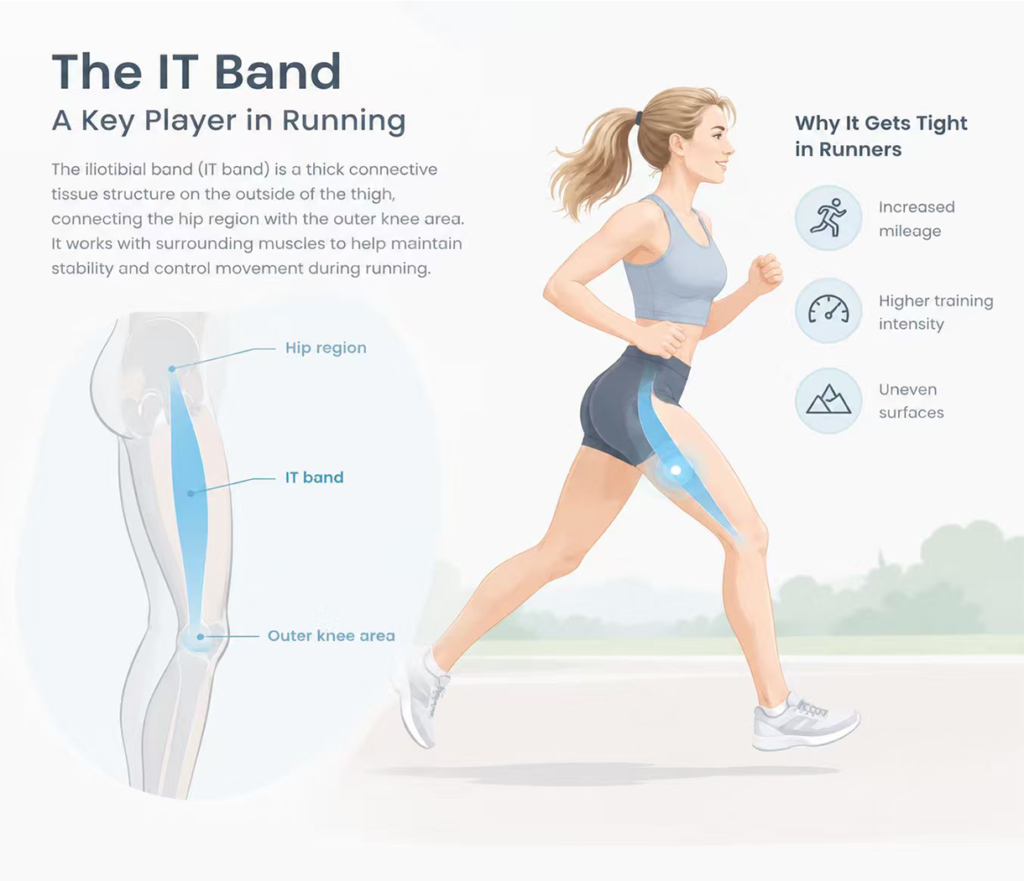
The iliotibial band is a thick connective tissue structure located on the outside of the thigh that connects the hip region with the outer knee area. During running, it works together with surrounding muscles to help maintain lower-limb stability and control movement patterns. When runners suddenly increase mileage, change training intensity, or spend more time running on uneven surfaces, the tissues around the IT band may experience increased stress.
Many endurance runners focus heavily on improving speed and distance, but recovery between training sessions is equally important. Repetitive knee flexion and extension during running can place continuous demand on the lateral thigh structures, making IT band discomfort a common concern among active runners.
1.2 The Importance of Calf Muscle Recovery for Running Performance
The calf muscles, including the gastrocnemius and soleus, contribute significantly to propulsion, balance, and shock absorption during every running step. During endurance training, sprint workouts, or hill running, these muscles repeatedly contract to generate forward movement.
When training intensity increases, calves may experience temporary stiffness, fatigue, and reduced flexibility. Because the calf complex connects closely with the ankle and foot mechanics, maintaining lower-leg comfort is an important part of a runner’s overall recovery routine.
Localized recovery methods such as CO₂ Cryotherapy allow attention to specific areas that experience repeated workload, making them suitable for runners who want targeted approaches rather than general cooling methods.
1.3 How Training Load Affects Lower-Body Recovery Needs
A structured running program often includes different training phases, including endurance development, speed improvement, and competition preparation. Each phase creates different physical demands on muscles and connective tissues.
For example, increasing weekly mileage places greater stress on the calves and thighs, while interval training requires stronger muscle activation and faster force production. Without proper recovery habits, repeated stress may influence movement quality and training consistency.
Modern sports recovery focuses on balancing physical adaptation with adequate recovery support. CO₂ Cryotherapy is often considered as one component of this approach because it provides controlled localized cooling for areas that experience repeated training demands.
2. How CO₂ Cryotherapy Supports Running Recovery
CO₂ Cryotherapy uses compressed carbon dioxide to create rapid cooling on targeted body areas. Compared with traditional cold methods, localized CO₂ Cryotherapy allows professionals and athletes to focus on specific regions while controlling application time and treatment location.
2.1 The Role of Rapid Cooling in Localized Recovery
The main characteristic of CO₂ Cryotherapy is its ability to deliver intense cooling within a short period. The rapid temperature change creates a physiological response involving temporary vasoconstriction followed by a natural warming process.
For runners, this targeted approach can be used around areas that commonly experience training-related stress, including the outer thigh, knee region, and calf muscles. Instead of cooling the entire body, localized cryotherapy allows attention to areas that require additional recovery support.
This makes CO₂ Cryotherapy different from traditional ice packs, which often provide broader cooling but may be less precise for specific athletic recovery needs.
2.2 Supporting IT Band and Outer Knee Recovery Routines
The outer thigh and lateral knee region experience repeated movement during running. For runners who regularly participate in endurance training, maintaining flexibility and comfort in this area is an important part of their recovery routine.
CO₂ Cryotherapy can be incorporated into recovery programs that focus on the tissues surrounding the IT band area. The localized cooling process allows targeted application without requiring long treatment sessions, making it convenient for runners with busy training schedules.
When combined with proper stretching, mobility exercises, strength training, and appropriate training progression, localized cryotherapy can become part of a broader strategy for supporting lower-body recovery.
2.3 Supporting Calf Muscle Comfort After Training Sessions
Calves are among the most active muscle groups during running because they absorb impact and contribute to forward movement. Long-distance sessions, speed workouts, and hill training can place additional demand on these muscles.
CO₂ Cryotherapy can be applied as part of a post-training recovery routine focused on calf areas that experience fatigue or tightness. The targeted cooling method allows runners and recovery professionals to focus on specific regions rather than applying a general cold treatment approach.
For many athletes, the convenience of short localized applications makes CO₂ Cryotherapy an attractive option within modern sports recovery environments.
3. CO₂ Cryotherapy Applications During Different Running Training Stages
Running recovery needs change depending on the type of training a runner follows. A beginner preparing for a first race, an experienced marathon runner, and a competitive athlete all experience different physical demands. Because CO₂ Cryotherapy focuses on specific areas instead of applying general cooling to the entire body, it can be integrated into different stages of a runner’s training cycle as part of a personalized recovery strategy.
3.1 Supporting Recovery During Long-Distance Training
Long-distance training requires repeated loading of the lower limbs over extended periods. As weekly mileage increases, muscles and connective tissues must continuously adapt to higher workloads. The calves, thighs, and structures around the knee often receive significant mechanical stress because they repeatedly absorb impact and support forward movement.
During marathon preparation or endurance training, runners often include recovery practices between workouts to maintain mobility and training consistency. CO₂ Cryotherapy can be applied to areas that experience frequent stress, such as the calf muscles and outer thigh region, providing localized cooling after demanding training sessions.
Compared with traditional cooling methods that may cover larger body areas, localized cryotherapy allows runners and sports professionals to focus on specific regions connected to their training demands. Research on cryotherapy in sports recovery has explored the role of cold application in managing post-exercise soreness and supporting recovery strategies, although optimal protocols can vary depending on individual needs and training conditions.
3.2 Supporting Recovery After Speed Training and Hill Workouts
Speed sessions and hill workouts create different challenges compared with steady-distance running. These activities require greater muscle activation, faster force production, and stronger engagement of the calves and lower-body stabilizing structures.
After high-intensity sessions, many runners focus on recovery methods that help them prepare for upcoming workouts. CO₂ Cryotherapy provides targeted cooling that can be directed toward areas experiencing greater training stress, including calf muscles, the lateral thigh, and areas around the knee.
Because localized CO₂ Cryotherapy works within a short application period, it can fit conveniently into post-training routines. This makes it a practical option for athletes who need recovery strategies that complement stretching, mobility exercises, strength conditioning, and proper rest.
3.3 Supporting Runners Returning to Regular Training
When runners return to training after a break, their bodies need time to readapt to repeated impact and movement demands. Increasing distance or intensity too quickly may create additional stress on muscles and connective tissues.
A gradual return-to-running plan usually focuses on rebuilding strength, improving movement control, and monitoring physical response. Within this process, CO₂ Cryotherapy can be considered as a supportive recovery method for areas that experience increased workload during training progression.
By combining localized cooling with appropriate exercise planning, runners can create a more complete approach to managing training demands and maintaining comfort throughout different phases of activity.
4. Why CO₂ Cryotherapy Is Becoming Popular Among Runners
The modern approach to running performance is no longer focused only on increasing training volume. Many athletes now recognize that recovery quality plays an important role in maintaining consistent performance and supporting long-term participation.
4.1 Localized Cooling for Specific Running-Related Areas
One reason runners are interested in CO₂ Cryotherapy is the ability to focus on specific body regions. Running-related discomfort often appears in localized areas rather than throughout the entire body.
For example, a runner may want to focus on the outer knee area after repeated downhill running or the calf muscles after speed training. Localized CO₂ Cryotherapy allows recovery professionals to direct cooling toward these targeted areas.
This approach provides more flexibility compared with general cold exposure methods because the application can match the athlete’s individual training situation and recovery goals.
4.2 The Growing Use of Recovery Technology in Sports
Sports recovery technology continues to develop as athletes search for efficient and convenient ways to support their training routines. From professional sports environments to recreational fitness facilities, recovery tools are increasingly becoming part of athlete wellness programs.
CO₂ Cryotherapy fits into this trend because it combines targeted application with rapid cooling. Localized cryotherapy systems are often used in sports recovery environments where professionals need flexible solutions for different athletes and activity levels.
For runners, this technology provides another option alongside traditional recovery practices such as mobility training, strength exercises, stretching routines, and rest.
5. The Future of CO₂ Cryotherapy in Running Recovery
As sports recovery continues to evolve, personalized approaches are becoming increasingly important. Every runner has different training goals, physical conditions, and recovery requirements, which means recovery strategies need to be adaptable.
5.1 Personalized Recovery Strategies for Different Types of Runners
A recreational runner preparing for weekend races may have different recovery needs compared with a competitive marathon athlete. Training frequency, running distance, previous injuries, and lifestyle factors all influence how runners manage physical stress.
Future recovery programs may continue combining technology-based solutions with individualized training plans. CO₂ Cryotherapy may become one supportive tool used within broader recovery systems designed around each runner’s specific requirements.
Rather than focusing on one single method, modern athletic recovery increasingly emphasizes combining multiple approaches to support mobility, comfort, and training consistency.
5.2 Expanding Applications in Running and Athletic Performance
As more athletes explore localized recovery technologies, CO₂ Cryotherapy may continue expanding across different sports environments. Its targeted cooling approach makes it suitable for various applications where athletes need focused recovery support.
Beyond runners, localized cryotherapy is also used in sports such as cycling, tennis, strength training, and other activities that place repeated demands on specific muscle groups.
For running communities, CO₂ Cryotherapy represents another developing option within the broader field of sports recovery technology.
PREGUNTAS FRECUENTES
What is CO₂ Cryotherapy for runners?
CO₂ Cryotherapy is a localized cold therapy method that uses carbon dioxide cooling to target specific areas affected by training stress.
Can CO₂ Cryotherapy help with IT band tightness?
It can be included in recovery routines focusing on the outer thigh, knee area, and surrounding tissues.
How long does a CO₂ Cryotherapy session take?
Application time depends on the area being treated and the recovery plan. Localized sessions are generally designed to be completed within a short period.
Can runners use CO₂ Cryotherapy after every workout?
Usage frequency depends on individual training needs and professional recommendations. It should be part of a balanced recovery routine.
Is CO₂ Cryotherapy a replacement for exercise recovery methods?
No. It is a supportive recovery technology and should be combined with proper training, mobility work, and healthy recovery habits.
Conclusión
Running performance depends not only on training intensity but also on how effectively the body manages repeated physical stress. IT band tightness and calf fatigue are common concerns among runners because these areas experience continuous loading during movement. CO₂ Cryotherapy provides a targeted cooling approach that can be incorporated into running recovery routines to support muscle comfort and mobility management. By combining localized cryotherapy with proper training progression, strength development, stretching, and recovery planning, runners can create a more balanced approach to maintaining their athletic routines.
Referencias
Crioestimulación para la recuperación post-ejercicio en atletas: Consenso y documento de posición
The Cold Truth: The Role of Cryotherapy in the Treatment of Injury and Recovery from Exercise
https://pubmed.ncbi.nlm.nih.gov/33877402
Whole-body Cryotherapy as a Recovery Technique after Exercise: A Review of the Literature
https://pubmed.ncbi.nlm.nih.gov/29161748
Don’t Lose Your Cool With Cryotherapy: The Application of Phase Change Material for Prolonged Cooling in Athletic Recovery and Beyond
https://www.frontiersin.org/journals/sports-and-active-living/articles/10.3389/fspor.2020.00118/full
LocalCryotherapy – CO₂ Cryotherapy Technology and Applications