Introducción
Modern women are increasingly focused on maintaining an active lifestyle through strength training, yoga, Pilates, running, and various fitness activities. However, regular exercise can also bring temporary muscle fatigue, stiffness, and physical stress that may affect daily comfort. CO₂ cryotherapy, also known as localized carbon dioxide cryotherapy, has gained attention as a targeted cold therapy approach that uses rapid cooling technology to support post-exercise recovery routines. By delivering controlled cold stimulation to specific body areas, CO₂ cryotherapy may help support circulation response, muscle relaxation, and overall wellness. As more women look for convenient recovery methods that fit into their fitness schedules, localized cryotherapy has become an interesting option for supporting comfort after physical activity.
1. Understanding CO₂ Cryotherapy and Women’s Exercise Recovery
1.1 What Is CO₂ Cryotherapy for Post-Exercise Recovery?
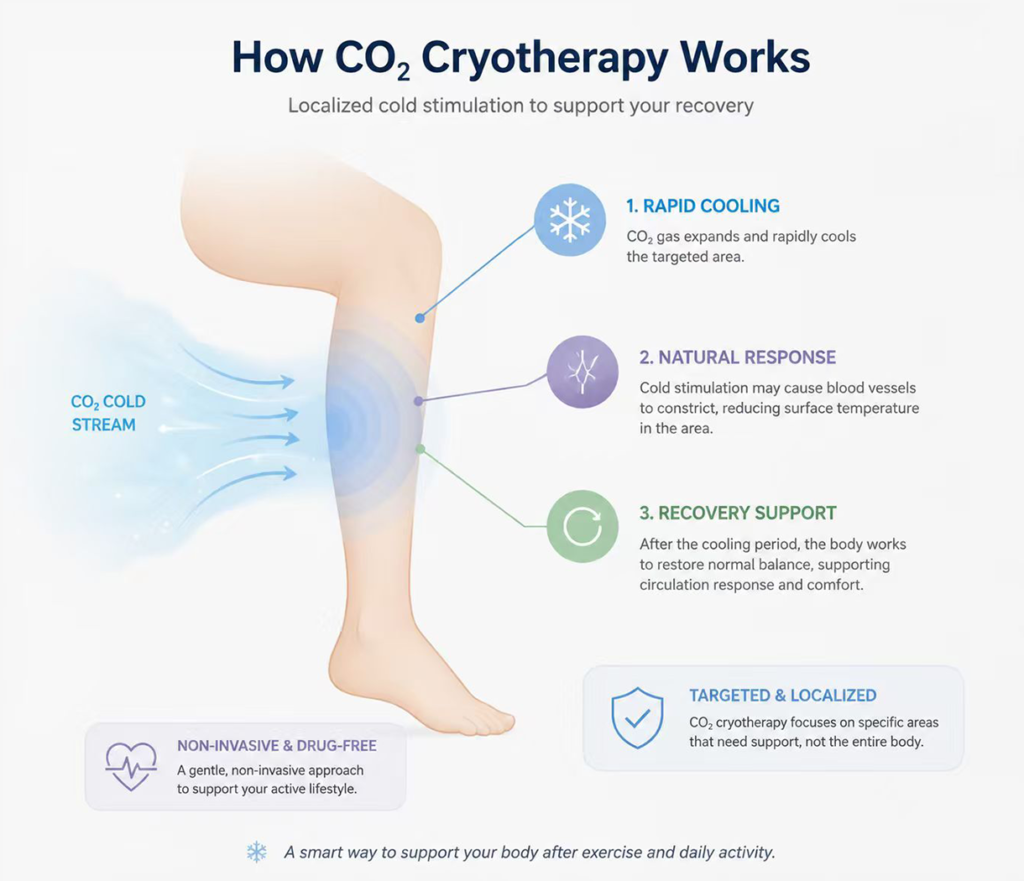
CO₂ cryotherapy is a localized cold therapy method that uses carbon dioxide gas to create a rapid cooling effect on targeted areas of the body. Unlike traditional ice applications that require direct contact with cold packs, CO₂ cryotherapy delivers controlled cooling through a specialized application process.
For women who participate in regular exercise, localized cryotherapy is often considered as part of a recovery routine after activities that place stress on muscles and soft tissues. Common areas of focus may include the legs, shoulders, arms, and lower back depending on individual activity patterns.
The purpose of CO₂ cryotherapy is not to replace exercise recovery fundamentals but to provide an additional approach that supports comfort after physical activity.
1.2 Why Women Are Exploring Localized Cryotherapy After Exercise
Women who maintain active lifestyles often combine different types of training, including resistance workouts, cardio sessions, dance, yoga, and outdoor activities. These exercises can create temporary muscle fatigue and stiffness as the body adapts to physical demands.
Localized CO₂ cryotherapy has attracted attention because it provides targeted cold stimulation instead of general cooling. This allows users to focus on specific areas that feel tired after exercise.
The cooling response from cryotherapy may influence local blood flow patterns, nerve activity, and tissue temperature. These effects are the main reasons why many fitness enthusiasts include cold therapy as part of their personal wellness routines.
1.3 The Science Behind CO₂ Cryotherapy and Cold Stimulation
The body responds to cold exposure through several physiological processes. When tissues experience controlled cooling, blood vessels temporarily narrow through a process known as vasoconstriction. After the cooling period, the body naturally works to restore normal temperature balance.
This temperature response is one reason cryotherapy continues to be studied in sports recovery and physical wellness fields. Research discussions around cryotherapy often focus on muscle soreness, recovery perception, and physiological responses after exercise.
CO₂ cryotherapy uses rapid cooling technology to create a localized cold environment while allowing users to focus on specific body areas rather than applying cold exposure to the entire body.
2. How CO₂ Cryotherapy Supports Women’s Fitness Recovery
2.1 Supporting Muscle Comfort After Strength Training
Strength training has become an important part of many women’s fitness routines. Exercises such as squats, lunges, resistance training, and weightlifting place repeated demands on muscles.
After intense workouts, temporary muscle soreness and stiffness may appear as the body responds to physical stress. CO₂ cryotherapy can be incorporated into a recovery routine to support muscle comfort during this period.
Localized cooling may help users feel more relaxed in targeted areas, especially after workouts involving the legs, hips, shoulders, and arms.
2.2 CO₂ Cryotherapy for Women Practicing Yoga and Pilates
Yoga and Pilates focus on flexibility, balance, posture, and controlled movement. Although these activities are often considered lower impact, they still require consistent muscle engagement and body control.
Areas such as the lower back, hips, shoulders, and legs may experience temporary tension after repeated training sessions.
CO₂ cryotherapy provides a targeted cooling approach that can complement stretching and mobility routines. Many wellness-focused users explore localized cold therapy as part of maintaining physical comfort while continuing regular movement practices.
2.3 Supporting Recovery After Cardio and Endurance Activities
Running, cycling, dance workouts, and other endurance activities require repeated muscle contractions over extended periods.
Women participating in these activities may experience temporary fatigue in areas such as:
- calves
- thighs
- knees
- feet
CO₂ cryotherapy allows targeted application to specific areas after exercise. By supporting a cooling response, it may help users create a more comfortable recovery routine after endurance-based activities.
Research has explored cryotherapy and photobiomodulation approaches in relation to exercise recovery, including muscle soreness and physical performance responses.
3. The Role of CO₂ Cryotherapy in Modern Women’s Wellness Routines
3.1 Combining Cryotherapy With a Balanced Fitness Lifestyle
A healthy fitness routine includes more than exercise alone. Rest, hydration, nutrition, stretching, and recovery habits all contribute to long-term wellness.
CO₂ cryotherapy fits into this broader approach by offering a targeted recovery option that can be combined with other healthy habits.
Rather than focusing on a single recovery method, many active individuals prefer a complete wellness strategy that supports their body before, during, and after physical activity.
3.2 Localized Cooling for Different Exercise-Related Areas
Different workouts place stress on different parts of the body. For example:
- lower body training may create temporary leg fatigue
- upper body workouts may create shoulder and arm tension
- core exercises may involve abdominal and back muscle engagement
CO₂ cryotherapy allows users to focus cooling on specific areas based on their personal exercise routines.
This targeted approach is one reason localized cryotherapy continues to attract interest among fitness and wellness communities.
3. The Role of CO₂ Cryotherapy in Modern Women’s Wellness Routines
3.1 Combining Cryotherapy With a Balanced Fitness Lifestyle
A complete fitness lifestyle involves more than regular workouts. Recovery habits, sleep quality, hydration, nutrition, and proper movement patterns all influence how the body adapts to exercise.
CO₂ cryotherapy can become part of a broader wellness routine by providing targeted cooling support after physical activities. Instead of focusing on one single recovery method, many active women combine different approaches to maintain muscle comfort and support their fitness goals.
Localized cryotherapy is especially appealing because it allows users to focus on specific areas that experience temporary fatigue after exercise, making it a practical addition to personalized wellness routines.
3.2 Localized Cooling for Different Exercise-Related Areas
Different forms of exercise create different physical demands. Lower-body workouts may involve repeated activation of the thighs, hips, and calves, while upper-body exercises may place more stress on the shoulders, arms, and back.
CO₂ cryotherapy allows targeted application based on individual workout patterns. This localized approach provides cooling directly to selected areas rather than exposing the entire body to cold temperatures.
For women who participate in multiple fitness activities, localized cooling can offer flexibility by adapting to different exercise routines and personal recovery preferences.
3.3 CO₂ Cryotherapy and the Growing Interest in Personalized Recovery
Modern wellness trends increasingly focus on personalized approaches rather than general solutions. Every person has different exercise habits, fitness levels, and recovery needs.
CO₂ cryotherapy reflects this trend by allowing targeted treatment areas and customized recovery routines. Whether after strength training, endurance workouts, or flexibility-based exercises, localized cold therapy provides another option for individuals looking to support their post-exercise comfort.
Current discussions around cryotherapy continue to examine how different cooling methods influence recovery-related factors, including muscle soreness and perceived recovery after exercise.
4. Exploring CO₂ Cryotherapy Applications for Active Women
4.1 CO₂ Cryotherapy After Lower Body Training
Lower-body workouts are popular among women who focus on strength, endurance, and overall fitness. Exercises involving squats, lunges, cycling, and resistance training can place repeated demands on the legs and surrounding muscles.
After these activities, some individuals experience temporary tightness or muscle fatigue. CO₂ cryotherapy can be used as part of a recovery routine to provide targeted cooling support to areas such as the thighs, calves, and hips.
The cooling effect may help create a more comfortable feeling after exercise while supporting the body’s natural response to physical stress.
4.2 Supporting Comfort After High-Intensity Fitness Sessions
High-intensity workouts often include short periods of demanding physical effort. Activities such as interval training, circuit workouts, and functional fitness sessions require repeated muscle activation.
Following these sessions, recovery becomes an important part of maintaining consistent training habits. CO₂ cryotherapy offers a localized cooling option that can be incorporated after intense workouts.
Cryotherapy research has explored the relationship between cold exposure and post-exercise recovery experiences, including muscle soreness and perceived comfort. However, individual responses can vary depending on exercise type, recovery habits, and personal conditions.
4.3 CO₂ Cryotherapy as Part of a Wellness-Focused Lifestyle
Many women now view fitness as part of a larger wellness approach that includes physical activity, stress management, and self-care routines.
CO₂ cryotherapy fits within this lifestyle by offering a quick and targeted cold therapy option that can complement existing wellness habits.
Rather than replacing traditional recovery methods, localized cryotherapy can work alongside stretching, mobility exercises, rest, and healthy daily routines.
5. Why CO₂ Cryotherapy Is Gaining Attention Among Female Fitness Communities
5.1 The Growing Demand for Convenient Recovery Solutions
As fitness participation continues to grow, many people are searching for recovery methods that fit easily into busy schedules.
CO₂ cryotherapy provides a targeted approach that focuses on specific body areas instead of requiring a full-body recovery process. This makes it attractive for people who want a practical option after workouts.
The combination of fast application, localized cooling, and compatibility with different exercise routines has increased interest in cryotherapy within fitness and wellness communities.
5.2 Understanding the Future of Localized Cryotherapy in Fitness
The development of recovery technologies continues to move toward more personalized and convenient solutions. Localized CO₂ cryotherapy represents one direction within this trend by focusing on specific areas and individual preferences.
As more people explore ways to support their active lifestyles, cold therapy technologies may continue to become part of broader wellness routines.
Understanding the science behind cooling responses helps users make informed decisions about how CO₂ cryotherapy may fit into their personal fitness and recovery strategies.
PREGUNTAS FRECUENTES
What is CO₂ cryotherapy?
CO₂ cryotherapy is a localized cold therapy method that uses carbon dioxide gas to create targeted cooling on specific body areas.
Can women use CO₂ cryotherapy after workouts?
Yes. Many active individuals explore CO₂ cryotherapy as part of their post-exercise recovery routines.
Which body areas can be used with CO₂ cryotherapy?
Common areas include legs, shoulders, arms, hips, and other regions that experience temporary exercise-related fatigue.
Is CO₂ cryotherapy the same as an ice pack?
No. CO₂ cryotherapy uses controlled carbon dioxide cooling, while ice packs rely on direct cold contact.
Does CO₂ cryotherapy replace stretching or exercise recovery habits?
No. It is designed as a supportive option and should be combined with balanced recovery habits.
How does cold therapy relate to muscle recovery?
Cold exposure may influence local temperature, blood flow response, and sensory signals related to post-exercise comfort.
Conclusión
CO₂ cryotherapy provides a modern localized cooling approach that supports the evolving needs of active women who value fitness and wellness. By focusing on specific body areas, this technology offers a convenient option that can complement exercise recovery routines, including strength training, yoga, Pilates, and endurance activities. While individual experiences may differ, CO₂ cryotherapy continues to attract attention as a non-invasive recovery support method that fits into personalized wellness lifestyles.
Referencias
Whole-body Cryotherapy as a Recovery Technique after Exercise: A Review of the Literature
https://pubmed.ncbi.nlm.nih.gov/29161748
Whole-body Cryotherapy for Preventing and Treating Muscle Soreness After Exercise in Adults
The Effect of Post-Exercise Cryotherapy on Recovery Characteristics: A Systematic Review and Meta-Analysis
https://pmc.ncbi.nlm.nih.gov/articles/PMC4586380
Cold-water Immersion and Other Forms of Cryotherapy: Physiological Changes Potentially Affecting Recovery From High-Intensity Exercise
https://pubmed.ncbi.nlm.nih.gov/24004719
Impact of Different Cryotherapy Interventions on Post-Exercise Acute Delayed-Onset Muscle Soreness, Athletic Performance, and Inflammatory Biomarkers