Einführung
Marathon running requires exceptional endurance, strength, and physical preparation. However, repeated impact, prolonged muscle activation, and high training volume can place significant stress on the lower body, especially the knees, calves, thighs, and feet. Many runners are exploring CO₂ cryotherapy as a localized cold therapy approach to support recovery after demanding workouts and competitions. By using controlled carbon dioxide cooling technology, localized cryotherapy creates a rapid cooling effect on targeted areas, which may help support circulation changes, muscle comfort, and post-exercise recovery routines. As recovery becomes an essential part of modern athletic performance, CO₂ cryotherapy is gaining attention among marathon runners who want a convenient and non-invasive method to support their training lifestyle.
1. Understanding CO₂ Cryotherapy and Its Role in Marathon Recovery
Marathon training places continuous demands on muscles, joints, and connective tissues. Understanding how CO₂ cryotherapy works and why athletes include cold-based recovery methods in their routines can help runners better understand its potential role in post-training care.
1.1 What Is CO₂ Cryotherapy for Runners?
CO₂ cryotherapy is a localized cold therapy technique that uses compressed carbon dioxide to create rapid cooling on specific areas of the body. Unlike traditional ice applications, CO₂ cryotherapy delivers controlled cold exposure directly to targeted regions, making it suitable for athletes who focus on specific recovery areas.
The rapid temperature reduction causes temporary vasoconstriction, followed by a natural warming response that may support microcirculation. This physiological response is one reason cold therapy has been widely explored in sports recovery environments.
For marathon runners, CO₂ cryotherapy is often considered as part of a recovery routine after long-distance running, intense training sessions, or periods of increased physical demand. It focuses on supporting muscle comfort and maintaining recovery habits rather than replacing professional healthcare or rehabilitation programs.
1.2 Why Marathon Runners Are Turning to Localized Cold Therapy
Long-distance running creates repeated mechanical stress throughout the body. During marathon preparation, runners often increase mileage, introduce interval training, or participate in multiple endurance events, which can contribute to temporary muscle fatigue and stiffness.
Traditional recovery methods such as stretching, mobility exercises, hydration, and rest remain important. However, many athletes are also looking for additional recovery options that can target specific areas instead of applying general approaches.
Localized CO₂ cryotherapy allows attention to areas commonly affected by running demands, including:
- Knees after repeated impact
- Calves after extended distance training
- Hamstrings after intense running sessions
- Feet after prolonged weight-bearing activity
Cryotherapy has been widely studied as a recovery strategy in sports environments, although individual responses can vary depending on training intensity, application method, and personal conditions.
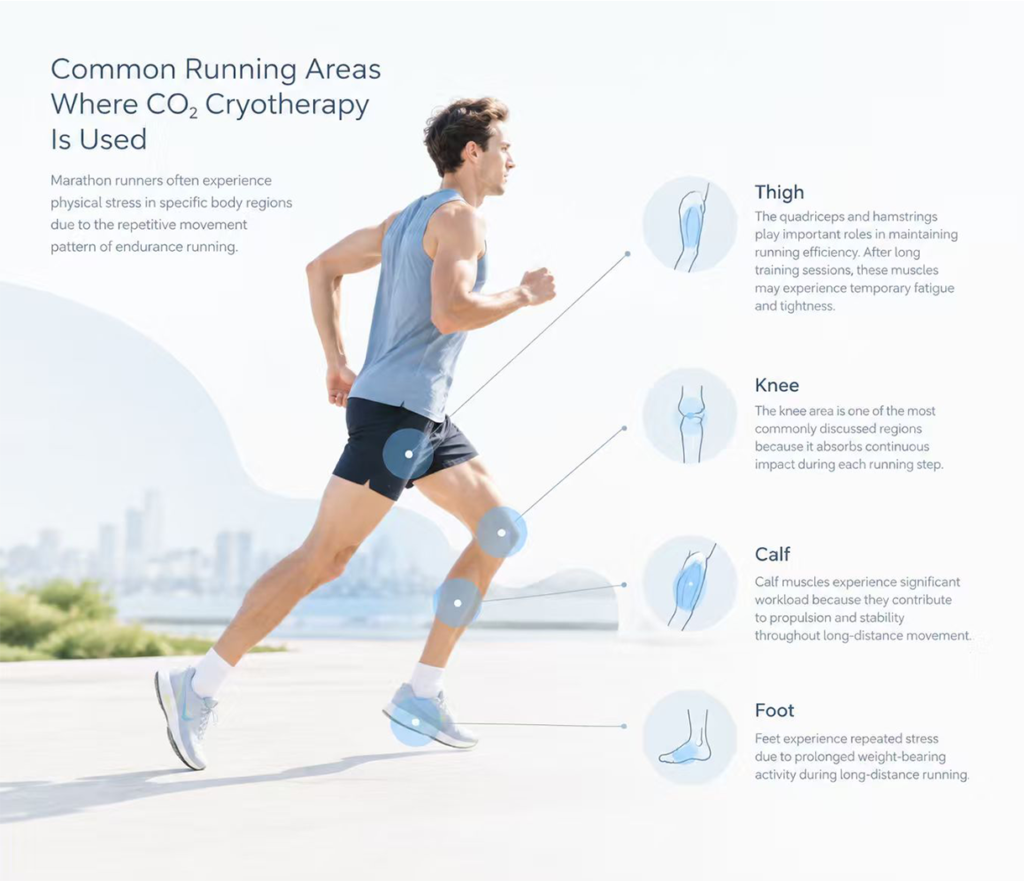
1.3 Common Running Areas Where CO₂ Cryotherapy Is Used
Marathon runners often experience physical stress in specific body regions because of the repetitive movement pattern involved in endurance running.
The knee area is one of the most commonly discussed regions because it absorbs continuous impact during each running step. Calf muscles also experience significant workload because they contribute to propulsion and stability throughout long-distance movement.
The thigh muscles, including the quadriceps and hamstrings, play important roles in maintaining running efficiency. After long training sessions, these muscles may experience temporary fatigue and tightness.
CO₂ cryotherapy allows athletes to focus cold application on specific areas that require additional recovery attention. This targeted approach makes localized cryotherapy different from general cooling methods because it allows more precise application based on individual training needs.
2. How CO₂ Cryotherapy Supports Marathon Training Recovery
Recovery is a major part of marathon preparation because runners need to balance training stress with physical readiness. CO₂ cryotherapy is becoming an option for athletes who want to include targeted cold exposure as part of their overall recovery strategy.
2.1 Supporting Muscle Comfort After Long-Distance Running
During marathon training, muscles experience repeated contraction cycles and prolonged loading. This physical stress can lead to feelings of soreness, fatigue, and reduced muscle comfort after demanding sessions.
CO₂ cryotherapy works through controlled cold exposure that may influence sensory responses and support temporary comfort in targeted areas. The cooling process can help athletes feel refreshed after intense physical activity.
For marathon runners, this can be especially relevant after:
- Long-distance training runs
- Hill workouts
- Speed sessions
- Competition preparation periods
Instead of focusing only on performance improvement, many endurance athletes now recognize that recovery quality plays an important role in maintaining consistent training.
2.2 CO₂ Cryotherapy and Post-Marathon Recovery Support
A marathon places significant physiological demands on the body. After completing a long-distance event, runners often focus on restoring normal movement patterns and supporting muscle recovery.
Cold therapy has been used in sports recovery settings because temperature changes can influence blood flow regulation, nerve sensitivity, and perceived muscle discomfort.
Some studies have explored cryotherapy methods following endurance events, including marathon recovery. Research outcomes vary depending on the type of cryotherapy, exposure conditions, and measurement methods, showing that recovery approaches should be personalized rather than considered one universal solution.
For runners, CO₂ cryotherapy can be viewed as one supportive tool within a broader recovery plan that includes proper nutrition, sleep, mobility training, and gradual return to activity.
2.3 The Connection Between Cold Therapy and Muscle Recovery Science
Cold therapy has a long history in sports medicine because temperature changes can influence several physiological processes related to exercise recovery.
When the skin experiences controlled cooling, blood vessels temporarily narrow through vasoconstriction. After cooling stops, the body gradually restores normal circulation patterns through a warming response.
This process is associated with changes in blood flow regulation and sensory nerve activity. These mechanisms are important areas of interest in sports recovery because athletes often seek methods that support comfort after intense physical activity.
For marathon runners, understanding these mechanisms helps create realistic expectations. CO₂ cryotherapy should be considered as a recovery support technique that works alongside established training and recovery principles.
3. Integrating CO₂ Cryotherapy Into a Marathon Training Routine
For marathon runners, recovery is not limited to the period after a race. It is a continuous process throughout the entire training cycle. Including appropriate recovery methods during preparation can help runners better manage physical stress and maintain training consistency.
3.1 Using CO₂ Cryotherapy During Different Training Stages
Marathon preparation usually includes different training phases, such as endurance building, speed improvement, and final competition preparation. Each stage creates different physical demands on the body.
During high-mileage weeks, runners may experience increased muscle fatigue due to longer running distances. During speed training, muscles and joints may experience greater mechanical stress because of faster movement patterns.
CO₂ cryotherapy can be incorporated into recovery routines during these periods by focusing on areas that commonly experience stress, such as the quadriceps, calves, knees, and ankles.
Rather than following a fixed recovery method for every runner, cold therapy application should match individual training intensity, physical condition, and recovery preferences.
3.2 CO₂ Cryotherapy as Part of a Complete Recovery Strategy
Successful marathon preparation requires more than just increasing mileage. Recovery strategies play an important role in helping runners maintain balance between training load and physical readiness.
CO₂ cryotherapy can work alongside other recovery habits, including:
- Proper sleep quality
- Balanced nutrition
- Mobility exercises
- Strength training
- Appropriate rest periods
A complete recovery approach considers the entire body rather than focusing on one single method.
For endurance athletes, localized cryotherapy provides another option for supporting areas that receive repeated stress during training.
3.3 Why Localized CO₂ Cryotherapy Is Different From General Cooling Methods
Traditional cooling methods often affect larger body areas, while localized CO₂ cryotherapy focuses on specific regions.
This targeted approach allows runners to direct cold exposure toward areas that experience greater physical demand. For example, a marathon runner may focus on the calves after a long-distance session or the knee area after repeated impact training.
Localized treatment also allows greater flexibility because runners can focus on different body areas according to their daily training requirements.
As sports recovery technology develops, targeted approaches such as CO₂ cryotherapy continue to attract attention among athletes looking for convenient recovery solutions.
4. The Science Behind CO₂ Cryotherapy for Endurance Athletes
Understanding the physiological mechanisms behind CO₂ cryotherapy helps runners recognize how localized cold exposure interacts with the body.
Cryotherapy does not work through one single pathway. Instead, temperature changes may influence several physiological responses related to blood circulation, nerve activity, and muscle comfort.
4.1 Vasoconstriction and Circulation Response During Cold Exposure
One of the primary responses during cold exposure is vasoconstriction, which refers to the temporary narrowing of blood vessels.
When the skin temperature decreases, blood vessels respond to the cold stimulus. After the cooling period ends, the body gradually returns to normal temperature regulation through a natural warming response.
This process is one reason cold therapy has been widely explored in athletic recovery environments.
For marathon runners, circulation changes are an important consideration because endurance exercise places continuous demand on muscles that require oxygen and nutrient support during normal recovery processes.
4.2 The Relationship Between CO₂ Cryotherapy and Muscle Fatigue
Muscle fatigue is a common experience among marathon runners, especially after long training sessions or competitions.
During endurance exercise, muscles repeatedly contract for extended periods. This continuous activity can lead to temporary changes in muscle performance, flexibility, and comfort.
CO₂ cryotherapy provides controlled cooling that may help runners manage feelings of post-exercise fatigue. The cooling sensation may also influence sensory nerve responses, helping athletes feel more comfortable after intense physical activity.
However, individual responses to cryotherapy can vary. Factors such as training level, recovery habits, and physical condition may influence how each runner experiences cold therapy.
4.3 Cold Therapy Research in Endurance Sports Recovery
Cryotherapy has been explored in endurance sports recovery because athletes often seek methods that support comfort after demanding exercise.
Research involving marathon runners and other endurance athletes has examined different cryotherapy approaches, including whole-body cryotherapy and other cooling methods. Findings vary depending on the technology, timing, and evaluation methods used.
These findings highlight the importance of viewing cryotherapy as one component of a complete recovery strategy rather than a replacement for proper training management.
For CO₂ cryotherapy users, the focus is on supporting recovery routines through targeted cold application and integrating the technology into a balanced athletic lifestyle.
5. Choosing CO₂ Cryotherapy as Part of a Modern Running Lifestyle
Modern runners are increasingly interested in recovery methods that fit their schedules and training goals. As marathon participation continues to grow, recovery technology has become an important part of sports wellness.
5.1 Supporting Active Runners With Targeted Recovery Solutions
Marathon runners often spend months preparing for competitions, which requires maintaining consistent training habits.
A recovery method that is easy to integrate into daily routines can provide additional support during demanding training periods.
CO₂ cryotherapy offers targeted cooling technology that focuses on specific body areas instead of requiring full-body exposure. This makes it suitable for runners who want a focused approach for commonly stressed areas such as knees, calves, and thighs.
Local Cryotherapy provides localized cryotherapy solutions designed around controlled cold application, allowing athletes and active individuals to include cold therapy within their personal recovery routines.
5.2 The Future of Cryotherapy in Sports and Wellness
The role of recovery technology continues to expand as athletes become more aware of the importance of physical maintenance.
CO₂ cryotherapy represents a combination of modern technology and traditional cold recovery concepts. Its localized application makes it an attractive option for runners who prefer targeted recovery methods.
For marathon runners, maintaining performance is not only about completing more training sessions. It is also about developing sustainable recovery habits that support long-term participation in the sport.
As wellness and sports science continue to evolve, localized cryotherapy may remain an important part of recovery conversations among endurance athletes.
FAQ
What is CO₂ cryotherapy for marathon runners?
CO₂ cryotherapy is a localized cold therapy method that uses carbon dioxide cooling technology to support recovery routines after running and training.
Can CO₂ cryotherapy help after marathon training?
CO₂ cryotherapy may help support muscle comfort and recovery routines after intense training sessions when combined with proper rest and healthy recovery habits.
Which body areas do runners commonly use CO₂ cryotherapy on?
Runners commonly focus on areas such as the knees, calves, thighs, ankles, and feet because these regions experience repeated stress during long-distance running.
How is CO₂ cryotherapy different from ice packs?
CO₂ cryotherapy provides controlled localized cooling, allowing users to focus on specific areas rather than applying general cooling methods.
Is CO₂ cryotherapy a replacement for professional care?
No. CO₂ cryotherapy is a supportive recovery approach and should not replace professional evaluation when runners experience ongoing or serious concerns.
Schlussfolgerung
CO₂ cryotherapy is becoming an increasingly recognized recovery option among marathon runners who want to support muscle comfort and training consistency. Long-distance running creates repeated physical demands on the knees, calves, thighs, and feet, making recovery an essential part of athletic preparation. Through controlled carbon dioxide cooling, localized cryotherapy provides a targeted approach that can be included alongside traditional recovery habits such as rest, mobility training, and proper nutrition. For endurance athletes seeking modern recovery solutions, CO₂ cryotherapy offers another way to support their running lifestyle.
Referenzen
Recovery following a marathon: a comparison of cold water immersion, whole body cryotherapy and a placebo control
https://pubmed.ncbi.nlm.nih.gov/29127510
Effects of Whole-Body Cryotherapy vs. Far-Infrared vs. Passive Modalities on Recovery from Exercise-Induced Muscle Damage in Highly-Trained Runners
https://pubmed.ncbi.nlm.nih.gov/22163272
Cryotherapy Models and Timing-Sequence Recovery of Exercise-Induced Muscle Damage in Middle- and Long-Distance Runners
https://pmc.ncbi.nlm.nih.gov/articles/PMC7164561
Prolonging the duration of cooling does not enhance recovery following a marathon
https://pubmed.ncbi.nlm.nih.gov/32901996
Local Cryotherapy – Targeted Cryotherapy Recovery Solutions
https://www.localcryotherapy.com/