Введение
Digital devices have become central to modern work, communication, and leisure, but extended screen exposure has introduced new musculoskeletal challenges. “Tech neck,” characterized by prolonged forward head posture and upper back strain, can influence cervical spine alignment, shoulder stability, and neuromuscular coordination. CO₂ Cryotherapy, an advanced non-invasive cooling therapy capable of delivering rapid surface temperatures around −78°C, has gained attention for its potential in supporting local circulation, modulating sensory nerve activity, and enhancing soft tissue responsiveness. By exploring the physiological mechanisms behind CO₂ Cryotherapy and its relevance to modern posture-related strain, this article provides insight into how this therapy can integrate into contemporary muscle balance and wellness strategies.
1. Mechanisms of Tech Neck and CO₂ Cryotherapy Support
Understanding CO₂ Cryotherapy’s role requires analyzing how prolonged device use affects neck and shoulder musculoskeletal systems.
1.1 Forward Head Posture and Cervical Stabilizers
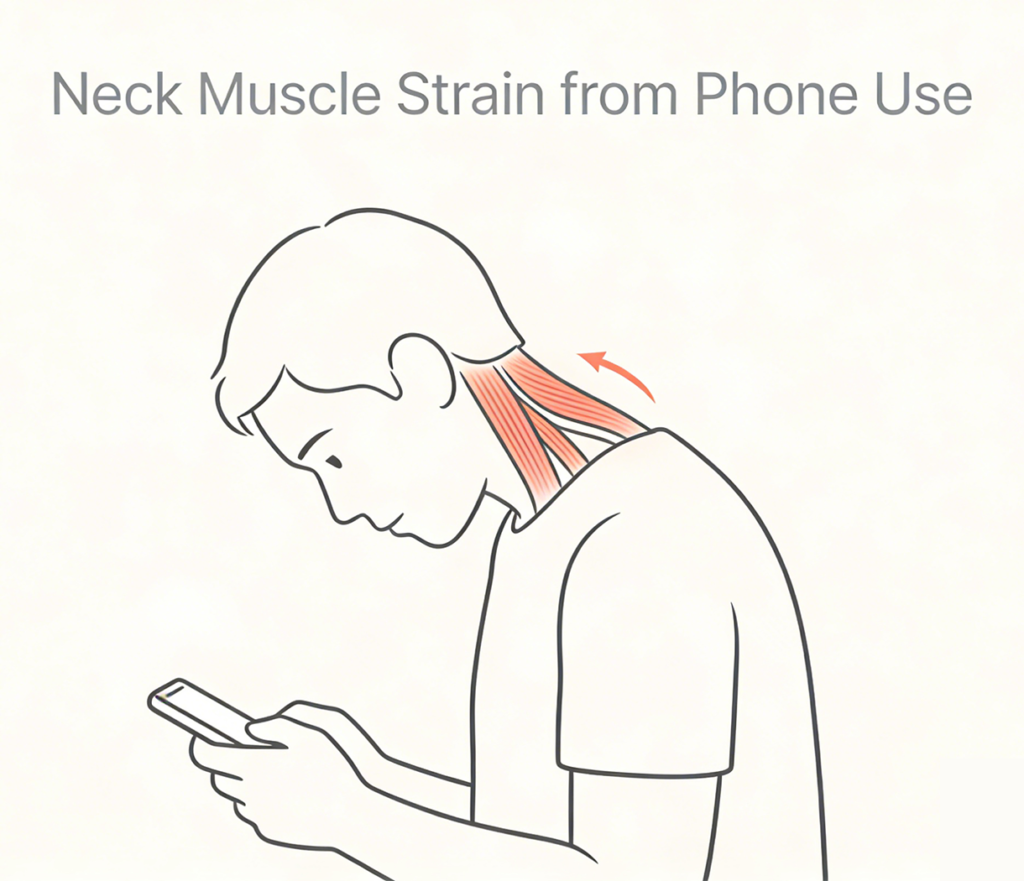
Forward head posture increases the mechanical demand on cervical extensors, which maintain head stability. Sustained contraction of these muscles can alter local metabolism and reduce microvascular efficiency, leading to fatigue. CO₂ Cryotherapy induces rapid surface cooling that triggers vasoconstriction followed by reactive vasodilation, enhancing local blood flow and oxygen delivery. The therapy also stimulates superficial sensory receptors, modulating neural feedback pathways and supporting cervical stabilizer adaptation under repetitive static loading. This mechanism helps explain why CO₂ Cryotherapy is increasingly recognized as a supportive modality in managing posture-related musculoskeletal strain.
1.2 Shoulder Girdle Compensation Patterns
When the head shifts forward, scapular protraction and shoulder rounding commonly occur, altering the synergy between scapular stabilizers and thoracic extensors. These compensatory changes can reduce upper back load distribution efficiency. CO₂ Cryotherapy supports the shoulder region by modulating local circulation and sensory receptor activity, creating an environment conducive to muscle relaxation and tension relief. Such effects contribute to maintaining neuromuscular coordination, making this therapy a valuable adjunct in posture-support frameworks for tech neck sufferers.
2. Soft Tissue and Circulatory Effects of Prolonged Screen Use
Beyond structural adaptations, extended device use affects local soft tissue physiology.
2.1 Cervical Muscle Circulation and Fatigue
Prolonged engagement of cervical stabilizers in low-intensity contractions may impair oxygen delivery and metabolite clearance, contributing to local fatigue and discomfort. CO₂ Cryotherapy rapidly cools superficial tissues, activating cutaneous vascular reflexes that support local blood flow redistribution. This response enhances tissue oxygenation and reduces localized strain, reinforcing muscle recovery environments in individuals with repetitive posture stress.
2.2 Upper Back Fascia Adaptations
The fascia connecting the cervical and thoracic regions provides essential postural support. Habitual forward head posture stretches or compresses these connective tissues, potentially reducing thoracic mobility and scapular coordination. CO₂ Cryotherapy influences fascia-associated sensory nerves, optimizing circulation and supporting tissue elasticity. Integrating such non-invasive interventions into wellness routines may enhance adaptive capacity, complementing ergonomic and movement-based strategies for tech neck.
3. Neuromuscular Modulation and Sensory Feedback
Tech neck is not purely mechanical; neural regulation plays a key role.
3.1 Sensory Nerve Modulation
Superficial skin contains numerous mechanoreceptors and thermoreceptors that regulate muscle tone and protective reflexes. Prolonged static posture can exacerbate neural feedback patterns, increasing sustained cervical and shoulder tension. CO₂ Cryotherapy’s rapid cooling stimulates these sensory pathways, modulating reflexive muscle contraction and supporting localized relaxation environments. This mechanism provides a neurophysiological basis for its role in posture-related wellness interventions.
3.2 Supporting Muscle Coordination
Neural regulation is essential for coordinated cervical and shoulder function. CO₂ Cryotherapy affects sensory nerve activity, indirectly influencing muscle recruitment patterns. By enhancing neuromuscular signaling environments, this therapy supports balanced activation of cervical extensors, scapular stabilizers, and thoracic musculature, helping maintain postural control in technology-intensive lifestyles.
4. Lifestyle Contributors and CO₂ Cryotherapy Relevance
Daily habits significantly influence tech neck development.
4.1 Screen Positioning and Cervical Load
Devices positioned below eye level increase neck extensor workload and may reinforce maladaptive posture memory. CO₂ Cryotherapy complements ergonomic adjustments by supporting circulation and neuromuscular responsiveness, reducing the cumulative effects of repetitive strain. This synergy allows tissue environments to recover more effectively between periods of sustained screen use.
4.2 Limited Movement Variability
Digital workflows often reduce upper body movement, restricting scapular and thoracic mobility. Reduced movement variability contributes to chronic muscle stiffness and impaired neuromuscular coordination. CO₂ Cryotherapy provides a rapid tissue response that supports circulation, neural feedback, and superficial soft tissue relaxation, mitigating some consequences of prolonged sedentary and static postures.
5. Integrating CO₂ Cryotherapy into Muscle Balance Strategies
Maintaining postural health requires combining recovery awareness, mobility interventions, and supportive therapies.
5.1 Supporting Local Circulation
CO₂ Cryotherapy induces a rapid cooling reflex that triggers vasoconstriction followed by reactive vasodilation. This process improves oxygen delivery, nutrient transport, and metabolite clearance in stressed cervical and upper back tissues. Enhanced circulation helps maintain cervical muscle readiness and soft tissue resilience during repetitive device use, supporting overall posture sustainability.
5.2 Supporting Neuromuscular Coordination
By modulating sensory nerve activity, CO₂ Cryotherapy helps regulate muscle tone and coordination across the neck, shoulder, and thoracic regions. This effect is particularly beneficial in counteracting fatigue patterns from static postures, reinforcing balanced muscle recruitment, and enhancing upper body stability. Integrating CO₂ Cryotherapy into posture management routines provides an evidence-informed, non-invasive method for supporting long-term musculoskeletal health in digital lifestyles.
ЧАСТО ЗАДАВАЕМЫЕ ВОПРОСЫ
What is tech neck?
A condition caused by prolonged forward head posture, typically from extended device use, leading to neck and upper back strain.
How does CO₂ Cryotherapy help?
It supports local circulation, modulates sensory nerve activity, and enhances tissue relaxation without invasive intervention.
Which areas are most affected?
Cervical extensors, shoulder stabilizers, and upper thoracic muscles.
Can posture habits affect long-term muscle balance?
Yes, repetitive alignment patterns can gradually alter neuromuscular coordination.
Is tech neck preventable?
Posture awareness, movement variation, and supportive therapies like CO₂ Cryotherapy can reduce risk.
Заключение
Tech neck represents a modern musculoskeletal challenge linked to prolonged screen exposure and forward head posture. CO₂ Cryotherapy provides a non-invasive modality capable of supporting local circulation, modulating sensory nerve feedback, and enhancing soft tissue adaptation. By integrating CO₂ Cryotherapy into lifestyle and ergonomic interventions, individuals can better maintain cervical and shoulder muscle balance, improve neuromuscular coordination, and enhance postural sustainability in technology-intensive environments.
Ссылки
Local Cryotherapy. CO₂ Cryotherapy Circulation Support.
https://www.localcryotherapy.com/ar/co%E2%82%82-cryotherapy-circulation.html/
Local Cryotherapy. CO₂ Cryotherapy Nerve Pain.
https://www.localcryotherapy.com/ar/co2-cryotherapy-nerve-pain.html
Local Cryotherapy. CO₂ Cryotherapy for Fast Pain Management.
Banerjee, R., et al. “Cryotherapy in Musculoskeletal Recovery.” Journal of Clinical Medicine Research, 2020.
https://www.ncbi.nlm.nih.gov/pmc/articles/PMC7053164/
Algafly, A.A., George, K.P. “Cryotherapy and Neuromuscular Function.” Journal of Orthopaedic & Sports Physical Therapy, 2007.