Введение
Fencing demands speed, balance, coordination, and repeated explosive movements. Among its most physically demanding actions, the lunge places considerable work on the thighs, hips, and surrounding muscles. During intensive training or competition, repeated lunges and rapid changes in direction may leave these areas feeling tired or uncomfortable. Localized CO₂ cryotherapy offers a targeted cooling option that can complement a broader recovery routine. By focusing on specific muscle areas, athletes and sports professionals can incorporate controlled cooling into post-training care while continuing to prioritize mobility, strength, and proper recovery.
1. Understanding the Physical Demands of Fencing
1.1 Why the Fencing Lunge Requires Lower-Body Power
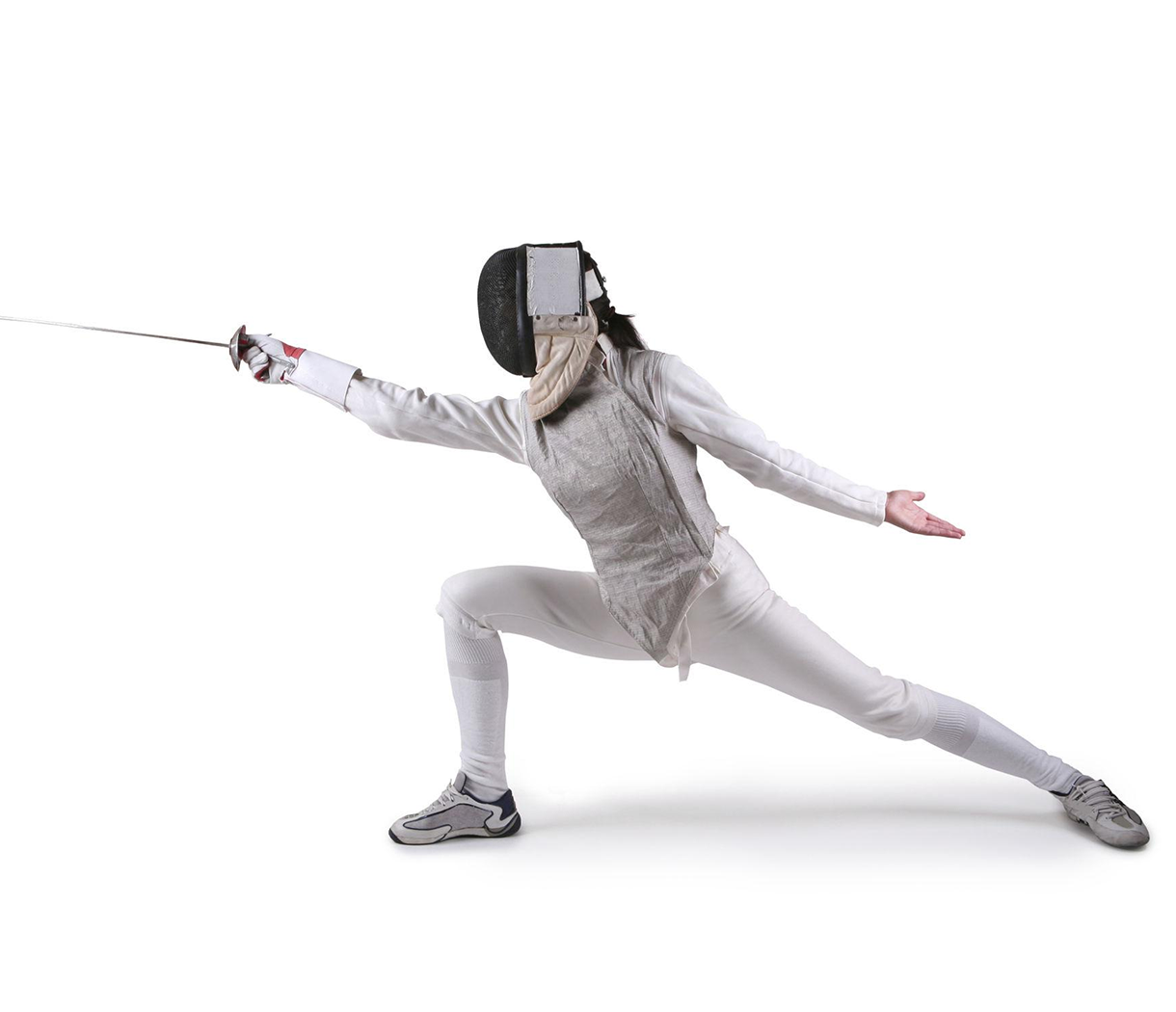
The fencing lunge combines a rapid forward movement with controlled body positioning. The front leg absorbs and manages much of the landing force, while the rear leg contributes to forward propulsion. The quadriceps, gluteal muscles, and hip stabilizers all play important roles in this action. Repeating the movement during drills and bouts places ongoing demands on these muscle groups, particularly when athletes perform frequent lunges at high speed.
1.2 Different Roles of the Leading and Trailing Legs
The leading leg helps control forward movement and stabilize the body when the foot lands. Its quadriceps and surrounding muscles work to manage knee movement and support balance. Meanwhile, the trailing leg generates much of the force that drives the body forward. This difference in function can create uneven muscle demands, especially during sessions involving repeated attacks and recovery movements.
1.3 Why Hip and Thigh Comfort Matters
The hips connect upper-body positioning with lower-body movement. Hip flexors help control leg movement, while gluteal and adductor muscles contribute to stability and direction changes. When these areas feel tight or fatigued, athletes may find it harder to maintain a comfortable stance or perform smooth footwork. Supporting muscle comfort can therefore be a useful part of maintaining consistent fencing practice.
2. Common Sources of Leg and Hip Discomfort in Fencers
2.1 Repeated Lunges and Quadriceps Fatigue
The quadriceps work repeatedly as fencers extend the knee, land from lunges, and regain their stance. High training volume can leave the front thigh feeling tired or tight, particularly after intensive footwork drills. Although normal training fatigue is not necessarily an injury, persistent discomfort may affect movement quality and should not be ignored.
2.2 Hip Flexor and Gluteal Muscle Demands
Fencers frequently move between forward lunges, backward retreats, and lateral adjustments. These actions require coordinated work from the hip flexors and gluteal muscles. The hip flexors help control leg movement, while the gluteal muscles contribute to hip extension and pelvic stability. Repeated loading may lead to temporary muscle soreness or a feeling of tightness around the hip.
2.3 Adductor and Hamstring Involvement
The inner-thigh adductors help stabilize the legs and control lateral movement. The hamstrings contribute to hip extension, knee control, and the return from an extended position. Both muscle groups remain active throughout fencing footwork, even when athletes focus primarily on the lunge. After demanding sessions, these areas may benefit from appropriate recovery strategies.
2.4 Training Volume and Asymmetrical Loading
Fencing often involves a preferred stance, which means one leg repeatedly performs a different role from the other. Over time, high training volume may contribute to uneven muscle fatigue. Coaches and athletes can address this by monitoring training intensity, maintaining balanced strength and mobility work, and allowing sufficient recovery between demanding sessions.
3. How CO₂ Cryotherapy Supports Localized Cooling
3.1 Understanding the Cooling Process
Localized CO₂ cryotherapy uses pressurized carbon dioxide gas to cool a selected area of the body. The rapid cooling creates a temporary cold sensation and may help manage discomfort after physical activity. Its potential value in sports recovery is primarily associated with short-term cooling and pain-relief support rather than a guaranteed acceleration of tissue repair.
3.2 Why Targeted Cooling Matters for Fencers
Fencers may experience discomfort in different areas depending on their stance, movement patterns, and training intensity. Localized cooling allows an operator to focus on a specific region, such as the leading quadriceps, rear thigh, or outer hip. This targeted approach can fit into a practical recovery routine without requiring whole-body cooling.
3.3 CO₂ Cryotherapy and Traditional Ice Packs
Ice packs are familiar and accessible, but they may be less convenient when an athlete wants to address several distinct areas. A CO₂ cryotherapy device provides controlled, directed cooling through a specialized applicator. The two approaches differ in application and equipment requirements, so the appropriate option depends on the athlete’s needs, available resources, and professional guidance.

4. Applying Localized CO₂ Cryotherapy to Fencing Recovery
4.1 Focusing on the Leading Quadriceps
The front thigh experiences considerable demand during lunge landings and repeated knee extension. When this area feels fatigued after training, localized cooling may be considered as part of post-session care. The treatment area should be selected according to the athlete’s symptoms and assessed by a trained operator, rather than assuming every fencer needs the same application.
4.2 Supporting the Rear Hip and Thigh
The trailing leg contributes to forward propulsion and helps the athlete return to a stable position. Depending on the training session, the gluteal muscles and rear thigh may feel particularly tired. Targeted cooling can be directed toward the relevant external muscle areas when appropriate, while avoiding treatment over areas with reduced sensation or other cold-related risk factors.
4.3 Considering the Inner Thigh and Hip Stabilizers
The adductors and surrounding hip muscles help control leg position during lunges and lateral movements. If an athlete reports localized discomfort in these areas, a qualified professional can determine whether cooling is suitable. The applicator should be kept moving and used according to the device instructions, with particular care around sensitive regions and areas where skin sensation is impaired.
4.4 Combining Cooling With Other Recovery Strategies
CO₂ cryotherapy should complement, not replace, the fundamentals of athletic recovery. Fencers can support their training routine through appropriate rest, hydration, nutrition, mobility exercises, and progressive strength training. Coaches should also monitor changes in movement quality and training tolerance. Persistent, worsening, or sharp pain requires assessment by a qualified healthcare professional.
5. Choosing a CO₂ Cryotherapy Device for Sports Recovery
5.1 High-Pressure CO₂ Cooling Technology
A purpose-built CO₂ cryotherapy device uses pressurized carbon dioxide to deliver localized cooling. The human-use system featured by Local Cryotherapy uses CO₂ gas with a stated temperature of approximately -78°C. This figure describes the gas temperature, not the temperature reached by the athlete’s skin. Actual application must follow the device instructions and appropriate operator training.
5.2 Red Laser Aiming for Treatment Accuracy
A red laser aiming feature helps the operator identify the intended application area. This can be useful when working with specific muscle regions, such as the quadriceps or outer hip. Clear targeting helps organize the treatment process, although the laser itself does not determine an appropriate treatment duration or guarantee a particular recovery outcome.
5.3 Real-Time Temperature Monitoring and Operator Control
Real-time temperature monitoring gives the operator additional information during application. The device also features a 1.44-inch display, allowing key operating information to be viewed during use. Its specified treatment distance is 150 ± 5 mm. These features support a more structured workflow, but they do not replace careful observation of skin response or professional judgment.
5.4 Practical Features for Training Environments
For sports clinics and training facilities, equipment should be practical to operate and maintain. The human-use CO₂ cryotherapy system includes a rechargeable 3400 mAh battery, supporting operation without a constant power connection. Its compact display and guided aiming features can also help operators manage localized applications as part of an organized athlete recovery service.
ЧАСТО ЗАДАВАЕМЫЕ ВОПРОСЫ
1. Can CO₂ cryotherapy help fencers after repeated lunges?
It may support short-term comfort through localized cooling after demanding training. It should be used as one part of a broader recovery routine.
2. Which areas can be considered for localized cooling?
Depending on the athlete’s needs, areas may include the quadriceps, outer hip, gluteal region, and rear thigh. A trained operator should determine whether application is appropriate.
3. Is CO₂ cryotherapy the same as whole-body cryotherapy?
No. The system discussed here is designed for localized cooling of selected body areas rather than whole-body exposure in a cryotherapy chamber.
4. Does the stated -78°C mean the skin reaches that temperature?
No. It refers to the stated temperature of the CO₂ gas, not the athlete’s skin temperature.
5. Can CO₂ cryotherapy replace stretching or strength training?
No. It does not replace mobility work, strength development, rest, or appropriate rehabilitation. It may be considered an additional recovery option.
6. Is localized CO₂ cryotherapy suitable for every athlete?
No. People with cold sensitivity, Raynaud’s phenomenon, circulation problems, reduced skin sensation, or certain other conditions may need to avoid it or seek medical advice first.
Заключение
Fencing places repeated demands on the quadriceps, hip muscles, adductors, and hamstrings, particularly during explosive lunges and rapid footwork. Localized CO₂ cryotherapy offers a targeted cooling option that may support short-term muscle comfort after demanding sessions. Devices featuring pressurized CO₂ delivery, red laser aiming, and real-time temperature monitoring can help organize this process in sports and rehabilitation settings. When combined with sensible training loads, appropriate rest, and professional guidance, localized cooling can form part of a balanced recovery approach for fencers.
Ссылки
- Chen, T. L. W., et al. (2017). Biomechanics of Fencing Sport: A Scoping Review.
https://pmc.ncbi.nlm.nih.gov/articles/PMC5302478/ - Guan, Y., et al. (2018). Biomechanical Insights into the Determinants of Speed in the Fencing Lunge.
https://pubmed.ncbi.nlm.nih.gov/29249174/ - Determination of Loading in the Lower Limb Joints During Step-Forward Lunge in Fencing (2019).
https://pubmed.ncbi.nlm.nih.gov/30821282/ - Chida, K., et al. (2024). Effects of Different Target Distances on the Kinematics of Hip, Knee, and Ankle Joints in the Fencing Lunge.
https://www.mdpi.com/2673-7078/4/2/20 - Racinais, S., et al. (2024). Cryotherapy for Treating Soft Tissue Injuries in Sport Medicine: A Critical Review.
https://pubmed.ncbi.nlm.nih.gov/39237265/ - CO₂ Cryotherapy Machine for Humans — Product Features and Specifications.
https://www.localcryotherapy.com/cryotherapy-machine-product-list/cryotherapy-machine-for-human