Введение
Winter snow removal can place unexpected physical demands on the body, especially when heavy snowfall requires repeated lifting, pushing, bending, and twisting. Although shoveling snow may seem like a routine household task, it engages several major muscle groups and places considerable stress on the shoulders, lower back, arms, and legs. After a long session, many people experience muscle fatigue, stiffness, and localized discomfort that can make everyday movements less comfortable. CO₂ cryotherapy offers a localized cooling approach that may help ease temporary discomfort and support physical recovery. Understanding how snow shoveling affects the musculoskeletal system, why certain areas become fatigued, and how different recovery approaches work can help people make more informed decisions about winter wellness.
1. Why Snow Shoveling Places Extra Stress on the Body
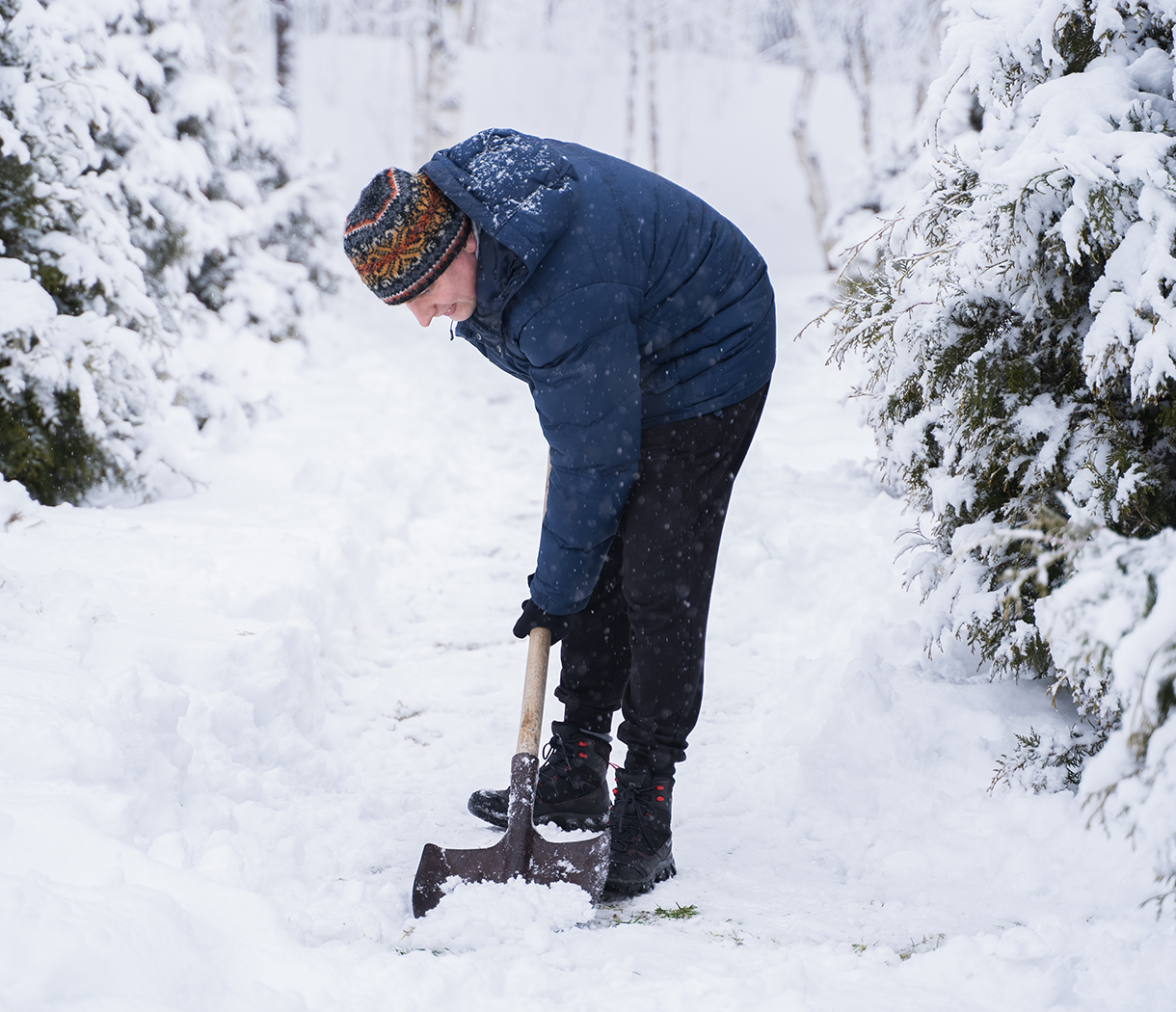
Snow shoveling involves more physical effort than many people expect. Unlike ordinary walking or light household activities, it combines repetitive lifting, pushing, carrying, and rotational movements. These actions require coordination between the upper and lower body, placing repeated demands on muscles, tendons, and joints.
1.1 The Physical Demands of Repetitive Snow Removal
During snow removal, the body repeatedly moves against resistance. Lifting a shovel filled with snow requires the arms and shoulders to support the load while the abdominal and back muscles stabilize the trunk. At the same time, the legs provide balance and generate much of the force needed to lift and move the snow.
Wet or compacted snow creates an even greater physical challenge because it weighs more than freshly fallen snow. Repeating these movements without adequate rest can increase muscular fatigue and reduce movement efficiency. Consequently, the body may experience soreness or stiffness after the activity, particularly when the workload exceeds a person’s usual activity level.
1.2 Why the Shoulders and Lower Back Experience More Discomfort
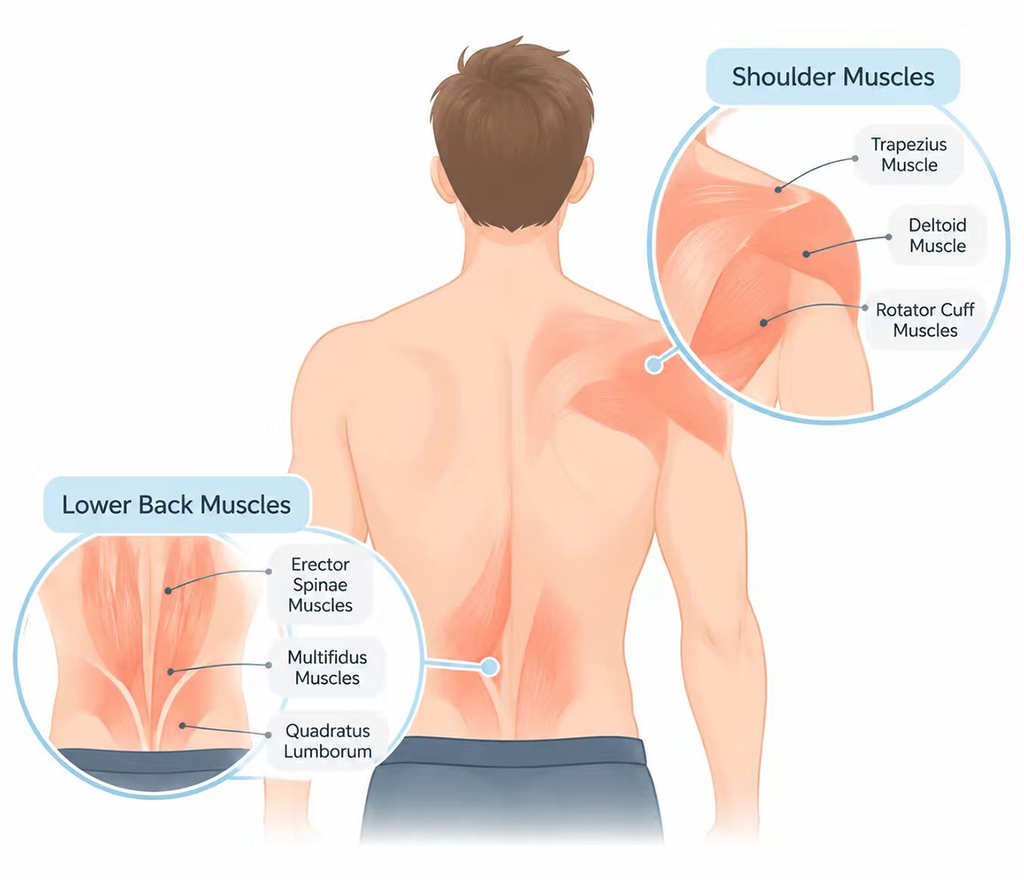
The shoulders and lower back play important roles in nearly every shoveling movement. The deltoid muscles, trapezius, rotator cuff muscles, and surrounding stabilizing structures help control the arms and maintain shoulder stability.
Meanwhile, the erector spinae, multifidus, and quadratus lumborum support the lumbar spine during bending, lifting, and trunk rotation. Repeatedly lifting heavy snow away from the body can increase the mechanical load on these structures.
When people combine heavy lifting with twisting or sudden movements, the risk of muscle strain may increase. These factors help explain why shoulder and lower back discomfort frequently follows demanding snow removal activities.
2. Common Shoulder and Lower Back Problems After Shoveling Snow
Not all discomfort after snow shoveling indicates an injury. Some symptoms reflect temporary muscular fatigue, while others may suggest irritation or damage to specific musculoskeletal structures. Recognizing the differences helps people understand when ordinary recovery measures may be appropriate and when professional evaluation is necessary.
2.1 Shoulder Muscle Fatigue and Rotator Cuff Irritation
The shoulder joint has a wide range of motion, which allows people to lift, push, and move objects in different directions. However, this flexibility also makes the shoulder dependent on surrounding muscles and tendons for stability.
Repeatedly lifting a heavy shovel can increase the workload on the deltoids and rotator cuff muscles, including the supraspinatus, infraspinatus, teres minor, and subscapularis. These structures help stabilize the humeral head and coordinate shoulder movement.
After prolonged activity, some people notice tenderness around the shoulder, reduced comfort when raising an arm, or stiffness during overhead movements. Although these symptoms may reflect temporary muscular fatigue, persistent pain or noticeable weakness can indicate a more significant problem, such as rotator cuff injury or tendinopathy.
2.2 Lower Back Strain and Lumbar Muscle Tension
The lumbar region supports much of the body’s upper-body weight and helps maintain trunk stability. During snow shoveling, the lower back works continuously to control bending, lifting, and changes in body position.
Repeated forward bending can increase the workload on the lumbar extensor muscles. Sudden twisting while holding a loaded shovel may also place additional stress on the surrounding soft tissues.
Common symptoms include localized lower back soreness, muscle tightness, discomfort when standing upright, and reduced flexibility during bending. In some situations, repetitive loading may aggravate existing lumbar conditions.
However, pain that travels down the leg, numbness, progressive weakness, or changes in bladder or bowel control require medical attention rather than routine recovery approaches.
2.3 Delayed-Onset Muscle Soreness and Physical Fatigue
Another common response to strenuous snow removal is delayed-onset muscle soreness (DOMS). This type of discomfort typically develops several hours after unfamiliar or demanding physical activity and may become more noticeable over the following one to three days.
DOMS can involve muscle tenderness, temporary stiffness, and reduced comfort during movement. It often affects muscle groups that performed repeated or unfamiliar work.
Unlike an acute muscle injury, ordinary DOMS generally improves gradually. Nevertheless, severe pain, significant swelling, unusual weakness, or symptoms that continue to worsen deserve professional assessment.
3. How CO₂ Cryotherapy Supports Localized Muscle Recovery
After strenuous winter activities, people often look for ways to manage localized discomfort without placing additional demands on already fatigued muscles. CO₂ cryotherapy is one approach that uses controlled cooling to target specific body areas.
3.1 Understanding CO₂ Cryotherapy and Localized Cooling
CO₂ cryotherapy uses carbon dioxide as a cooling medium to lower the temperature of a targeted body area. Unlike whole-body cryotherapy, which exposes a much larger portion of the body to cold temperatures, localized CO₂ treatments focus on selected regions.
This approach allows practitioners to direct cooling toward areas such as the shoulders, upper back, and lumbar region, depending on individual needs and treatment suitability.
The cooling stimulus influences sensory nerve activity and local circulation. It may temporarily reduce the perception of discomfort and provide a soothing sensation in areas affected by muscular fatigue.
The exact physiological response depends on the cooling method, temperature, exposure duration, and individual characteristics. Therefore, localized CO₂ cryotherapy should be understood as a supportive recovery option rather than a guaranteed solution for musculoskeletal injuries.
3.2 Potential Benefits for Shoulder and Lower Back Comfort with CO₂ Cryotherapy
Following repetitive snow removal, the shoulder and lower back may feel tense, tired, or sensitive. Localized cooling can offer temporary relief by influencing pain perception and reducing local tissue temperature.
For the shoulders, targeted cooling may help manage temporary discomfort associated with overworked muscles. In the lower back, it may provide a soothing sensation around fatigued lumbar muscles.
Cryotherapy also has a recognized role as an adjunctive option in certain musculoskeletal care settings. However, clinical guidelines emphasize that evidence varies across conditions and cooling methods. Its effects should not be interpreted as proof of faster tissue repair or complete injury recovery.
The main goal is to support short-term comfort while allowing the body to follow its natural recovery process.
3.3 CO₂ Cryotherapy Compared with Traditional Cold Therapy
Traditional cold therapy usually involves ice packs, cold compresses, or other cooling materials applied to the skin. These methods are widely used for temporary discomfort following physical activity.
CO₂ cryotherapy differs mainly in its cooling medium and delivery method. A professional device can direct a controlled stream of carbon dioxide toward a selected area, whereas a conventional ice pack cools the skin through direct contact.
Both approaches aim to lower local tissue temperature, but their cooling characteristics and application protocols differ.
Importantly, more intense cooling does not automatically produce better results. Appropriate application, skin protection, individual tolerance, and professional guidance remain essential considerations.
4. Comparing CO₂ Cryotherapy with Other Recovery Approaches
Different recovery methods address physical discomfort through different mechanisms. Understanding these differences helps people choose approaches that complement their individual needs rather than expecting one method to address every aspect of recovery.
4.1 CO₂ Cryotherapy and Laser Therapy
Laser therapy, particularly low-level laser therapy (LLLT), is another modality used in musculoskeletal rehabilitation. It belongs to a broader category known as photobiomodulation (PBM), which uses specific wavelengths of light to influence biological activity in targeted tissues.
Unlike cryotherapy, which relies on cooling, photobiomodulation uses light energy to produce photochemical effects. Researchers have explored its potential influence on cellular signaling, mitochondrial activity, and tissue-related responses.
In rehabilitation settings, practitioners may consider laser therapy for selected musculoskeletal conditions, depending on the clinical presentation and available evidence.
CO₂ cryotherapy and laser therapy therefore serve different purposes. Cooling primarily influences local temperature and sensory responses, while photobiomodulation uses light-based energy to interact with cellular structures.
Neither approach should replace an appropriate clinical assessment. Their suitability depends on the individual’s symptoms, medical history, and treatment goals.
4.2 The Role of Gentle Movement and Physical Rest
Although specialized recovery modalities may help manage discomfort, basic recovery habits remain important after strenuous snow removal.
Adequate rest gives fatigued muscles an opportunity to recover. Gentle movement, when comfortable, can also help maintain mobility and reduce the feeling of stiffness associated with prolonged inactivity.
For example, comfortable shoulder movements, gentle walking, and controlled trunk movements may help people gradually return to their usual activity levels.
However, people should avoid forcing painful movements or returning immediately to demanding physical work. If symptoms suggest an injury, a physical therapist or healthcare professional can recommend an appropriate rehabilitation plan.
4.3 Why Individualized Recovery Matters
People respond differently to cold exposure and physical activity. Factors such as age, previous injuries, circulation, skin sensitivity, and existing musculoskeletal conditions can influence recovery needs.
For example, someone with ordinary muscle fatigue may tolerate localized cooling differently from someone with a significant shoulder injury or chronic lumbar condition.
A qualified practitioner can assess the affected area, review relevant health considerations, and determine whether localized CO₂ cooling is appropriate.
People with impaired sensation, poor circulation, cold hypersensitivity, or certain skin conditions should seek professional advice before undergoing cryotherapy. Treatment should stop if unusual pain, excessive numbness, or adverse skin changes occur.
5. Preventing Shoulder and Lower Back Discomfort During Winter Snow Removal
Recovery is only one part of maintaining physical comfort during winter. Paying attention to movement patterns and workload can also help reduce unnecessary stress on the musculoskeletal system.
5.1 Maintain Proper Lifting Mechanics
Body positioning plays an important role in reducing excessive mechanical stress during snow removal. Keeping the shovel close to the body, bending the knees, and using the leg muscles can help distribute the workload more effectively.
Whenever possible, pushing snow is generally less demanding than repeatedly lifting heavy loads. People should also avoid twisting the trunk while carrying a loaded shovel. Instead, turning the feet and moving the whole body can reduce unnecessary rotational stress on the lumbar region.
Using a shovel that suits personal strength and body size may further improve movement efficiency.
5.2 Take Breaks and Avoid Excessive Physical Exertion
Snow removal can become strenuous quickly, particularly when snowfall is heavy or the snow has become wet and compacted.
Taking regular breaks helps prevent excessive fatigue and gives the body time to recover between periods of activity. Staying hydrated and wearing suitable winter clothing also contribute to overall physical comfort.
People who are physically inactive or have existing cardiovascular or musculoskeletal conditions should discuss strenuous snow removal with a healthcare professional before beginning.
Most importantly, stop the activity if unusual pain, dizziness, chest discomfort, or shortness of breath develops. Chest pain or other possible cardiac symptoms require urgent medical attention.
5.3 Recognize When Professional Evaluation Is Necessary
Temporary muscle soreness usually improves over time. However, not every symptom after snow shoveling represents ordinary fatigue.
Persistent shoulder pain, restricted movement, significant lower back pain, or symptoms that interfere with everyday activities may require evaluation by a qualified healthcare professional.
Severe back pain accompanied by progressive leg weakness, saddle numbness, or bladder or bowel changes requires urgent medical assessment. Similarly, a sudden loss of shoulder strength or an inability to raise the arm warrants prompt evaluation.
A professional assessment can help distinguish muscular fatigue from tendon injuries, joint problems, or spinal conditions. This distinction is important when considering whether CO₂ cryotherapy or another supportive modality is suitable.
ЧАСТО ЗАДАВАЕМЫЕ ВОПРОСЫ
1. Can CO₂ cryotherapy help with shoulder soreness after snow shoveling?
Localized CO₂ cryotherapy may help temporarily ease shoulder discomfort associated with physical exertion. However, persistent pain or weakness requires professional evaluation.
2. Can CO₂ cryotherapy help relieve lower back stiffness?
It may provide temporary comfort in targeted areas affected by muscular fatigue. Its suitability depends on the cause of the stiffness and individual health factors.
3. How is CO₂ cryotherapy different from an ice pack?
CO₂ cryotherapy uses a controlled carbon dioxide cooling stream, while ice packs rely on direct contact with a cold material. Both provide localized cooling but use different delivery methods.
4. Is CO₂ cryotherapy the same as laser therapy?
No. CO₂ cryotherapy uses localized cooling, while laser therapy uses specific light wavelengths to produce photobiomodulation effects. They have different mechanisms.
5. Can I use CO₂ cryotherapy if I have a shoulder injury?
A healthcare professional should assess the injury first. Cryotherapy may provide supportive comfort in selected situations, but it does not replace appropriate injury management.
6. How long does muscle soreness after snow shoveling usually last?
Ordinary delayed-onset muscle soreness often improves within several days. Severe, worsening, or persistent symptoms may indicate an injury that needs evaluation.
7. Is localized CO₂ cryotherapy suitable for everyone?
No. People with circulation problems, reduced skin sensation, cold sensitivity, or certain medical conditions should obtain professional guidance before treatment.
Заключение
Snow shoveling places repeated demands on the shoulders, lower back, and surrounding muscle groups, making post-activity fatigue and discomfort relatively common during winter. Understanding the biomechanics of snow removal and recognizing the difference between ordinary soreness and a potential injury can help people make better decisions about their recovery. CO₂ cryotherapy offers a localized cooling approach that may temporarily ease muscular discomfort and complement other recovery strategies when appropriate. Alongside adequate rest, gentle movement, safe lifting habits, and professional guidance, targeted cooling can form part of a broader approach to maintaining physical comfort throughout the winter season.
Ссылки
- American Academy of Orthopaedic Surgeons. Prevent Snow Shoveling and Snowblowing Injuries.
https://orthoinfo.org/staying-healthy/prevent-snow-shoveling-and-snowblowing-injuries
- Mayo Clinic Health System. Tips for Safe Snow Shoveling.
- Clinical Practice Guidelines for Pain Management in Acute Musculoskeletal Injury. Journal of Orthopaedic Trauma.
https://pmc.ncbi.nlm.nih.gov/articles/PMC6485308
- International Association for the Study of Pain. Photobiomodulation and Thermal Therapies.
https://www.iasp-pain.org/resources/fact-sheets/photobiomodulation-and-thermal-therapies
- Canadian Centre for Occupational Health and Safety. Shovelling – Snow.
https://www.ccohs.ca/oshanswers/ergonomics/snow_shovelling.html