Introdução
Flyball and disc dogs push their bodies to remarkable limits. These canine athletes sprint, leap, catch, pivot sharply, and land repeatedly—often at top speed with explosive energy. While the sport brings joy and a sense of purpose to many active dogs, the physical demands also carry a real risk. Among the most concerning patterns in these sports is the high frequency of shoulder injuries, which can quietly develop from cumulative microtrauma before an owner even notices a change in performance. A 2023 study investigating injuries in flyball dogs found that the shoulder region ranked as the most common injury site, affecting approximately 17% of injured dogs, closely followed by injuries to the back and trunk at nearly 16%. This article explores why shoulder soft tissue injuries occur so frequently in flyball and disc dogs, how CO₂ cryotherapy may support post-activity tissue management, and how owners can incorporate this approach alongside other recovery strategies to help their dogs stay active and comfortable over the long term.
1. The Physical Demands of Flyball and Disc Sports
Understanding the mechanical challenges these sports place on a dog‘s shoulder helps clarify why injuries are so common. The shoulder absorbs a tremendous amount of force with every jump, turn, and landing, often in ways that go unnoticed until subtle signs appear.
1.1 Understanding the Flyball Sequence
A flyball race involves multiple high-intensity elements packed into just a few seconds. The dog sprints down a lane, clears a series of four hurdles, triggers a spring-loaded box with their feet, catches the ejected ball, and then turns 180 degrees to race back over the same hurdles. Among these components, the flyball box turn is widely considered the greatest injury risk for competitors. The athlete must reduce forward velocity to zero while retrieving the ball, generate propulsive force through the hindlimbs, rotate the body, land squarely, and re-accelerate—all within a fraction of a second. This sequence exposes the forelimbs, particularly the shoulder complex, to extraordinary eccentric loading.
1.2 How Repetitive Jumping and Landing Affect the Shoulder
Each time a disc dog leaps to catch a flying disc or a flyball dog lands after clearing a hurdle, the forelimbs absorb landing forces that travel upward through the carpus, elbow, and shoulder joint. Landing with the forelimb outstretched creates a high-moment arm at the shoulder, placing significant tension on the tendons that stabilize the joint. When these landing patterns repeat hundreds or thousands of times over a competition season, the cumulative effect on tendon tissue becomes substantial. Small, microscopic tears that would heal with adequate rest instead accumulate faster than the body can repair them, eventually leading to degenerative changes within the tendon structure.
1.3 The Turning Challenge
Turning places a different set of demands on the shoulder. During a sharp pivot—whether a flyball dog turning off the box or a disc dog changing direction to track a disc—the inside forelimb bears proportionally more weight while the shoulder joint rotates under load. Research examining flyball injury patterns found a clear association between the direction of turn and the side of injury. Shoulder injuries most frequently occurred on the limb on the inside of the turn. By contrast, hip injuries showed the opposite pattern, occurring more often on the outside limb. This asymmetrical loading suggests that the repetitive nature of turning in the same direction over many runs creates predictable patterns of tissue strain that can lead to chronic overuse injuries on one side of the body.
2. Common Shoulder Soft Tissue Injuries in Sporting Dogs
Several specific tendon conditions affect the canine shoulder in flyball and disc dogs, each with its own pattern of injury and typical presentation. Understanding what these conditions are helps owners recognize potential problems and seek appropriate guidance.
2.1 Bicipital Tenosynovitis
The biceps brachii tendon originates on the scapula and runs through the shoulder joint within a groove called the bicipital groove, where it attaches to the radius and ulna. This tendon allows the shoulder to extend and the elbow to flex simultaneously. In flyball and disc dogs, repetitive jumping and landing produce repeated traction on the biceps tendon at its origin. Over time, this chronic overloading can inflame the tendon and its surrounding sheath, a condition known as bicipital tenosynovitis. Dogs with this problem often show pain on shoulder flexion during veterinary examination and may have difficulty with activities that require full extension of the forelimb, such as reaching forward to catch a disc or pushing off the flyball box.
2.2 Supraspinatus Tendinopathy
The supraspinatus tendon serves as one of the primary lateral stabilizers of the canine shoulder joint. This tendon becomes particularly vulnerable during landing from a jump with the forelimb outstretched and during quick jump-turn combinations. In dogs, chronic repetitive activity is the most common cause of supraspinatus tendinopathy. As the tendon suffers repeated strain, microscopic disruption of tendon fibers creates a core lesion within the tissue. In chronic cases, a nodule of scar tissue called a supraspinatus bulge may develop and compress the adjacent biceps tendon, further increasing discomfort. Research indicates that a high proportion of dogs with this condition fail to improve with rest and nonsteroidal anti-inflammatory drugs alone, making appropriate supportive management especially important.
2.3 Infraspinatus and Teres Minor Involvement
The infraspinatus muscle, responsible for external rotation of the shoulder, frequently sustains damage in dogs making sharp, repetitive turns. Agility and flyball dogs often experience this pattern. In some cases, the teres minor muscle may also develop myopathy, presenting as consistent lameness with pain on extension of the shoulder. For dogs whose competition careers depend on maintaining full shoulder range of motion and explosive turning ability, even relatively mild involvement of these structures can noticeably affect performance.
2.4 Why These Injuries Often Go Undetected Early
One of the challenges with shoulder soft tissue injuries in sporting dogs is how subtle they can be in early stages. Rather than showing obvious lameness, a dog might take slightly shorter strides, seem a bit slower on turns, or appear to warm out of stiffness after the first few runs. Some affected dogs shift weight subtly away from the painful shoulder and may slip onto the sound shoulder during tight turns because the injured joint lacks the expected stability. These changes can be easy to dismiss as an off day or lack of motivation. However, delaying attention allows the underlying tissue damage to progress, making recovery potentially longer and more complicated.
3. How CO₂ Cryotherapy Supports Soft Tissue Management
CO₂ cryotherapy offers a controlled cooling approach that may help dogs manage post-activity sensations and support healthy circulation in tired or strained shoulder tissues. Understanding how this therapy works can help owners decide when and how to use it as part of a broader recovery plan.
3.1 The Physiology of Controlled Cooling
When cold contacts the skin overlying a strained tendon or fatigued muscle, several physiological responses occur. Specialized cold receptors called TRPM8 channels in the skin activate and send signals to the nervous system. This activation may temporarily reduce how the body perceives post-activity tissue discomfort, making recovery more comfortable without medication. The cold also triggers a biphasic vascular response: vessels narrow, then widen as tissue rewarms. This cycle supports circulation, helping deliver oxygen and remove metabolic waste accumulated during intense exercise.
3.2 Targeted Cooling for the Shoulder Region
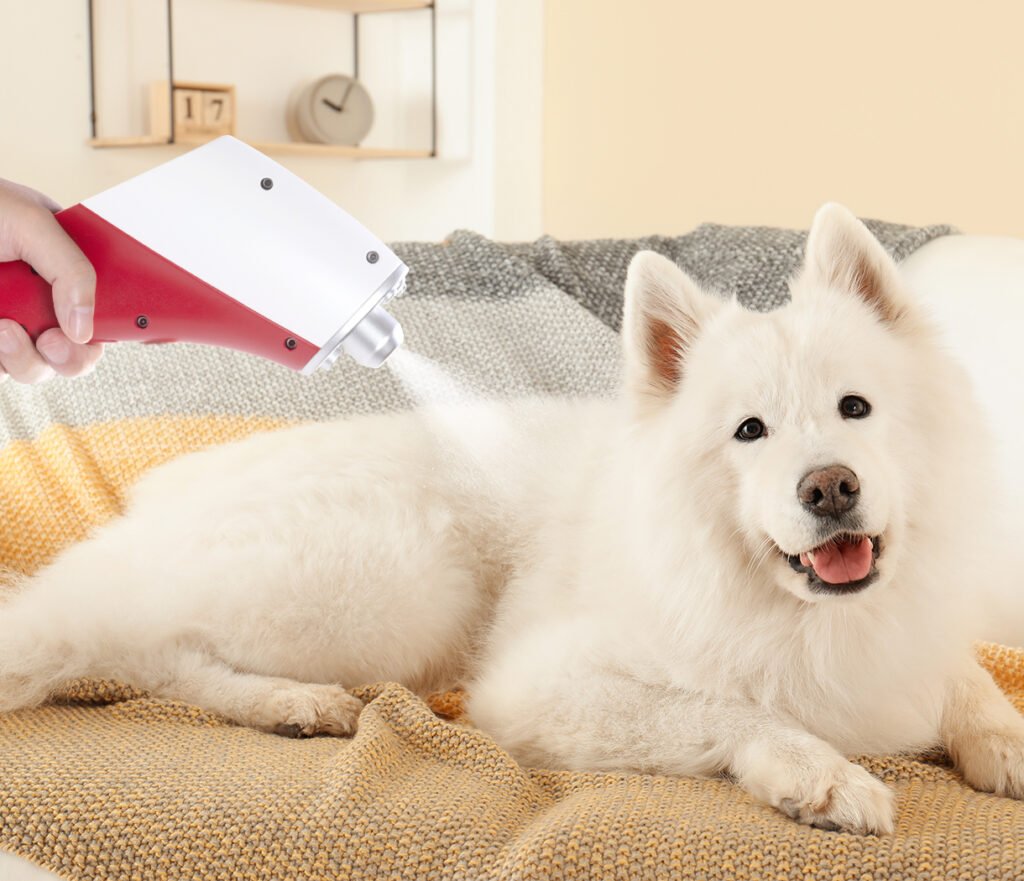
One advantage of CO₂ cryotherapy is precise, dry cooling without prolonged contact. For a dog recovering from competition, a practitioner can direct the gas stream to the shoulder, focusing on the supraspinatus or biceps tendon as needed. This targeted approach avoids unnecessary cooling of surrounding tissues. The dry, quick session (just a few minutes) fits easily between runs and causes no distress to the dog.
3.3 Managing Post-Activity Sensations
After a day of intense training or competition, microscopic tissue stress naturally accumulates within the shoulder tendons. This normal response to loading represents the body’s way of signaling that rest and recovery are needed. CO₂ cryotherapy may help manage post-activity sensations by temporarily slowing nerve conduction in the treated area. This can reduce the intensity of discomfort signals reaching the brain, making the recovery window after training more comfortable. It does not eliminate natural feedback but may help the dog adhere better to recommended rest periods.
3.4 Complementary, Not Standalone
CO₂ cryotherapy does not directly repair torn tendon tissue. Tendon healing depends on rest, rehabilitation exercises, nutrition, and the body‘s own repair mechanisms. What controlled cooling can do is help manage post-activity sensations that might otherwise make a dog reluctant to rest or do rehab. This supportive tool can improve compliance with the overall recovery plan.
4. Supporting Your Dog‘s Shoulder Health Between Competitions
A thoughtful approach to shoulder health extends beyond any single therapy. Consistent daily habits and training practices play a key role in helping active dogs stay sound.
4.1 The Importance of Proper Warm-Ups
Just as human athletes warm up before competition, canine athletes benefit significantly from a structured warm-up routine. Jumping straight into intense runs or high tosses without preparation leaves the shoulder tendons cold and less elastic, raising injury risk. A proper warm-up includes several minutes of light walking or trotting, followed by dynamic movements like slow weaves or gentle turns. This brief preparation increases blood flow and tissue elasticity, helping reduce the chance of injury during high-intensity activity.
4.2 Cross-Training and Conditioning
Engaging the same movement patterns over and over trains specific muscle groups but also overworks specific tendons. Adding variety to a dog‘s exercise routine distributes the mechanical demands across different anatomical structures. For a flyball or disc dog, cross-training might include swimming, hill walking, balance work on wobble boards, and strength-building exercises like front-feet-on-a-ball push-ups. These activities use the shoulder in slightly different ways, supporting overall strength without concentrating repetitive stress on the same tendon origins. Well-conditioned dogs with balanced muscle development around the shoulder tend to handle the demands of competition more effectively than those who train exclusively on sport-specific skills.
4.3 Recognizing Early Signs of Shoulder Strain
Paying attention to subtle changes in a dog‘s movement can help catch problems before they become significant. An owner might notice that their dog seems to shift weight off one forelimb when standing, takes slightly shorter strides on that side, or appears hesitant to jump into the car after practice. Some dogs with developing shoulder tendinopathy show a characteristic warm-up lameness—appearing stiff for the first few runs of the day but improving as they move. Others may show changes in their turning mechanics, such as slipping onto the good shoulder during sharp pivots. Keeping a simple log of how the dog moves before, during, and after training can help an owner track patterns and share useful observations with a veterinarian.
4.4 Allowing Adequate Recovery Time
Rest days serve a genuine physiological purpose. Tendon tissue requires time to repair the microdamage that accumulates during training, and this repair process happens primarily during periods of reduced activity. For active sporting dogs, scheduling at least one or two rest days per week allows the shoulder tendons to recover fully before the next training session. After a tournament or a particularly demanding practice, additional recovery time may be appropriate. Some owners find that alternating high-intensity days with low-intensity conditioning days provides a sustainable balance that keeps their dog fit without pushing the tendons beyond their healing capacity.
5. Integrating CO₂ Cryotherapy Into Your Dog’s Recovery Routine
For owners who choose to use CO₂ cryotherapy as part of their dog’s shoulder care plan, thoughtful integration with other recovery practices tends to produce the best results.
5.1 When to Apply Cryotherapy
The timing of cooling matters. Many owners find that using CO₂ cryotherapy immediately after intense training or competition provides the most value. During this post-activity window, the shoulder tissues have accumulated microdamage from running, jumping, and turning. Controlled cooling at this point may help manage post-activity sensations and support the biphasic vascular response that enhances circulation during rewarming. Some owners also use cryotherapy on rest days as maintenance. However, do not use cryotherapy immediately before activity, as cooling temporarily alters nerve conduction and tissue elasticity, which may affect performance or increase injury risk if intense exercise follows too soon.
5.2 Working With a Qualified Practitioner
While the concept of CO₂ cryotherapy is straightforward, proper application requires attention to safety and technique. A qualified practitioner knows how to set appropriate distance from the skin, duration of treatment, and movement patterns across the shoulder region to achieve effective cooling without over-treating. Dogs with cold hypersensitivity, open wounds, or active skin infections in the treatment area should not receive cryotherapy. For owners new to the approach, consulting a practitioner experienced in canine sports rehabilitation provides a solid foundation for understanding what to expect and how often treatments should be scheduled.
5.3 Combining Cryotherapy With Other Supportive Measures
CO₂ cryotherapy works best as part of a broader shoulder care routine. Many owners combine it with proper warm-ups, controlled cooldowns, weight management, and regular body condition checks. Maintaining a healthy weight reduces the load on shoulder joints and tendons. For dogs with existing shoulder discomfort, cryotherapy may complement a rehabilitation veterinarian‘s strengthening and stretching program. When used consistently with these measures, it may help dogs feel more comfortable and support better long-term shoulder health.
Frequently Asked Questions
Q1: What are the early signs of shoulder strain in my flyball dog?
Look for shorter strides on one forelimb, stiffness that improves after the first few runs, or hesitation before jumping or turning sharply.
Q2: Is CO₂ cryotherapy safe for all dogs?
Most dogs tolerate it well, but those with cold hypersensitivity or open wounds on the shoulder should not receive treatment. A veterinarian can advise on suitability.
Q3: How soon after exercise should I use cryotherapy?
Using it immediately after training or competition is generally most effective for supporting post-activity recovery.
Q4: Will cryotherapy fix my dog‘s shoulder injury directly?
No. Cryotherapy may help manage post-activity sensations and support circulation, but tendon healing depends on rest, rehabilitation, and the body’s own repair processes.
Q5: How often can I safely use CO₂ cryotherapy on my dog?
Many owners use it after each intense training session. A qualified practitioner can recommend frequency based on your dog‘s specific needs and activity level.
Q6: Can I use cryotherapy at competitions?
Yes. The dry, quick application makes it practical to use between runs, helping manage post-activity sensations during multi-day events.
Conclusão
Flyball and disc dogs place extraordinary demands on their shoulder tendons through repeated jumping, landing, turning, and sprinting. The shoulder is the most common injury site in flyball dogs, with bicipital tenosynovitis and supraspinatus tendinopathy affecting many active canine athletes. These injuries stem from chronic repetitive loading, not acute trauma. CO₂ cryotherapy offers a supportive tool that may help manage post-activity sensations and support healthy circulation. It does not directly heal tendon damage but may improve a dog‘s comfort during recovery, making it easier to follow rest and rehabilitation plans. Combined with proper warm-ups, cross-training, and early monitoring, owners can help their sporting dogs stay active and comfortable.
Referências
Blake, S., Melfi, V., Tabor, G., & Wills, A. P. (2023). Frequency of injuries and orthopaedic conditions sustained by flyball dogs.
Canapp, S. O. (2021). Supraspinatus Tendinopathy. Veterinary Orthopedic & Sports Medicine Group.
https://sunsethillvet.com/wp-content/uploads/2021/09/VOSM-Supraspinatus-Tendinopathy.pdf
Trafalgar Animal Hospital. (2025). Caring for Your Playful Companion: Protecting Active Pets from Injuries.
Blake, S., Melfi, V., Tabor, G., & Wills, A. P. (2023). Injury Risk Factors Associated With Training and Competition in Flyball Dogs.
https://www.sciencedirect.com/science/article/abs/pii/S1938973623000156
Brunke, M. (2020). Warming up and cooling down, is it REALLY necessary for my dog? Canine Arthritis Resources and Education.