
Einführung
A laboratory bench may seem like a stationary workplace, but for the technician who spends eight or more hours standing on a concrete or epoxy floor, each step by the end of a shift carries a familiar dull ache through the heel. Between juggling samples, monitoring equipment, and entering data, many lab professionals overlook the quiet strain accumulating in their feet. Over time, that subtle ache along the inside of the heel—worse with the first morning steps and lingering after a long day—signals something more than ordinary fatigue. Plantar fasciitis, the most common cause of heel pain in adults, affects a substantial portion of those who stand for extended periods on hard surfaces. For lab technicians seeking relief without relying solely on medication or extended time away from work, CO₂ cryotherapy offers a non‑invasive, drug‑free option that may help manage this stubborn occupational discomfort.
1. Understanding Plantar Fasciitis in the Lab Setting
The plantar fascia is a thick band of connective tissue that runs from the heel bone to the base of the toes, supporting the arch of the foot and absorbing mechanical shock during standing and walking. When this structure undergoes repeated stress, microtears develop at its attachment to the heel, leading to inflammation, degeneration, and the characteristic pain that defines plantar fasciitis. For lab professionals, the daily reality of standing on hard flooring provides exactly the kind of chronic mechanical overload that triggers this condition.
1.1 What the Pain Feels Like
The hallmark symptom of plantar fasciitis is pain along the inside edge of the heel, often near the arch of the foot. Many technicians describe the discomfort as a sharp, stabbing sensation that is most intense with the first few steps after waking or after prolonged sitting. As the foot warms up and the fascia gradually stretches, the pain often subsides temporarily, only to return after a full shift of standing. Some technicians also notice aching that worsens toward the end of the day, a burning sensation along the sole, or tenderness when pressing on the heel pad. The longer the condition persists, the more likely it is to affect walking patterns and overall comfort at work.
1.2 Why Laboratories Are a High‑Risk Environment
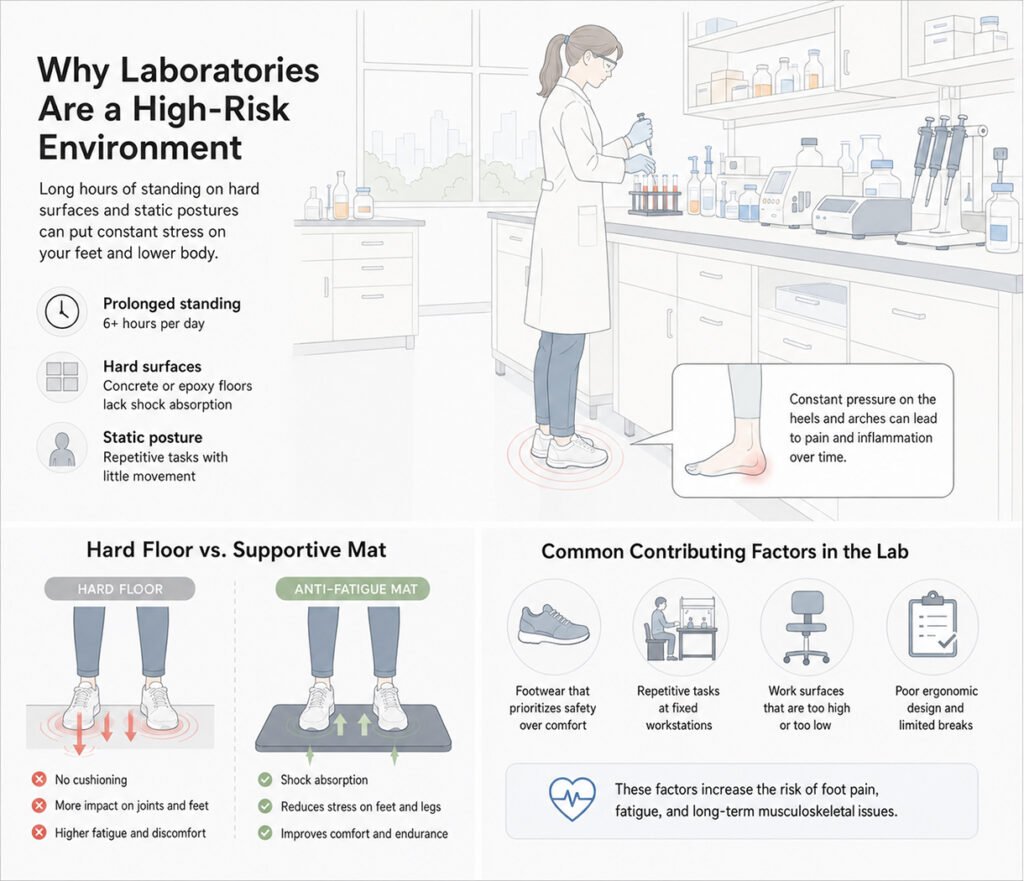
Several factors make the laboratory setting particularly challenging for foot health. The floors in most labs are concrete or epoxy—materials that provide minimal shock absorption compared to wood or carpet. Standing on such surfaces for six or more hours daily may increase the risk of plantar fasciitis. Additionally, the static nature of lab work means that technicians often maintain a relatively fixed standing posture while performing repetitive tasks at biosafety cabinets, fume hoods, or bench tops, further concentrating mechanical stress on the heel. Poorly fitting lab footwear, which may be chosen for protection rather than comfort, adds another layer of strain.
2. The Hidden Burden of Heel Pain in Laboratory Professionals
Musculoskeletal symptoms are surprisingly common among medical laboratory technicians. The cumulative toll of prolonged standing, repetitive movements, and awkward postures extends far beyond foot pain alone, yet heel discomfort often serves as an early warning sign of broader work‑related strain.
2.1 Prevalence of Foot‑Related Issues
Studies examining the work environment of medical laboratory technicians have found that a significant majority report musculoskeletal problems, with the ankle and foot among the most commonly affected areas. While lower back pain and knee discomfort receive more attention in occupational health discussions, foot pain quietly affects a notable proportion of technicians. Poor ergonomic design in laboratories—such as inadequate foot clearance, lack of floor mats, and improperly positioned work surfaces—contributes directly to this problem. Many technicians simply accept heel pain as an unavoidable part of the job, delaying treatment until the condition becomes more difficult to manage.
2.2 The Impact on Daily Work and Quality of Life
Chronic heel pain does more than cause discomfort during standing. It alters how a person walks, leading to compensatory changes in gait that can transfer stress to the knees, hips, and lower back. Technicians with ongoing foot pain may find themselves shifting weight from one foot to the other unconsciously, reducing their efficiency and increasing fatigue. Over time, the persistent ache can affect concentration during delicate tasks that require a steady hand, such as pipetting or specimen handling. Beyond the laboratory, heel pain may limit physical activities outside of work, from walking the dog to participating in recreational sports, reducing overall quality of life.
3. How CO₂ Cryotherapy Works for Plantar Fasciitis
Cold application has long served as a home remedy for sore feet, but CO₂ cryotherapy represents a more refined approach. Instead of wrapping an ice pack around the heel and waiting twenty minutes, this method uses pressurized carbon dioxide gas delivered through a specialized applicator to provide rapid, dry, and precisely targeted cooling to the plantar fascia.
3.1 The Physics and Physiology of CO₂ Cooling
When the CO₂ gas exits the applicator, it undergoes rapid expansion that lowers its temperature significantly. This cold gas stream, applied directly to the heel and arch, rapidly draws heat away from the skin and underlying tissues. The body responds to this thermal shock with a series of physiological adjustments. Blood vessels in the treated area constrict—a process called vasoconstriction—which helps limit local blood flow and reduce the accumulation of inflammatory fluid in the fascia. Within a short period after the cold stimulus ends, the blood vessels then dilate more widely than before in a phase known as reactive hyperemia, bringing fresh oxygen and nutrients to the area while carrying away metabolic waste products.
3.2 Effects on Nerve Signaling and Pain Perception
Plantar fasciitis pain involves not only tissue damage but also altered nerve signaling in the heel region. The extreme cold from CO₂ cryotherapy temporarily slows nerve conduction velocity, meaning pain impulses travel more slowly along the nerve fibers. This slowing effect can provide a period of reduced discomfort that allows technicians to move more comfortably during their shift or after returning home. Additionally, the cold stimulus activates cold receptors in the skin that compete with pain pathways for neural bandwidth, further diminishing the perception of heel pain. Many lab professionals report feeling a noticeable difference in foot comfort immediately following a treatment session.
3.3 Reducing Local Inflammation and Supporting Tissue Recovery
Chronic plantar fasciitis involves a degree of low‑grade inflammation at the heel attachment that does not always resolve with rest alone. CO₂ cryotherapy helps modulate this inflammatory environment by influencing the behavior of inflammatory mediators and restoring the semi‑permeability of cell membranes. This modulation supports the body‘s natural healing response without relying on anti‑inflammatory medications, which may carry side effects with long‑term use. By reducing the swelling that can accumulate around the fascia, CO₂ cryotherapy creates conditions more favorable for the tissue to reorganize and recover between shifts.
4. What Lab Technicians Can Expect from CO₂ Cryotherapy
For technicians considering adding CO₂ cryotherapy to their foot care routine, understanding what a typical treatment involves helps set realistic expectations. The approach is not a one‑time solution but rather a supportive tool that works best when used consistently.
4.1 The Treatment Experience
A localized CO₂ cryotherapy session targeting the heel and arch lasts only a minute or two per foot. The technician remains fully clothed, with the applicator directed at the bare skin of the painful area. Most people describe the sensation as intensely cold but not painful—a dry, tingling cold that passes quickly as the applicator moves in sweeping motions. Unlike ice packs, CO₂ cryotherapy leaves no moisture behind, so the foot stays dry throughout and after the session. The entire treatment fits easily into a lunch break or a brief stop after work, making it practical for busy laboratory professionals.
4.2 When to Use It
The best time to apply CO₂ cryotherapy for plantar fasciitis depends on individual symptom patterns. Some technicians benefit from treatment at the end of a shift, when the foot feels most tired and inflamed, allowing the cooling effects to support overnight recovery. Others prefer a session before the start of the workday, as the temporary pain‑relieving effects may make the first few hours of standing more comfortable. Many find that consistent use—such as two or three sessions per week—provides more sustained improvement than occasional application. The effects from a single session can last for several hours, providing a window of improved comfort for daily activities.
4.3 Combining with Other Self‑Care Measures
CO₂ cryotherapy works most effectively when laboratory technicians also address other factors that influence foot health. Wearing supportive footwear with adequate cushioning reduces the repetitive impact on the heel. Using anti‑fatigue mats at standing workstations provides a layer of shock absorption that concrete floors lack. Taking brief micro‑breaks to shift weight or walk a few steps helps interrupt prolonged static loading of the fascia. Gentle stretching of the calf muscles and plantar fascia before the first morning steps can reduce the intensity of that initial pain. These simple habits create a more favorable environment for the foot, allowing the cryotherapy to support the body‘s natural recovery processes.
5. Practical Tips for Lab Professionals to Protect Their Feet
Preventing plantar fasciitis or keeping it from worsening requires attention to both workplace conditions and personal habits. Laboratory technicians can take several practical steps to reduce their risk of chronic heel pain.
5.1 Choosing the Right Footwear
The shoes worn in the laboratory should provide firm arch support and adequate heel cushioning. Many lab‑appropriate shoes prioritize chemical resistance and slip protection over ergonomic design, but technicians can look for brands that combine safety features with supportive insoles. Replacing shoes every six to twelve months, depending on wear, ensures that cushioning material has not lost its shock‑absorbing properties. Some technicians benefit from adding over‑the‑counter arch supports or custom orthotics to their existing lab shoes.
5.2 Using Floor Mats and Adjusting Workstation Height
Requesting anti‑fatigue mats for standing workstations can significantly reduce the mechanical load on the feet. These mats encourage subtle movement of the leg muscles, which helps pump blood and lymphatic fluid out of the lower extremities. Adjusting the height of work surfaces to keep the wrists at a comfortable level often has the additional benefit of allowing the technician to stand with a more neutral posture, reducing unnecessary tension in the feet and legs. Even small adjustments to the laboratory environment can make a meaningful difference over time.
5.3 Stretching and Strengthening Exercises
A simple routine of calf stretches and plantar fascia stretches performed daily can help maintain tissue flexibility and reduce tension at the heel attachment. Rolling a frozen water bottle or a tennis ball under the foot provides a combination of massage and cold therapy. Strengthening the intrinsic muscles of the foot—through exercises such as towel curls or marble pick‑ups—creates a more resilient arch that tolerates standing demands better. These exercises should be performed without sharp pain, starting gently and progressing slowly over weeks.
FAQ
Q1: Is CO₂ cryotherapy painful for plantar fasciitis?
Most lab technicians describe a strong cold sensation that is intense but not painful. The applicator moves continuously, so no single spot stays cold for more than a moment.
Q2: How soon after a session will I feel less heel pain?
Many technicians notice reduced discomfort within minutes after the session. The analgesic effects begin quickly, while deeper tissue recovery continues over the following hours.
Q3: How many sessions does a lab technician typically need?
Some technicians use cryotherapy after every shift during high‑demand periods, while others reserve it for days when pain feels particularly limiting. A typical supportive protocol may include two to three sessions per week.
Q4: Can I use CO₂ cryotherapy alongside my regular footwear and floor mats?
Yes. Cryotherapy complements other self‑care measures such as supportive shoes, anti‑fatigue mats, and stretching exercises. It does not replace them but works alongside them.
Q5: Will CO₂ cryotherapy prevent plantar fasciitis from returning?
Cryotherapy helps manage existing symptoms and supports tissue recovery. However, maintaining good footwear, proper workstation ergonomics, and regular stretching is important for long‑term foot health.
Schlussfolgerung
Laboratory professionals dedicate their days to precise, careful work that often requires long hours of standing on unforgiving concrete or epoxy floors. The persistent heel pain that many technicians come to accept as normal is often plantar fasciitis—a condition driven by the very demands of their workplace. For those who have tried ice, rest, or over‑the‑counter measures without lasting relief, CO₂ cryotherapy offers a non‑invasive, drug‑free option that works through rapid cooling, vascular rebound, modulation of nerve signaling, and reduction of local inflammation. When combined with supportive footwear, anti‑fatigue mats, and consistent stretching, CO₂ cryotherapy may help lab professionals reduce their heel discomfort and stay focused on the important work they do each day.
Referenzen
Ergonomics in Medical Laboratories: A Systematic Review
https://pubmed.ncbi.nlm.nih.gov/32456789
Work‑Related Musculoskeletal Disorders Among Medical Laboratory Technicians
https://www.researchgate.net/publication/345678901
Cryotherapy for Plantar Fasciitis: A Practical Guide
https://www.localcryotherapy.com/plantar-fasciitis-treatment
CO₂ Cryotherapy Mechanisms and Clinical Applications
https://www.localcryotherapy.com/how-co2-cryotherapy-works
Preventing Heel Pain in Standing Occupations