Einführung
Dog trainers spend significant time demonstrating movements, guiding animals, and managing physically active training environments. From obedience instructors to professional canine behavior specialists, daily training sessions often involve walking, standing, repetitive gestures, and frequent interaction with animals. These activities require continuous use of the muscles, joints, and soft tissues, especially in areas such as the shoulders, arms, wrists, and lower body. CO₂ Cryotherapy, also known as localized carbon dioxide cryotherapy, is a modern cooling technology that uses controlled carbon dioxide gas to provide targeted cold stimulation. For dog trainers who want to support physical comfort and maintain their active working routines, localized cryotherapy can be considered as part of a broader wellness and recovery approach combined with proper movement habits, stretching, and professional guidance.
1. Understanding the Physical Demands of Professional Dog Training
Dog training involves much more than verbal instruction. Professionals often rely on body movements, repeated demonstrations, and physical coordination to communicate with animals effectively.
1.1 Why Dog Trainers Experience Repetitive Physical Demands
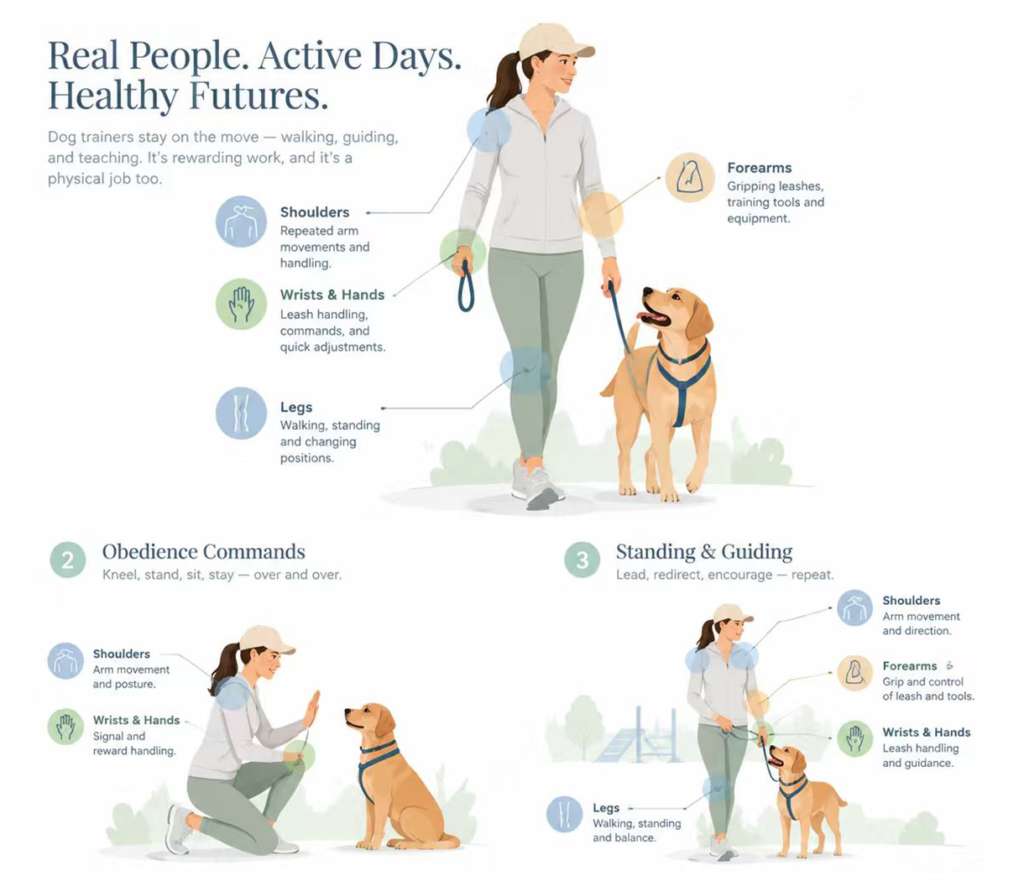
Professional dog trainers frequently perform repeated movements throughout the day, including walking with dogs, demonstrating commands, handling training equipment, and maintaining control during active sessions.
Unlike office-based occupations, dog training requires continuous movement and physical interaction. Trainers may spend several hours outdoors, changing positions frequently, and adapting their movements based on animal behavior.
These repeated activities can place ongoing demands on areas such as the wrists, forearms, shoulders, hips, and legs. Maintaining mobility and physical readiness becomes an important part of supporting long-term professional performance.
1.2 Common Areas of Physical Stress During Canine Training Activities
Different dog training activities require different movement patterns.
For example, obedience training may involve frequent leash handling and hand control, while agility training often requires trainers to move quickly, demonstrate commands, and coordinate with dogs during obstacle exercises.
Common areas that trainers may focus on include:
- Hands and wrists from repeated leash control
- Forearms from gripping and handling equipment
- Shoulders from repetitive arm movements
- Lower body areas from walking and standing
A personalized recovery routine can help trainers manage the physical requirements associated with daily canine training activities.
1.3 The Importance of Recovery for Long-Term Canine Professionals
Many dog trainers build careers around daily physical activity. Whether working independently, operating training facilities, or participating in competitive canine events, maintaining comfortable movement is essential.
Recovery strategies may include:
- Mobility exercises
- Strength training
- Proper warm-up routines
- Rest periods
- Professional recovery technologies
CO₂ Cryotherapy provides another option for professionals exploring localized cooling approaches to complement their existing wellness routines.
2. Understanding CO₂ Cryotherapy Technology
CO₂ Cryotherapy uses controlled carbon dioxide cooling technology to create a targeted cold stimulation effect. Unlike traditional ice-based methods, this technology allows professionals to focus cooling on specific areas.
2.1 What Is Localized CO₂ Cryotherapy?
Localized CO₂ Cryotherapy is a non-invasive cooling approach that applies carbon dioxide gas to selected body areas.
The rapid temperature change creates a controlled cooling environment around the application area. This technology is commonly discussed in sports recovery, wellness, and physical maintenance settings because it allows targeted application rather than whole-body exposure.
For dog trainers, localized cryotherapy may be considered for areas affected by daily physical activity, such as the hands, wrists, shoulders, or legs.
2.2 How CO₂ Cryotherapy Fits Into Professional Recovery Programs
Cold-based recovery methods have long been used in sports and wellness environments because temperature changes can influence the body’s natural response to physical stress.
CO₂ Cryotherapy focuses on controlled cooling rather than general cold exposure. This makes it suitable for professionals who want a targeted approach based on their specific activity patterns.
For canine professionals, this approach may fit into recovery programs designed around:
- Maintaining physical comfort
- Supporting active lifestyles
- Managing daily training demands
2.3 Why CO₂ Cryotherapy Matters for Dog Trainers
Dog trainers do not always experience physical demands in the same areas. Some professionals may use their hands and arms more frequently, while others may spend more time walking or demonstrating movements.
Localized cooling technology allows attention toward specific areas based on individual needs.
This flexibility makes CO₂ Cryotherapy an option for professionals who require adaptable recovery solutions within busy working schedules.
3. CO₂ Cryotherapy Applications for Different Types of Dog Trainers
Dog training includes various professional fields, and each type of trainer may experience different physical demands. Understanding these differences helps professionals choose recovery approaches that fit their working routines.
3.1 Supporting Obedience Trainers During Daily Training Sessions
Obedience trainers often spend many hours teaching basic commands, leash control, and communication techniques between humans and dogs.
Their daily work may include repeated hand movements, frequent walking, and maintaining specific body positions while guiding dogs through exercises.
The hands, wrists, shoulders, and forearms play important roles during leash handling and training demonstrations. CO₂ Cryotherapy for dog trainers can be considered as part of a professional wellness routine to support these frequently used areas.
By combining localized cooling technology with proper movement habits, obedience trainers can better manage the physical requirements of their daily schedules.
3.2 Supporting Agility Trainers During High-Movement Activities
Agility dog training requires trainers to move quickly, demonstrate obstacle courses, and coordinate with dogs during active sessions.
Unlike traditional obedience training, agility instruction often involves:
- Short-distance running
- Quick direction changes
- Repeated demonstrations
- Outdoor training environments
These activities require strong coordination between the upper and lower body.
For agility trainers, localized CO₂ Cryotherapy may provide a targeted approach for areas that experience frequent physical activity, such as legs, shoulders, and lower back.
3.3 Supporting Service Dog Trainers With Long Training Programs
Service dog trainers often work through extended training programs that require patience, consistency, and repeated practice.
Their responsibilities may include:
- Walking with dogs
- Demonstrating commands
- Adjusting training equipment
- Spending long periods in different environments
Because service dog training involves both physical and mental demands, maintaining personal wellness is an important part of professional sustainability.
CO₂ Cryotherapy can be explored as one supportive recovery option for professionals who maintain active training schedules.
4. How Localized CO₂ Cryotherapy Fits Into Canine Professional Wellness
Modern professionals increasingly look for recovery technologies that are practical, targeted, and easy to integrate into busy schedules. Localized CO₂ Cryotherapy provides a focused cooling approach designed for specific body areas.
4.1 Targeted Cooling for Areas Used During Dog Training
Dog trainers do not experience physical stress in identical ways.
A trainer who specializes in puppy training may perform different movements compared with a professional working with service dogs or competition animals.
Localized CO₂ Cryotherapy allows attention toward specific areas based on individual activity patterns.
Common areas that trainers may focus on include:
- Wrist and hand areas from leash control
- Forearms from equipment handling
- Shoulders from repeated movements
- Legs after extended walking
Targeted cooling approaches are often discussed in recovery environments because they allow professionals to focus on selected body regions rather than applying cold exposure generally.
4.2 Supporting Recovery Routines After Outdoor Training Sessions
Many dog trainers work outdoors regardless of weather conditions.
Outdoor training environments may involve:
- Walking on different surfaces
- Standing for long periods
- Repeated demonstrations
- Physical interaction with animals
After active sessions, trainers may include different recovery habits such as stretching, hydration, mobility exercises, and localized cooling methods.
CO₂ Cryotherapy can complement these routines by providing a technology-based cooling option designed around specific areas requiring attention.
4.3 The Role of CO₂ Cryotherapy in Professional Animal Care
Dog trainers focus on animal behavior, communication, and performance, but their own physical condition also influences their ability to work effectively.
A sustainable career requires balancing:
- Training schedules
- Physical activity
- Recovery time
- Personal wellness
Recovery technologies such as localized CO₂ Cryotherapy are becoming part of broader wellness discussions because they provide professionals with additional options for managing the physical demands of active occupations. Cold-based recovery approaches have been widely explored in sports and physical activity settings, with researchers examining how different cryotherapy methods may support recovery-related goals.
5. Building a Long-Term Wellness Strategy for Dog Trainers
Professional dog training requires consistency, patience, and physical involvement. Developing a balanced wellness strategy helps trainers maintain their ability to perform daily responsibilities.
5.1 Combining CO₂ Cryotherapy With Daily Movement Habits
CO₂ Cryotherapy works best when viewed as one part of a complete wellness approach.
Dog trainers can combine localized cooling technology with:
- Regular stretching
- Strength conditioning
- Proper warm-up routines
- Movement awareness
- Recovery periods
A balanced approach allows trainers to address different aspects of physical preparation instead of relying on one single method.
For active professionals, maintaining good movement habits is an important part of supporting long-term career performance.
5.2 Choosing Recovery Methods Based on Training Specialties
Different dog training specialties create different physical requirements.
For example:
- Puppy trainers may perform frequent demonstrations and floor-based activities.
- Agility trainers may experience higher movement demands.
- Service dog trainers may participate in longer training programs.
Understanding personal work patterns helps trainers select recovery strategies that match their professional needs.
Localized CO₂ Cryotherapy provides flexibility because it can focus on specific areas depending on individual routines.
5.3 Supporting the Future of Canine Professional Wellness
The pet care industry continues to expand, creating more professional opportunities for specialized dog trainers.
As training programs become more structured, professionals are paying greater attention to their own physical maintenance.
CO₂ Cryotherapy represents one of the technologies being explored within modern wellness environments, offering a localized cooling approach that fits the needs of professionals with active lifestyles.
By combining technology, healthy movement habits, and professional self-care practices, dog trainers can create a more sustainable approach to their careers.
FAQ
What is CO₂ Cryotherapy for dog trainers?
CO₂ Cryotherapy is a localized cooling technology that uses controlled carbon dioxide gas to provide targeted cold stimulation for selected body areas.
Why might dog trainers consider CO₂ Cryotherapy?
Dog trainers perform repeated movements, handle equipment, and spend long periods standing or walking. Localized cooling may be considered as part of their wellness routine.
Which areas may dog trainers focus on?
Common areas include the wrists, hands, forearms, shoulders, and legs that experience frequent activity during training sessions.
Can CO₂ Cryotherapy replace exercise or professional care?
No. CO₂ Cryotherapy is a supportive wellness technology and should not replace professional medical advice, exercise programs, or rehabilitation plans.
Is CO₂ Cryotherapy only for professional dog trainers?
No. Other animal care professionals and active individuals may also explore localized cooling approaches based on their personal needs.
Schlussfolgerung
Dog trainers dedicate significant time and energy to helping animals learn behaviors, develop skills, and adapt to different environments. This profession requires continuous movement, repeated demonstrations, and physical interaction, making personal wellness an important consideration for long-term career development. CO₂ Cryotherapy provides a localized cooling approach that can be integrated into broader recovery routines for canine professionals who want to support physical comfort after active training sessions. By combining targeted cooling technology with proper movement habits, strength maintenance, and healthy recovery practices, dog trainers can create a balanced strategy to support their demanding and rewarding profession.
Referenzen
Kryostimulation zur Erholung nach dem Training bei Sportlern: Ein Konsens- und Positionspapier
Whole-body Cryotherapy as a Recovery Technique after Exercise: A Review of the Literature
https://pubmed.ncbi.nlm.nih.gov/29161748
The Effect of Local Cryotherapy on Subjective and Objective Recovery Characteristics and Acute Performance in Healthy Athletes
Don’t Lose Your Cool With Cryotherapy: The Application of Phase Change Material for Prolonged Cooling in Athletic Recovery and Beyond
https://pubmed.ncbi.nlm.nih.gov/33345107
Cryotherapy with Carbon Dioxide Hydrate Enhances Immediate Recovery of Muscle Function from Neuromuscular Fatigue
https://www.tandfonline.com/doi/full/10.1080/02640414.2024.2423135