Einführung
Every fighter knows the feeling. You land a clean shot, but you also take one back. The next morning, your knuckles are swollen, your ribs are tender, and that dark purple bruise on your cheek reminds everyone at the gym what you walked into. Bruises and soft tissue trauma are not just cosmetic problems. They slow you down, limit your training, and if left unchecked, can keep you from stepping into the cage or ring when it matters most. Traditional methods like ice packs and rest work, but they take time. And in combat sports, time off the mat means lost momentum. That’s where CO₂ cryotherapy comes in. This guide explains how localized CO₂ cryotherapy can help fighters heal bruises faster, reduce inflammation, and get back to training without missing a beat.
1. The Reality of Bruising and Soft Tissue Trauma in Combat Sports
1.1. Why Fighters Bruise More Than Other Athletes
Bruising, medically called a contusion, happens when blood vessels under the skin rupture from blunt impact, causing blood to pool in the surrounding tissues. In combat sports, impacts come from punches, kicks, knees, elbows, and even accidental collisions during sparring. Fighters also tend to bruise more easily and more deeply than other athletes because the same areas get hit repeatedly during training camps. A shin that checks kicks all week, knuckles that land on foreheads, or ribs that absorb body shots every round—these repeated micro-traumas accumulate. Over time, what starts as a minor bruise can turn into deep tissue damage that limits mobility and causes lingering soreness. For fighters, a bruise isn’t just a mark—it’s a signal that tissue needs time to heal, and time is always in short supply.
1.2. How Bruising Affects Training and Performance
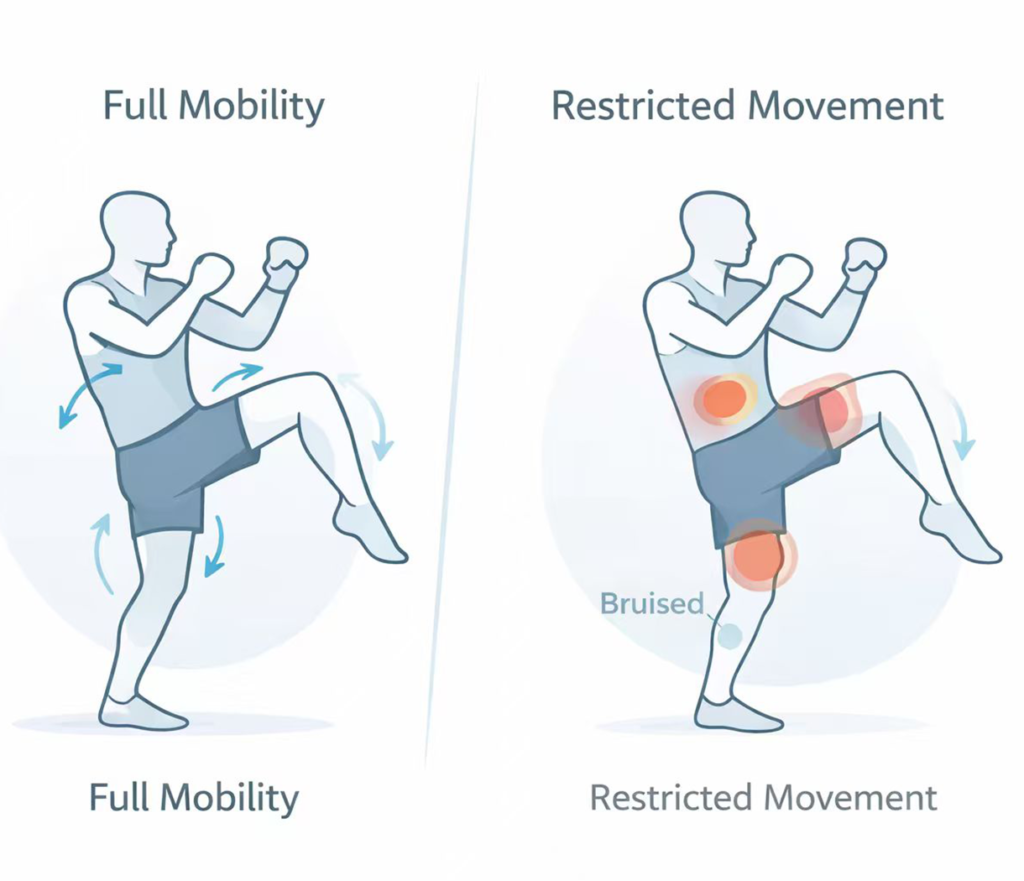
A fresh bruise is tender to the touch. That tenderness changes how you move. You might pull a punch slightly, hesitate before throwing a kick, or avoid certain drills that put pressure on the sore area. These small compensations add up. Over the course of a training session, you are not training at full capacity. Over a training camp, those limitations can mean the difference between feeling sharp on fight night and feeling sluggish. Bruising also affects the muscles underneath the skin. When blood pools in the tissues, it creates pressure and stiffness, reducing range of motion and slowing down reaction time. For a fighter who relies on explosive movement and split-second reactions, even a small loss of speed or mobility matters.
1.3. The Traditional RICE Protocol and Its Limits
The standard approach to bruises and soft tissue injuries is RICE: rest, ice, compression, elevation. Ice packs have been the go-to for decades. But ice packs have real limitations. They warm up quickly, losing their effectiveness after a short time. They do not penetrate deep enough to reach the underlying muscle tissue where much of the bruising actually sits. Ice also numbs the area, which can mask pain without actually speeding up the healing process. Fighters using ice may feel temporary relief, but the underlying inflammation and pooled blood take just as long to resolve. Rest, while necessary, is passive. It does not actively flush out the blood that has leaked into the tissues or accelerate the body’s natural cleanup processes. For fighters with a fight on the calendar, sitting and waiting is not a winning strategy.
2. Why Traditional Recovery Methods Fall Short for Fighters
2.1. Rest Means Lost Momentum
The most common advice for a bad bruise is to take time off. But for a fighter in the middle of camp, taking days off is not an option. Training camps are scheduled down to the day. Missed sessions mean lost conditioning, dulled skills, and a mental edge that slips away. Every day on the sidelines is a day your opponent is getting sharper. Passive rest does nothing to actively repair the damaged tissue or speed up the removal of pooled blood. Fighters need a recovery method that works while they keep training, not one that forces them to choose between healing and staying ready.
2.2. Ice Packs Lack Depth and Consistency
Ice packs are convenient, but they are not designed for the kind of deep, repeated trauma that fighters endure. A standard gel ice pack cools the surface of the skin well, but its effects drop off sharply beyond the outer layers of tissue. For a deep muscle bruise in the thigh or a contusion over the ribs, surface-level cooling does very little. Ice packs also need constant repositioning and reapplication to stay effective, which is impractical when you are trying to get through a full training day. The temperature is not regulated, so you risk either insufficient cooling or, in some cases, skin damage from leaving the pack on too long. Fighters deserve a recovery tool that delivers consistent, deep-reaching cold without the hassle.
2.3. Painkillers Mask Symptoms Without Healing the Cause
Many fighters reach for over-the-counter anti-inflammatory medications when bruising and soreness build up. These drugs can reduce pain and swelling temporarily, but they come with risks when used frequently. Long-term use can cause stomach irritation, kidney stress, and other side effects. More importantly, painkillers do not address the underlying problem. They do not help clear the pooled blood from a contusion. They do not accelerate tissue repair. They simply turn down the pain signals so you feel better while the damage remains. For a fighter who needs to heal, not just feel better, a drug-free solution that actively promotes tissue repair makes far more sense.
3. How CO₂ Cryotherapy Targets Bruising and Soft Tissue Trauma
3.1. What CO₂ Cryotherapy Actually Does
CO₂ cryotherapy uses pressurized carbon dioxide gas delivered through a handheld device to apply intense cold directly to an injured area. The CO₂ exits the nozzle at a very low temperature and cools the skin surface to near freezing almost instantly. Unlike ice packs that only chill the surface, CO₂ cryotherapy penetrates deeper into the tissue, reaching the muscle layers where contusions actually form. The treatment is dry, so there is no messy melted ice or wet towels. Each application lasts only a short time per area, making it quick enough to fit into a busy training schedule. For fighters, this means you can treat a bruise between rounds of sparring or immediately after a hard session without disrupting your flow.
3.2. The Science of Vasoconstriction and Vasodilation
The real magic of CO₂ cryotherapy lies in the body’s vascular response. When the extreme cold hits the skin, blood vessels in the area constrict immediately, a process called vasoconstriction. This reduces blood flow to the injured site, helping to limit swelling and prevent the bruise from spreading further. Then, within a short time after the cold is removed, the body responds by dilating those same blood vessels, a process called vasodilation. The vessels open up wider than their normal diameter, allowing oxygen-rich blood to rush back into the area. This increased circulation flushes out the pooled blood that causes discoloration, delivers nutrients needed for tissue repair, and removes metabolic waste products. For a fighter, this two-stage response means less swelling right away and faster healing over the following days.
3.3. Rapid Pain Relief Without Drugs
CO₂ cryotherapy also provides immediate pain relief through a mechanism called analgesic effect. The extreme cold temporarily slows nerve conduction velocity, reducing pain signals sent from the injured area to the brain. Fighters often report feeling significant relief within moments of treatment, not hours later like with oral painkillers. The therapy also helps restore the semi-permeability of cell membranes, stopping the inflammatory cascade and reducing edema formation. This means less fluid buildup in the tissues, which translates to less pressure on nerve endings and less pain. For fighters who need to train through minor injuries, the combination of rapid pain relief and active tissue repair makes CO₂ cryotherapy a powerful tool in the recovery arsenal.
3.4. Evidence That Localized Cryotherapy Works
Clinical research supports the use of localized cryotherapy for soft tissue injuries and contusions. A review of local cryotherapy applications in traumatology and orthopedics found that localized cooling offers several therapeutic benefits, including reduced inflammation and pain, faster recovery of joint function, and reduced need for analgesics. For acute musculoskeletal trauma like the contusions fighters experience, localized cryotherapy is widely used on the sidelines to control pain and limit early swelling during the inflammatory phase. Unlike whole-body cryotherapy chambers, which cool the entire body, localized CO₂ cryotherapy targets the exact area that needs attention, delivering deeper, more consistent cooling than traditional ice packs. For fighters with a fresh bruise on the ribs or a tender shin, this precision matters.
4. Practical Ways Fighters Can Use CO₂ Cryotherapy in Training
4.1. Immediate Post-Sparring Treatment
The best time to treat a fresh bruise is immediately after it happens. Fighters who have access to CO₂ cryotherapy can apply it right after sparring sessions, before the swelling has fully developed. The rapid vasoconstriction helps contain the injury, preventing the bruise from spreading to a larger area. The cold also numbs the site, so you are not walking around in pain for the rest of the day. Many fighters find that treating a contusion within the first moments after impact leads to noticeably less discoloration and tenderness the next morning. For gyms and training facilities, having a CO₂ cryotherapy device on hand gives fighters a real-time recovery tool that fits seamlessly into their routine.
4.2. Between Rounds During Extended Training Camps
Training camps for a fight can last weeks, with sparring sessions scheduled multiple times per week. Bruises accumulate, and by the end of camp, fighters often carry a collection of sore spots that never fully healed. CO₂ cryotherapy can be used between sessions to keep inflammation in check and prevent minor bruises from becoming chronic issues. A quick treatment on a sore shin or tender ribs after a hard session can make the difference between waking up ready to train and waking up barely able to move. The short treatment time means fighters can fit it into their cool-down routine without taking extra time away from other recovery activities like stretching or nutrition.
4.3. Preventing Chronic Tissue Damage
Repeated trauma to the same area can lead to more than just surface bruising. Over time, chronic contusions can cause deep tissue scarring, calcification, and persistent pain that lingers long after the bruise itself has faded. Fighters who ignore their bruises and keep training through the pain risk turning a temporary injury into a long-term problem. Regular use of CO₂ cryotherapy on frequently impacted areas—like knuckles, shins, forearms, and ribs—helps manage the cumulative damage before it becomes chronic. The therapy promotes healthy circulation and tissue repair, giving the body a better chance to heal completely between impacts. For fighters planning a long career, this preventive approach is essential.
4.4. Using CO₂ Cryotherapy Alongside Other Recovery Methods
CO₂ cryotherapy works best as part of a complete recovery plan, not a standalone solution. Fighters can combine it with proper nutrition, hydration, active stretching, and adequate sleep for optimal results. The therapy is also easily integrated with physical therapy and rehabilitation protocols. Some fighters use CO₂ cryotherapy before manual therapy sessions to reduce pain and make the tissues more receptive to treatment. Others use it after ice baths or contrast therapy to extend the benefits of cold exposure. Because CO₂ cryotherapy is non-invasive and has no downtime, it fits into any recovery schedule without interfering with other treatments. The key is consistency—using it regularly, not just when a bruise is already severe.
FAQ
How soon after sparring should I use CO₂ cryotherapy on a bruise?
As soon as possible. Treating within the first moments helps limit swelling and contains the bruise before it spreads.
Can CO₂ cryotherapy be used on facial bruises or cuts?
Yes, but with caution. Always keep the eyes and mouth protected during treatment.
How many sessions will I need to see a bruise fade faster?
Many fighters notice improvement after a session or two. A series of treatments over several days yields the best results.
Is CO₂ cryotherapy safe to use on the same area repeatedly during a training camp?
Yes. The treatment is non-invasive and safe for repeated use on the same area as needed for ongoing recovery.
Schlussfolgerung
Bruises and soft tissue trauma are part of the sport. They are proof that you showed up, you trained hard, and you did not back down. But they do not have to keep you off the mats or slow you down. CO₂ cryotherapy gives fighters a fast, drug-free, non-invasive way to heal bruises faster, reduce inflammation, and get back to training without losing momentum. The science is clear. The results speak for themselves. Whether you are preparing for a title fight or just trying to get through another week of sparring, CO₂ cryotherapy can help you recover like a professional. Get off the canvas faster. Train harder. And keep fighting.
Referenzen
LocalCryotherapy – Official CO₂ Cryotherapy Services:
https://www.localcryotherapy.com/
LocalCryotherapy – Beat the Bruise: CO₂ Cryotherapy for Quick Contusion Relief:
https://www.localcryotherapy.com/beat-the-bruise-co2-cryotherapy-for-quick-contusion-relief.html
LocalCryotherapy – How CO₂ Cryotherapy Reduces Bruising and Inflammation After Trauma:
LocalCryotherapy – The Expanding Role of CO2 Cryotherapy Devices in Modern Medicine:
Sportärztezeitung – Cryotherapy (Neuroreflex Hyperbaric CO2 Cryotherapy):
https://sportaerztezeitung.com/rubriken/therapie/19374/cryotherapy/
Longest Medical – Localised Cryotherapy Device: Applications & Clinical Uses:
https://www.longestmedical.com/localised-cryotherapy-device-applications.html
Kazan Medical Journal – Local Cryotherapy in Traumatology and Orthopedics: A Review: