Einführung
Your dog loves going to the park, enjoys car rides, and greets every guest with a wagging tail. But the moment you pull into the veterinary clinic parking lot, everything changes. Your happy, confident dog tucks their tail, starts panting, and tries to hide under the seat. You know what is coming next – the dreaded needle. For many dogs, the fear of needles turns routine veterinary visits into traumatic experiences for both pet and owner. Topical anesthetics take fifteen to twenty minutes to work, and the application process itself can be stressful. CO₂ cryotherapy offers a different approach. This technology uses pressurized carbon dioxide gas to create an intense cooling effect that numbs the skin in just five seconds, replacing the need for topical creams and reducing the stress of needle procedures.
1. Understanding Needle Phobia in Dogs
Needle phobia is not just a minor inconvenience. It is a genuine fear that affects many dogs and creates real challenges for veterinary care.
1.1 How Common Is Needle Fear in Dogs
Many dogs show signs of anxiety or fear during veterinary procedures that involve needles. Blood draws, vaccinations, intravenous catheter placement, and fine needle aspirates all require inserting a needle through the skin. For dogs who have had negative experiences in the past, the fear can become more intense with each visit. Some dogs become so anxious that they need sedation just for routine blood work. Others develop aggressive behaviors when they see a needle, putting veterinary staff at risk.
1.2 Why Traditional Topical Anesthetics Fall Short
Topical anesthetic creams contain medications like lidocaine or prilocaine that numb the skin surface. To work effectively, these creams must stay on the skin for fifteen to twenty minutes. The cream needs to be applied, covered with a bandage or plastic wrap, and left in place while the owner and dog wait. Many dogs lick off the cream immediately, reducing its effectiveness. Others become more anxious during the waiting period, anticipating what comes next. For busy veterinary clinics, the time requirement makes topical anesthetics impractical for many procedures.
1.3 The Stress Cycle of Needle Procedures
The fear of needles creates a vicious cycle. A dog has a painful needle experience, which makes them anxious at the next visit. The anxiety makes the procedure more difficult, which may lead to a worse experience. The dog learns to fear the veterinary clinic itself. Owners start dreading vet visits. Some owners delay necessary care because they cannot face the stress of the appointment. Breaking this cycle requires a different approach to pain control during needle procedures.
2. How CO₂ Cryotherapy Works for Needle Procedures
CO₂ cryotherapy uses pressurized carbon dioxide gas to create an intense cooling effect on the skin. This rapid cooling numbs the area almost instantly through a well-understood physiological mechanism.
2.1 The Science of Cryoanesthesia
When pressurized CO₂ gas expands rapidly, it drops the skin temperature from normal down to near freezing in just seconds. This intense cold temporarily blocks the transmission of pain signals from the skin to the brain. The cold affects the small nerve endings in the skin that detect pain, essentially slowing their ability to send signals. The effect is local and temporary. Only the area directly sprayed becomes numb. The rest of your dog’s body remains completely normal, and no chemicals enter the bloodstream.
2.2 The TRPM8 Pathway
Your dog’s skin contains millions of temperature sensors called TRPM8 channels. These channels detect cold temperatures and send signals to the nervous system. When the CO₂ spray rapidly drops the skin temperature, these channels activate powerfully. The intense signals they send to the spinal cord and brain override the pain signals that would otherwise come from the needle stick. This natural mechanism explains why CO₂ cryotherapy provides such effective pain control without any medication. The body already has the equipment for cold-induced pain relief; CO₂ cryotherapy simply activates it.
2.3 How Fast Does It Work
Topical anesthetic creams require fifteen to twenty minutes to achieve adequate numbing. CO₂ cryotherapy works in five seconds. You spray the area, wait a moment for the cold to take effect, and the needle procedure can begin almost immediately. This speed transforms the veterinary experience. There is no waiting period for the owner to manage an anxious dog. The procedure moves quickly from start to finish, which reduces the dog’s overall stress exposure.
2.4 What the Research Shows
A 2026 randomized controlled trial published in Frontiers in Veterinary Science studied the effectiveness of CO₂ cryotherapy for pain control during needle procedures. The study included ninety cases where dogs received either CO₂ spray or standard topical anesthetic. The results showed that dogs receiving CO₂ spray had pain scores drop from 3.7 to 0.8 on the pain scale. The difference was significant, and no dogs experienced any skin complications from the cold spray. The study concluded that CO₂ cryotherapy is an effective and safe alternative to topical anesthetics for needle procedures in dogs.
3. What to Expect During a CO₂ Cryotherapy Procedure
Understanding what happens during a CO₂ cryotherapy procedure helps you prepare your dog and set realistic expectations.
3.1 Before the Spray
Your veterinary team will identify the procedure site and clean the area if needed. For a blood draw, this means the jugular vein area on the neck or the cephalic vein on the front leg. For a vaccination, this means the area over the shoulder or hip. Your dog should be held gently but securely. The entire process takes only a few seconds of preparation.
3.2 The Spray Application
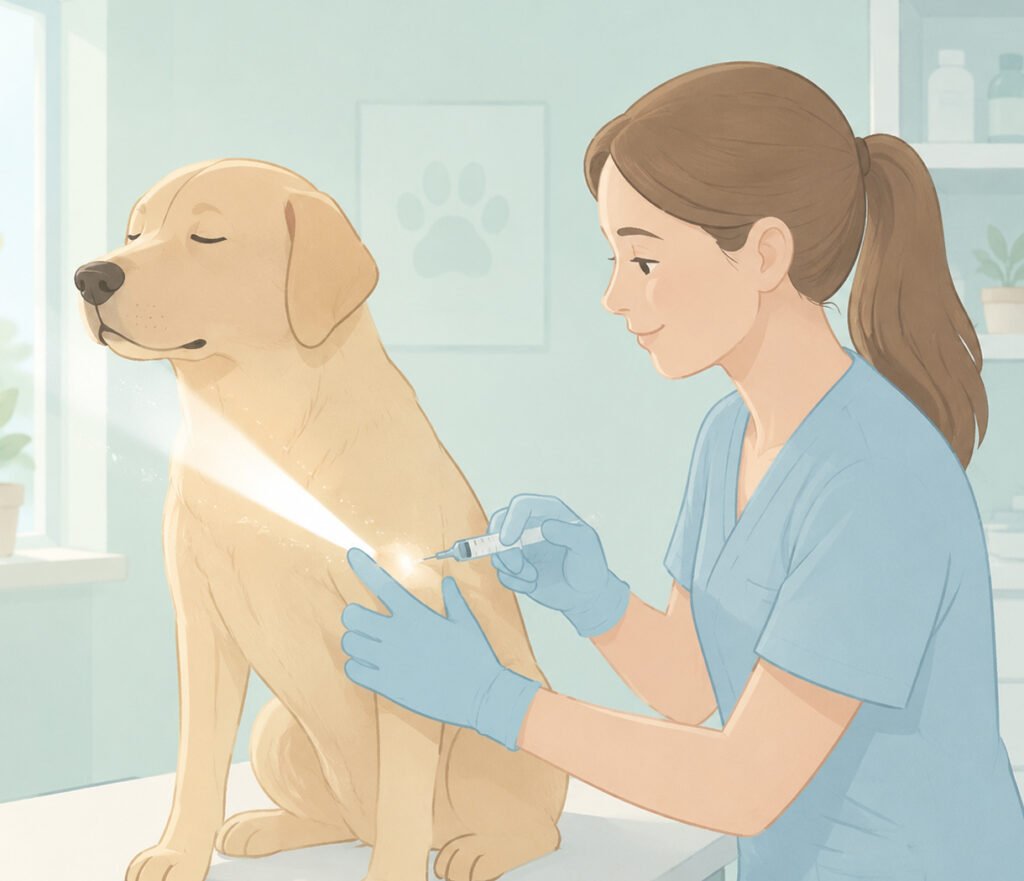
The veterinarian or technician holds the CO₂ cryotherapy device several inches from your dog’s skin. They activate the device for a short burst, typically lasting five seconds. The pressurized CO₂ gas expands rapidly upon release, creating an intense cooling effect that drops the skin temperature to near freezing. Your dog may react to the cold sensation. Some dogs flinch or try to move away. The cold is intense but brief. By the time your dog registers the sensation, the spray is already finished. Most dogs tolerate the spray well, especially compared to the alternative of feeling the needle without numbing.
3.3 The Needle Procedure
Immediately after the spray, the skin in the treated area is numb. The veterinarian can now perform the needle procedure. Your dog may still feel pressure or touch, but the sharp pain of the needle entering the skin is significantly reduced or eliminated. Many dogs show no reaction at all during the needle stick when the area has been properly numbed. The procedure proceeds quickly, and the entire process from spray to finish takes less than thirty seconds for most procedures.
3.4 What Your Dog Feels
Your dog will feel the cold spray. That sensation is intense but short-lived. After the spray, the area feels numb, similar to how your own mouth feels after a dental freezing injection but without any needle. Your dog may not even notice the numbness because dogs do not interpret sensations the way humans do. What matters is that the sharp pain of the needle does not happen. Without that pain, the negative association with needle procedures may not form or may weaken over time.
4. Comparing CO₂ Cryotherapy to Other Numbing Options
Understanding how CO₂ cryotherapy compares to other options helps you discuss pain management with your veterinarian.
4.1 CO₂ Cryotherapy vs. Topical Creams
Topical creams require fifteen to twenty minutes of waiting time. During that time, the cream must stay on the skin. Many dogs lick it off. The waiting period also gives anxious dogs time to work themselves up. CO₂ cryotherapy works in five seconds. There is no waiting period, no risk of your dog licking off medication, and no extended time for anxiety to build. The spray is applied immediately before the procedure, and the procedure happens right away.
4.2 CO₂ Cryotherapy vs. Injectable Local Anesthetics
Injectable local anesthetics like lidocaine require a needle to deliver the numbing medication. For a dog who fears needles, giving a needle to numb the area for another needle defeats the purpose. The dog still experiences the first needle stick. Injectable anesthetics also require careful dosing based on your dog’s weight. CO₂ cryotherapy uses no needles and no medications. There is no risk of allergic reaction, no concern about incorrect dosing, and no additional needle sticks.
4.3 CO₂ Cryotherapy vs. Sedation
For very anxious dogs, veterinarians sometimes recommend sedation for procedures that require needles. Sedation carries risks, especially for older dogs or those with underlying health conditions. Sedation also requires your dog to stay at the clinic longer for monitoring before and after the procedure. CO₂ cryotherapy works on awake dogs with no sedation needed. The dog remains alert and aware throughout, but without the pain that would otherwise make the procedure distressing.
4.4 The Neuroreflex Advantage
Unlike topical creams that merely block nerve endings locally, CO₂ cryotherapy triggers a neuroreflex response. The intense cold activates TRPM8 channels, sending powerful signals through the spinal cord that help override pain signals from the needle site. This neuroreflex mechanism provides pain control that is not just local but also involves the central nervous system, making it more effective for some procedures than simple surface numbing.
5. How to Prepare Your Dog for a CO₂ Cryotherapy Procedure
You play an important role in helping your dog have a positive experience with CO₂ cryotherapy procedures.
5.1 Reducing General Anxiety
If your dog is already anxious about veterinary visits, take steps to reduce that anxiety before the appointment. Practice handling your dog’s paws, ears, and neck at home. Use treats and praise to create positive associations with being touched. Consider using a calming pheromone spray or supplement before the visit. A calmer dog will handle the cold spray sensation better and will have an easier time overall.
5.2 What to Tell Your Veterinarian
Let your veterinarian know about your dog’s past experiences with needles. Tell them if your dog has shown aggression, extreme fear, or has needed sedation for previous procedures. Ask whether CO₂ cryotherapy is an option for your dog’s upcoming procedure. Many clinics have this technology available, but they may not offer it unless you specifically ask.
5.3 During the Procedure
Stay calm during the procedure. Your dog takes cues from you. If you are anxious, your dog will be more anxious. Hold your dog gently but firmly as directed by the veterinary team. Talk to your dog in a calm, reassuring voice. The cold spray will happen quickly. Before you know it, the procedure will be finished, and you can reward your dog with praise and treats.
5.4 After the Procedure
After the needle procedure, the numbness will wear off within a few minutes. Your dog may lick the area briefly, which is normal. Offer treats and praise to create a positive memory of the visit. If your dog seems uncomfortable later, contact your veterinarian. Most dogs have no after-effects from CO₂ cryotherapy, but every dog is different.
FAQ
Q: Does CO₂ cryotherapy hurt my dog?
A: Your dog will feel an intense cold sensation for a few seconds. It is not painful, though some dogs may flinch at the sensation. The cold is brief and causes no tissue damage.
Q: How long does the numbing last?
A: The numbing effect lasts several minutes, which is plenty of time for most needle procedures like blood draws or vaccinations.
Q: Is CO₂ cryotherapy safe for all dogs?
A: CO₂ cryotherapy is safe for most healthy dogs. It should not be used on open wounds, infected skin, or areas with poor circulation. Your veterinarian will determine if it is appropriate for your dog.
Q: Can I use CO₂ cryotherapy at home?
A: No. CO₂ cryotherapy should only be used by trained veterinary professionals who understand the proper technique and safety precautions.
Q: Does my dog need to be shaved for the spray to work?
A: For best results, the spray should contact the skin directly. In most cases, the fur can be parted rather than shaved. Your veterinarian will prepare the area as needed.
Q: How does CO₂ cryotherapy compare to an ice pack?
A: An ice pack takes fifteen to twenty minutes to cool the skin and cannot reach the same low temperatures. CO₂ cryotherapy works in seconds and drops the skin temperature to near freezing, activating the TRPM8 pathway much more effectively.
Q: Will my dog still fear needles after using CO₂ cryotherapy?
A: Over time, associating needle procedures with no pain may reduce your dog’s fear. The positive experience of a painless procedure can help break the cycle of anxiety.
Schlussfolgerung
Needle procedures do not have to be traumatic for your dog. CO₂ cryotherapy offers a fast, effective, and drug-free alternative to topical anesthetics that takes only five seconds to work. By activating the TRPM8 cold receptors in the skin, this technology triggers natural pain-relief pathways that numb the area without needles or chemicals. The pressurized CO₂ gas drops the skin temperature to near freezing almost instantly, providing pain control that is both local and neuroreflexive. For dogs who fear the veterinary clinic because of past needle experiences, CO₂ cryotherapy can help break the cycle of anxiety and make routine care less stressful for everyone involved.
Referenzen
- Evaluation of a Carbon Dioxide Cryotherapy Spray for Pain Control During Needle Procedures in Dogs. Frontiers in Veterinary Science.
https://www.frontiersin.org/journals/veterinary-science - TRPM8 Channels in Cold Sensing and Pain Modulation. National Center for Biotechnology Information.
https://pubmed.ncbi.nlm.nih.gov/31123724/ - Needle Phobia in Dogs: Prevalence and Management Strategies. American Veterinary Medical Association.
https://avmajournals.avma.org/view/journals/javma/javma-overview.xml - Local Anesthesia in Veterinary Practice: Comparing Topical, Injectable, and Cryotherapy Options. National Center for Biotechnology Information.
https://pubmed.ncbi.nlm.nih.gov/35876447/