Einführung
You push hard in the gym, tracking every rep, every set, every gram of protein. You have optimized your training, your nutrition, and your sleep. But there is one piece of the puzzle you might be missing. Recovery is not just about resting muscles. It is about activating the part of your nervous system that controls rest, digestion, and repair. This is the parasympathetic nervous system, and it does not turn on just because you lie down on the couch. CO₂ cryotherapy offers a unique way to trigger this recovery state. The intense cold creates a controlled stress that forces your body to shift into repair mode, helping you bounce back faster and feel more balanced.
1. Understanding the Parasympathetic Nervous System
Your nervous system has two main branches. One gets you ready for action. The other helps you rest and recover. Knowing how they work helps explain why CO₂ cryotherapy is so effective for recovery.
1.1 The Fight-or-Flight Response
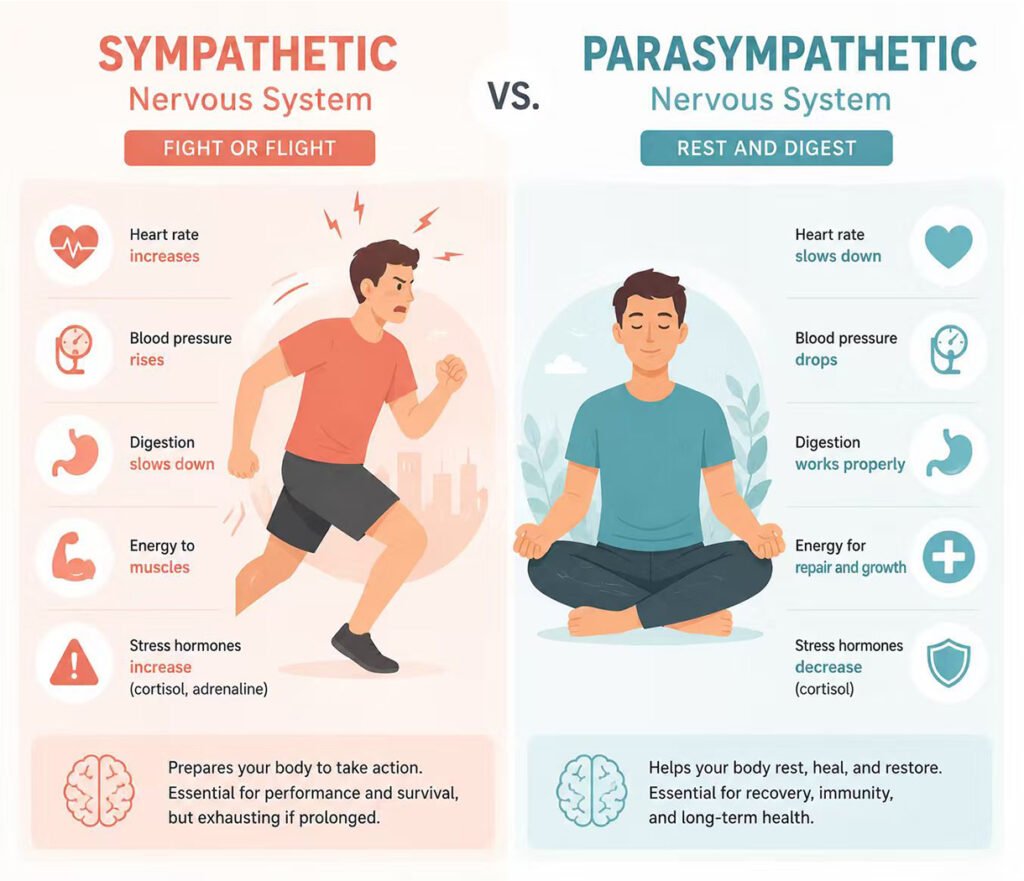
The sympathetic nervous system is your body’s accelerator. It activates when you face a challenge. Your heart rate increases. Blood pressure rises. Digestion slows down. Energy is directed to your muscles so you can fight or flee. This system is essential for performance. It helps you lift heavy weights, run fast, and respond to danger. But staying in this state too long is exhausting. Chronic sympathetic activation leads to high cortisol levels, poor sleep, inflammation, and burnout.
1.2 The Rest-and-Digest State
The parasympathetic nervous system is your body’s brake. It activates when you are safe and relaxed. Your heart rate slows. Blood pressure drops. Digestion works properly. Energy is directed toward repair, healing, and growth. This system helps you recover from exercise, heal injuries, fight infections, and maintain overall health. The problem is that modern life keeps many people stuck in sympathetic mode. Stress, screens, caffeine, and constant stimulation make it hard to switch into parasympathetic mode, even when you are trying to rest.
1.3 Why Rest Alone Is Not Enough
Lying on the couch does not automatically activate your parasympathetic nervous system. Your mind may still be racing. Your body may still be tense. Stress hormones may remain elevated. True recovery requires an active trigger that signals your nervous system to shift gears. This is where controlled stressors come in. Certain types of stress, applied briefly and safely, can actually stimulate the parasympathetic response. CO₂ cryotherapy is one of these controlled stressors.
2. How CO₂ Cryotherapy Triggers the Parasympathetic Response
CO₂ cryotherapy uses pressurized carbon dioxide gas to create an intense cooling effect on the skin. This extreme but brief cold triggers a specific pattern of nervous system activation.
2.1 The Initial Stress Response
When CO₂ gas expands rapidly on your skin, the temperature drops dramatically within seconds. Your body perceives this as a threat. The sympathetic nervous system briefly activates. Your heart rate may spike. Blood vessels constrict to preserve heat. This is the fight-or-flight response, but it lasts only a few seconds. Your body quickly realizes that the cold is not actually dangerous.
2.2 The Rebound Relaxation Effect
After the cold stimulus ends, your body overcompensates. Blood vessels dilate dramatically, sending warm blood back to the treated areas. Your heart rate slows below your baseline. The parasympathetic nervous system takes over. This rebound relaxation is the key to the therapy. The brief stress triggers a deeper relaxation response than you could achieve by simply resting. It is similar to how a short sprint can lead to a deeper sense of calm afterward than sitting still.
2.3 Hormonal Changes
Research has shown that cold exposure influences several hormones involved in stress and recovery. Cortisol, the primary stress hormone, tends to decrease after regular cold exposure. Norepinephrine, which helps with focus and alertness, increases during the cold stimulus. This combination of lower baseline stress and improved alertness helps you feel more balanced. Your body learns to recover more efficiently after each session.
2.4 Clinical Insights
Some individuals who have tried regular CO₂ cryotherapy sessions report noticeable changes in how they feel. After using the therapy daily for a period of time, some people describe feeling less stressed overall. Others mention that their sleep seems to improve, with fewer nighttime awakenings and a greater sense of rest in the morning. Falling asleep may feel easier for some after consistent use. These reported changes happen without major lifestyle adjustments, suggesting that the cold therapy itself may play a supportive role in helping the nervous system shift toward a more relaxed state. While results vary from person to person, many find that regular sessions contribute to a greater sense of calm and balance.
3. CO₂ Cryotherapy vs. Other Recovery Methods
Understanding how CO₂ cryotherapy compares to other recovery approaches helps you see its unique value for nervous system activation.
3.1 CO₂ vs. Ice Baths
Traditional ice baths immerse your body in cold water for ten to twenty minutes. This prolonged cold keeps your sympathetic nervous system activated throughout. You shiver. Your muscles tense. While ice baths have benefits for reducing inflammation, they do not trigger the same rebound parasympathetic response. CO₂ cryotherapy is brief, lasting only seconds per area. The cold is intense but short, allowing the relaxation rebound to occur without extended sympathetic activation.
3.2 CO₂ vs. Meditation
Meditation can activate the parasympathetic nervous system, but it requires practice and time. Many people struggle to quiet their minds. CO₂ cryotherapy provides a physical trigger that forces the nervous system to shift without requiring mental effort. The cold does the work for you. This makes it particularly useful for people who find it hard to relax through meditation alone.
3.3 CO₂ vs. Massage
Massage helps relax muscles and reduce tension, which can support parasympathetic activation. However, massage requires another person, takes time, and can be expensive for regular use. CO₂ cryotherapy is self-administered, quick, and can be done daily at home or in a clinic. It targets the nervous system directly rather than working through muscle relaxation alone.
3.4 CO₂ vs. Breathwork
Breathwork techniques like slow, deep breathing can activate the parasympathetic nervous system. They are effective and free. But they require focus and practice. CO₂ cryotherapy works differently. It uses a physical stimulus rather than a mental one. Some people respond better to physical triggers than to breath control. The two approaches can also complement each other, with cold exposure followed by deep breathing for enhanced relaxation.
4. What to Expect During a CO₂ Cryotherapy Session
If you decide to try CO₂ cryotherapy for nervous system recovery, understanding what the treatment involves helps you prepare and get the most benefit.
4.1 The Treatment Experience
You will sit or stand comfortably while a trained provider applies brief bursts of CO₂ gas to different areas of your body. Common treatment areas include the back of the neck, the upper back, and the lower back. Each burst lasts only a few seconds. You will feel an intense cold sensation, but it fades almost immediately. The entire session typically lasts two to five minutes. Most people find the treatment invigorating rather than unpleasant.
4.2 What You Feel During Treatment
During the cold burst, you may feel a sharp cooling sensation. Your body may react with a brief tensing or a quick intake of breath. This is normal. The cold is intense but over before it becomes uncomfortable. After the burst, you will feel a warm sensation as blood rushes back to the treated area. This warmth is pleasant and may last for several minutes. By the end of the session, many people feel alert yet calm.
4.3 After the Session
The relaxation effect may not be immediately obvious. Pay attention to how you feel over the next hour. You may notice that your breathing is deeper. Your shoulders may feel less tense. Your mind may feel quieter. Over time, with regular sessions, you may notice that you fall asleep more easily at night, that your energy levels during the day are more stable, and that you recover more quickly from workouts.
4.4 How Often to Use CO₂ Cryotherapy
For nervous system support, many people start with daily sessions for one to two weeks. After that, maintenance sessions two to three times per week may be sufficient. The exact frequency depends on your stress levels, activity levels, and how you respond to the therapy. Some people use it only when they feel particularly stressed or after intense training sessions. Others make it a regular part of their wellness routine.
5. Making CO₂ Cryotherapy Part of Your Recovery Routine
CO₂ cryotherapy works best as one tool in a complete recovery strategy. These practices can enhance its effects.
5.1 Timing Your Sessions
The best time for CO₂ cryotherapy depends on your goals. For post-workout recovery, use it within thirty to sixty minutes after exercise. For stress management and sleep support, late afternoon or early evening may work well. Avoid using it too close to bedtime, as the initial alertness from the cold might interfere with falling asleep for some people.
5.2 Combining with Deep Breathing
After your CO₂ session, take five minutes to practice slow, deep breathing. Inhale for four seconds, hold for four seconds, exhale for six seconds. This deep breathing can extend the parasympathetic activation initiated by the cold. The combination of physical and mental relaxation techniques may produce a deeper recovery state than either alone.
5.3 Creating a Pre-Sleep Routine
Use CO₂ cryotherapy as part of your wind-down routine before bed. Follow it with dim lights, no screens, and quiet activities like reading or listening to calm music. The cold helps shift your nervous system out of sympathetic mode, and the relaxing environment helps keep it there as you prepare for sleep.
5.4 Listening to Your Body
Pay attention to how you feel before and after sessions. If you are already very tired or stressed, you may need a gentler approach. Some people find that daily sessions are beneficial, while others prefer every other day. There is no single right protocol. Let your body’s responses guide you.
FAQ
Q: Does CO₂ cryotherapy hurt?
A: You will feel an intense cold sensation during each burst, but it lasts only seconds. Most people find it tolerable and even invigorating.
Q: How long does each session take?
A: A full session typically takes two to five minutes. This is much shorter than ice baths or other recovery methods.
Q: How soon will I notice changes in my stress levels?
A: Some people notice feeling calmer after the first session. Others see gradual improvements over one to two weeks of regular use.
Q: Are there any side effects?
A: Side effects are rare and temporary. Some people experience mild redness or tingling in the treated area that resolves quickly.
Q: Can I use CO₂ cryotherapy if I have high blood pressure?
A: The cold causes a brief increase in blood pressure. People with uncontrolled hypertension should consult their doctor before trying cryotherapy.
Q: How does CO₂ cryotherapy compare to a cold shower?
A: CO₂ cryotherapy is much colder and more targeted. It reaches lower temperatures in seconds, while a cold shower takes longer and cools the whole body less intensely.
Q: Will I need to continue cryotherapy indefinitely?
A: Many people use it as needed. Some use it daily during stressful periods and weekly for maintenance. Others use it only after intense workouts.
Schlussfolgerung
Recovery is not just about resting your muscles. It is about activating the part of your nervous system that controls repair, growth, and balance. CO₂ cryotherapy offers a unique way to trigger this parasympathetic response through brief, intense cold exposure. The initial stress of the cold forces your nervous system to shift, and the rebound relaxation leaves you calmer, more balanced, and better recovered. For athletes, busy professionals, or anyone looking to optimize their recovery, CO₂ cryotherapy represents a science-backed tool that works in minutes.
Referenzen
- Effects of Whole-Body Cryotherapy on the Autonomic Nervous System. National Center for Biotechnology Information.
https://pubmed.ncbi.nlm.nih.gov/31123724/ - Cold Exposure and Parasympathetic Activation. Journal of Thermal Biology.
https://www.sciencedirect.com/journal/journal-of-thermal-biology - Cortisol and Sleep Quality After Cryotherapy. National Center for Biotechnology Information.
https://pubmed.ncbi.nlm.nih.gov/32669774/ - Local Cryotherapy for Stress Management. LocalCryotherapy Clinical Resources.
https://www.localcryotherapy.com/resources