
Einführung
Runners commonly experience shin splints, a lower leg discomfort, especially during periods of increased training intensity or seasonal mileage buildup. Clinicians often associate the condition with repetitive stress on the tibial region, leading to localized tightness and discomfort along the front or inner side of the lower leg. In modern recovery strategies, practitioners increasingly discuss CO₂ cryotherapy as a non-invasive cold application method that delivers targeted cooling to soft tissue areas. By rapidly lowering skin surface temperature in a controlled manner, clinicians commonly use CO₂-based cryotherapy systems to support post-exercise recovery routines and help manage exercise-induced lower leg stress in running populations.
1. Understanding Shin Splints in Running Athletes
1.1 Repetitive Impact and Tibial Stress
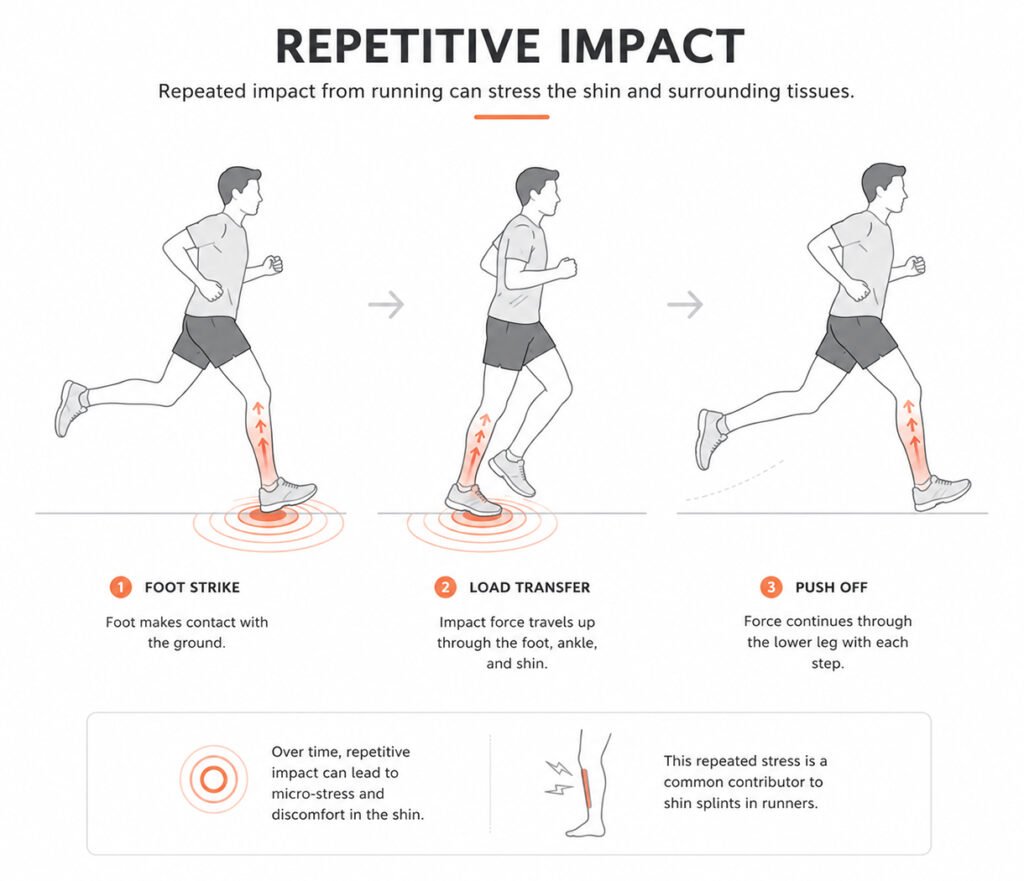
Shin splints typically develop due to repetitive impact forces placed on the lower legs during running. Each foot strike generates mechanical load that travels through the tibia and surrounding muscle structures. Over time, this repeated stress can lead to localized discomfort and tightness, particularly in runners who increase training volume too quickly.
1.2 Muscle-Tendon Overload in the Lower Leg
The muscles of the lower leg, including the tibialis anterior and posterior, play a key role in stabilizing foot movement during running. Repeated overwork of these muscles may cause them to develop fatigue-related tightness, which contributes to the sensation that practitioners commonly associate with shin splints.
1.3 Training Intensity and Recovery Imbalance
Shin splints often appear when training intensity exceeds recovery capacity. Inconsistent rest periods, insufficient muscle recovery, or sudden changes in running surfaces can all contribute to increased stress in the lower leg region.
2. How CO₂ Cryotherapy Supports Lower Leg Recovery
2.1 Rapid Cooling and Tissue Response
CO₂ cryotherapy uses controlled carbon dioxide gas delivery to produce rapid surface cooling. This sudden temperature change influences local tissue response, and practitioners commonly use it in non-invasive recovery settings to support post-exercise comfort in targeted areas such as the lower legs.
2.2 Localized Application for Shin Region Stress
In running-related recovery routines, CO₂ cryotherapy is typically applied to the anterior and medial shin region. The focused nature of the treatment allows for precise application in areas where runners commonly experience repetitive stress accumulation.
2.3 Supporting Post-Exercise Recovery Environments
Cold-based therapies like CO₂ cryotherapy are often integrated into recovery protocols to support a balanced post-exercise environment. This includes promoting localized cooling effects after running sessions where lower leg fatigue is more pronounced.
3. Lower Leg Biomechanics and Shin Splint Development
3.1 Impact Loading and Micro-Stress Accumulation
Running generates repetitive loading cycles that gradually create micro-stress within bone and soft tissue structures. When recovery is insufficient, this stress can accumulate and contribute to discomfort along the shin region.
3.2 Muscle Fatigue and Movement Compensation
As lower leg muscles fatigue, running mechanics may subtly change. These compensations can shift load distribution, increasing strain on specific areas of the tibia and surrounding musculature.
3.3 Surface and Footwear Influence
Running surfaces and footwear also play a role in shin splint development. Hard surfaces and inadequate cushioning can increase impact forces, while worn-out footwear may reduce shock absorption efficiency.
4. CO₂ Cryotherapy in Modern Running Recovery Strategies
4.1 Non-Invasive Cold Application in Sports Recovery
Practitioners widely use CO₂ cryotherapy in sports recovery environments as a non-invasive method that does not require downtime. They often incorporate it alongside stretching, hydration, and active recovery routines.
4.2 Targeted Lower Leg Recovery Applications
Advanced cryotherapy systems allow precise targeting of the lower leg muscles. This is particularly relevant for runners who experience localized shin stress during training cycles or competitive events.
4.3 Integration into Running Training Cycles
In structured running programs, recovery strategies are essential for maintaining consistency. CO₂ cryotherapy may be used during high-mileage phases or after intensive sessions to support overall lower leg recovery balance.
5. CO₂ Cryotherapy in Running Season Management
5.1 Seasonal Training Load Increase
During running season, athletes often increase mileage and intensity. This progression, while necessary for performance improvement, can also elevate the risk of lower leg overuse symptoms if recovery is not properly managed.
5.2 Role of Cryotherapy Systems in Recovery Support
Manufacturers design modern CO₂ cryotherapy systems, such as those that professional platforms like Local Cryotherapy reference, to deliver controlled cooling applications that support post-exercise recovery routines. These systems focus on localized cold exposure to help manage soft tissue stress after running activity.
5.3 Supporting Long-Term Running Consistency
Rather than focusing on short-term outcomes, CO₂ cryotherapy is often used as part of a long-term training strategy. By integrating recovery tools into regular routines, runners may better manage lower leg stress and maintain consistent training progression throughout the season.
FAQ
What causes shin splints in runners?
Shin splints are mainly caused by repetitive impact stress and muscle fatigue in the lower leg during running.
How does CO₂ cryotherapy work?
It delivers controlled carbon dioxide cooling to targeted areas, creating rapid surface temperature reduction.
Where is CO₂ cryotherapy applied for shin splints?
It is typically applied along the front and inner lower leg where stress is most commonly felt.
Is cryotherapy used before or after running?
It is most commonly used after running as part of recovery routines.
Can cryotherapy replace rest and recovery?
No, it is typically used as a supportive method within a broader recovery strategy.
Schlussfolgerung
Shin splints are a common overuse condition among runners, especially during periods of increased training intensity. CO₂ cryotherapy offers a non-invasive cold application approach that is widely used in sports recovery settings to support lower leg recovery routines. When incorporated into structured training programs, it may help runners better manage exercise-related stress and maintain consistent performance throughout the running season.
Referenzen
American Academy of Orthopaedic Surgeons – Shin Splints (Medial Tibial Stress Syndrome)
https://orthoinfo.aaos.org/en/diseases–conditions/shin-splints/
American College of Sports Medicine – Exercise Recovery and Overuse Injuries
https://www.acsm.org/education-resources/trending-topics-resources
National Institutes of Health – Cryotherapy in Sports Injury Management
https://www.ncbi.nlm.nih.gov/pmc/articles/PMC522152/
Journal of Orthopaedic & Sports Physical Therapy – Medial Tibial Stress Syndrome Clinical Practice Guidelines
https://www.jospt.org/
MedlinePlus – Shin Splints
https://medlineplus.gov/ency/article/001262.htm